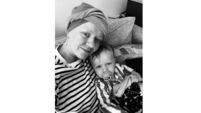
Love, not money, is the key to a rich childhood
But where did we get the idea that child development is conditional upon wealth?
When did we decide that without money, psychological, social or educational progress would be arrested: that it was more beneficial for children to have the luxuries in life that two incomes could provide rather than the limitations a single income might impose?
The debate about child-minding centres on whether child-minding should take place in the child's home or elsewhere, by whom care should be provided, at what age and in what circumstances.
But what has received less attention is the issue of what role finances play. Many couples who opt for dual income do so out of the wish to provide their child with every available educational opportunity. For those couples, the issue is not whether the mother would feel marooned at home, or deprived of maternal experiences by having to work. The decision is motivated by the belief money is central to a child's welfare. But is this so?
The needs of children are far simpler than marketing would suggest.
But what parent could resist the mobile that motivates their child to look and learn or educational enrichment for an infant?
Babyhood is big business now, guilt its instigator. There is a fear that unless every opportunity is provided, a child will be disadvantaged. This is not so. Interaction is free and positive parent-child interaction is the most proficient educational tool. It enhances language development, offers ideas and provides terminology to describe feelings.
Book tapes can't compete with the stories read by parents. Few activities compare with walking in the countryside holding a parent's hand. Maths is lived out in daily living. Compassion comes from caring for living things. Wisdom derives from simplicity; decisions from not having a confusion of choices, and values from parental behaviour.
Houses are where people live. Home is where parents are. It need not be palatial. Enough is sufficient. Too much is never enough.
Parents making the choice of how to maintain a work-life balance, how to fulfil their dual role to parent and provide might wish to remember they have a choice. Except in cases of extreme poverty, few autobiographies describe distress at having parents who, while poor, were loving and concerned. These are products not yet packaged.
Marie Murray is director of psychology at St Vincent's Hospital, Fairview, and director of Dublin Diocese Family Research.
CONNECT WITH US TODAY



Be the first to know the latest news and updates