One in three pupils in disadvantaged schools missing a month or more of class, ESRI finds
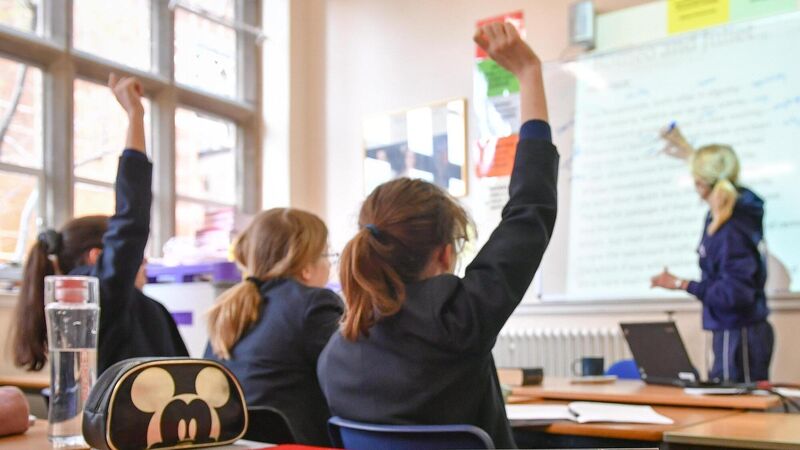
In the 2023/24 school year, 35% of students in Deis urban band one schools and 31% of students in special schools missed 20 or more days of school. Stock Picture: PA
Pandemic-era “chronic” school absenteeism shows little sign of improvement, as 35% of children attending the most disadvantaged schools are missing at least a month of school.
Schools in poorer areas and special schools are experiencing higher rates of school absences than mainstream schools in more affluent locations, new analysis shows.
During the 2023/24 school year, 35% of students in Deis urban band one schools and 31% of students in special schools missed 20 or more days of school — compared with 17% of students in non-disadvantaged schools.
A report by the Economic and Social Research Institute (ESRI), in partnership with Tusla Education Support Service, found that 30% of primary schools experienced a rise in “chronic absences” between 2022/23 and 2023/24.
“Chronic absence” is defined as missing 20 or more days of school.
Some 27% of primary schools also recorded an increase in days lost per student.
The report found:
- Higher levels of absence are found in multi-denominational schools than in Catholic or minority faith schools;
- Students in disadvantaged areas lose the most time at school, averaging 20.07 days per student;
- Fee-paying schools recorded less “chronically absent” students and fewer days lost per student;
- Small primary schools were found to have better attendance levels on average.
Pooled data from all primary schools indicated that 46.7% of all absences were due to illness.
This was followed by unexplained absences (24.7%), “other reasons” (12.8%), holidays (12.1%), and urgent reasons (3.6%).
At post-primary level, the most common reason for absence is unexplained (48%), followed by illness (31%), other reasons (16.1%), holidays (1.9%), and urgent reasons (2.6%).
Among post-primary schools, 42% saw an increase in chronic absence. Some 48% reported an increase in days lost per student.

The study found there was no “statistically significant” association between being a mixed-gender primary school and the number of days lost, compared to single-gender schools.
However, at post-primary level, boys’ schools were associated with significantly lower absence than mixed schools.
The study notes how there is “no evidence” that the passage of time since the pandemic is likely to solve attendance issues.
Anna Moya, one of the report's co-authors, said: “Greater absence among schools serving socio-economically disadvantaged children and young people is concerning, as it is likely to contribute to inequality in later life.
“It is particularly worrying that attendance in primary and post-primary Deis schools is not recovering as well as non-Deis schools in the post-covid period.”
The findings provide an important evidence base for targeting support to schools with high levels of absence, according to report co-author Emer Smyth of the ESRI.
Ms Smyth said: “Matching data on the background of individual students to the school-level information would yield greater insights into the factors driving absenteeism, thus helping to address these issues.”
A spokeswoman for the Department of Education said that tackling school attendance is a key priority for education minister Hildegarde Naughton.
Key measures taken include issuing attendance grants to all schools in December to “promote and support regular school attendance”.
“Schools will be asked to utilise this grant to reach and engage children and young people identified as being at risk of poor attendance,” the department spokeswoman said.
- Jess Casey, Education Correspondent
CONNECT WITH US TODAY



Be the first to know the latest news and updates