Opel Frontera review: Budget family SUV marks a welcome return for the famous name
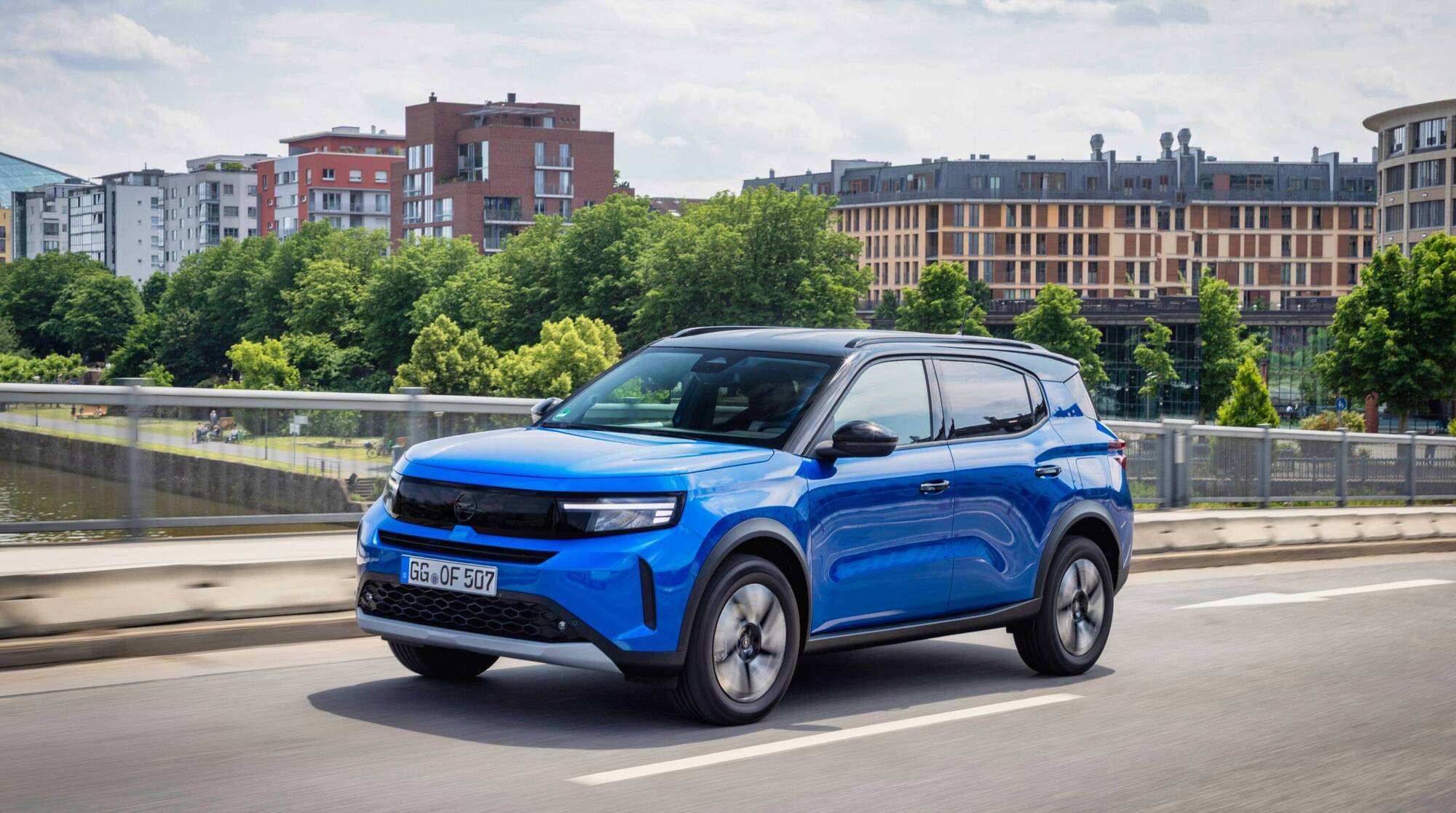
Opel revives the Frontera name with a new hybrid SUV aimed at value-focused families. We test the practical budget crossover.
|
OPEL FRONTERA |
|
|---|---|
|
|
★★★★☆ |
|
|
from €27,995 - €32,095 as tested |
|
|
A decent 1.2 petrol hybrid with 136bhp |
|
|
Sophisticated kit, unsophisticated décor |
|
|
Promising signs despite an unpromising history for this nameplate |
There was a time back in the dying embers of the last century when the SUV market started to rapidly evolve and for most serious manufacturers, getting on this train was a matter of necessity.
As one of Europe’s biggest manufacturers at the time, Opel found itself in something of a pickle – they didn’t anticipate this market shift and they didn’t have an SUV ready to roll off any production line.
What they did have was a product/technology sharing arrangement with the small Japanese manufacturer Isuzu. And guess what? Isuzu had a vehicle that might just meet their immediate needs and it was called the Isuzu MU, with the acronym standing for – as is the way sometimes with weird automotive nomenclature – ‘Mysterious Utility.’
Thankfully, they copped on quickly to this nonsense and renamed the car the Isuzu Wizard. It was made from 1989 through to 2005 and, to be honest, it was pretty naff. In fact, it was awful.
But – needs must and all that – Opel needed an SUV fast to shore up a glaring hole in their product line-up, so the people in Russelsheim gave their counterparts in Yokohama a bell and, hey presto, the Opel Frontera was born.
And guess what? It was bloody awful too.
Read More
Coming in two- and four-wheel drive guises and three and five-door bodystyles, it gave Opel (and their British subsidiary Vauxhall) a leg in the door of a vital segment and bought some time for them to come up with their own line of SUVs, which, in truth, turned out to be pretty grim too.
It was around this time that the owners of Opel/Vauxhall, the General Motors behemoth in Detroit appeared to become completely indifferent to the well-being of their European arm, and the dosh from America started to dry up.
Now when all you have for R and D and product expansion is the financial equivalent of a gift voucher, it does make life rather difficult for a serious manufacturer, and the quality of what was coming out of Russelsheim and the old Bedford Van factory near Luton dipped alarmingly.
Stuff like the original Mokka and the Crossland were widely panned for being rubbish – and they were. But a Prince Charming was at hand in the shape of Peugeot, which realised the potential Opel had and bought out the whole operation for the price of a packet of cigarettes and a choc ice.
Peugeot, of course, was thence subsumed into the new Stellantis alliance, which brought it and sister companies Citroen and DS into a new automotive monster along with Fiat and Chrysler/Jeep.
New management quickly stemmed the bleeding at Opel and swiftly got the undoubted design and engineering talent there to work. Since then, there has been an unremitting flow of new models (most with familiar names – Corsa, Astra etc) from the erstwhile German outfit. And most of them, it has to be said, have been positively received by the motoring media and, more importantly, the buying public.
This is all very good news for the brand, and so too is the arrival of a new compact budget SUV. That it has been called the Frontera is something of a gamble with Opel bosses obviously hopeful that the target audience will have never heard the name before and will not therefore associate the new vehicle with its rubbish predecessor.
The new car is illustrative of Opel’s current back-to-basics approach, whereby the company makes very affordable, appealing, well-designed and engineered cars for the mass market. It comes in two guises – EV and hybrid.
For the Irish market, this will turn out to be a sensible approach given the recent uptick in EV sales, where the genre seems to have turned a corner and is seeing a perceptible increase in people’s willingness to adopt electrics. That the EV Frontera (which we will be testing in the coming weeks) is cheaper than the hybrid – thanks mainly to government incentive grants – will help further in this regard.
So what of the Hybrid? Well, it is not without its faults, but it is priced to sell and it very definitely will. That one of its main rivals will be the excellent Dacia Jogger, probably tells you a lot about the car and while that news may induce scorn among some, if the Opel is as good as the Dacia, they’ll sell shedloads of them.
And, apparently, that’s what’s happening as the Frontera is moving off dealer forecourts in a fairly lively fashion, giving them and the brand a very welcome boost ahead of the arrival of the much-vaunted new Astra.
In hybrid form, it comes with a 1.2 litre three-cylinder petrol engine with a 21-kW electric motor and a battery with a 0.989 kWh capacity, which outputs 136 bhp. Top speed is just shy of 190 km/h, and the 0-100 km/h dash is achieved in nine seconds dead. It will also return a consumption figure of 5.2 l/100km (54 mpg). All reasonably impressive.
What’s not so good is that the standard six-speed auto gearbox is something of a laggard and takes way too long to change down, which leads to a lot of unnecessary noise from the engine bay and causes an element of frustration for those driving it.
This setup is shared across many Stellantis products right now but, oddly, it works a lot better in other cars, which is something of a mystery.
The steering, too is not as supple as it is in, say, the Peugeot 308, and it suggests that the Frontera is not a car designed to be pressed hard but one whose comfort zone is much more family-oriented. In fact, in many ways, it is more akin to sibling Citroens in this regard.
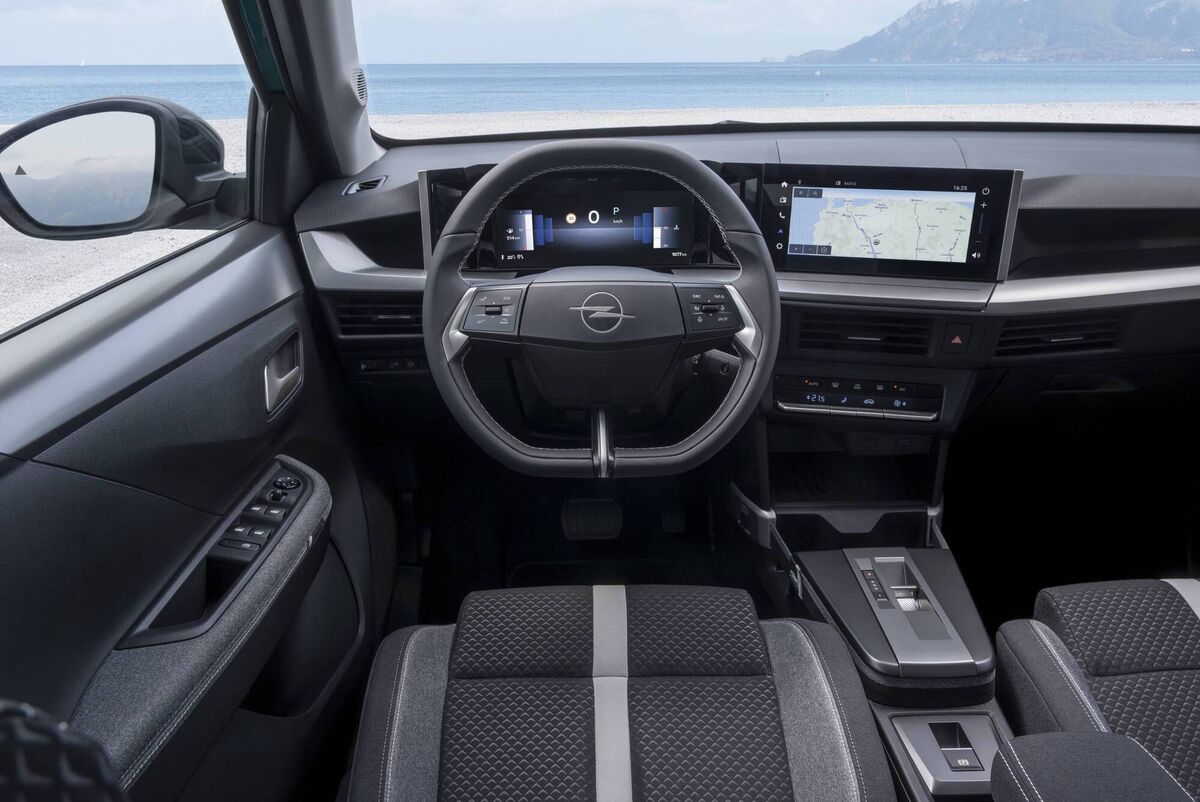
As the price might suggest, savings have been made on the interior décor where hard black plastic abounds, even if there was a leather steering wheel and decorative silver trim across the dash on the GS specification model we tried.
The upholstery is excellent and the seating very comfortable – again redolent of close relative Citroens – and such as rear camera, front and rear parking sensors, and cruise control are all part of the package, along with electronic climate control and heated front seats, a heated steering wheel and 17” alloys.
The twin 10” screens – for infotainment/instrumentation – are neat and very functional, with the former being very easy to navigate. The separate controls for the climate system are also welcome.
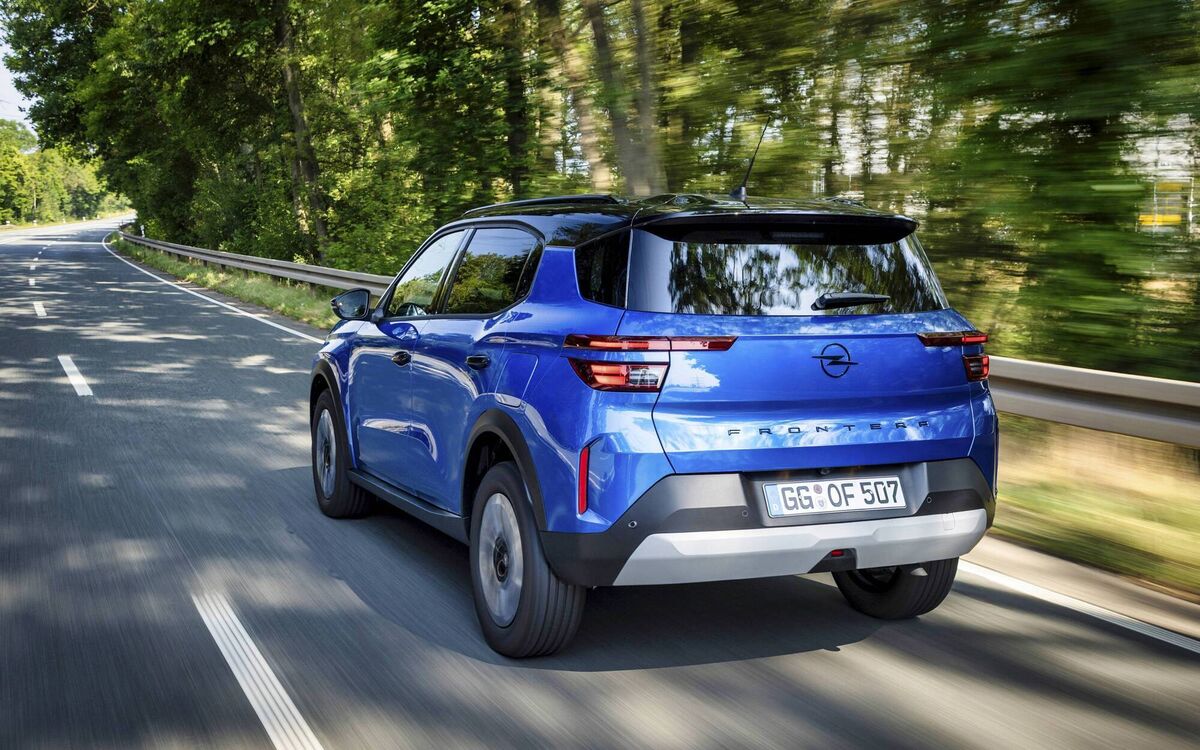
It is also a chunky-looking car – very fetching too in its Effect Blue overcoat – and practical to a fault with plenty of room for the rear passengers and loads of boot space.
A definite return to form for Opel here then, and way, way better than any previous Frontera models. Sales suggest that the public seems to think so too, and it may well be that the German arm of Stellantis has stolen something of a march on such as the new C3 and C5 Aircross models from Citroen, with which it shares so much.
While not perfect, it is very much a step in the right direction for Opel, and we are looking forward to trying the EV version, which is reputed to be better again.