Ssangyong Rexton Review (27/09/14)
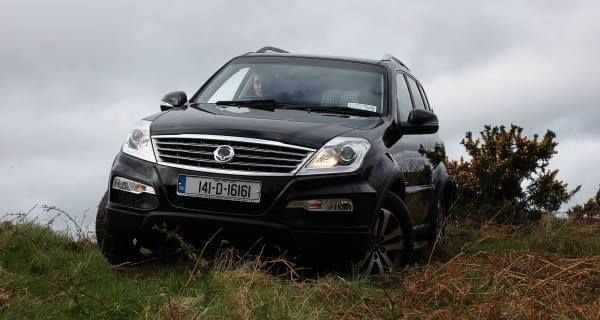
IT could easily be argued that there is no longer any such thing as a bad car; certainly there are still any number of poor ones, but in the great scheme of things there are few if any bad ones.

Ssangyong Rexton Review (27/09/14)

In times past, manufacturers, blessed with either a complete lack of engineering or design prowess or an inability to manufacture anything with a build integrity greater than a cardboard box, produced plenty of terrible cars. These days, however, any such concern would have the longevity of a fish without water.

This brings us onto Ssangyong. In recent months we have tested two recent products from the revitalised Korean marque. First up we tested the dynamically challenged but massively practical Rodius, and then we tried Korando, a medium sized SUV which turned out to be quite good.


This week we get to drive the car Ssangyong probably believes will be its biggest worldwide seller, the Rexton.

Sad to say, though, whatever confidence the company itself may have in this car, its belief in the product is not something I would share.

I would not say the Rexton is a bad car, but it is certainly not a great one.

The Rexton is something of a throwback, an example of what motor companies once proclaimed to be a ladder-frame construction. This is a body-on-frame structure, a system of SUV car-making which even the Americans have long-since ditched as being Neanderthal. It was something Land Rover pioneered with its’ Series 1 back in 1948 and, to be honest, driving the Rexton, you might as well be back in the 1940s.

Unfortunately, such a chassis makes for a driving experience equivalent to that of a dessert jelly on wheels — and that is why every manufacturer worth its salt has long since stopped making them.

Now it may be that Ssangyong is convinced that its main target audience — farmers and small businesses — care little what the Rexton drives like, on the basis they simply want a workhorse that will last a long time and put in sterling service.

We tested the Rexton W in the ‘Business Edition’ and this car exploits an anomaly in the motor tax regime which has seen a number of manufacturers coming out with five-seat commercial vehicles. The Land Rover Discovery commercial was one of the first and Ssangyong is following suit.

Dare I suggest, though, that the difference between the Land Rover and the Ssangyong is of the light year variety. The former displays an excellent combination of driving dynamics, passenger comfort and practicality.

The latter only offers practicality and while it does present many creature comforts as part of the standard specification, that does not mean you will ever be comfortable enough to enjoy them.

On the positive side, the two litre turbodiesel engine is a fair enough companion to live with.

I suspect, however, prospective owners will be more interested in figures such as the 2.6 tonne towing capacity, or the part-time 4WD capability which incorporates a hill descent control system, or the excellent ground clearance and the five year warranty.

The Rexton will be a decent and hard-working companion for those people who want a decent and hard-working companion.

But, if you think you’re going to enjoy it for its on-road prowess, then you’d be better looking elsewhere. It is certainly not a bad car, but it’s not great either.

Ssangyong Rexton

*

The Cost: €41,377 for the five-seat Business Edition commercial version we tested.

The Engine: Not a bad two-litre turbodiesel from Ssangyong’s own design department.

The Specification: One of the plusses of the car is an impressive list of goodies that come as standard.

The Overall Verdict: This is a workhorse and not a car which will deliver any driving enjoyment at all.

More in this section

Revoiced

Newsletter

Sign up to the best reads of the week from irishexaminer.com selected just for you.

Cookie Policy Privacy Policy Brand Safety FAQ Help Contact Us Terms and Conditions

© Examiner Echo Group Limited

