Mitsubishi Outlander PHEV review (16/08/2014)
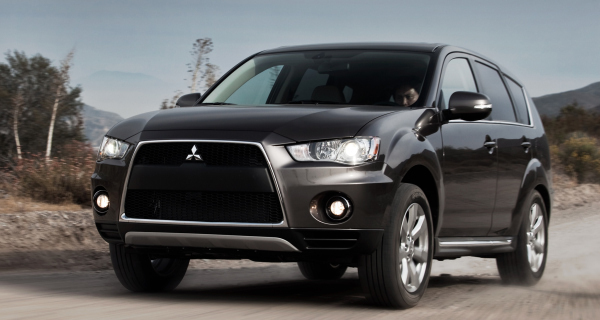
Electric hybrids are all the rage right now what with more and more companies now following Toyota’s lead down this road with cars powered by a combination of batteries and internal combustion engines.
Electric cars too are very fashionable at present, but the majority of them simply do not have the range to make them a practical choice for anyone — well, anyone with any sense anyway.
But hybrids have started to crack the whole mass appeal thing in a serious way — even here in conservative Ireland — and a growing band of manufacturers are only too happy to get on the bandwagon.
And Mitsubishi is the latest.
Of course the Japanese outfit hit the ground running with its i-MiEV electric vehicle, even before the Nissan Leaf and the rest of the mob which followed it, but it has not moved on to an entirely more complex — and a very cost-efficient prospect for punters — system which utilises batteries, electric motors and a regular engine.
The most this Outlander will travel on its battery/electric motivation is about 52km, but I am told by dealers that this has not put off customers. Indeed, I understand several buyers with a daily commute of less than 50km have already signed up to buy one because it gives them very cheap motoring for the majority of their daily needs. And, if they want to take off somewhere for a longer trip, they can either use up the electricity and transfer seamlessly to engine power when it runs out, or they can switch off the electric element altogether and drive away to their heart’s content.
But — and for regular readers who know I am a sceptic when it comes to these things — while I can see the rationale involved here, that does not necessarily mean I get it.
In fact, I don’t really — particularly when it comes to the potential appeal for everyday motorists. I don’t really believe that Mitsubishi are aiming this car at regular family buyers because I’m fairly certain it will be the business sector which is where the majority of Mitsubishi PHEV customers will come from.
The raft of tax benefits pertaining to this car are impressive, including the Accelerated Capital Allowances scheme run by the SEAI which allows companies write off 100% squared of the purchase value of ‘qualifying energy efficient equipment’ against their profit in the year of purchase.
Now things like that certainly make people sit up and take notice.
So, for businesses with large or small fleets, any vehicle which can reduce running costs on a day-to-day basis is a welcome thing and if that vehicle also has the practicality of an SUV and the ruggedness of a 4x4 (which this is), it has a whole host of potential benefits which will certainly bring buyers into dealers’ forecourts.
The matter of living with this Outlander is pretty straightforward. Driving it around is as normal and it is nearly impossible to tell when the electricity has run out and the petrol engine kicks in.
It is all fairly seamless, even though the system is clever enough to allow you charge the batteries while using the engine and there is a regenerative element to the brakes as well.
In any event, the Outlander will clip along at a fine rate whichever power source you’re on. It will accelerate to 100kph from zero in ten seconds and achieve a top speed of 170kph.
It will also return 7.3l/100 km in motorway driving (38 mpg) which is not bad for a car its size, although Mitsubishi claim an overall figure of just 1.9l/100 km over the combined cycle.
Of course, when you’re on electric motivation, there is no fuel being used other than what’s in the batteries. According to Mitsubishi, it currently costs some €1.20 to charge the car to give it its maximum 52 km range.
All that aside, the Outlander is a very well appointed car with plenty of kit and the sort of pleasing interior layout which is both easy to live with and very practical.
On the road it is a competent companion rather than an outstanding one, but it handles well, rides reasonably well and has bags of grip.
It is good, but there’s little by way of a wow factor.
All of which is fine and dandy, but I really wonder just how many people are going to take all this on board and get excited about what Mitsubishi has to offer here.
Sure there are some people who will buy into the 52km electric range and use the car to is maximum in this regard.
And, almost certainly there will be a substantial hunk of business buyers who will be intrigued by this Outlander for what it can bring to them in savings.
But, for the normal Jane and Joe, I doubt very much if this car will impinge on their thoughts when it comes to changing their mode of transport.
Don’t get me wrong, because that last assertion does not mean this is a bad car — far from it — but it is just something which I do not believe will have across-the-board support from the buying public.
Colley's Verdict
***
From €41,950 — compared with €39,950 for the existing diesel version
there is a petrol engine — two-litre — but it is the electrical trappings that make this unique and provide most of its potential appeal, too.
very good, even from entry level, where standard kit includes 18” alloys, dual-zone air con., leather steering wheel, cruise control, Bluetooth with voice activation and parking sensors
I see this as being a niche car for nerdy hybrid fans and businesses looking to reduce running costs. More of the latter than the former.





