Dacia Duster review (02/10/2013)
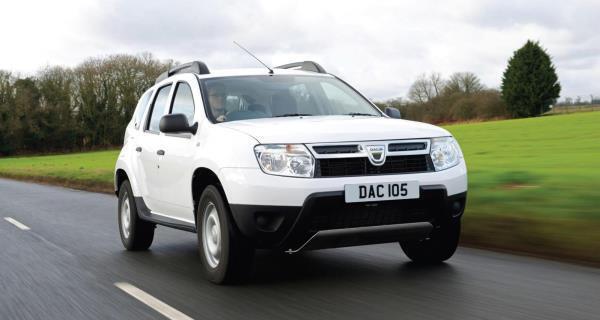
YOU can say what you like about the Dacia Duster — and believe me many have — but in my view this machine represents a new era for the motor industry and new thinking too, offering as it does an extremely cost effective package for families alike, admittedly with few frills, at a time when just such a thing is truly needed by the buying public.

Dacia Duster review (02/10/2013)

There are those who might dismiss the Dacia on the basis that it is just another cheap and ultimately doomed attempt to secure market share for the Renault-owned Romanian-built brand, but I think these people are entirely missing the point here. Certainly the Dacia might be as cheap as chips — whichever of the two models, Duster and Sandero, you choose — but its cars are built on proven and sturdy mechanicals, are endowed with decent kit levels and they don’t look bad either.

And the Duster we tried recently, when examined closely, is a very acceptable offering from the company and it also represents a whole new line of thinking. In their efforts to make Dacia a widely accepted and purchased brand, those pulling the strings decided the bargain basement route was the way to go in order to popularise it. And they have been very successful at it too, judging by the sales figures from such important European markets such as Germany and France. But here in Ireland — austerity central — you would have thought dealers would be crushed under the feet of eager punters only too anxious to dispense with their cash in return for a new car at prices you’d hardly have seen 10 years ago.


But, to the end of August Dacia has only achieved a 1.51% share of the Irish market with a total of 1,034 units shifted out on to our roads and, while it has outsold such established brands as Honda, Fiat, Suzuki and Mitsubishi, it has still not really set the market ablaze. Its performance across Europe has been much more solid.

Sure it may have had to deal with an Irish public that up to a year ago was largely ignorant of the Dacia brand and a complete standing start when it comes to dealer representation, but the Renault connection has been a huge help and it is through the French company’s existing dealer network that it has impacted here.

However, there is a school of thought that says Dacia, while doing well, should be doing much better. Particularly so in the times in which we currently live where people don’t have too much expendable income

But then you also have to factor in the times in which we live — austerity aside — where brands are king and designer labels are a form of currency in their own right. The corollary, of course, is that there are still practical-minded people out there for whom value is the top priority and badges and labels be damned. This latter group will have no problem buying Dacia products — and many of them already have, but there has not been enough of them yet to mark the manufacturer down as a serious player.

Personally I don’t doubt that Dacia can achieve big things with both the Sandero and the Duster.

The latter is a chunky thing, although not unattractive. It may not go down in car design history as a classic, but it’s far from the ugliest thing I’ve ever seen. Get to the interior though and you begin to see where the ‘budget’ element of this car kicks in. All the plastics used on the dash, centre console and doors are grim. They look like they were recycled in a mid-’80s eastern bloc synthetics factory and it would be fair to say that chipboard has a better tactile feel.

The seating is okay comfort-wise and the high seating position will suit many. The range of adjustment on the driver’s seat is not fantastic and it will take a while to find your preferred setting. Elsewhere, the switchgear is all pretty much Renault cast-offs, but again that’s not necessarily a bad thing.

On the engine front the 1.5 dCi turbodiesel (see panel for tech details) is a familiar beast and while not the most powerful unit around, still delivers serviceable oomph with decent economy thrown in. The standard kit on the Signature model (4,000 more expensive than the entry model) we tested wasn’t bad either.

On the handling front the car’s humble origins betray it and this is not a car which will find favour with any sort of enthusiastic driver. It rolls a lot and in two wheel drive as tested, grip levels are not impressive when press-on driving requires it. The ride is on the harsh side and the car is not particularly nice to drive on Irish B-roads. But, if you’re a farmer from Termonfeckin or a housewife from Ballydehob, these are not issues which will concern you greatly. The ruggedness of the thing and its practicality will be of more concern — not to mention the price.

Do I see a future for Dacia? Well, yes I certainly do, but I’m not sure if it is as bright as the company thinks it is.

Colley’s lowdown

The Cost: from 15,000; 19,990 as tested.

The Engine: the Renault-sourced 1.5 dCi turbodiesel is allied to a six speed gearbox.

Power: 110 bhp.

Fuel / CO2 : 5.3 l/100 km; 137 g/km.

Specification: the Signature version as tested included manual air con, steering mounted radio controls, electric front and rear windows, Bluetooth and 16” alloys.

Overall Verdict: Not at all bad for the price.

**

More in this section

Revoiced

Newsletter

Sign up to the best reads of the week from irishexaminer.com selected just for you.

Cookie Policy Privacy Policy Brand Safety FAQ Help Contact Us Terms and Conditions

© Examiner Echo Group Limited





