Toyota Auris review (06/02/2013)
VW topped the 9m for the first time last year, while GM sold 9.29m units. The Japanese outfit has staged a remarkable comeback from a variety of setbacks. Firstly, there was the series of Toyota recalls, ending with tearful company chief, Akio Toyoda, apologising to the US Congress for his company’s failings.
It was a public relations disaster for Toyota and cast a dark cloud over its “best-built cars in the world” advertising tag-line, but I was impressed by how the company ‘fessed-up’ to its misdemeanours.
Millions of cars are recalled by manufacturers monthly, but rarely is the boss held accountable by the government of a foreign country. Never, in fact.
If all that was not bad enough, Japan was stricken by an earthquake and a tsunami in 2011, and Toyota’s production facilities were badly hit, causing critical supply difficulties to its worldwide network.
The net effect of these two crises was that Toyota fell to number three in the global sales charts. The company’s reaction to its plight was typical determination.
Since late last year, Toyota has embarked on a slew of model launches, including the astonishing GT86, the new Auris and the Yaris Hybrid, which aim to gain in the small family-car and supermini segments — and undoubtedly will.
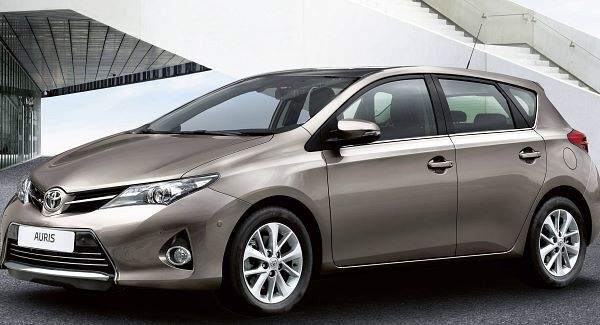
It is the Auris with which we concern ourselves this week. Despite my admiration for Toyota, this car mystifies me, even aside from the decision to drop the Corolla handle and, instead, use the Auris name for the three- and five-door variants.
This was to give the Corolla a “youthful” image but I doubt it has done so.
It also nags at me that Toyota is tricking around with a conservative and money-conscious audience. The majority of buyers for this car are attracted by its price and its (largely) bombproof reliability — and not its appeal to the “yoof” market.
The new Auris is an archly conservative machine and will be bought by the archly conservative, but that puts it against machines for which edgy styling and daring engineering are key selling points. It is not that Toyota are incapable of these — vis the GT86, or the hybrid machines that have put the wind up opposition — it is just that the Auris doesn’t go there. It might scratch the surface, but it’s not daring.
Sure, the car does everything well enough to satisfy the demands of the majority of drivers, but if you want a car that engages you, then look elsewhere.
Take the suspension, for example. Toyota has persisted with a twist-beam axle at the rear. This technology is not Neanderthal, but neither is it up to the exacting standards set by the Ford Focus and the VW Golf, which feature all-round independent systems.
While Ford is undergoing its worst financial performance in Europe in recent years, and the Golf is not a money-spinner for VW, despite excellent sales figures, Toyota’s profitability has been steady, so that is something to consider when looking at the bigger picture.
On the up side, Toyota has brightened up the Auris’s exterior and interior to escape the anonymity that bedevilled the previous version. The front-end look appears to be a reaction to what Hyundai and Kia have been doing in this segment lately, but that’s not necessarily a bad thing.
The interior is spacious and well up to class standards. There are obvious improvements over the previous car — the driver’s seat is much more comfortable, for one — and it is a nice place to be. The spec levels, too, are good for the price.
On the engine front, the 1.4-litre, D-4D turbodiesel is very familiar, too, but upgrades mean it now outputs 66 kW (90 bhp) and 205 Nm of torque, between 1,800 and 2,800 rpm. It is not the perkiest engine — I won’t even bother with the 0-100 kph and top-speed figures — but it does the job, and with a six-speed gearbox and Stop/Start technology allowing a claimed consumption rate of 3.8 l/100km over the combined cycle — that’s well over 70 mpg — many drivers will not need further convincing.
Undoubtedly, this Auris is better than the last one, but it had to be, such is the pace of development of the opposition. Whether or not that will translate into increased sales in a highly competitive segment, here in Ireland, remains to be seen. But we are a mere drop in the ocean for Toyota and, undoubtedly, the Auris will help the company maintain global dominance.
It will appeal to a lot of people, but it probably won’t stir their emotions.





