I spent three days travelling this giant of a hiking trail — you don’t know what you’re missing

Any Irish hillwalker who hasn’t rambled the Causeway Coast is missing out on some of the island’s most spectacular scenery, and plenty of good food and drink, too
Jim Gallagher shares his experience on Ireland's Northern coasts
Jim Gallagher shares his experience on Ireland's Northern coasts
Hiking the glorious Causeway Coast Way along the northern tip of this island is a bit like a United Nations exercise.

There are people from all over the globe walking up and down the stunning clifftops between Ballycastle in Co Antrim and Portstewart, Co Derry. They might only do a small section of the 52km trail but they are there in abundance. There are Americans galore, Germans, French, Spanish, a lot of English and, quite naturally, many people from Northern Ireland.

On a recent visit I heard languages I couldn’t decipher along with Italian, Polish, and Dutch and I chatted away with a woman hiking alone from New Zealand. What I didn’t hear was anyone with a southern brogue. It seemed remarkable to me that so many people would fly here to visit or hike this beautiful 33-mile stretch of coastline and yet I didn’t meet anyone from the Republic.

Well, wake up all you keen southern walkers, you don’t know what you’re missing.

The Causeway Coast Way has some of the most spectacular scenery on the island of Ireland. I spent three and a half days marvelling at endless white limestone cliffs, sea stacks, dramatic caves, golden beaches, and crystal clear water.

Then there is the wonder that is Giant’s Causeway, the most famous part of this long-distance walk which the Causeway Coast Way passes right through. This is by far the busiest section but most visitors here will only be walking a small part of the trail. Stroll a mile or two east or west and you are back in the solitude of this wonderful natural region.

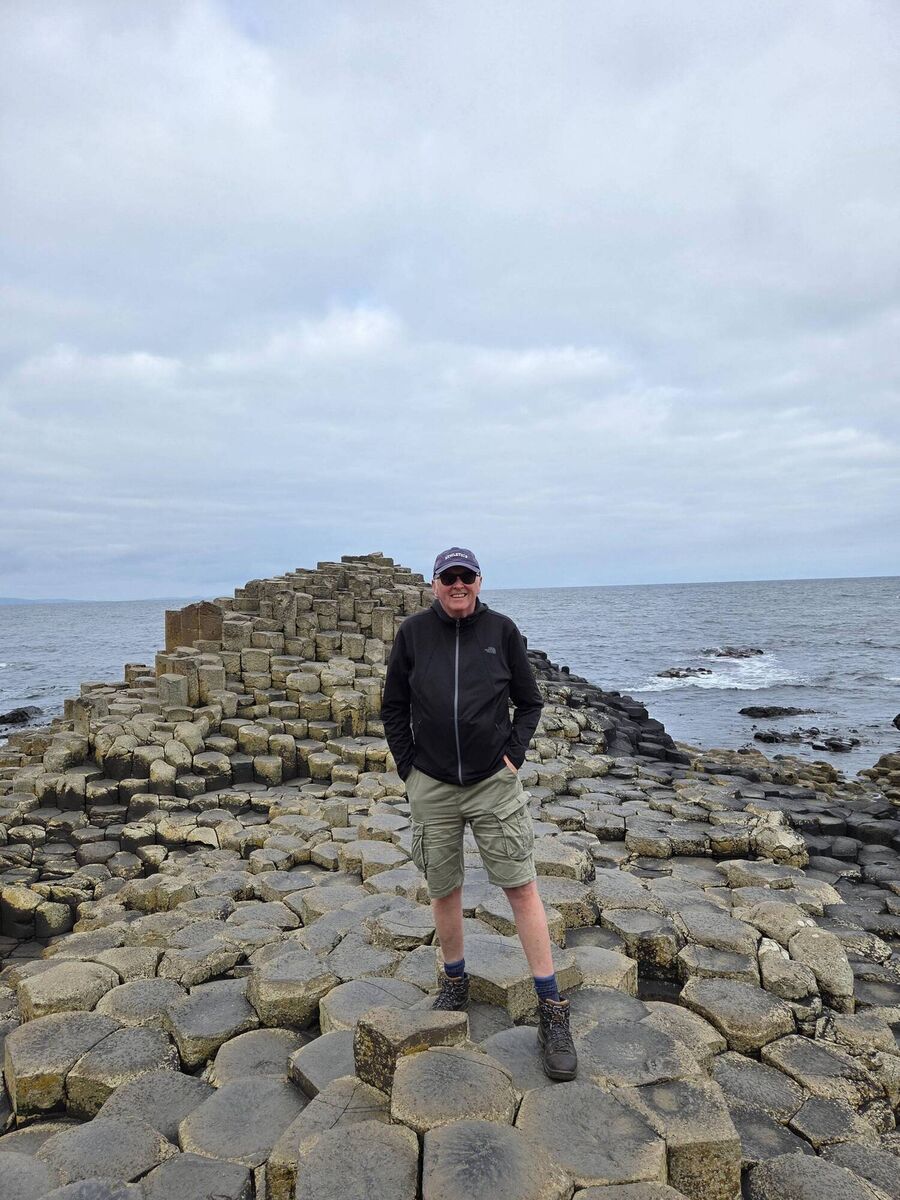
Jim Gallagher at Giant's Causeway. Giant’s Causeway is a Unesco World Heritage site.

The Causeway Hotel told me their number one visitors were American followed by the French and then English. At the Fullerton Arms in Ballintoy, the English took the lead over the Americans although during dinner I was surrounded by two tables of French.

The Causeway Coast Way — part of the 1,000km Ulster Way which encircles Northern Ireland — starts at the seaside town of Ballycastle where boats leave for Rathlin Island, which is visible right along the trail. The first 8.5 kilometres of the Way are along the B15 road, which is busy in summer so walkers must take care until they get to the famous Carrick-a-Rede rope bridge where a clifftop trail begins.

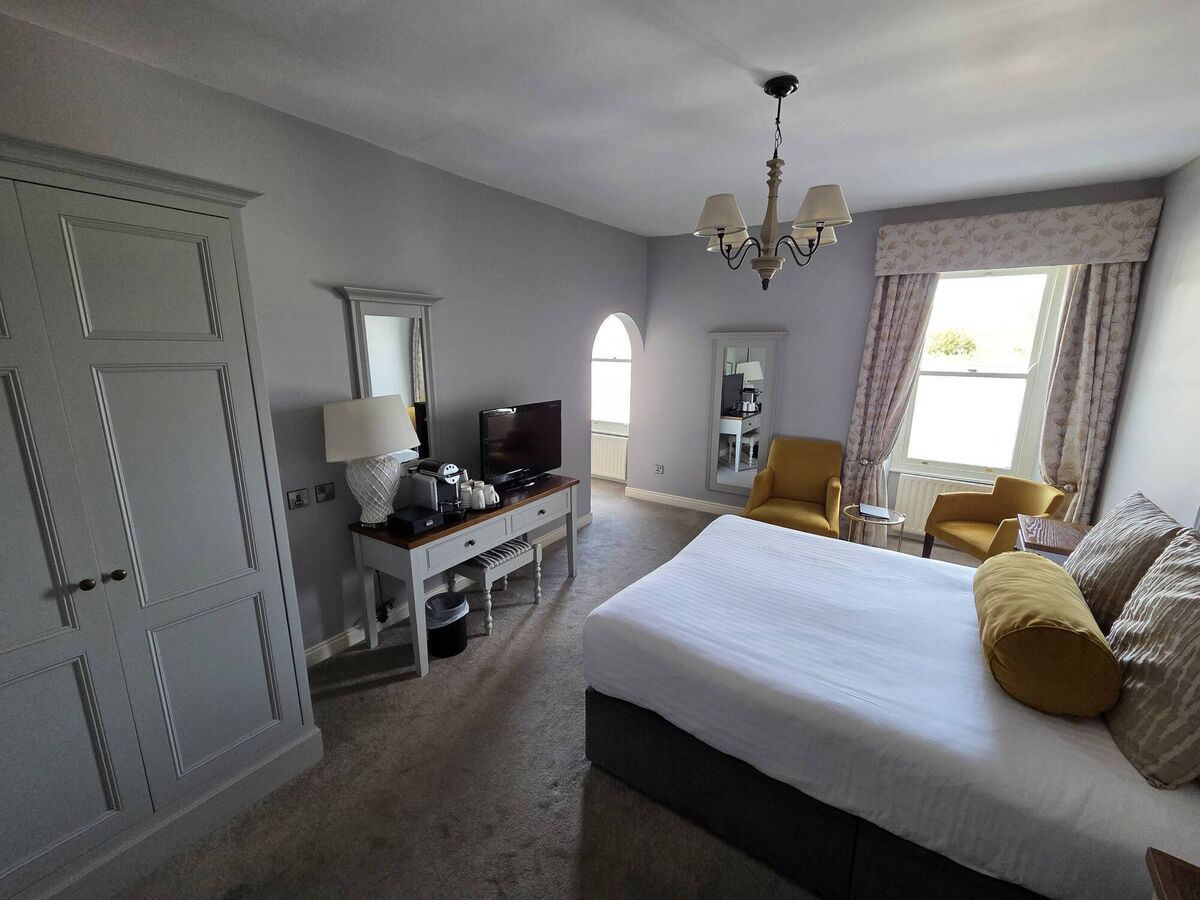
A room in The Causeway Hotel

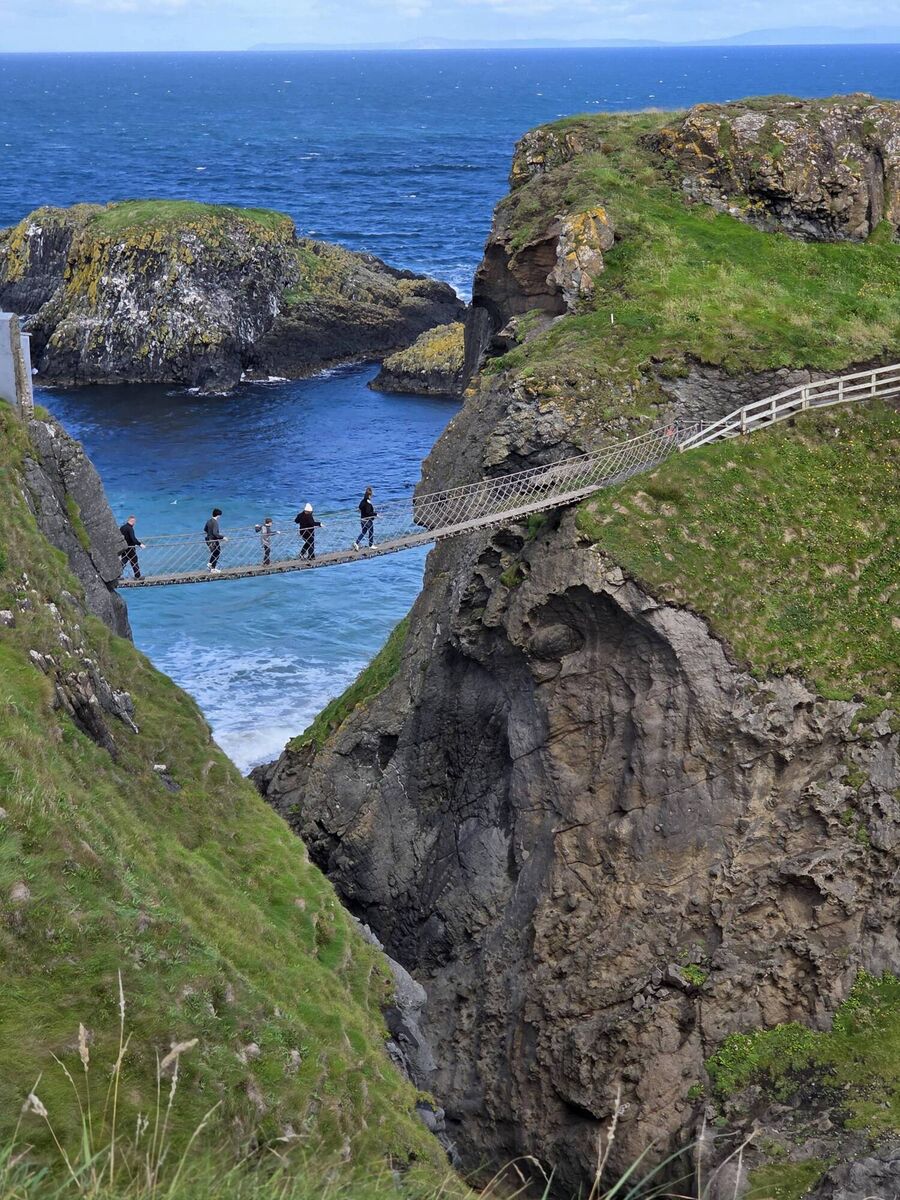
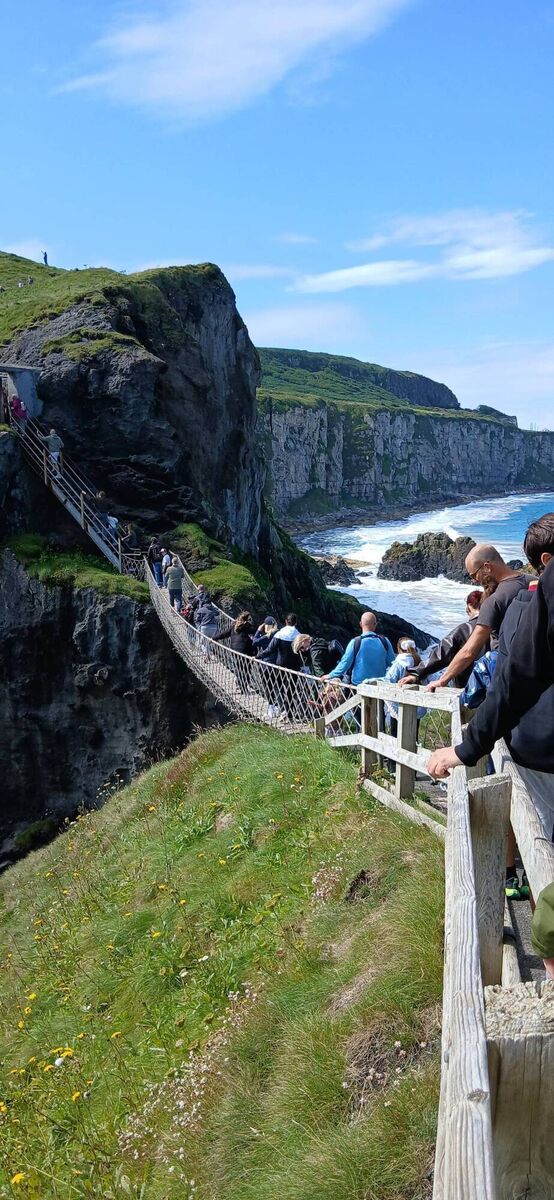
The bridge, swinging 100ft above the swirling sea, is one of Northern Ireland’s most popular attractions and attracts thousands of visitors a year. First installed in 1755 to allow salmon fishermen to access the rocky Carrick-a-Rede island, it is 20m long and is made up of planks strung between wires. It wobbles and is not for the faint-hearted. I had crossed it before but it still got the adrenaline going.

Carrick-a-Rede car park, 1km from the bridge, marks the start of the beautiful coastal trail where you leave the road behind for a gravel and earth path over the cliffs with great views of Sheep Island off the shoreline. It’s uninhabited but farmers used to ferry sheep there to graze in the summer. It was also famous for its dulse, or edible seaweed.

The bridge at Carrick-a-Rede

The bridge at Carrick-a-Rede

You soon arrive at the picturesque white church of Ballintoy, which can be seen from miles away, sitting on a headland. A short lane leads down to the very pretty Ballintoy Harbour which Game of Thrones fans might recognise as the Iron Islands where Theon Greyjoy returns home. It was packed with visitors when I arrived with local guide Heather Nicholl, who joined me for the first day, and the cosy cafe was doing a roaring trade.

We walked on and Heather pointed out the lookalike Elephant Rock and various arches carved out of the cliffs by the sea, right up to the golden sands of White Park Bay.

My first night was spent in the comfortable Fullerton Arms guest house and restaurant, Ballintoy, which boasts a Game of Thrones door made from one of the trees blown down in a ferocious storm on the famous Dark Hedges, the King’s Road in the TV show. My beef and Guinness dinner in a giant Yorkshire pudding with crispy kale was something that might have been served up at a Game of Thrones banquet.

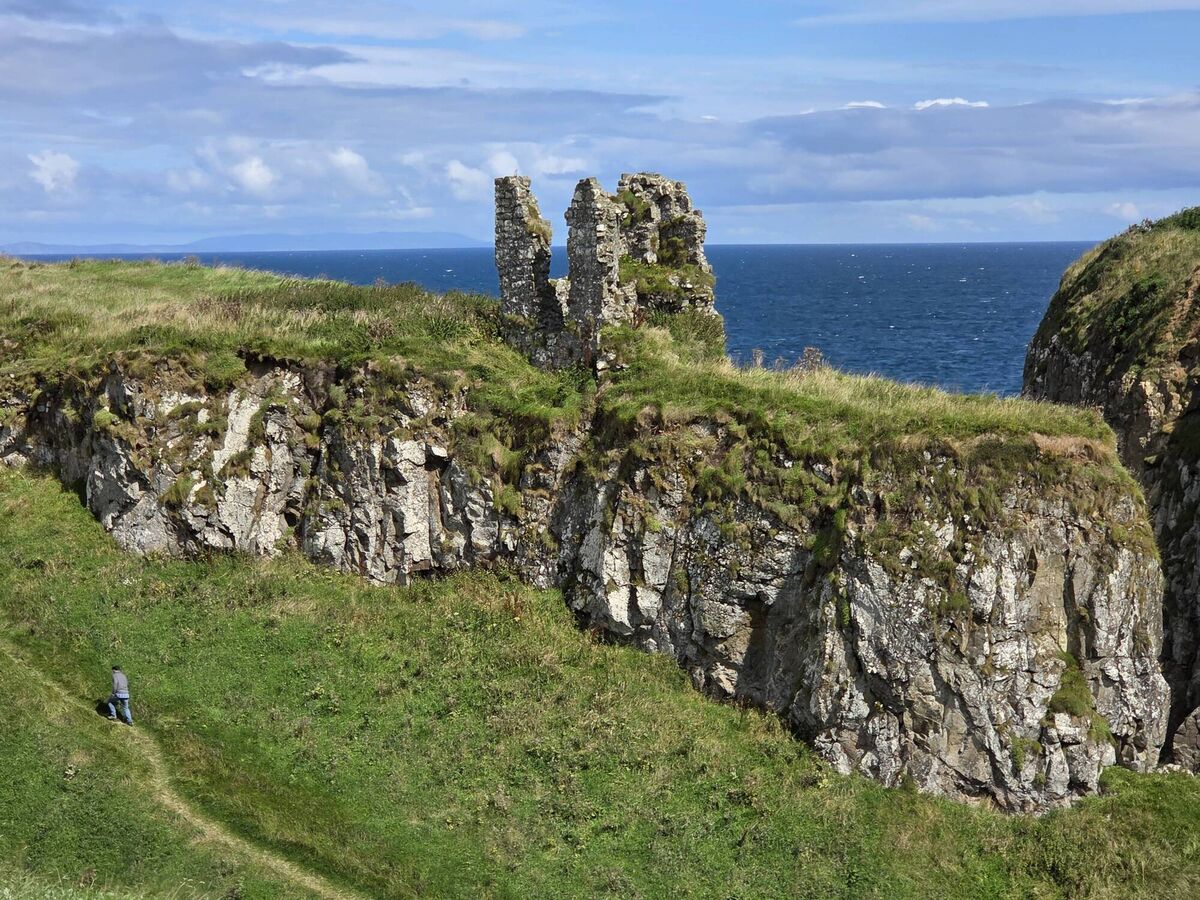
Dunseverick Castle on the Causeway Coast

Next day, I set off alone along the rocky coast, passing through a cave-like arch and several small pebble beaches until I came to the dramatic ruins of Dunseverick Castle on a steep stack. All that remain now are two walls of the gatehouse. St Patrick is recorded as having visited a stone fort on the site in the 5th century but the medieval castle which followed was destroyed by Cromwellian troops in the 1650s.

The next section of the Way, from Dunseverick to Giant’s Causeway, is the most beautiful of all.

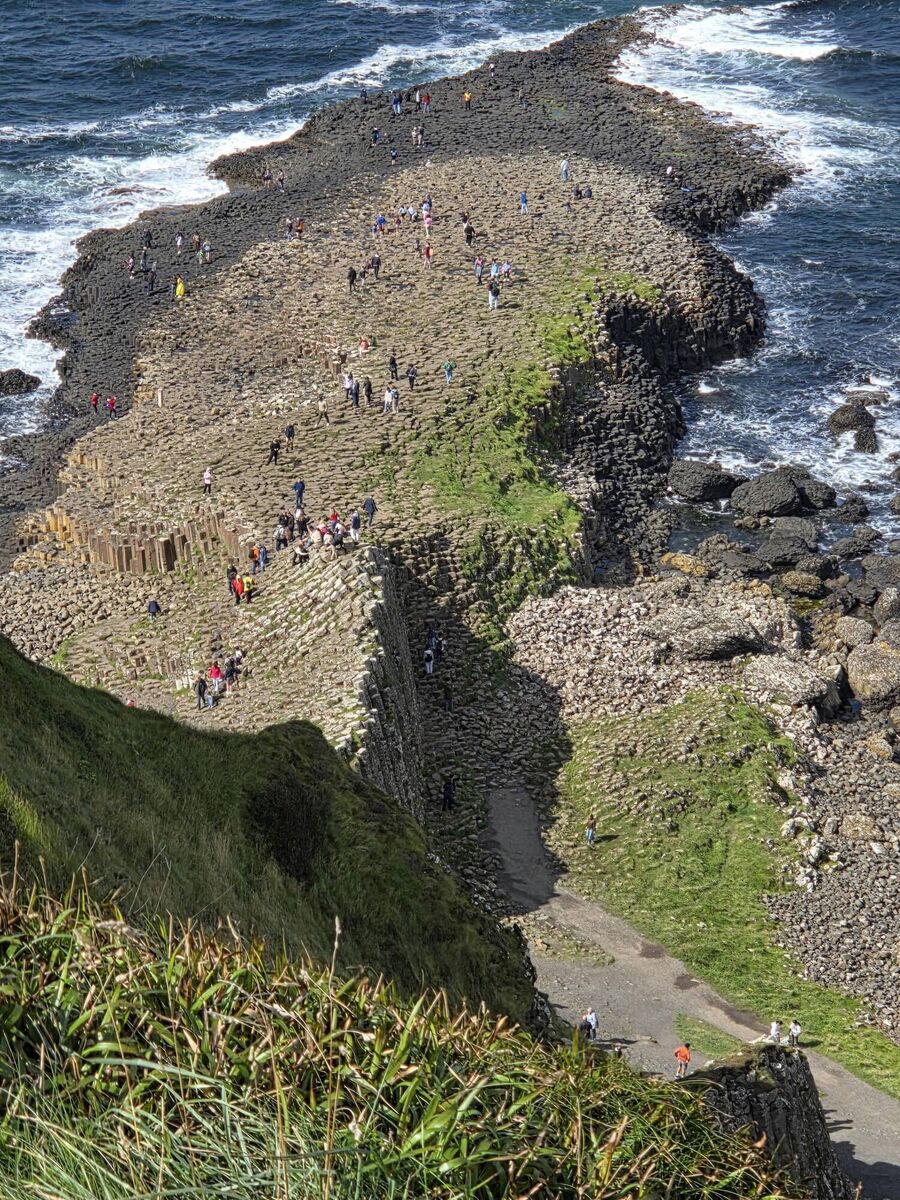
Giant's Causeway from the cliff top

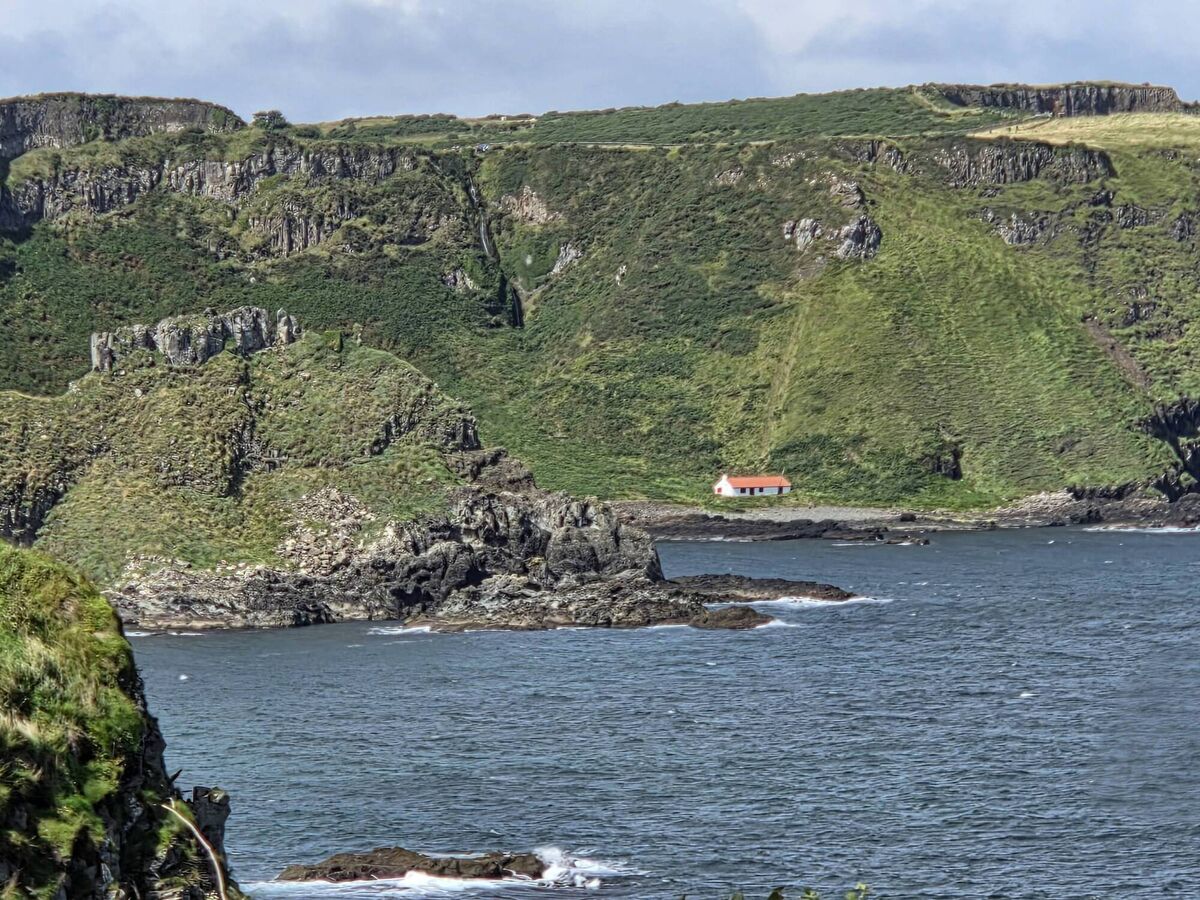
Walking over Benbane Head the views east and west are spectacular. In the distance you will spot the Fish House in Port Moon, a tiny cottage dwarfed by huge cliffs which was once used by fishermen but closed in 2002 due to dwindling fish stocks. It was given a new lease of life in 2011as a bothy for the North Coast Canoe Trail. As you descend into Giant’s Causeway, a Unesco World Heritage site, you will meet many more casual walkers checking out the 40,000 basalt stone columns created by a volcanic eruption nearly 60m years ago when cooling lava cracked into hexagonal shapes.

Port Moon fish house near Benbane Head

The historic Causeway Hotel, built in 1836, was the perfect spot to spend my second night. The 28 rooms are large, bright, and airy and I took full advantage of the cosy bar and restaurant. Next morning saw me push on to Portballintrae, but before entering the town I saw a sign for Lisanduff Earthworks, and a small detour took me to a mysterious pair of prehistoric concentric rings with high surrounding banks. Known locally as “the cups and saucers” due to their bowl-like shapes, they are believed to date back to the Bronze or Iron Age.

A few kilometres west is the magnificent Dunluce Castle, one of the most picturesque and romantic fortresses on this island, which appears to be about to fall into the sea. Built in the 16th and 17th centuries by the warring McQuillan and MacDonnell clans it is now in ruins but is still one of the highlights of the Causeway Coast.
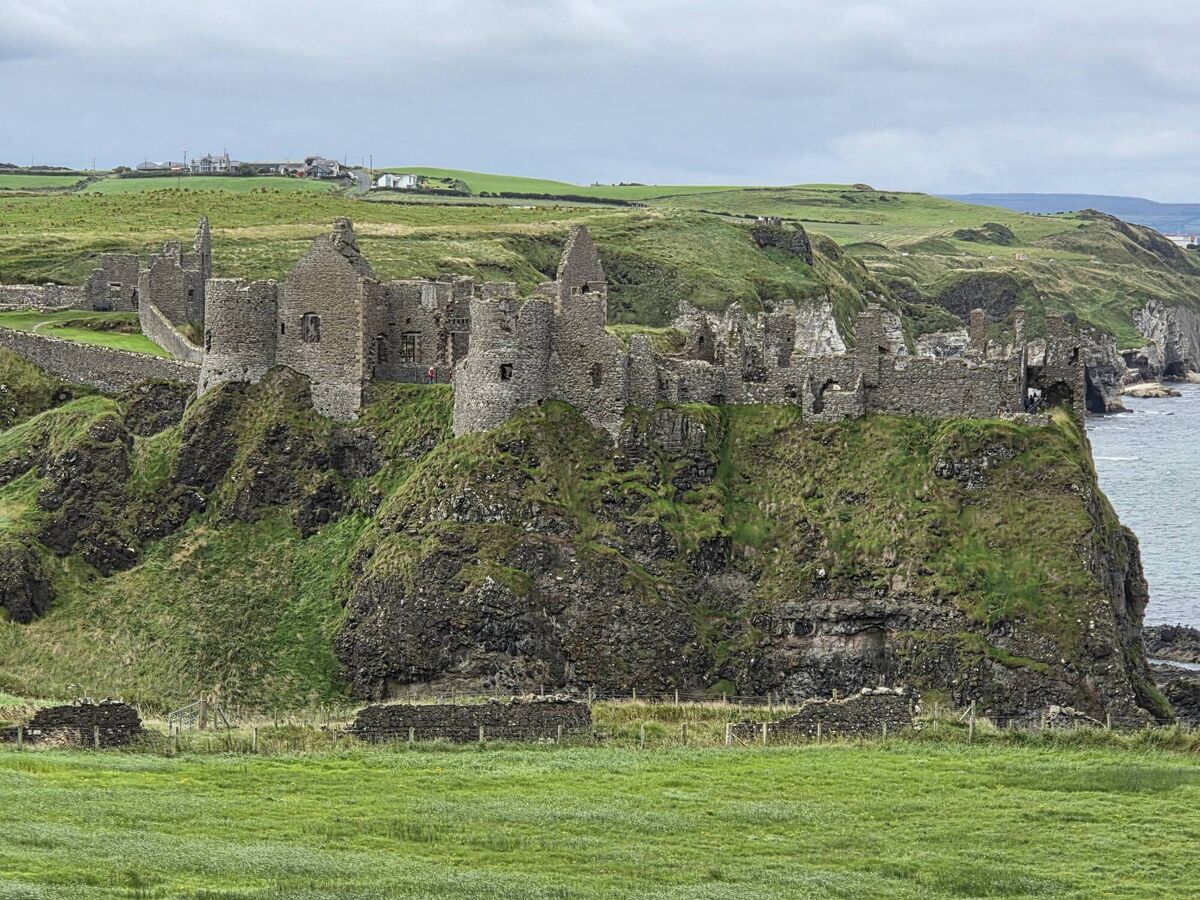
Duncluce Castle is one of Jim Gallagher's Causeway Coast highlights

From Dunluce, you have to walk on the pavement running alongside the busy A2 road. There is no room for a trail as the road often runs at the cliff edge but there are still stunning views of sea caves and arches.

At Magheracross, there are two steel viewing platforms next to a large car park with fabulous views of the headlands, eastwards towards Giant’s Causeway and westwards towards Portrush and Donegal.

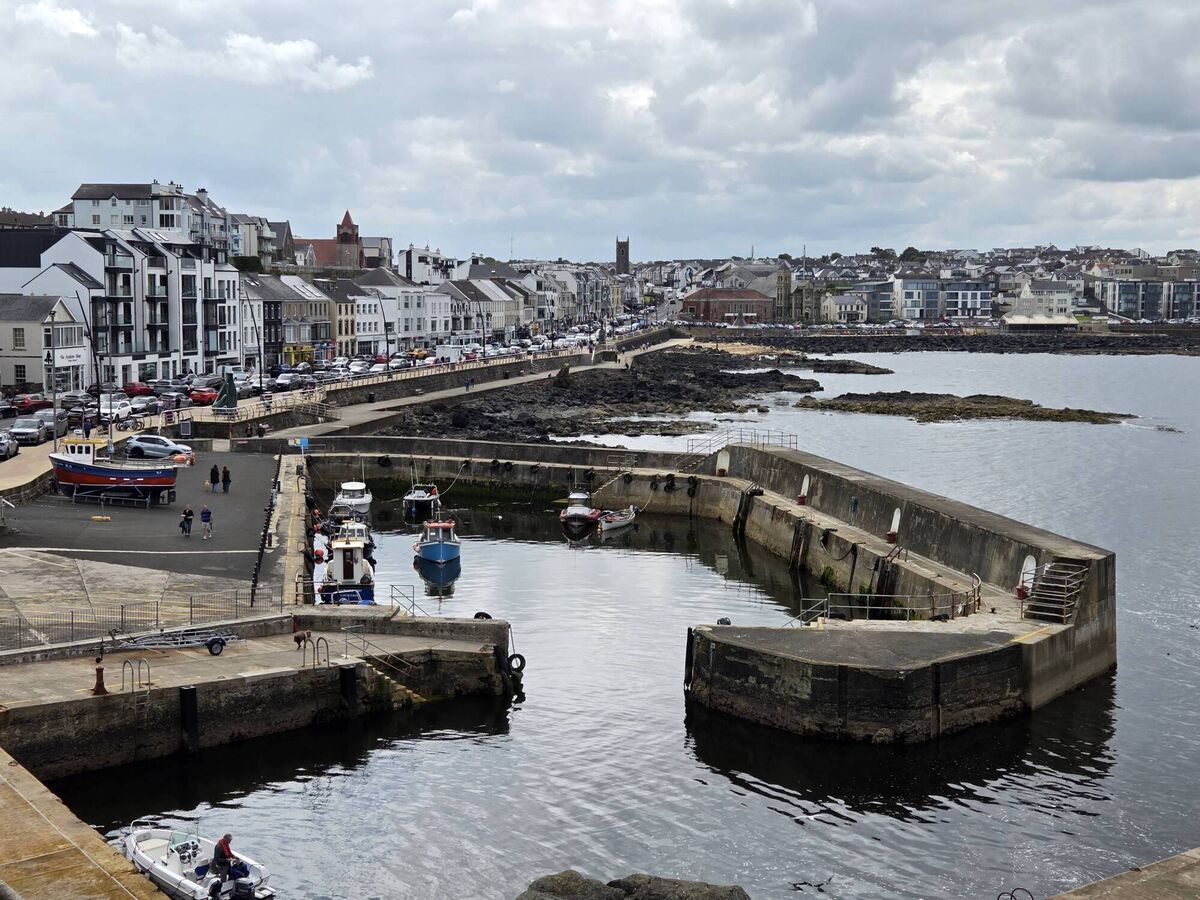
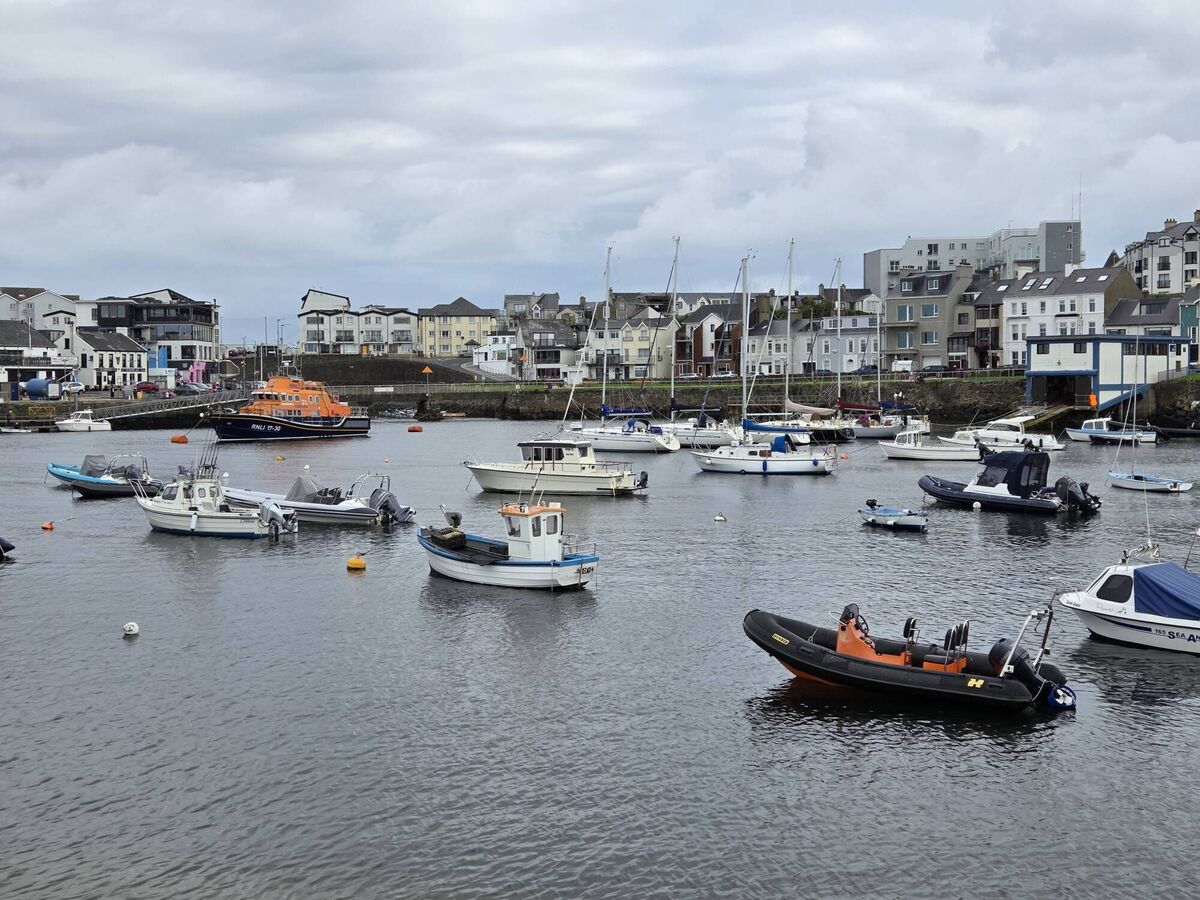
Portrush Harbour, Antrim, Northern Ireland

Soon after, a very welcome trail leaves the road and descends to the beach at White Rocks, named after the dramatic white limestone cliffs. A 2.5km stretch of continuous golden sand merges Curran Strand with Portrush’s East Strand right next to the Royal Portrush Golf Club which hosted The Open last year. This is a great place for a dip if you want a break from hiking and is very popular with surfers and bodyboarders.

Portrush proper starts at the end of East Strand. The busy seaside resort has two huge sandy beaches divided by a mile-long peninsula, Ramore Head, home to the old town, which you will ascend for great views of the spectacular coastline.

There is a multitude of cafes and restaurants in the town, many of them around the picturesque harbour, completed in 1835 and reinforced in 2019.

I stopped for my last night in the town’s three star Golflinks Hotel, which has 23 air-conditioned rooms, and dined in its White Pheasant Bar & Grill. It sits right opposite the Royal Portrush and I was able to leave my car here during my walking adventure.

My final morning, I walked along the pretty promenade on the West Strand towards Portstewart, nearly 6km away, on the last lap. The quaint resort has its own Victorian promenade and a beautiful two mile stretch of strand.

The seaside town of Portstewart

Before arriving in town, I happened upon a wonderful natural deep rock pool called the Herring Pond where a few people were swimming after descending a metal ladder. It’s used at low tide when it’s completely enclosed.

Portstewart is a pretty seaside town, with a small harbour and a wealth of places to eat.

At the far end is Tubber Patrick, or St Patrick’s Well, a sacred site in pagan times long before St Patrick arrived, after which it became a place of pilgrimage.

And that finally, was the end of my own pilgrimage. It was my second time walking the Causeway Coast Way but it won’t be my last.

More in this section

Lifestyle

Newsletter

Eat better, live well and stay inspired with the Irish Examiner’s food, health, entertainment, travel and lifestyle coverage. Delivered to your inbox every Friday morning.

Cookie Policy Privacy Policy Brand Safety FAQ Help Contact Us Terms and Conditions

© Examiner Echo Group Limited