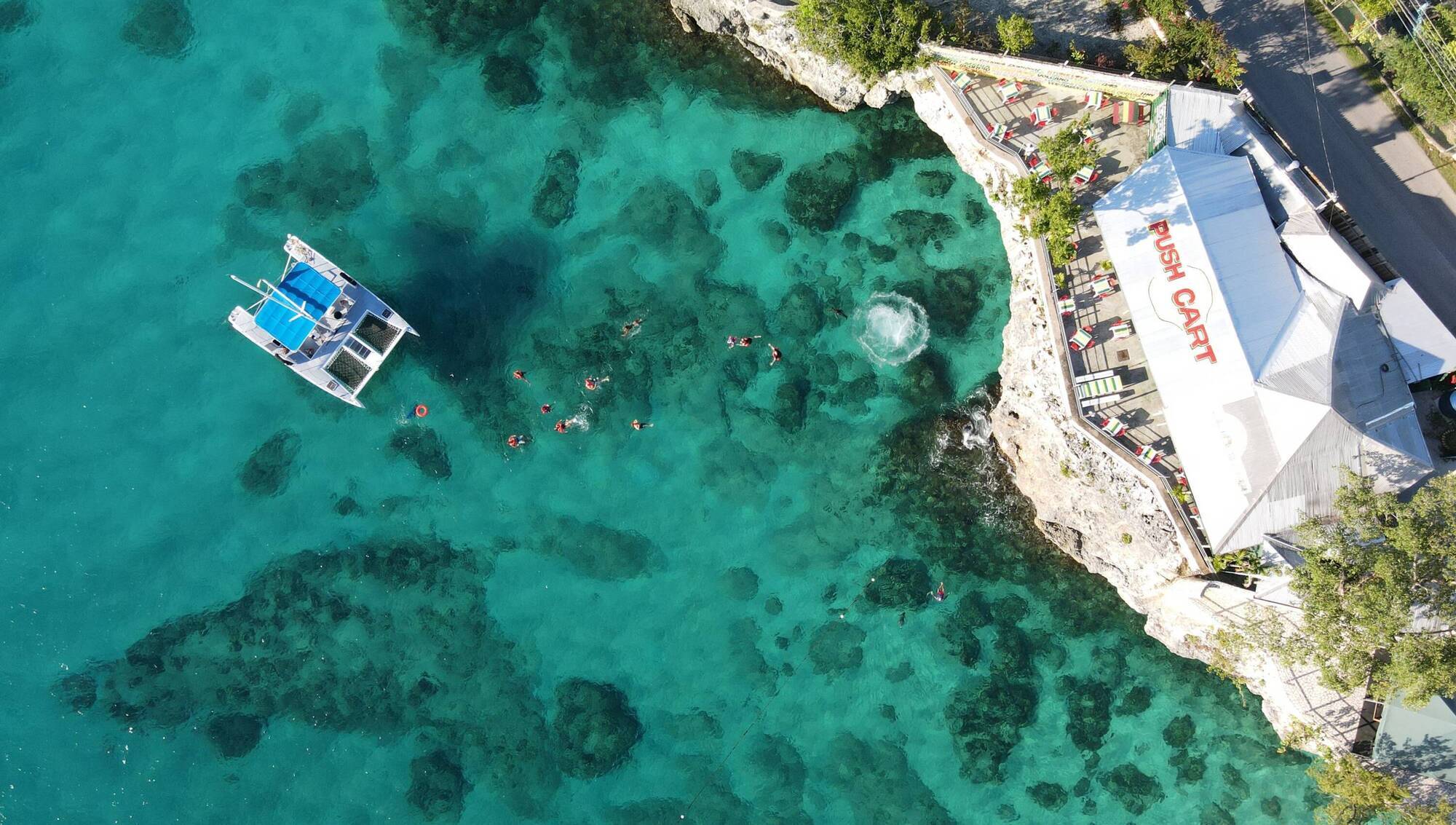
"Yeah man! It only jumps like that when something large is chasing it,” the attendant says, when I ask whether he just saw the massive stingray leaping clear of the Caribbean Sea beneath us, like an omen from below. What that ‘something large’ is I don’t want to know: I’m too busy staring down the 40-foot cliffs beneath, wondering why I would jump.
Why? Because Jamaica is electric.
Jump I do, landing with the splash of a humpback’s breach. No one notices, because it’s party time in Rick’s Café on the west end cliffs of Jamaica. The rum and beer, the cliff diving, DJs, and dancing are in full force with the sun setting off Mexico way, glistening across the Caribbean Sea, lowering the blind on another fabulous day on this little isle.
We’re staying a few minutes further north in Negril — the self-ordained Capital of Casual — where primarily US and Canadian tourists surface from an array of hotels down Seven Mile Beach (it is actually four, at a stretch).
The previous day had us out on a chartered yacht tour from Montego Bay, where we snorkelled and swam in translucent, 28-degree waters and among parrotfish and yellow-tailed snapper, before being served lunch and cocktails onboard. Then came the music and the moves were mighty.
You see, in Jamaica, there is always music: It’s the first of five elements of nature here. It’s not just the birthplace of reggae, but of ska, mento and rocksteady. And these Jamaican genres keep mushrooming about the world, seeding fields of hip-hop. Perhaps my greatest surprise about my riveting week here is how I arrived with little time for such music and left a devotee.

Music is to Jamaica what the coca leaf is to Andean cultures: A round-the-clock supplement to sustain daily travails. Pop in for a Sprite and you will be bopping before you can reach the fridge. Scarcely the size of counties Cork and Limerick combined, and with less than three million inhabitants, Jamaica must be this planet’s most petite cultural superpower. Take the most cultural, colourful threads of Africa and plait them in to a stunning, rugged, tropical dot in the Caribbean, then let it ferment — like the richest rum — and you’re only a quarter way there.
How is it that such a relaxed, slow-moving island produces the fastest sprinters in history? And how can a country spawn an Abrahamic religion and international social movement (Rastafari), when only 1% of its populace remain adherents? Well, because Jamaica is electric, and so the current flows.
Day three and we hit the road down to the gem of Treasure Beach. The two-hour drive hammers home the devastation — only in sections of the south coast — from Melissa, that wicked stepmother of hurricanes. Making landfall last October, Melissa was among the most powerful Atlantic hurricanes in history.
Vast acres of coastal woodland remain desiccated from the 300km-per-hour winds, leaving forests dead on their feet. “Like a plague of locusts hit it,” is how our driver, Anaif, put it. Today, sheet metal and 40 foot containers are still scattered among fields, like Lego after a child’s tantrum.

In some town centres, the red-brick, 19th-century buildings have been stripped down to their bloomers. But Jamaica doesn’t want your sympathy: It wants your custom.
Perched over a low, rocky shore, the boutique and delightfully bohemian Jake’s Place was, thankfully, spared by monstrous Melissa. As I step through exquisite, palm-dotted gardens, colourful, adobe-style villas are revealed, the sea audible on the rockface beneath.
In my villa, I size up the rustic chair and desk under the square window framing the crystal sheen of waters beyond. Is it any surprise Ian Fleming made Jamaica home long before he became an
author?
Here, I could write and read for ever. (I later learn that in 1952, Fleming, a keen ornithologist, pinched the name of his daring spymaster extraordinaire, James Bond, from the author of the soporific, 1936 book Birds of the West Indies. Fleming wanted a “really flat, quiet name” for his protagonist.)
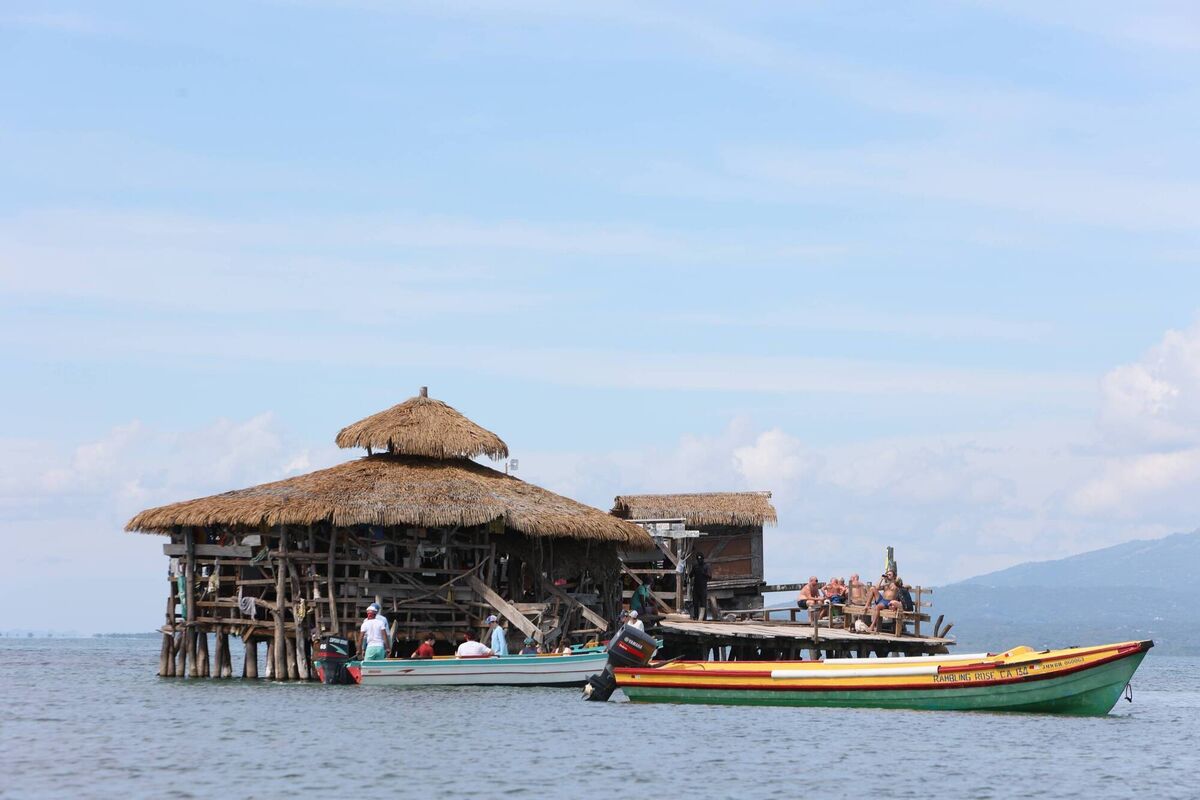
The morning after and we’re skimming over the waves from Calabash Bay, the sea spray deliciously fresh upon the skin as we speed along to the Pelican Bar.

It’s a stilted shack, and inside you’d expect to see Jack Spratt nursing a hangover, and it sits on a shallow reef where its namesakes gather. We swim and sip beneath the high sun, before departing for a remote, deserted shoreline of endless, blazing sands, only reachable by boat.
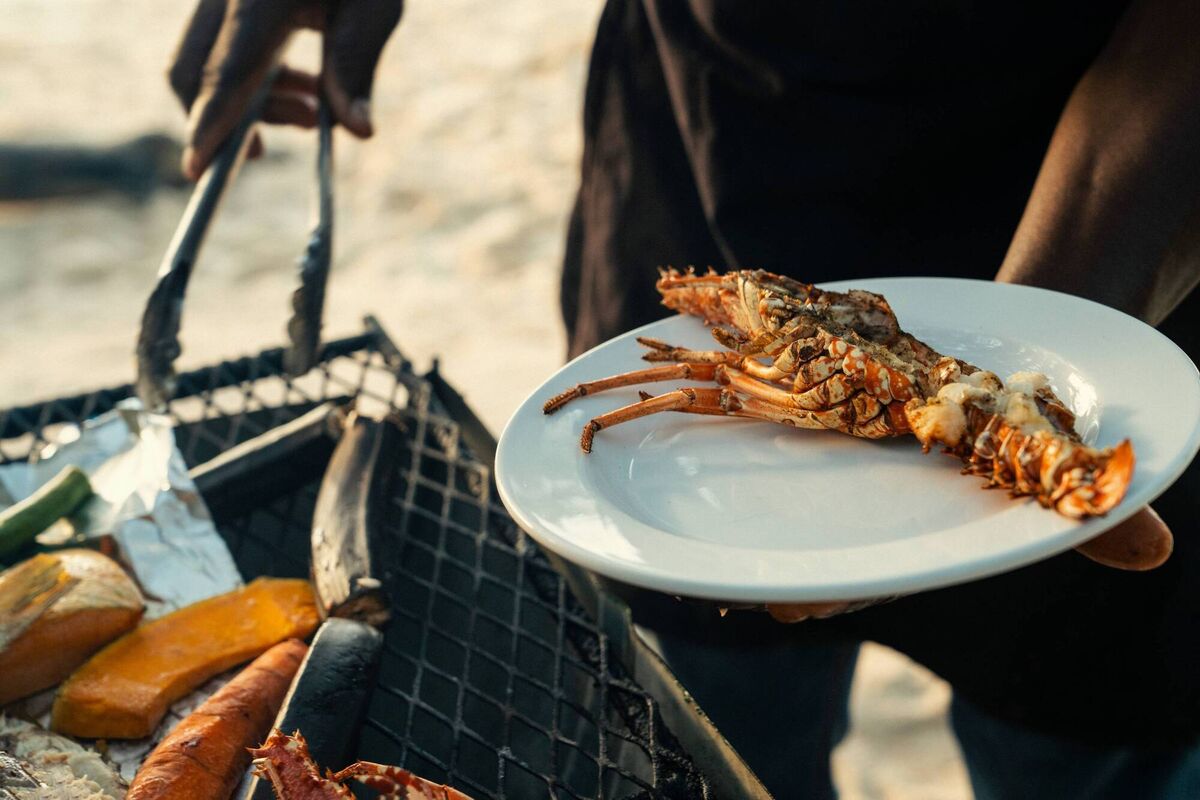
Here awaits the similarly austere, equally complete, Drifters Hideaway Bar & Grill. There, we relish freshly caught seafood, then lounge in breezy hammocks, drip drying between swims.
To the indigenous Taino people, all this was once Xaymaca: The ‘Land of Wood and Water.’ Alas, Columbus made landfall in 1494 and soon began the ethnic cleansing. The Brits invaded in 1655 and overstayed until 1962, replacing Spanish savagery with barbaric British
colonialism.
Yet by the late 1600s, the Irish here made up two-thirds of the white population, albeit mostly in the form of forced indentured labourers (and, no, the Cork accent didn’t forge its Jamaican counterpart).
Meanwhile, lucrative sugar cane plantations were established on the sweat, blood, and death of endless African slaves.
It’s believed that rum originated in the Caribbean in the 1600s, as an incidental byproduct of the sugar-refining process, when cooking up molasses to feed slaves. By the end of that century, it was being imported to Europe in higher regard than French brandy.
Thankfully, the Appleton Estate doesn’t shy away from its horrid slave legacy. Founded in 1749, it’s the oldest, continuously operating estate and rum distillery in Jamaica, and the tour is an eye-opener on the past and present profile of this deceptively delicious Jamaican staple.

A real Jamaican icon is served up later, when we reach Kingston and pull into 56 Hope Rd; the recording studio and off-and-on home of Bob Marley from 1973, and where he and his band mates were shot in 1976 in an assassination attempt.
“Bob is watching us,” an old pal back home loves to say; only that in 56 Hope Rd you sense he’s standing shoulder to shoulder with us all, and has been since dying, aged just 36, in 1981. We need this gifted Rasta’s appeal for peace, love, and unity more than ever, as the world unravels. We cap off our Kingston visit with a beautiful barrage of downtown street art, beating like a confident, colour-saturated drum to the city.
Near Ocho Rios, on the central north coast, roughly an hour north of Kingston, is the unforgettable Dunn’s River Falls. It’s a sequence of spectacular and climbable, smooth-boulder waterfalls and shallow pools — as lonesome John Crow vultures glide between treetops — cascading down 300m of tropical forest,
before releasing into a gilded beach so glorious it is downright ridiculous.
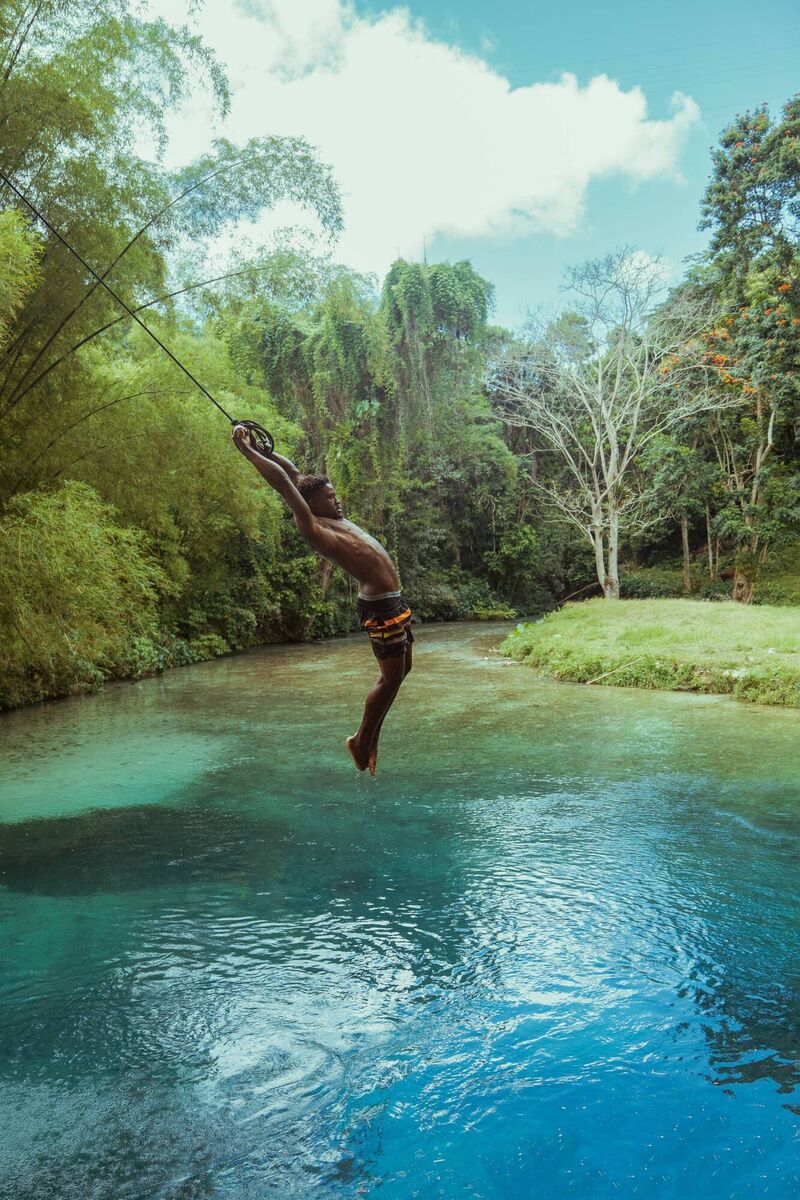
The world over, there is little as unifying as generations of everyday, local people coming together in clear, fresh water. Chilling and chatting and giggling in the mercifully cool waters, everyone is six years old again, and I struggle to leave such a place of peace and beauty.
Our final night and we’re partying on Murphy Hill. It’s sprinkled with smartly attired dignitaries from government departments. Following a sumptuous buffet, the DJ ramps up and all bets are off.
The chef spills out of the kitchen — replete with toque and white, double-breasted jacket — to lead the dancing.
Kitchen staff and ministerial secretaries, waiters, and tourists cease everything to bop in unison to his all-smiling, magical moves by the swimming pool.
“And, remember, we have no lifeguard here today,” the DJ offers. The current is live; this party is on.
Escape Notes
Return flights from Dublin to Jamaica start from €650, via direct flight from London. As Jamaicans drive on the left, consider a hire car. Alternatively, book a Knutsford Express, a luxury passenger bus offering safe, reliable, comfortable, and cost-effective, scheduled service.
When to visit: While it’s optimum to visit mid-December through to February, try to avoid June-November (i.e. the wet/hurricane season).
- Jamie was a guest of Visit Jamaica. Plan your trip at visitjamaica.com

Cancel anytime
CONNECT WITH US TODAY
Be the first to know the latest news and updates