A guide to Europe's top theme parks for people who have additional needs
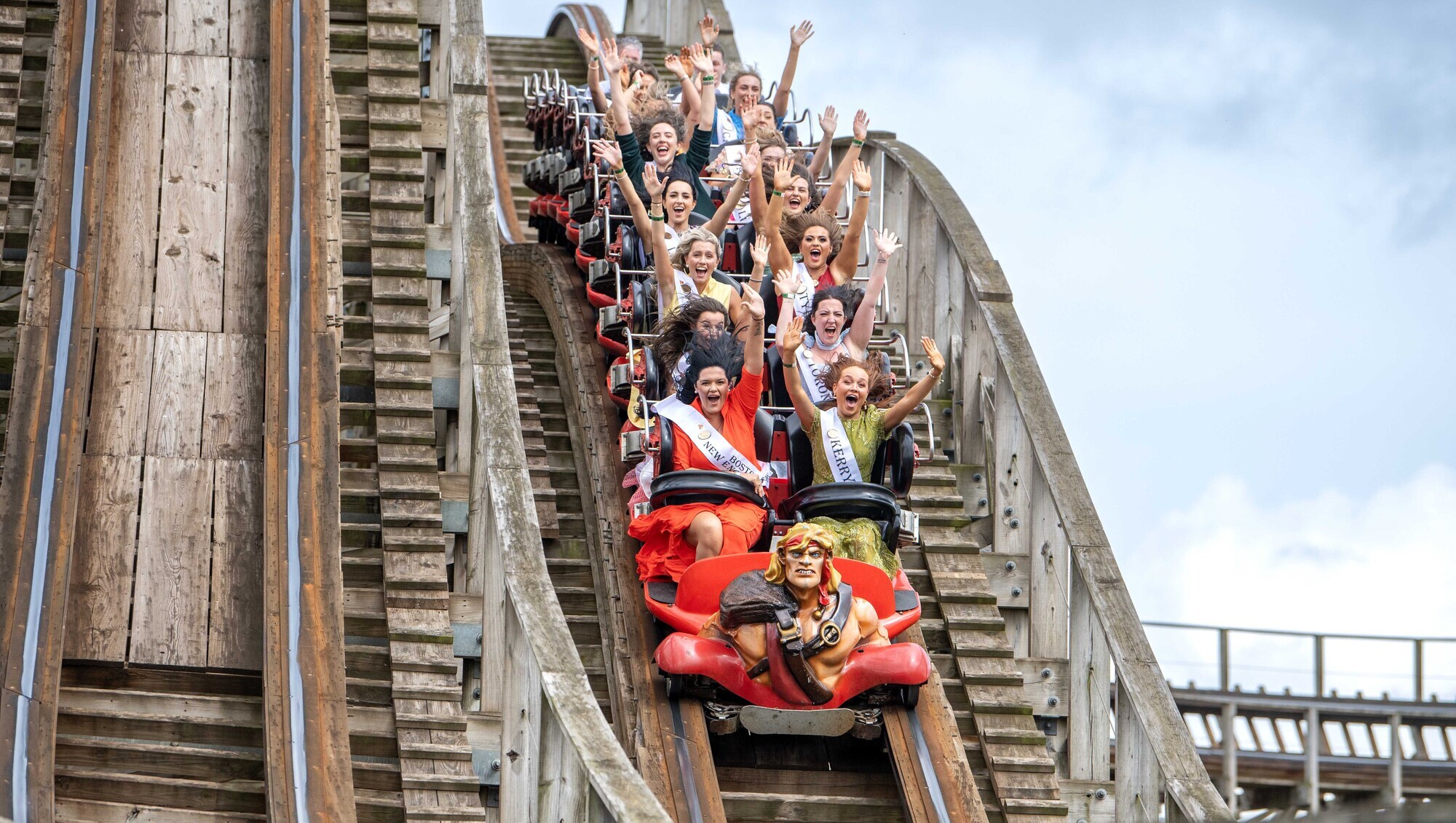
The Roses of Tralee ride the Cú Chulainn rollercoaster at Emerald Park last year. Picture: Domnick Walsh
We’ve compiled the accessibility policies of some of Ireland’s and Europe’s most popular theme parks to give you a heads-up on what you can expect at Emerald Park, Efteling, Port Aventura, and Disneyland Paris this summer.
Close to Barcelona and with direct flights, Salou, on Spain’s Costa Daurada, is one of the most popular summer destinations for Irish holidaymakers.
Visiting families will often plan a day trip to the nearby PortAventura World. One of Europe’s top theme park resorts and Spain’s largest, it’s renowned for record-breaking rollercoasters, like Shambhala (the continent’s tallest hypercoaster), Dragon Dhan, and the adjoining Ferrari Land.
“At PortAventura World,” the website states, “we are firmly committed to providing an accessible, safe, and comfortable experience for all our visitors.”
That experience matches the promise. At entry, guests queue at the guest service office for visitors with special needs, located just after the ticket booths. A medical certificate from a doctor, or identity card from an organisation like AsIAm, is required for a child or adult on the autism spectrum. A wristband will be provided and a maximum of four companions are allowed, but one must be an adult.
The wristband allows the holders to enter each ride via the express option, meaning queues will be at a minimum. There are also discounted rates.
Last year, the park introduced Julia — Sesame Street’s first character with autism — to the family-friendly SésamoAventura area. She appears in a special performance in SésamoAventura to “normalise, through entertainment, different ways of communicating, feeling, and interacting with the world”.
PortAventura World also introduced accessible signage with pictograms to enhance the experience for visitors with autism and promote greater visibility of neurodiversity.
There are also hearing loops for the deaf and adapted virtual reality experiences in the ride Uncharted: The Enigma Of Penitence.
www.portaventuraworld.com/en/about-us/park-services
Disneyland Paris is split into two parks: Disneyland Park (with its five ‘lands’, including Frontierland and Discoveryland); and Disneyland Adventure World, which highlights Disney movie franchises, with its Marvel Avengers Campus and Worlds of Pixar.
There are two passes for people with additional needs: The priority card for guests with recognised disabilities (must have official documentation); and the easy access card for people with long-term chronic diseases (the list on the Disneyland Paris website is comprehensive). These cards will give you faster, but not immediate, access to attractions.
The famed theme park takes a different approach to accessibility than others. Its MagicALL policy focuses on guests’ autonomy “to determine which attractions they can experience”. So, it has expanded access to attractions for guests with disabilities.
The resort includes audio descriptions for various experiences, induction loops for guests with hearing impairments, and tactile park maps for visually impaired people. Priority card holders can access designated areas for shows and parades.
www.disneylandparis.com/en-ie/guest-services/accessibility-at-disneylandparis
It’s Ireland’s only theme park and has more than 45 attractions, including the wooden rollercoaster, Cú Chulainn, and the suspended Fianna Force.
There’s also a section with rides for younger visitors, including the Ladybird Loop rollercoaster.
To get this discount, they will need to present supporting documents, such as photo ID, from an additional needs organisation, a letter from a GP with your name on it, or a JAM card or similar. A designated carer can gain free entry to the park, provided they supply supporting documentation.
The Queue Assist Pass (QAP) is available to a person with additional needs who can’t wait in line. You’ll need to show supporting documentation that “clearly states the guest’s inability to queue”. The pass covers an eligible additional needs guest, a named companion or carer, and up to two additional guests, and it means holders can expect a reduced wait time on up to 10 rides during a park visit.
www.emeraldpark.ie/plan-your-visit/park-accessibility/
You can apply for an Efteling facility card if you have a “visible or invisible” disability or medical condition that prevents you from waiting in regular queues.
To do that, you need to book your entry ticket first and then apply for the facility card, which you can do online by filling in a questionnaire, or in person when you arrive at the park.
A facility card does not enable a person to skip the line. It means they can access alternative, often quieter queuing areas or special attraction entrances.
Some reviews of Efteling have been critical of this approach, saying the waiting times in these alternative queues can often be as long as the regular queue.
If you are unable to visit an attraction independently, the park says you must have at least one companion with you who is 16 years of age or older.
If you are using the facility card, you can bring a maximum of three people with you to the alternative queues, although this can vary at certain rides.
Earlier this year, Efteling introduced subtitles to “most of the narrated stories in the park” via the Efteling app. This, it says, “enables visitors who are deaf or hard of hearing to follow the stories”. It also has plans to introduce audio descriptions at some of its attractions.
www.efteling.com/en/park/information/disabled-visitors/plan-your-visit
John Fulham, who is a wheelchair user and also a member of the advocacy team at the Irish Wheelchair Association, has just returned from a family holiday in Disneyland Paris. He says he had “a great time” at the theme park, but he had done his research before going and that made all the difference.
For families looking at a theme park holiday, he says planning ahead is essential.
He cautions people to familiarise themselves with each ride’s safety requirements.
Some wheelchair users, for example those who are quadriplegic, may only be able to access a small number of rides.
“Find out what it means in reality. For anybody who’s a major user, like me, don’t take for granted that you’ll be able to use every ride,” Fulham says.
“A holiday like this is a financial investment, and the last thing you want to do is book it before really looking in to it and understanding what you can and can’t do.”
CONNECT WITH US TODAY



Be the first to know the latest news and updates