A feast for the senses in southern Italy
Southern Italy combines sweeping panoramic views and coastal drives with picturesque towns and elegant islands, writes
Italy strikes at the senses, enticing visitors with its sweet smells and tastes, dulling eyes and ears with its shimmering sunny seas and soothing sounds from evening breezes.
Sorrento and its surrounding environs are postcard perfect and in many ways sum up the best of the Mezzogiorno, Italy’s southern regions.
Dramatic cliff drives along the Mediterranean, a gripping history and remains of Europe’s most catastrophic volcanic eruption, lemon scents from the streetside trees and the decadence of Capri island all await.
There are a myriad of day trips to choose from, all depending on how much time you have and where you base yourself. Indeed, the latter is a key point as traffic along the coastline is restricted and public buses are infrequent after certain hours.
More on ways to move around the coast later.
The first and most important thing is there are daily flights from Ireland to Naples, the southern city that looks onto the Bay of Naples and the Sorrentine Peninsula.
With an average flying time of three hours and 20 minutes, the first thing you will notice after landing and journeying south is the looming magnificence of Mount Vesuvius. Its towering peak looms over the red and orange terracotta roofs of the densely populated coastal valley.
The only active volcano in mainland Europe, it last erupted in 1944 a few months after Allied troops landed. But this hasn’t stopped emergency evacuation preparations.
Nonetheless, you can still make an ascent to the top.
The volcano is famed for its eruption in 79AD, which covered the nearby towns of Pompeii and Herculaneum in ash and molten lava, killing thousands. Today though, local Neapolitans and residents in the gulf regard the mountain and its terrain as a creator of life, not death.
Nutrients from the lava rock help grow some of the richest fruit and vegetables in Italy. Shops and markets along the peninsula swear their grapes, lemons, artichokes and olives are some the tastiest in Italy.
Furthermore, the fertile soils help feed the tapestry of colourful and plentiful flowers lining the coastal hamlets. This makes spring or early summer the most rewarding time to visit the peninsula, with more moderate temperatures then too.
I was a guest with the Travel Department, which provided well-organised tours, airport transfer, accommodation and whose guides were obliging, informative and even entertaining.
This of course makes holidaying hassle-free, when the daily bus transported us in a group to sites, towns and ticketing for everything from boats to gardens is taken care of so easily.
What is noticeable is that the Travel Department, established 20 years ago, has loyal clients, many who happily come back to join its tailored trips year after year.
There are a few musts for any travel itinerary to the region. A priority is Pompeii and its ruins, where everything from the local forum to brothels, an amphitheatre and old bakeries have been excavated.
Be warned though, there is little cover so best to avoid here during the midday heat. The entrance to the preserved old town of Pompeii is 25 minutes drive south of Naples or almost an hour north of Sorrento.
It is further south of the ruins though where you discover why this riviera and its cartellina postcard views attract visitors from all over the world. The panorama is breathtaking along the Sorrento Peninsula.
I was based in the sleepy village of Seiano, close the better serviced town of Vico Equinse.
Even this less traversed spot delights with views back over the bay towards Vesuvius.
There is a rich collection of restaurants in the latter to chose from too, not to mention its own quiet beach below the cliffs where you can while away a day or two and dine well on its delicious seafood, admiring moored yachts.
A common choice as a base is Sorrento, a half hour drive away. Best known for Piazza Tasso, a cafe-lined square, Sorrento offers lots of services, has many a windy back street, shops and trattoria to keep you occupied for several evenings after a day’s adventure.
The downside is it is slightly touristy. Nonetheless, all the authenticity is still there from the multiple tastings of biscotti and limoncello among the narrow alleys to the swimming area at the back of the town and the deep gorges below the streets where old mill ruins remain.

Above all, Sorrento gives the traveller easy access to the train system that serves towns north all the way to Naples or indeed the public SITA bus system that covers the harder-to-reach villages south.
And by far the best way to experience the coast is by bus. You can relax and enjoy the views (sit on the right-hand side), while not experiencing the nail-biting twists and turns behind a wheel.
Corner after corner throws up sweeping views of sea-swept cliffs, with luxurious villas staring out to the blue expanse, with little sandy inlets below for swimming and all watched by boats cruising past.
It all feels like a fairytale scene, made immortal by the Roman poet Virgil. And this doesn’t stop.
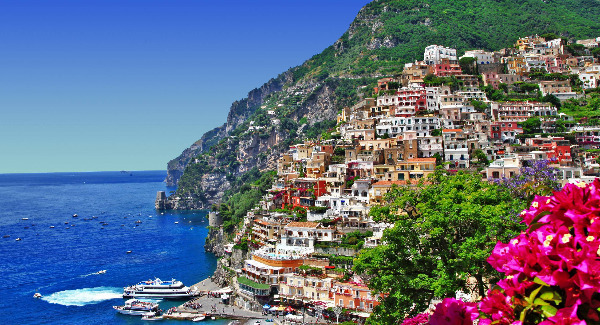
On the southern side of the peninsula is the remarkable vertical town of Positano. This is on the Amalfi coast, the next stretch on the other side of Sorrento peninsula.
The enchanting village has to be one of the most beautiful in the world, added to with its pebble beach, romantic alleyways with boutique shops and galleries and small homes stretching up the cliffside, all which light up like a layered cake with candles at night if you are lucky to stay there until then.
While it is a little more costly than other parts, the few euro more is worth it for pasta or fish, glasses of local wine or indeed fascinating art. Be prepared for a walk down into the town from the roads above though or vice versa when leaving.
Further up the coast lies the seaside town of Amalfi, an enticing setting with its fascinating yellow and green topped Duomo. The cathedral also contains many relics and its elaborate crypt is a must-see.
Inland, the afternoon breezes in the town of Ravello offer relief from the midday heat. The cliffside terraced gardens of the Moorish-style Villa Rufolo are the main attraction here, offering panoramic views down to the coast.

By far the most visited location along this coastline is the picturesque island of Capri, where movie stars, politicians and royalty have all stayed over the years.
A boat ride around its grand rocky shores allows you peak at former homes of Jackie Kennedy, actress Sophia Loren while the Swedish Queen Victoria used to stay here as well.
The highlight on the luxurious (and costly) island is by far the views and gardens of Villa San Michele, a mini-paradise and horticulture den of surprises.
All in all, these towns and the island offer keen travellers several days of adventure.
While the beaches are not comparable to soft sands of the likes of Sardinia, the little coves and pebble banks offer some relief when the sun is overpowering for an Irish tourist.
Above all, the colour, food and majestic views of the Sorrento and Amalfi coasts will leave visitors with memories for years to come of this part of the Mezzogiorno.
GETTING THERE
Aer Lingus and British Airways run daily flights between Dublin and Naples, while Ryanair has several every week.
There are no direct flights from Cork, but several quick changeover options.
Flights are modest in cost if booked in advance, but obviously shoot up during holiday periods.
While renting a car can often be less than €20 a day, travelling by bus and train in the region is the best option with good services between towns at little cost.
A ticket between Naples and Sorrento costs €3.60. An unlimited ticket for a day’s journey between Sorrento and Salerno is €10.
Just give yourself time, as traffic can be plentiful.
Spring is the perfect time of year. Flowers are blooming, fruit stalls are full and the season is calmer while the afternoon sunshine is bearable.
August is peak season with busloads of tourists and temperatures regularly passing 30C.
Autumn though brings back the cooler weather as tourist numbers ease off too.
The island of Capri and the towns of Sorrento, Positano and the ruins of Pompeii are a must-see.
These alone could give any traveller five to seven days enjoyable adventure.
Be advised though that Sundays are still considered almost sacred in Italy and most shops or premises close.
Buses and trains can get packed, even in quieter seasons. So be prepared to wait.
The coastal region can also be subject to random thunder storms, bringing quick showers.
The region is not famed for its beaches but the ones there are still special.


CONNECT WITH US TODAY



Be the first to know the latest news and updates