Why inter-railing across Europe is a richly rewarding journey
PLANE, train or automobile? It’s a tough question: what is the best way to explore Europe?
Well, unless your aim is to simply cross cities off a list, you can discount planes.
And, unless you want to take your chances on the autobahn, you can discount the car too. That leaves us with the train.
Long before a gap year in Thailand became the norm for students, interrailing was firmly enshrined as the best manner to mark an end to college life.
As such, like many students in their early 20s, I opted to tackle the continent by rail, as thousands more had done before me.
The journey was mapped out: Amsterdam, Berlin, Dresden, Prague, Bratislava, Vienna, Ljubljana, Zagreb, Split, Dubrovnik, Milan, and Nice.
We allowed ourselves only one cheat — flying from the southern tip of Croatia to Milan. One night on the floor of a Croatian train next to a toilet is more than enough, thank you very much.

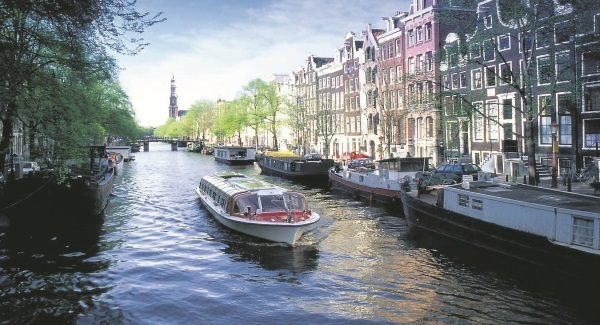
First stop, Amsterdam — where the meandering canals offer a natural starting point for any Irish person tackling the wider world.
Less than an hour from Cork Airport, it is a good one to tick off the bucket list for the seasoned traveller and the cautious rambler alike.
And, for the latter, it eases you into the rough and tumble of life on the road (or rails), especially since most Dutch people have better English than you or I, making it nearly impossible to get lost.
From there, the hedonism and history of Berlin is simply unmissable.
The overnight train from the Netherlands is — in a word — hell, but that first taste of bratwurst and German beer after nine hours crammed into a single seat is unforgettable.
As cities go, Berlin tops most others.
The most unremarkable streets burst to life when you realise that a wall is, in fact, the wall.
Graffiti artists tell tales of liberation, dotted between the haunts of Messrs Bowie, Pop, and Reed.
From bullet-holed government buildings to unremarkable carparks, every inch of this city has a story to tell. There simply is never enough time to soak it all in.
But, such is the joy of a whirlwind tour through the continent.
In time-honoured tradition, most cities keep our attention for just a day or two.
The German capital was the exception — its sprawling streets held our gaze for five days and could have kept us 500 more, I expect.

Naturally, 48 hours is not enough to so much as scratch the surface in most cities, yet the iconic haunts of Europe are more than capable of leaving an impression.
You are compelled to draw a conclusion in a brief glimpse — a lifetime isn’t enough to take all this in, so a few days will have to do.
Prague? A majestic, fairytale city.
Bratislava? Soaking wet. But, our hostel was next to, of all things, a Tesco. And Slovakian beer is both cheap and strong.
And so it went. City after city passing by in a muddied blur — the only drawback of the sudden and continuous bombardment of different cultures which one can only get from interrailing.
The overall highlights, however, are crystal clear.
The landmarks — from the bone chapel ruins at Kutna Hora near Prague to the Roman ruins of the Croatian coast — are damn near unforgettable, as are the people.
There are few more memorable experiences than arguing with German taxi drivers at 4am — “What do you mean you don’t know where the Brandenburg Gate is? We’re in Berlin!” — or struggling to explain that you need fresh towels to an octogenarian hostel owner in Nice without a shred of a common language.
That may be the crux of the experience but, admittedly, it’s not a luxurious way to see the world.
In fact, it’s often not very dignified at all, but you certainly learn some things about yourself when you’re waist-deep in the Mediterranean after a €2 bottle of wine. Mainly, of course, just how strong a swimmer you are.
But there is a certain romance to bouncing around Europe on a train — almost in a nod to a bygone era.
You don’t get many other opportunities to make a thin wooden slab your bed for the night, or to peer curiously out the door of a cabin as hooded men climb aboard a train that has stopped in the Slovakian countryside.
Another downside appears to be that roughing it around Europe isn’t what it used to be.
Currency, for one, makes it pretty easy to keep on top of things — though nothing quite punches you in the stomach like realising that you underestimated an exchange rate in Croatia.
And, of course, mobile phone signal, maps, the works, it can almost take the fun out of it all.
Having said that, nothing quite tops the feeling of thumbing through a worn copy of Lonely Planet’s ‘Europe on a Shoestring’, especially when it’s followed by an ‘Uh, lads, we’re going the wrong way...’
It is easy to see why a whistle-stop tour of Europe became a must-do for many over the years — it is a richly rewarding journey.
For anyone thinking about railing through Europe, keep in mind it may not necessarily be cheaper to buy the InterRail pass, especially if you are over 26.
Many countries require additional payments on top of the pass to use trains, and some limit the types of services you can access.
In addition, some countries offer relatively cheap rail tickets if booked online in advance. So, if you are limiting the number of journeys you intend on taking, it would be wise to explore alternative booking options.
If you do opt for the 30 country passes, it may be easier but monthly passes come at an eye-watering €479 for students and €626 for those aged 26 and up.