Capital for culture at the heart of Slovenia
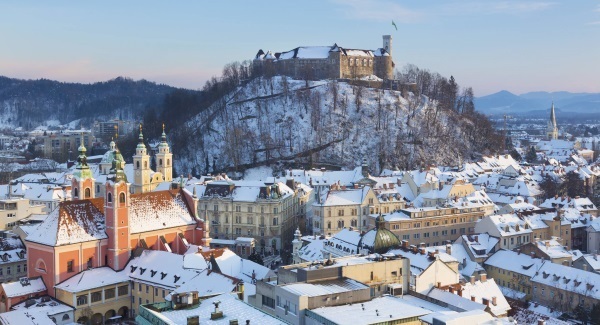
VISITING Ljubljana, Slovenia’s 1,000-year-old capital, feels like stepping into an ancient fable. Despite decades under communist rule, there’s magic to the intimate city: It’s the sort of place where you can stroll past jelly-bean-coloured Baroque churches, over a bridge flanked by dragons — Ljubljana’s mascot — onto winding cobblestone lanes filled with local farmers selling peonies the size of lap dogs and creaky inns serving bear meat.
But in the past few years, an influx of chefs, artists and musicians has reinvigorated the once-sleepy city.
The attractions are a relaxed pace, Art Nouveau architecture, rich layers of history and cuisine (Roman, Austro-Hungarian, French, Mediterranean), an unapologetic focus on good living and a fiercely held creative edge.
Twenty-five years after independence from Yugoslavia, you can find that radical spirit in places like Metelkova Mesto, an arts and music complex in a former military barracks, or in an abandoned power station repurposed as a weekend rave venue.
Jelisaveta Duricic, an embroidery artist associated with the popular Universal Studio of Street Arts, still likens the city to “a fairy tale” — albeit now one illustrated by Banksy.

STAY
was built in 1932 as a private residence, this statuesque Art Deco building had many lives — as a ballet school, a magazine headquarters, a government office — before its 2011 reincarnation as a hotel. The minimalism of the exterior continues in the airy guest rooms, with their glass walls and sculptural lamps made of silkworm cocoons.
is located down a narrow lane in the pedestrian-only heart of Old Town, four conjoined stone townhouses hide daring Slav-Mod interiors: exposed-concrete corridors, suites with mustard-yellow Moroso chairs and quilted, periwinkle walls. The open-air bar and infinity pool offer great views of the city’s iconic bridges.
EAT
is the cozy brainchild of two self-taught chefs and offers a revolving tasting menu: whole sprigs of garlic on a bed of roast chicken and cheese gnudi one night, roasted cauliflower topped with truffle and prunes the next. The décor — silver farmhouse chairs, black-beamed ceiling, mismatched floral china — is as refined yet unpretentious as the food.
serves small plates in a sleek space (white walls, Warhol prints, Tolix chairs), TaBar has a cult following who spill out into its candlelit courtyard. Dishes include lardo with beetroot and hazelnuts, and cheeses from local farms. The wine selection, simplistically divided into “red” and “white” is stellar.
is a closet-size shop offering gelatos which tend toward the unorthodox: truffles, tarragon, persimmon and salt from Slovenia’s legendary Piran salt pans. The best reconfigure homegrown specialties, such as a sorbet made from red Terrano wine, or a creamy potica gelato based on walnut cake.
SEE
At her sparse, spaceship-like boutique, , Jelena Pirkmajer stocks her own feminine line of high-necked lace shirts and body-hugging knit dresses, as well as sculptural accessories from emerging local designers.
is an earthy home and accessories shop specialising in Slovene and Scandinavian labels. It is a trove of everything eco-friendly and artisanal, from flowerpots to brooches made from textile scraps.
is like a permanently installed Burning Man, this sculpture-filled complex has emerged as a hotbed of experimentation. The on-site galleries, studios and clubs host daily events that might include a feminist collective’s DIY vegan dinner, a dubstep concert or a screening of shorts by regional filmmakers.
overlooks the main artery of Old Town, and depending on the time of day it is a cafe, gallery, bar or concert venue. Regardless of the hour, its pillow-bedecked window seats — lit by bare bulbs dangling from a spidery chandelier — are filled with a hipster crowd nursing coffee, microbrews or cocktails made with homemade elderflower syrup.
Marko Drpic scoured Slovenia collecting vintage printing equipment — whatever wasn’t destroyed during the socialist regime — to create the country’s sole letterpress studio — . Located in a stone-walled former stable, the store, gallery and workshop sells sketchbooks, greeting cards and notebooks stamped with botanical drawings lifted from turn-of-the-century texts.

CONNECT WITH US TODAY



Be the first to know the latest news and updates