Aged 42, Copenhagen's Freetown still has a cause
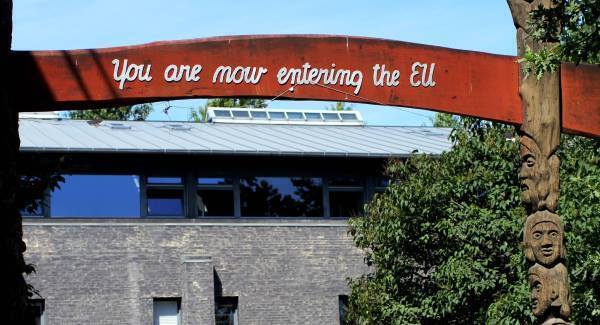
Not the usual age for rebellion, but in some ways this is how the people of Christiania and most Danes would describe the freetown to outsiders. They would tell you, that you could compare this piece of green in the midst of Copenhagen to a state of falling in love: Everything seems possible and yet unpredictable.
Christiania could also be described as the Danish outcome of the rebellious 1960s. A group of hippies decided in 1971 to squat the abandoned military barracks in the midst of the city. They declared it a free zone with room for everyone who didn’t fit into Danish society.
Since then, Christiania has been a home for about 800 restless, anarchistic bohemians, and a safe haven for the addicted, the homosexuals, the weak, the paranoid, the artists, the entrepreneurs, and their kids. From the beginning, the manifest of Christiania stipulated the freetown was to protect everyone seeking an alternative lifestyle from the official Denmark. Including individual right to use conscience-expanding drugs.
Christiania made it a virtue to keep mild drugs (such as hash, marijuana, and skunk) legal to possess, trade, and consume through the open hash market. It’s been a decision with severe consequences. The hash market has been a constant source of trouble since the first pushers put their merchandise up for sale. Because hash and its different varieties are illegal in Denmark, the free sale and consumption has caused an ongoing battle with the police throughout the years.
The hash market also caused internal turmoil in Christiania, because of its attraction to hardcore criminals and, in Christiania’s early days, hardcore drug abusers. But in general, the people in Christiania are proud of their mild drug market. It symbolises freedom and their choice of alternative living to them, and most of them are ready to fight for this right.
Various governments have tried to shut the freetown down; some with violence, others with more clever political tactics, but thanks to Christiania and its supporters, the freetown is still standing and is now partly owned by the Christianittes. The 34 hectares has grown to become a public recreational institution for the Danes and a massive tourist attraction. Not least due to the freetown’s liberal attitude towards mild drugs.
Walking into Christiania’s main entrance on a sunny day in August, I was surprised to be met with a forest of signs. Coming into a freetown, I didn’t expect to be met with a lot of ‘Forbidden’ signs, but then I remembered Christiania has its own sets of laws. ‘No Cars’, ‘No Hard drugs’, ‘No cameras in the Green District’, and ‘No Running in the Green District’ are among the most important to remember as a visitor.
Walking on the cobblestone main street into Christiania, you might also start to notice the No Cars policy. The first thing you meet is the vivid market place, where you can buy colourful clothes, Indian silver jewellery, falafels, and all sorts of ‘smoking’ equipment, from elaborate water-pipes to joint papers. After the market place you get to the infamous Green District — the hash market.
Christiania’s hash market is out in the open, because it’s believed that openness prevents the sale of hard drugs (which are forbidden). Despite this, you might still pick up an uneasy vibe in Christiania’s Green District and get verbally assaulted if you produce a camera here. It’s still illegal to trade and posses drugs in Denmark, and the police still come — unannounced and unwelcome.
The small hash stands are hiding in the shadows of the houses, often with one or more dealers behind the table. On the table you’ll find a selection of hash and skunk. Side by side, small nodges of merchandise are on display with their price tags.
Among the hash stalls on the main street, you’ll find bars and small local stores. There is the low building with tonnes of stickers on the small windows, which is the local bakery (Sunshine bakery). For more than 30 years the place has been feeding Christiania and its hungry visitors with everything from buns and bread to Danish pastry and energy cakes.
Christiania also has several bars and eateries to offer. By the entrance you’ll find the concert spot Loppen, which has live gigs four days a week. Big names like The National and Smashing Pumpkins have played here. In the same building you’ll find Christiania’s tourist office, where you can book a sightseeing trip and a local restaurant: Spiseloppen. At the other entrance you’ll find ‘info cafeen’ that serves thai food.
Inside Christiania you find a good selection of bars. Woodstock is the oldest bar where everybody knows each other (it’s very friendly but looks scruffy). Nemoland is the biggest bar, with free outdoor concerts during the summer, and the big lake as a neighbour. Månefiskeren (The Moonfisher) is a regular café. This is the place to go, if you’re looking for a latte or an organic juice. Abegrotten (The Monkey Cave) is a bit of both and serves sandwich and salads.
The market place also offers a variety of food, from falafels to ice cream. Morgenstedet caters vegetarian food, NemoGrill is fast food and the vegetable shop ‘Grøntsagen’ carries freshly-made organic salads.
You can also avoid the bars and just go to the ‘Indkøberen’ (The shopper) and buy a drink. Walk around the freetown or sit down by the water or at the bridge. Christiania is, of course, mostly used by Copenhageners and visitors for its recreational offers, but it is also a home for two generations (soon to be a third).
Christiania is a grown-up rebel and has a lot of sights and experiences to offer, from small Alice in Wonderland moments to architectural wonders and disasters. And if you feel like partying, you’re in the right place: At 42 Christiania knows how to throw a party.
Flights from Dublin — Copenhagen with SAS: €360 return trip/€142 return advance booking; Aer Lingus: €211 /€151 return advance booking; Norwegian: €182/€174 return advance booking
Metro: Copenhagen Airport to Christianshavn — Walk 5-10 min.
Denmark still uses Kroner as currency, it’s roughly 1 euro = 7.46dkr. You can use most cards in Danish stores, restaurants and hotels. (except Lasercards).
Public transport is brilliant in Copenhagen and can take you anywhere, any time. If the weather is nice you can also choose to rent a bike.
One ticket (2 zones/1 hour): 24dkr/ €3.2 www.moviatrafik.dk
Copenhagen Card (unlimited travel within the city limits + discount at 75 tourist spots in the city — Christiania excluded) from 299dkr/ €40 www.copenhagencard.dk
Bike rent: 24 hour for 80dkr/ €11 www.cph-bike-rental.dk/
There is no hotel or B&B inside Christiania, but there are plenty of beds in Copenhagen in all price ranges. For example, three nights Thursday to Sunday, Sept 26 to 29,
sleep on a boat in Nyhavn: 3000dkr/ €402www.cphliving.com.
Stay at SAS Radison (Double standard room): 3236dkr/ €434 www.radissonblu.com.
Sleep in Dan Hostel (double room): 1579.50/ €212 www.danhostel.dk (Choose the Copenhagen City).
You can either book a guided tour online at www.rundvisergruppen.dk, at 260dkr (€35) for 1-6 persons (approx 2 hour), or show up at the gate Saturday and Sundays at 3pm with 40dkr (€5). This tour will often be a little shorter approx 1 hour.
The market place has plenty of Christiania souvenirs, from stickers and t-shirts to special made smoking equipment. If your budget allows it, you can also visit the Christiania bike smith and take a look at the original Christiania bike.
If you want a night out most of Christiania bars will celebrate the 42nd birthday, so just put on your party face and head out to the old military ground. Check the birthday programme at :
* www.loppen.dk
* www.nemoland.dk
CONNECT WITH US TODAY



Be the first to know the latest news and updates