Colman Noctor: Why are we doing so much for our children?
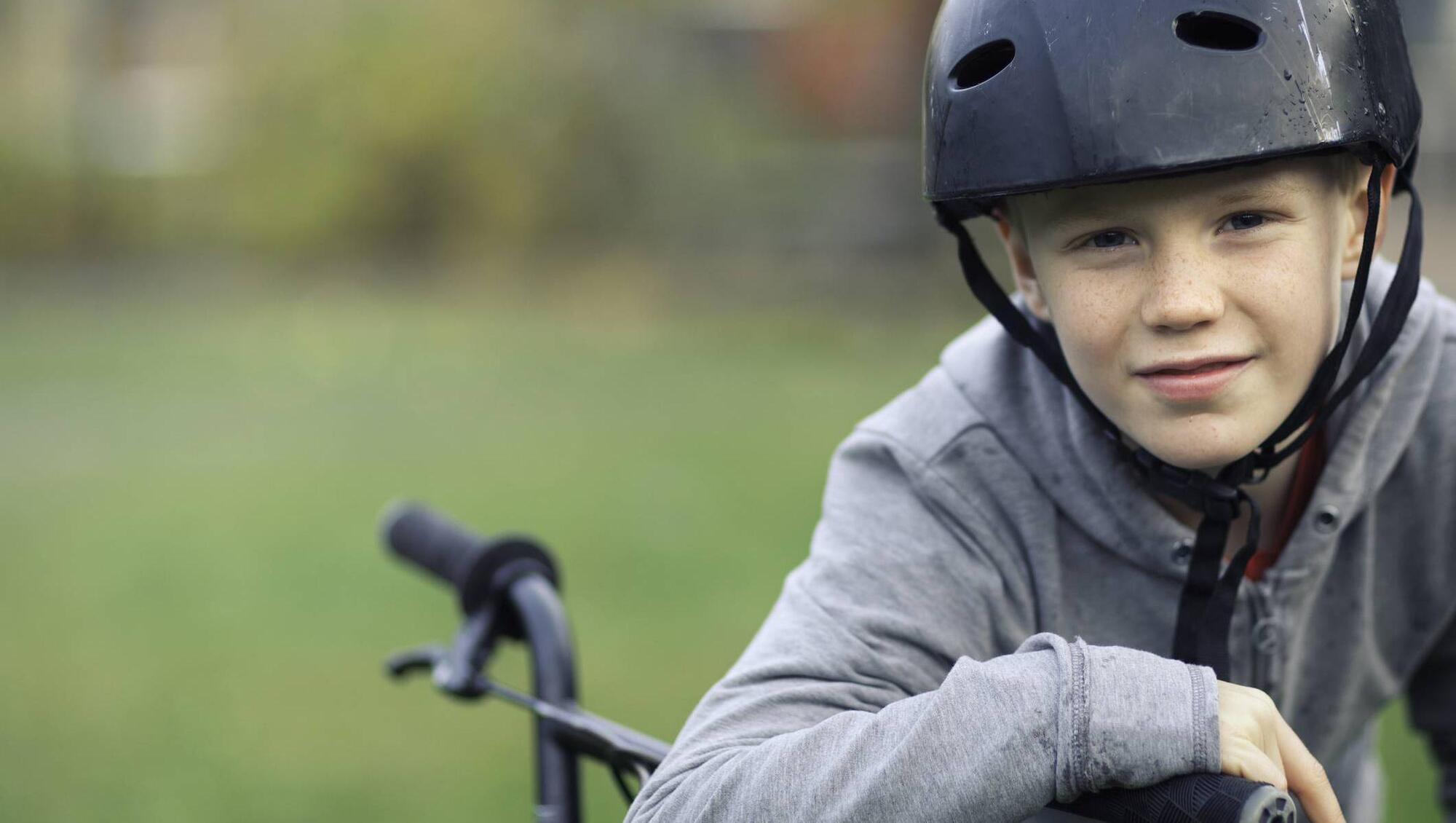
Over the 20 years of my clinical work, I have found that children and young people are becoming less and less independent and especially over the last two years where the opportunities for autonomy were so limited. Pic: iStock
is a compelling TV series that sees young Japanese children carry out tasks they ordinarily would not be asked to do. A big hit in Japan for the past 30 years, Netflix is streaming the series to worldwide audiences for the first time.
The first episode follows a two-year-old boy sent to a shop over a kilometre away to get some groceries. He is expected to negotiate heavy traffic and complex routes along the way. Watching this episode kept me on the edge of my seat as I anxiously watched the toddler cross a dual carriageway. I kept reminding myself that a camera crew was secretly following him, so a catastrophic accident was unlikely to happen. Unbelievably, he managed to execute the task superbly, even returning to the shop to get an item he had initially forgotten.
I have children aged seven, nine and ‘almost 12’ and if I sent any of them upstairs to get a towel, a hairbrush and their pyjamas, they would most likely forget one, if not all of the items. It made me wonder whether this was cultural - if Japanese children are more independent than their western counterparts?
However, the second episode followed another young boy of a similar age, whose task was to go home, make some freshly squeezed orange juice and bring it back to the family who was working a kilometre away in an orchard. This boy was far closer to what I would have expected of a three-year-old child. When he returned home, he seemed to forget about the orange juice and instead started playing with his dog, got some snacks for himself and went on the doss. When his mother phoned to ask where the juice was, he lied and said he had already made it. To his credit, he eventually squeezed some oranges and finally brought the juice to his family members in the orchard.
I am often struck by how my children’s childhood experience is different to mine, especially when it comes to their level of independence. When I was 11-years-old, I used to cycle to school, hitch lifts off neighbours, and during school holidays I was often gone from my house from morning to night.
I spent a lot of my childhood on my neighbour’s farm, which on reflection, was a hotbed of potential dangers as we jumped off bales of hay or rode on the trailers through the fields. Though I believe I am ‘all the better’ for these experiences, I would never dream of giving the same freedom to my children. So why do I have this double standard?
The research in this area is patchy as childhood involves so many moving parts that a cause-effect relationship is hard to establish, but over the 20 years of my clinical work, I have found that children and young people are becoming less and less independent and especially over the last two years where the opportunities for autonomy were so limited.
I try to justify my protective parenting by telling myself that it is because the world is different now. We live in an urban area, so the road traffic is more complex to negotiate than when I was a child growing up in the Dublin mountains. But the traffic does not explain the disparity between my childhood experience and my children's. I do more for my children than was ever done for me.
Things like paying for something in a shop, packing a school bag for the following day, or making snacks were simple responsibilities I had growing up. Still, I am far more likely to do these things for my children than allow or expect them to do these tasks themselves.
I tell myself that this dynamic represents the busy lives we lead and that sometimes it is just easier to do things ‘for’ my children than have the battle of convincing them to do it for themselves. For example, it is easier for me to pack my children’s bag and know that I have done it right than run the risk of getting a call from the school to say that one of my children has forgotten their drink bottle or gumshield.
Both my parents worked full-time and were extremely busy, so there was little time for handholding. Furthermore, if I forgot a gumshield or a drinks bottle when I was a child, no one from the school would ring my parents. If I was going to be thirsty and at risk of losing a few teeth in my GAA match, so be it, because back then, the school of hard knocks was the way we learned. And the best way to remember your drink bottle was to forget it once.
This wasn’t a conscious strategy at the time, it was just the way it was. So, if this approach ‘worked’, why have we changed? I think it's because we have become a more child-centred society. If I received a call from the school saying my son had forgotten his drink bottle and replied in the style of my parents, ‘well he won’t forget it the next time’, I could be criticised for my parenting style, or indeed the school could question my interest in my child.
It’s a similar scenario with homework. My mother never ‘checked’ my homework. When parents today look over our children’s homework, my guess is that many point out the errors the child has made and get them to correct them. Homework is, therefore, not a reflection of our children’s ability but instead a reflection of our parenting.
Have we forgotten that our children’s mistakes are valuable learning opportunities?
Too often, over-doing things for our children becomes motivated by our need as parents to feel better about ourselves, to manage our anxiety about getting something wrong. This is similar to the argument that perfectionism is not about the desire to get it right but the fear of getting it wrong.
It would be remiss not to consider the ever-increasing safety fears in our society in this discussion. I believe that the disappearance of Madeline McCann in 2007 was a game-changing event in terms of parental attitudes to child safety. The high-profile nature of her disappearance had a ripple effect on parenting attitudes across the globe.
Busy roads, safety fears and the busy nature of parents' lives may go some way to explain why contemporary parents have developed a more cautious attitude to children’s independence and autonomy. But we must also acknowledge how the culture of comparative parenting influences our approach.
Our parenting performance has never been more publicised or scrutinised than now. The ever-growing industry of parenting advice and the evolution of ‘competitive parenting’ on social media has created an over-cautiousness that inhibits our willingness to let our children grow, evolve and learn how to be independent. We need to be honest with ourselves and ask if we are at risk of prioritising parental performance over our children’s development.
Maybe the strength of is that it removes parental influence altogether and allows children to literally ‘find their own way’, a timely reminder that sometimes doing what’s right for your child might involve stepping back instead of stepping in.
- Dr Colman Noctor is a child psychotherapist

CONNECT WITH US TODAY



Be the first to know the latest news and updates