Colman Noctor: Wellbeing in school cannot be taught. It has to be lived
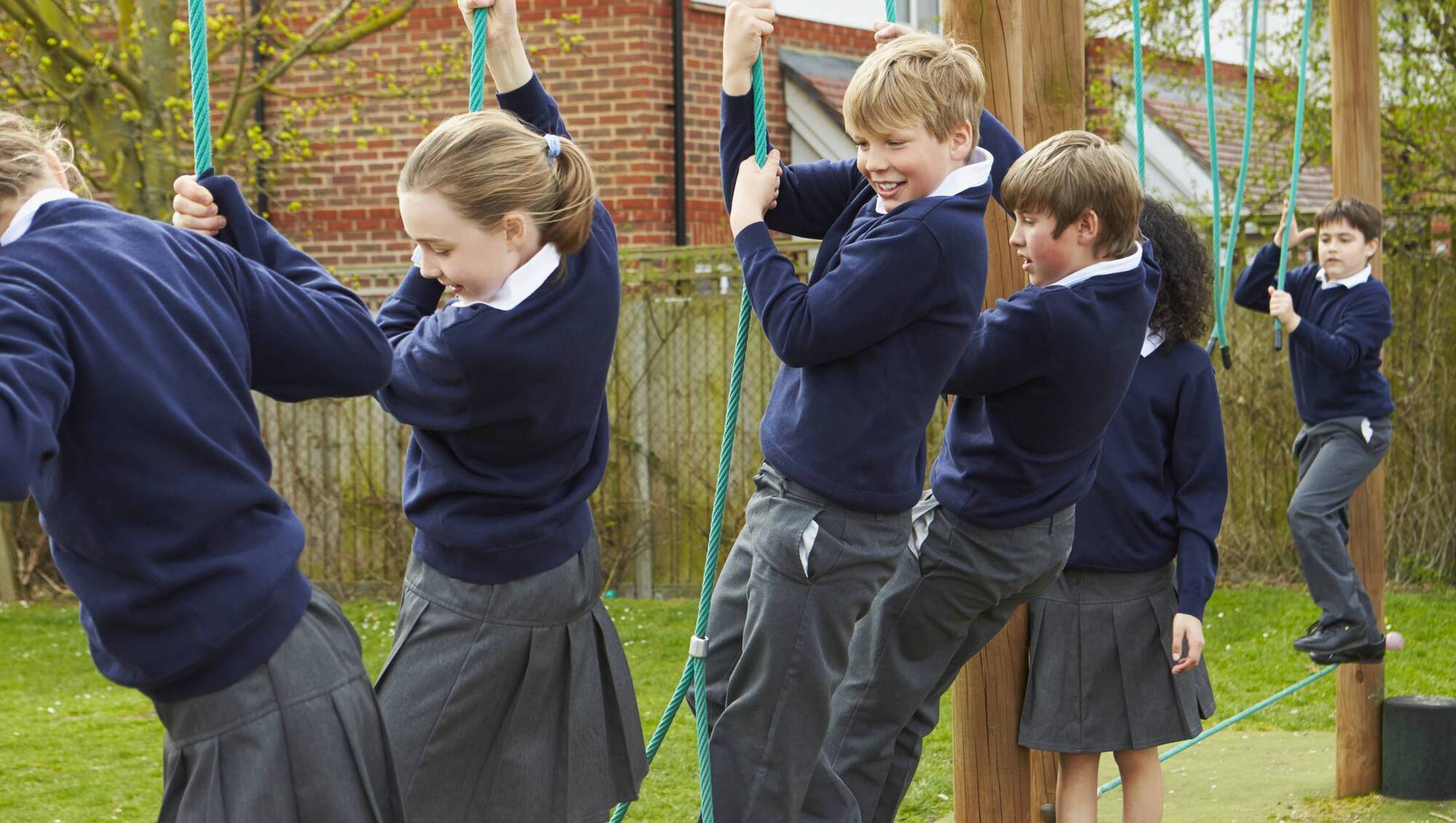
Play is how children learn to socialise and make friends. These skills cannot be learned from a book. Picture: iStock

If we are asking children to do wellbeing homework worksheets, we have fundamentally misunderstood what mental health is all about.
Reading the latest report from the ESRI, titled , I notice a quiet but significant sentence buried in the text: "Culture, relationships, and belonging are central to promoting wellbeing in schools." That’s so plainly true and strikes at the core of wellbeing, yet risks being overlooked.
Wellbeing is not just a modern trend — it’s a philosophy that looks beyond what children are learning and considers whether they feel safe, seen, and connected while doing so.
The ESRI review, which looks at how schools support wellbeing and mental health, confirms what I have long suspected: Children don’t experience wellbeing as a subject on a timetable, they feel it in the classroom atmosphere, in the quality of relationships, and in whether they belong and matter.
Wellbeing, in other words, is not an add-on. It is the emotional climate in which learning and being either thrive or struggle.
The ESRI report recognises Irish schools, especially at the primary level, already do many things well: Play, physical activity, the arts, and nutrition, which all lay a strong foundation for wellbeing. These are not merely ‘extras’; they are essential developmental needs.
But schools cannot, and should not, replace specialist mental-health services. One of the most crucial findings of the ESRI review is the need to differentiate between universal wellbeing supports (which can occur in schools) and targeted interventions (which take place in specialist mental-health services) for children with complex needs. When this boundary becomes blurred, everyone suffers: Teachers feel overburdened and out of their depth, parents become frustrated, and children don’t receive the help they truly need.
Wellbeing programmes work best when they are realistic about what they can and cannot do. Teaching children emotional literacy, coping skills, and self-awareness is valuable. But a worksheet on managing anxiety will not compensate for loneliness, exclusion, or a school culture where some children feel invisible.
To make a meaningful difference, belonging is crucial, particularly for marginalised students and those with additional needs, who consistently report a weaker sense of connection in our school communities.
From a parenting perspective, it is not just about asking, ‘Are they doing OK academically?’ or ‘Are there supports in place if they are struggling academically?’ It is about asking if your child feels they belong where they learn. For example, are they known by at least one adult and accepted by some of their peers?
These are not soft measures. They are protective factors that buffer children against stress, anxiety, and low mood.
When students have a real voice in how wellbeing is understood and supported in their school, the outcome is usually more relevant, more grounded, and more effective.
I was involved in designing the 'A Lust for Life' secondary school mental-fitness programme, and we made it a priority to run focus groups with teenagers to gather their perspective, and this was not tokenistic but seriously considered, leading to a significant overhaul of much of the initial content.
Another aspect of wellbeing in school that deserves more attention is time, particularly informal social time.
Many children go through the school day following a tightly managed routine, moving from class to the yard, from task to task, with limited opportunities for unstructured interaction. Even break times are increasingly supervised, regulated, and shortened.
While I understand this protects some children, for many others, it quietly diminishes opportunities to practise social skills.
This week, I spoke to my 11-year-old son about the importance of connecting with others. I was encouraging him to invest in his friendships because good friends are the most significant factor in shaping his whole school experience. He said they only have 40 minutes a day to play with friends and build relationships, because the rest of the time is consumed by scheduled schoolwork.
This seems like very little time to develop crucial social skills, especially when many children are not growing up on the road, the street, or the green, as previous generations did.
In the wake of pandemic lockdowns and the rise of technological communication, socialising has become more important than ever.
Socialising is not something children instinctively know how to do. It is not acquired by completing a worksheet. It develops through trial and error: Negotiating games, resolving small conflicts, managing rejection, finding allies, and laughing together. These experiences are just as vital as literacy and numeracy, if not more so, for development. Yet, they are rarely recognised as such.
We discuss social skills only when there is a problem, but we seldom organise school days to actively foster supportive social connections. Ironically, this lack of informal time to socialise might undermine the very wellbeing programmes we invest in.
We can teach children about empathy, resilience, and emotional regulation through structured lessons, but if they lack opportunities to apply these skills in real relationships, the learning remains abstract. Wellbeing needs to be practised as well as taught.
Parents frequently notice the effects of this imbalance at home: Children who appear ‘fine’ at school, but fall apart emotionally in the evening. Young people are often drained by relentless performance and comparison. Teenagers are surrounded by peers all day, yet feel profoundly lonely. These are not failures of individual coping: They are signals that connection has been squeezed out by busyness.
This recommendation is encouraging, but it comes with a caveat. Teachers cannot act as therapists, and schools cannot operate as clinics. Their greatest strength lies in what they can be, which are environments where relationships are valued and children feel secure enough to learn.
For parents, this shifts our view of what makes a ‘good school’. It is tempting to focus on results, league tables, or the number of programmes available. However, wellbeing is seldom about quantity — it concerns the quality of relationships, culture, and everyday exchanges.
A school that protects play, champions inclusion, and fosters space for connection is doing important preventative mental-health work, even if it never describes it as such or is recognised with a flag or other measure.
This also challenges us as parents to reflect on the messages we send. When we rush children from activity to activity, or measure success solely through achievement, we mirror the same pressures that exist in schools.
Connection takes time. Belonging requires repetition. Friendship needs boredom, freedom, and the occasional awkward silence. We need to create spaces for our children to socialise and recognise that these are not luxuries; they are essential developmental requirements.
When considering the role of mental wellbeing programmes in schools, the real conclusion isn’t that we need more content, lessons, or policies — although guidance and resources certainly play an important part. The deeper issue is cultural. Do we organise school life in a way that recognises socialising as essential, and not just an afterthought? Do we give children enough space to interact with each other in unstructured ways? Do we see wellbeing as something experienced daily, rather than something provided occasionally?
Socialising is crucial for children and young people, especially in a world where much interaction happens online. Learning how to engage with others, with all the messy, rewarding, frustrating aspects, is essential for mental health. If schools are serious about wellbeing, they must protect and prioritise the conditions that encourage connection and, crucially, be supported by the Department of Education in doing so.
Ultimately, wellbeing is not a programme you complete. It is a practice, shaped by relationships, routines, and the subtle signals children receive about belonging.
When we get the concept of belonging right, both learning and mental health are strengthened. When we don’t, no amount of curriculum time can make up the difference.
- Dr Colman Noctor is a child psychotherapist

CONNECT WITH US TODAY



Be the first to know the latest news and updates