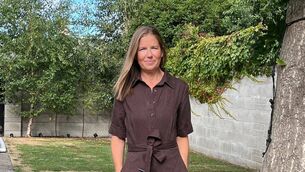
Illustrator Karen Harte: Why graphic novels are perfect for a generation raised online
“It feels really unnatural,” she says. “But it’s kind of the way that world works.”
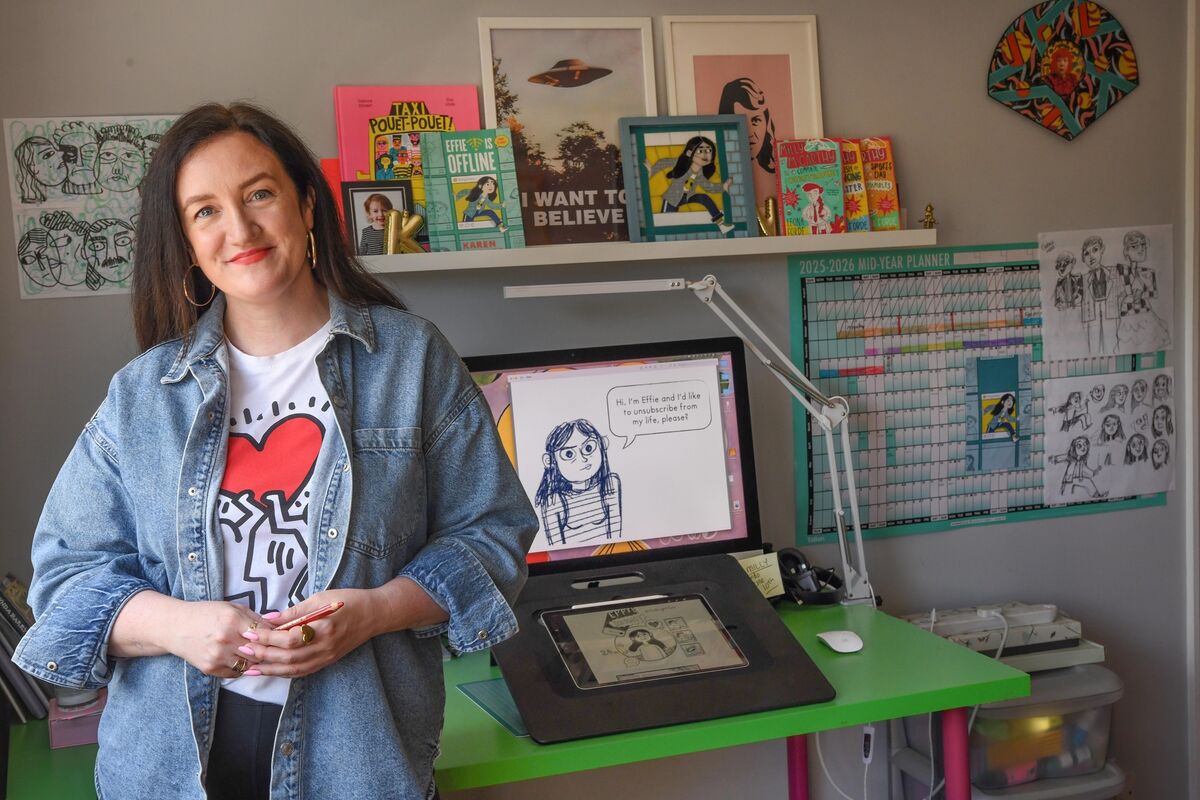
The contradiction isn’t lost on her. tells the story of a 15-year-old girl who has spent her entire life online — not by choice, but because her influencer mother has documented almost every moment of it. The pregnancy was content. The birth was content. Effie’s childhood became content. By the time she is old enough to understand what privacy means, she no longer has any.
It is an unmistakably modern premise, one that feels less speculative than observational. Yet it also marks another significant milestone in Irish publishing. The book is Gill Books’ first original YA graphic novel, arriving at a time when graphic novels have undergone one of the most remarkable transformations in contemporary literature.
Not so long ago, the phrase ‘graphic novel’ still carried a faint sense of apology. Adults who read them often felt obliged to explain themselves. They were comics, only more respectable. They belonged, many assumed, to superhero enthusiasts, comic-book shops, and an enthusiastically niche readership.
That world has changed almost beyond recognition.
Today, graphic novels occupy dedicated shelves in Irish libraries and bookshops. Schools recommend them. Literary festivals programme them. Parents buy them for reluctant readers and find themselves reading them after the children have gone to bed.
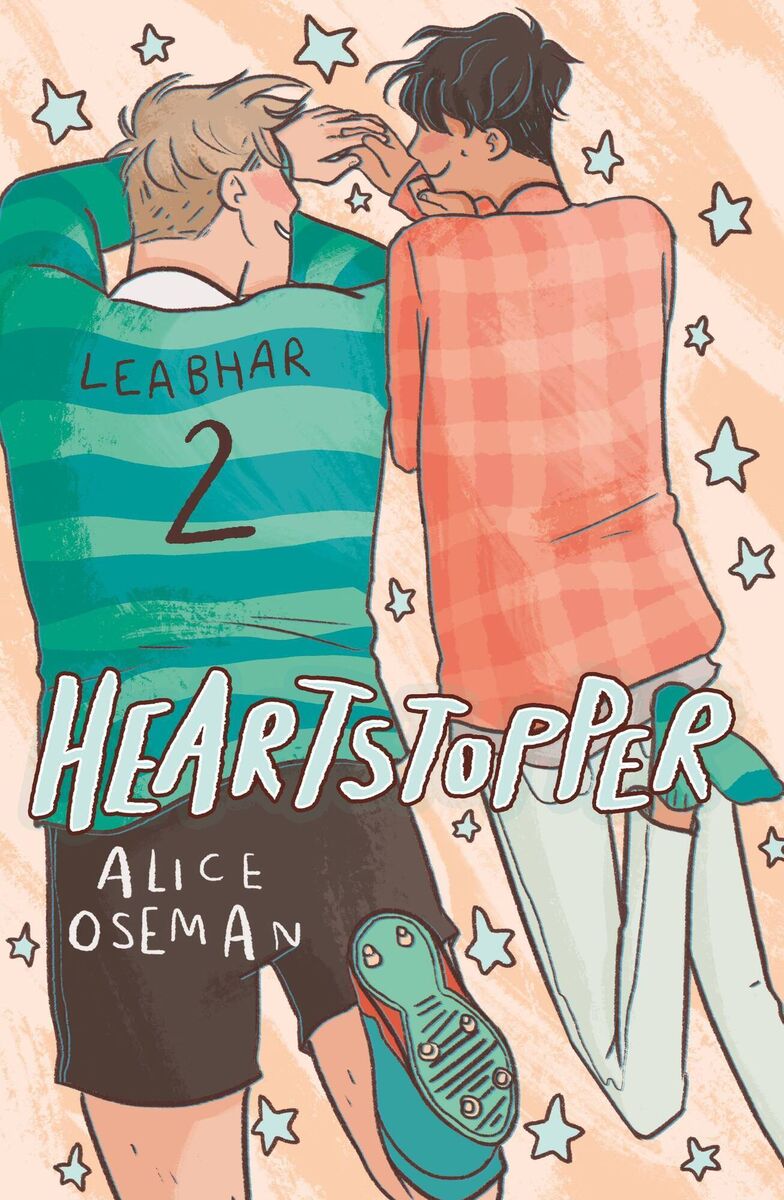
Works such as Maus, Persepolis, Fun Home and, more recently, Alice Oseman’s hugely successful Heartstopper series (which last year was translated into Irish) have demonstrated that the format can carry memoir, romance, politics, history, grief, and every shade of human experience every bit as effectively as prose.
For Harte, that evolution explains almost everything.
“I think it’s moved away from being a genre to being a format,” she says. “You can tell any story in this format.”
It is a deceptively simple observation.
For decades, comics were defined largely by what they were about. Superheroes dominated public perception. But graphic novels have increasingly become defined instead by how they tell stories. The illustrations no longer exist simply to decorate the words. They become another language altogether.
That matters, Harte believes, because today’s readers have grown up communicating visually.
“We’re looking at images all the time,” she says. “Images and words. We’re looking at faces. We’re visually literate in a way that maybe previous generations weren’t.”
It is difficult to argue with the evidence. The average teenager now navigates a daily torrent of photographs, videos, emojis, memes, captions, notifications, and text messages.
Their conversations often happen simultaneously across multiple platforms. Their emotional lives unfold partly in person and partly through screens.
Graphic novels, with their combination of visual storytelling and carefully-paced dialogue, seem uniquely suited to that reality.
They also provide a bridge for readers who might otherwise struggle.
“I think they can really build confidence,” Harte says. “If somebody finds a full chapter book intimidating, a graphic novel can be a different way into reading.”
That includes many neurodivergent readers, she believes, but attention spans have changed for almost everyone.
“We all have that lack of attention span now because of our phones, because of streaming, because everything is so visually stimulating.”
Until last year, Harte worked full-time as a graphic and motion designer, spending a decade with Accenture while quietly building an illustration career on evenings and weekends.
It was around 2016 that she began posting illustrations on Instagram.
“I wasn’t really thinking of myself as an illustrator,” she says. “Then people just started coming to me.”
The internet, which would later become the central subject of her first graphic novel, quietly became the platform that launched her career.
It also led, unexpectedly, to her first books.
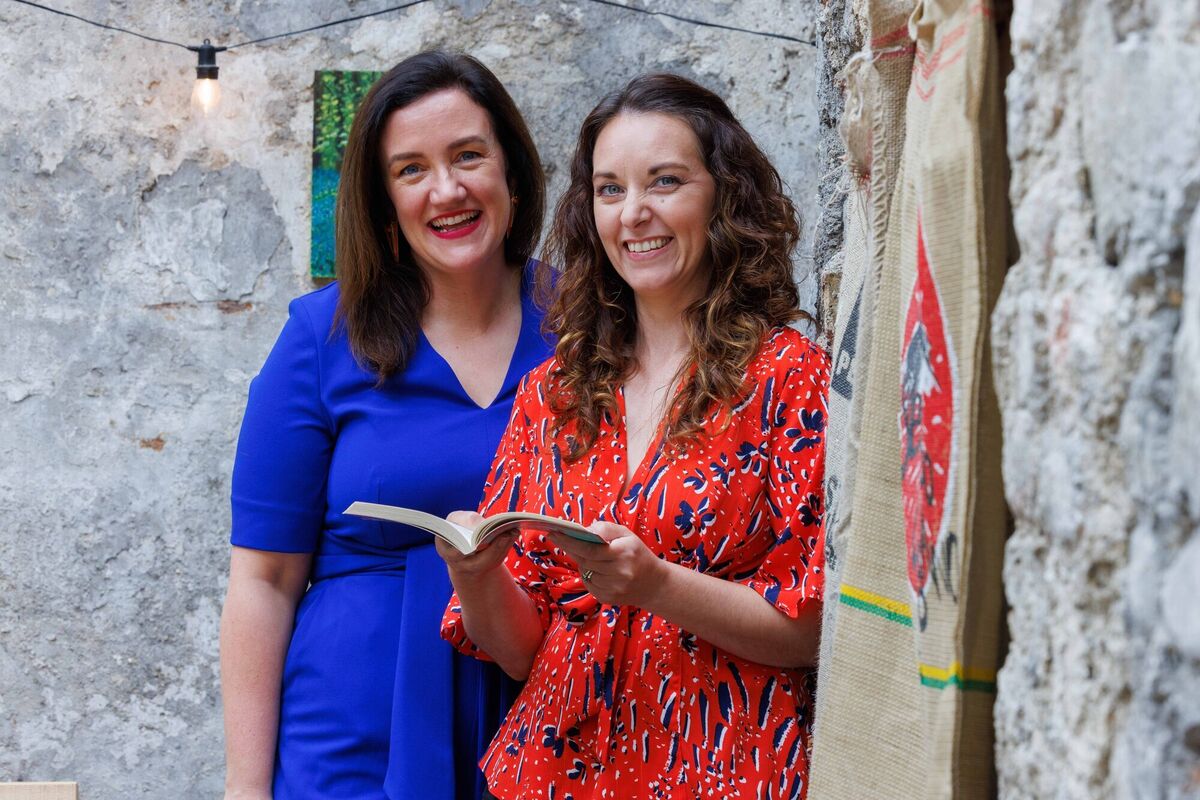
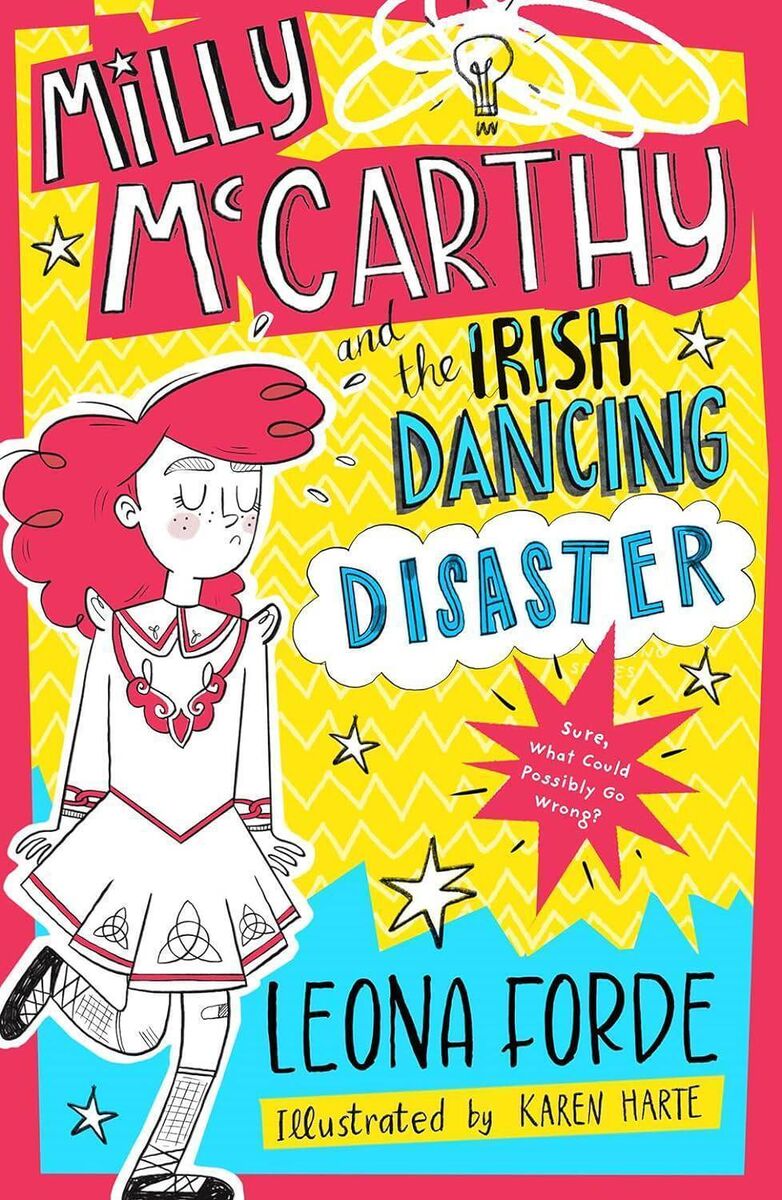
Editors at Gill Books came across some illustrations she had posted online years earlier. They were looking for an illustrator for Leona Forde’s Milly McCarthy series.
“I didn’t even remember posting them,” Harte laughs.
The collaboration proved enormously successful, with the series now several books strong. But, while illustrating somebody else’s stories taught her the mechanics of visual storytelling, another ambition was beginning to grow in the background.
She wanted to write one herself.
The opportunity arrived after she was made redundant in 2024. Instead of panic, redundancy brought something rarer — permission.
Her freelance illustration work had steadily grown. Teaching, workshops with Children’s Books Ireland, guest lecturing, and book illustration had created enough of a foundation to take the leap.
“It was scary,” she admits. “But it was probably good timing.”
Her first instinct was to develop a picture book.
Publishers, however, sensed something else.
“They kept nudging me towards doing a graphic novel.”
The suggestion turned out to be inspired.
Not because Harte had always dreamed of writing graphic novels, but because she had stumbled across a subject that almost demanded to be told visually.
Like many parents, she had found herself increasingly fascinated — and unsettled — by the rise of influencer families.
She noticed parenting accounts quietly removing children’s faces from posts after years of sharing every milestone online.
She watched YouTube channels where children appeared to spend every waking hour playing happily with their parents.
She listened as her own six-year-old son asked why they didn’t play like that all day.
“You feel guilty,” she says. “Then you have to remind yourself that it’s like reality television. It’s set up. It isn’t real.”
Slowly, another image formed in her imagination.
Not a beginning. A scene. A group of teenagers sitting in a circle. A support group. Not for addiction or anxiety. But for children who had grown up famous before they understood what fame meant.
One by one, they begin describing lives that had been lived for somebody else’s audience.
That image became the opening scene of
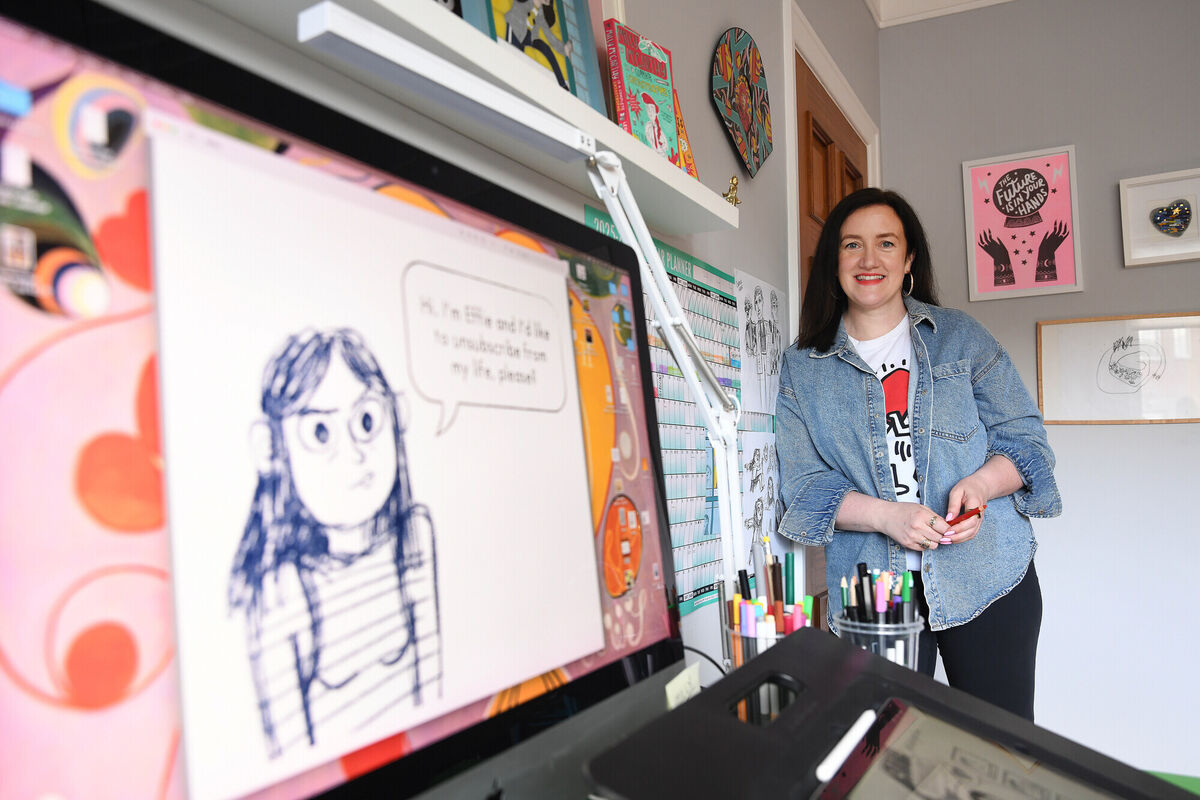
“I imagined all these kids in a support group,” Harte says.
“One of them says: ‘I worked from the age of four until I was 13. My parents looked like they were always playing with me, but the minute the camera was turned off they didn’t want to talk to me any more.’”
It is a fictional scene, but one that feels increasingly plausible in an era where childhood itself has become a commodity.
The inspiration came from countless places. Harte watched influencer families evolve in real time. She noticed some of the biggest family accounts quietly turning cameras away from their children as public concern around ‘sharenting’ gathered pace.
She found herself thinking about digital footprints, informed consent, and the strange permanence of the internet.
Her own son occasionally watched YouTube channels where children reviewed toys or appeared to spend idyllic days playing games with their parents.
“I remember thinking how guilty it made me feel,” she says.
“He’s asking me to play while I’m trying to make dinner or finish some work, and then you’re looking at these families online who seem to be playing together all day.”
But she knew it was performance.
“We know reality television isn’t reality,” she says. “Influencer culture works in much the same way.”
That distinction sits at the heart of .
Harte isn’t interested in condemning parents or presenting social media as an uncomplicated villain. She understands why people share photographs of their children. She understands the loneliness that can accompany early parenthood and the instinct to celebrate milestones with family and friends.
“Part of the joy of parenting is sharing,” she says. “Especially if you’re a single parent and you don’t have someone beside you at the end of the day saying, ‘did you see what he just did?’”
The question, she believes, is where sharing ends and broadcasting begins.
“I’m like, share it in the family WhatsApp,” she laughs.
The joke lands because it contains an uncomfortable truth. Parents make decisions on behalf of their children every day. Most disappear into family albums, old phones and fading memories. Social media changes the scale of those decisions completely.
In Effie’s case, it becomes existential. She has never had the chance to construct her own identity because one already exists online, built for her by somebody else. It is a dilemma that Harte believes many young people are beginning to recognise.
“When they’re very young, people say, ‘oh, my child doesn’t mind.’ But they can’t really give informed consent.”
There is another complication.
“What happens,” she asks, “when your family’s income depends on your content?”
It is one of the more unsettling ideas running beneath the novel. A child may technically have the option to withdraw from family content, but how free is that choice if the mortgage depends on clicks?
Harte avoids moralising. Instead, she is interested in the blurred boundaries between love, pride, commerce, and performance.
Those blurred boundaries also influenced the way she wrote the book itself.
Although an experienced illustrator, Harte had never written a full-length graphic novel before. Rather than beginning with drawings, she taught herself story structure almost from scratch, filling notebooks with diagrams of three-act structures, romantic subplots, and pacing before writing the entire book as a screenplay.
Every panel was first imagined as film.
“I had the scenes playing in my head,” she says.
Only once the manuscript had been approved did she begin drawing.
The process, surprisingly, proved liberating. As an illustrator she already knew how to tell stories visually. The challenge was learning to trust her own writing.
Gill’s editorial response came as a relief.
“I was convinced they’d come back with loads of changes.”
Instead, there were remarkably few.
The timing, however, could hardly have been harder. While Harte was writing the manuscript, her mother became seriously ill.
Doctors initially believed there would be months. Instead, everything happened far more quickly, and she died in August.
For several weeks, Harte stepped away from work entirely before gradually returning to the manuscript.
Looking back, she believes writing became something she could manage when drawing felt emotionally impossible.
“My brain could handle typing,” she says quietly.
The finished book is dedicated, in many ways, to the encouragement her mother gave her before she died. For years, both her parents had gently urged caution about creative careers. Like many Irish families, stability came first. Then something changed. After retiring from a lifetime working in recruitment and later as a medical secretary, her mother finally enrolled in community art classes. She had always been creative but had never really given herself permission to pursue it.
“She was so excited,” Harte says. “She was talking about having an exhibition.”
Cancer intervened before she got the chance. “It really made me think,” Harte says. “You can’t keep waiting.”
It is difficult not to see Effie is Offline itself as a story about reclaiming ownership — not simply of an online identity but of your own life. There is another challenge facing artists now, one that Harte cannot ignore. Artificial intelligence has transformed illustration almost overnight.
She sees AI-generated posters, advertisements, and animations appearing everywhere. Organisations that once commissioned illustrators increasingly experiment with image generators instead. Her greatest concern is not established artists, it is those just starting out. “The small jobs are how people build portfolios,” she says. “If those disappear, that’s a problem.”
Rather than compete with artificial perfection, Harte has moved in the opposite direction. She has begun sharing rough sketches, unfinished work and the visible messiness of drawing by hand.
“I want people to see mistakes.”
That desire feels oddly connected to everything else she has been talking about. In an age of curated feeds, algorithmic recommendations and increasingly convincing artificial images, imperfection itself begins to acquire value.
Perhaps that explains why graphic novels feel so timely. They slow readers down.
They ask them not simply to consume images but to read them; to notice expressions, pauses and silence between panels; to participate in constructing meaning rather than scrolling past it.
For younger readers especially, they acknowledge the visual language in which they already live while quietly asking them to linger there a little longer. It is easy to imagine graphic novels as the publishing success story of the moment, another expanding category in an increasingly competitive market.
Karen Harte’s debut suggests something more interesting. Perhaps graphic novels are flourishing because they understand modern life better than almost any other literary form.
They recognise that today’s readers move constantly between image and text, between conversation and notification, between the physical world and the digital one. That is the world Effie inhabits. It is also the one most families now recognise.
Harte smiles at the irony that she will spend the coming weeks promoting Effie is Offline, online.
There is no escaping the internet. Nor, she suggests, should there be. The challenge is learning where to draw the line.
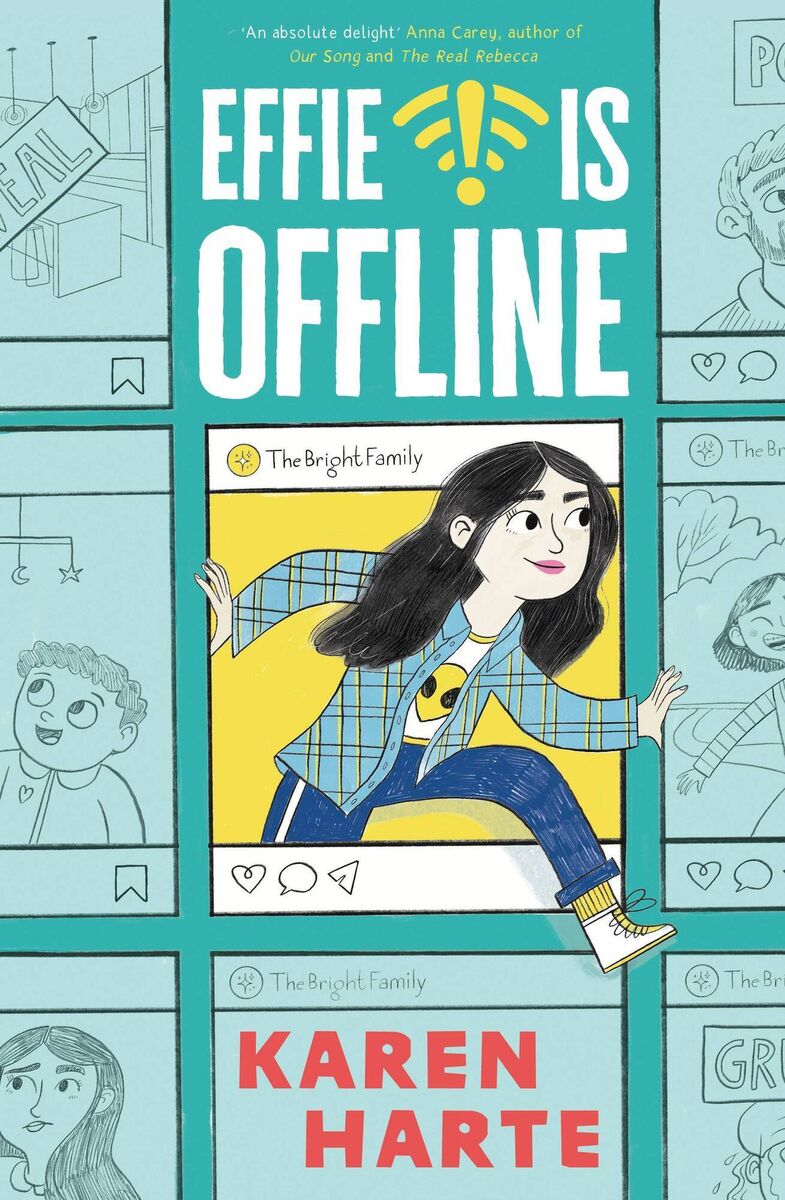
- ‘Effie is Offline’ by Karen Harte, published by Gill Books, is available now
CONNECT WITH US TODAY



Be the first to know the latest news and updates