Bernard O'Shea — The Dad Bod Diaries: A trip to Norway changed how I view myself
We Irish need to adopt a Norwegian approach when it comes to exercise, diet, and wellbeing, says Bernard O'Shea
Bernard O'Shea — The Dad Bod Diaries: A trip to Norway changed how I view myself

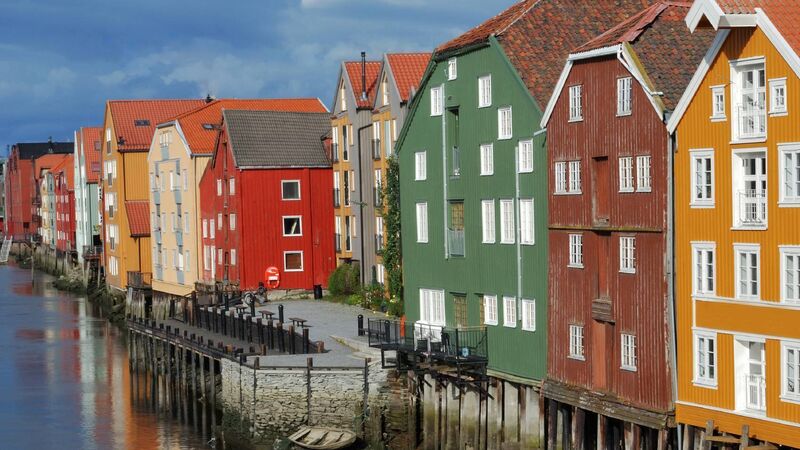
Doing a gig in the beautiful Norwegian city of Trondheim allowed Bernard O'Shea to view how the people there live.

THERE are moments in life when a country quietly holds up a mirror to you. This week, Norway became that mirror for me.

I was there for a gig in Trondheim. It’s a beautiful place: Clean air, wooden houses, public transport gliding past as if they have nowhere urgent to be. What grabbed my attention wasn’t the scenery, it was the people — more specifically, the complete and total absence of anyone who looked like me.

Walking in Trondheim, I had the distinct, slightly unsettling, feeling I might be the only man in the entire country who had eaten a toasted sandwich at 10pm the night before and justified it as “technically dinner”. It’s a strange sensation suddenly realising you might be the statistical outlier.

Norwegians move a lot. They walk everywhere. They cycle. They ski. You get the sense movement is simply part of life rather than a separate activity that requires special clothing and a motivational podcast.

They also have a concept called friluftsliv — 'open-air living'. In Ireland, we might call that ‘going outside’.

The difference is that, in Norway, it isn’t something people do occasionally if the weather behaves itself. Meanwhile, I arrived like a slightly confused Irish mammal whose natural habitat is the driver’s seat of a car outside a petrol station deli.

Food is different too. In Norway, it’s astonishingly simple: Fish, potatoes, whole grains, rye bread, berries, soup. There’s little of the emotional chaos that tends to surround food in Ireland. 

My relationship with food for most of my adult life has been less “sustainable ecosystem”, more late-night improv.

One morning at a hotel breakfast buffet — eggs, smoked fish, rye bread — surrounded by people who looked like they’d casually completed a triathlon on the way to work, I had an uncomfortable realisation. The issue wasn’t really Norway. The issue was me. More specifically, the expectations I’d been carrying in my own head.

When I started this Dad Bod experiment, I wanted the weight to come off quickly. Much more quickly than it actually has. 

In my mind, there was a timeline. A few weeks of discipline, a dramatic shift, a noticeable transformation. Something cinematic. But that isn’t what happened.

Progress was slower. Steadier. Less dramatic. Along the way, I realised something slightly uncomfortable: The speed — or at least my obsession with speed — was actually working against me. 

The more I wanted the weight to come off quickly, the more pressure I put on the whole process. The more pressure I felt, the more I found myself drifting back into the exact habits that had put the weight there in the first place. Late-night eating.

Treating food like a reward for surviving the day. Convincing myself that if the plan wasn’t working fast enough, maybe it wasn’t working at all.

In other words, the urgency in my head was pushing me in the opposite direction. And this is where Jill comes in. Jill has been helping me with this Dad Bod situation for a while, and has a way of cutting through the drama. Her advice is deceptively simple.

“When people start thinking about weight loss,” she told me, “they get completely immersed in the concept. The food, the exercise, the future, the pressure. It becomes overwhelming. So we shrink it. Day by day. Meal by meal.”

That’s it. No heroic montage. No grand masterplan. Just the next meal. Standing there in Norway, feeling like the least Nordic man in Scandinavia, that advice made more sense.

The truth is I didn’t gain this weight in one dramatic moment. It arrived quietly. Meal by meal. So the only way to change is to do it the way the habits formed: One meal, one decision at a time. 

Doing nothing — the new productivity

Watching life in Norway also made me think about something else entirely — productivity. We are obsessed with doing. Doing more. Moving faster. Filling each hour. Running from work to school, from errands to sports training, to whatever else the day demands of us.

Norwegians seem strangely comfortable doing nothing. They sit. They walk slowly. They stare at the water. And the odd thing is, it doesn’t look lazy. It looks … balanced.

Maybe doing nothing is the new productivity. Or at least a healthier version of it. 

Because when you slow down, something interesting happens. You move more naturally. You eat more deliberately. And you don’t constantly feel you need a reward at the end of the day.

This thought popped up again thanks to something a little ridiculous that happened recently. I put up an Instagram reel pleading with partners everywhere to stop panicking when a man sits down. 

I even created a fake campaign website — justletussitdown.ie — which I imagined as a support group for Irish men trying to enjoy five consecutive minutes in a chair without being handed a list of jobs.

Since posting it, I’ve had at least 10 men come up to me to tell me: "Someone had to say it.”

Now, obviously, sitting down constantly isn’t exactly the cornerstone of elite athletic performance. But watching life in Norway did make me wonder if we’ve misread the situation. 

Maybe those of us sitting quietly on couches across the country aren’t lazy at all. Maybe we’re just subconsciously incorporating Norwegian living.

Less friluftsliv. More couch-luftsliv.

More in this section

Lifestyle

Newsletter

The best food, health, entertainment and lifestyle content from the Irish Examiner, direct to your inbox.

Cookie Policy Privacy Policy Brand Safety FAQ Help Contact Us Terms and Conditions

© Examiner Echo Group Limited