Are 'AI Griefbots' the future of processing loss, or are they a self-imposed hurdle to moving on?
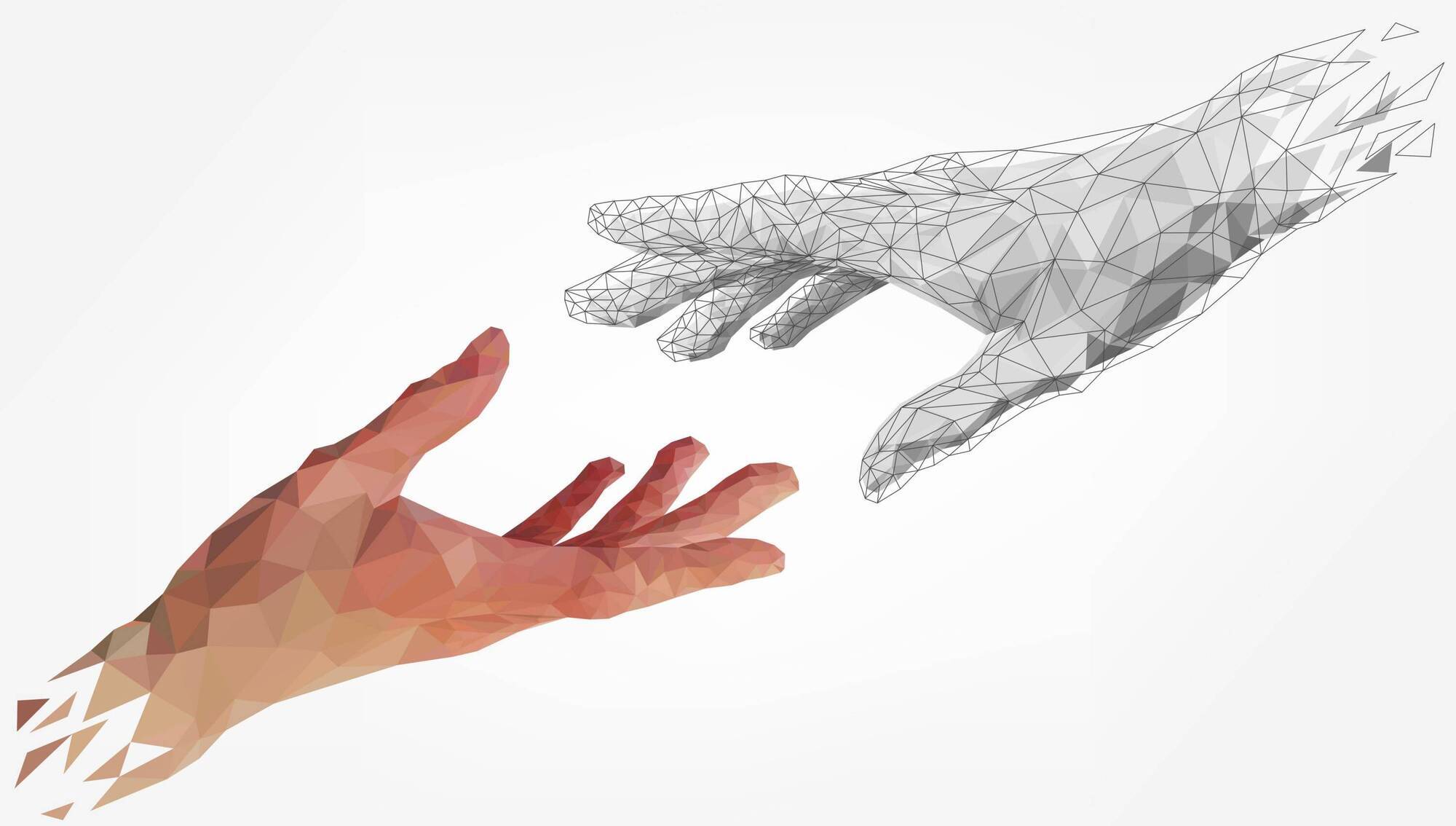
Once the preserve of the rich and famous, the power to generate lifelike images and videos of those we’ve lost is now just a tap away.
In 2020, before their turbulent split, Kanye West surprised Kim Kardashian with a hologram of her late father, Robert Kardashian, for her birthday. The gift was extravagant and extreme.
At the time, my partner and I regularly joked about how appalled I’d be if ever he surprised me with a similar gift, of my own late dad, or best friend. “I couldn’t think of anything worse!” I’d declare.
Just a few years later, this extravagant, erratic gift doesn’t seem so extreme. Now, thanks to generative AI, people can conjure up imagery and photographs of their late loved ones in mere seconds on their phones.
A scroll on Instagram or TikTok might show you a doctored photograph that morphs into a video of a child hugging their late granny. You can conjure a video of a dead dad into a wedding clip, looking proudly at his daughter — in the no-motion, robotic way that AI generates ‘pride’, anyway.
Genealogy site MyHeritage boasts that its ‘Deep Nostalgia’ feature, which allows users to create animated videos of their ancestors from still photos, has created “over 119 million animations”.
Soon, we will likely be hearing more about ‘AI Griefbots’ who are trained on the departed person’s digital footprints, such as texts, emails, social media posts, so they can simulate them.
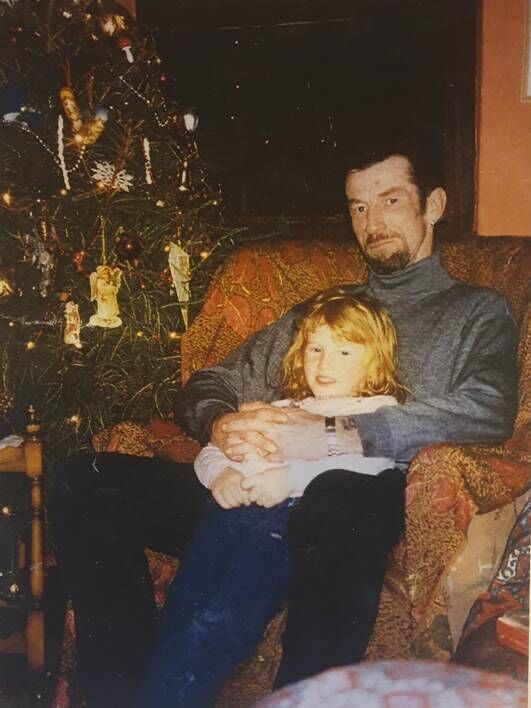
I long for additional photos and videos of my loved ones. Truly, the greatest gift anyone can give me is a new (old) photo I hadn’t seen of my dad, or my friend Shauna. For bereaved people, it’s like winning the lottery. But I have no desire at all to create content of them that is not real. Robin Williams’ daughter Zelda shared similar sentiments in October, when she pleaded with fans to stop sending her AI videos of her late dad.
“Please, if you’ve got any decency, just stop doing this to him and to me, to everyone, even, full stop,” she wrote on Instagram. “It’s dumb, it’s a waste of time and energy, and believe me, it’s NOT what he’d want.”
I know that grief is different for everyone, and, having lost my loved ones when I was a teen, I’ve had lots of time to process my grief. If this were available to me as a 13-year-old, maybe I’d have filled my Facebook page with generated videos of my dad smiling at me. But what is it doing to our grieving process? Can it aid this turbulent time, or are there negative effects to this trend?
“It’s quite fascinating,” says Liz Gleeson, grief psychotherapist and founder of Shapes of Grief. “I don’t want to immediately say it’s all bad, because it may not be.”
She points out that technology has changed and grown over the years and that our ancestors would find it hard to fathom even a photograph. “But that said, understanding the grieving process, I can’t help but worry about this.”
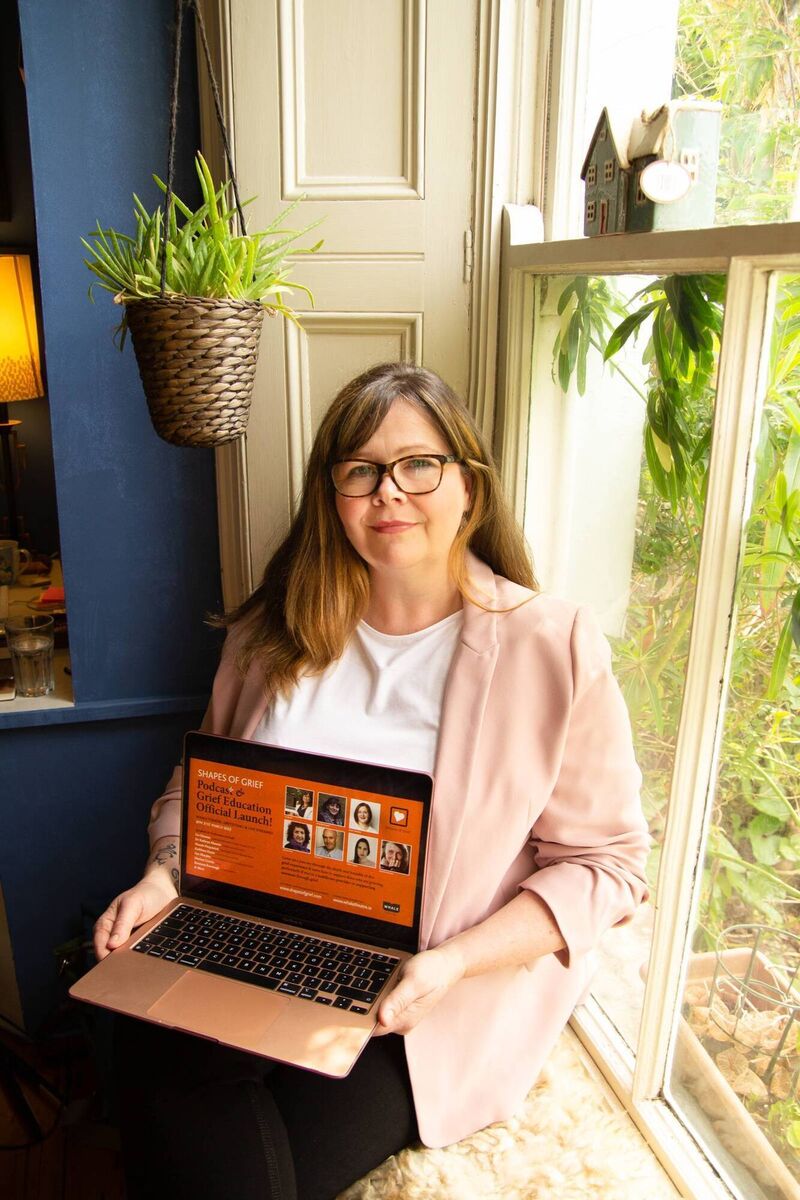
The process is complex, and Gleeson worries how this trend might alter it. “Grieving is not just a sad time after someone you love dies, it’s a deep psychological process where our whole neurology, our brains, have to map new neural pathways to create a world in which they no longer exist, and that’s what helps us accept that it’s real.”
Our brains need time to understand a person is really gone, she says. “For many people, for the first six or 12 months, they’ll say, ‘it doesn’t feel real’, that’s basically because their brains haven’t updated yet, and they still have a map of the world in which their loved one exists. We have to experience their absence again and again to be able to adjust to the world without them.
“If we’re starting to create things on our phones that aren’t reality, what’s that doing to that neurological process?”
Denial is a common element in grief, and moving past it is an important part of the grieving process.
“Because our grieving is to do with our attachment system, that system is ruptured when someone dies,” explains Gleeson. “Our first response is to protest and scream and cry and say we want them back. If protest is ‘I don’t want this to be true’, but then I can say ‘here they are hugging my child via AI’, what is that doing to this process? We want people to move from protest or disbelief to despair – AI could actually impede this. These psychological, biological functions that are happening could be absolutely disturbed by generating false imagery of loved ones.”
Gleeson suggests that there are other, healthier ways to cope with missing someone.
For example, my father loved gardening, and he died five years ago. I always feel so close to him when I’m doing my garden. I see the robins, and I’m holding the fork and planting raspberries. That helps me, and it’s good for me. These are lovely, beautiful, healthy ways to remember someone.” Tangibility helps us to process, in a way an artificial memory cannot.
Like denial, fear is an emotion that comes with loss; fear of change, fear of life without your loved one, and that lack of stability and trust in the world. False content is unlikely to help us make sense of these feelings.
“Grieving does not just involve sadness; it involves overwhelm and dysregulation and anxiety,” says Gleeson. “People will report huge levels of anxiety where the world feels unsafe… we’re totally distressed. Is the antidote to this really showing them a creation of something that isn’t real? Or is it bringing us into the present through our senses – sight, smell, touch, and actually giving us a break from all these distressing elements?”
This is something Gleeson is exploring in a PhD.
“The research involves bringing people who’ve been through a difficult loss into the forest every week, for 12 weeks, to teach their bodies what it feels like to feel safe in the world again, and how to regulate through the senses in the natural world.” She points out that in order to grieve, we have to feel. “Our brains don’t learn from information, our brains learn by experience.
“So, I can tell you someone’s died, but it means nothing to my brain if I’m not experiencing their absence every day. It’s accepting the reality, it’s not about being okay with it, but it’s understanding that they are dead and we’re not going to see them again. That is a psychological process that can take, 10,12, 18 months. It’s that exposure to their absence over time which brings us to accept the reality. So if I’m sitting there with an AI virtual reality, I think it would keep us in some fake alternative reality, which would stop us from going through the grieving process, or certainly mess it up significantly.”
Gleeson points out that there are many ethical questions, too, including the use of people’s likeness without permission.
“Would any of us want our loved ones to be sitting watching replays or memories that never happened?” she asks.
“There is a huge ethical, psychological, environmental and moral component to this.”
When it comes to the role of AI in the modern grieving process, Gleeson acknowledges it could be useful for some, but she urges people to consider, “is it helping you, or is it keeping you from something that would help, like getting outside, or crying in a friend’s arms?”
Grief is hard because the relationship was real. When it comes down to it, I miss the very human things about my loved ones: their laugh, movements, the texture of their hair, the fabric of their clothes during a hug. None of that can be replicated by a machine.
CONNECT WITH US TODAY



Be the first to know the latest news and updates