Irish J1 student recalls JFK Jr plane tragedy at Kennedy Compound in 1999
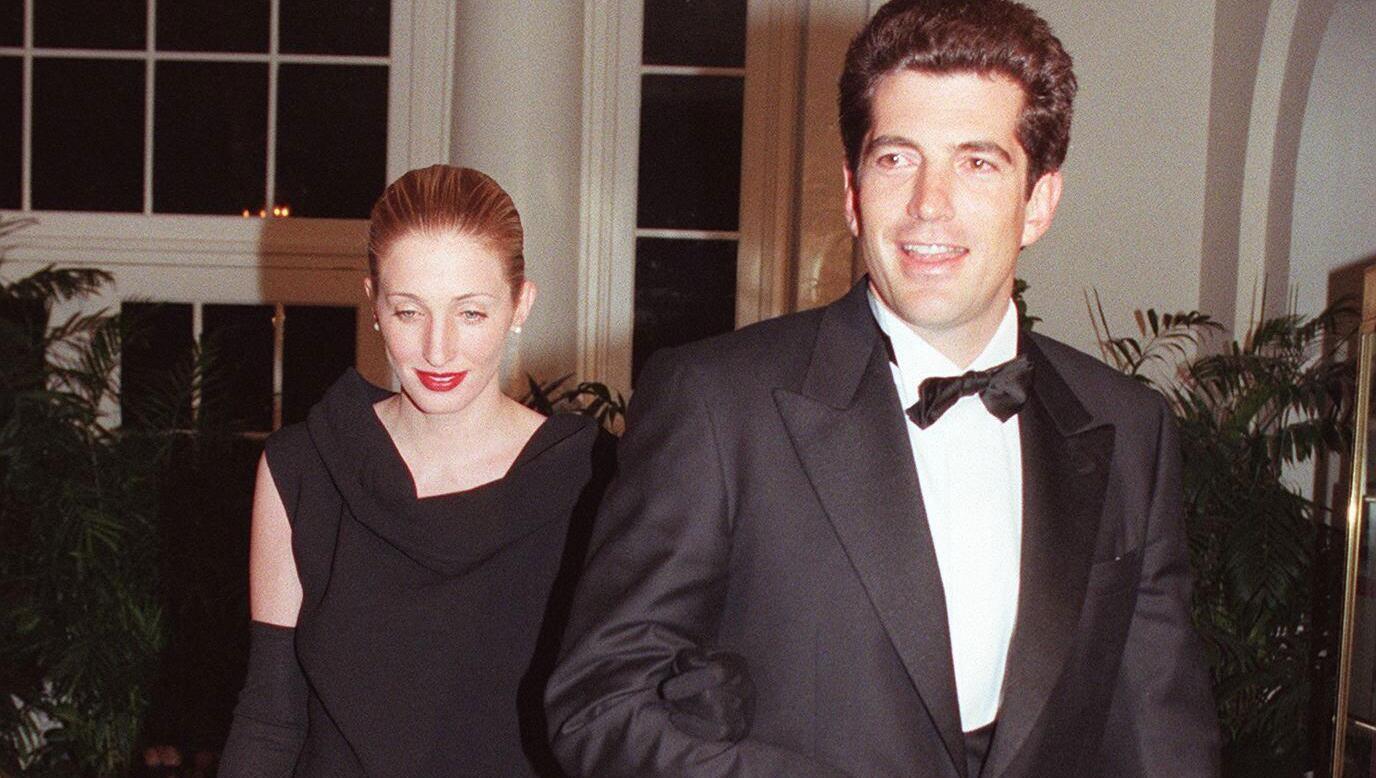
John F. Kennedy Jr (right) and his wife Carolyn Bessette Kennedy (left) at the White House in 1998. At the time, John F. Kennedy Jr was more than a man — he was a kind of American inheritance. File photo: Chris Kleponis/AFP/Getty Images
Catherine McNicholas arrived in Hyannis Port in the summer of 1999 too late to snag one of the waitressing jobs that yielded the best tips, and too early to pick up the crumbs left by those heading home for autumn exams.
Instead, she found herself folding shirts in Filene’s Basement. With no social media to police her choices, she resigned herself to dull, windowless days and warm, carefree Cape Cod nights. J1 summers were never about the day job anyway, she figured — and Filene’s gave a 10% discount.
Then, a curious thing happened. A few miles away, Ethel Kennedy — the great American matriarch at the Kennedy Compound — had a family wedding to plan. She may not have needed a polo shirt from Filene’s, but she did want two Irish girls to work.
Word spread. Most of the Irish students weren’t interested. Catherine and her friend most definitely were. Ethel’s PA greeted them and wasted no time prosecuting their suitability.
“She just fired questions at us. ‘Can you work in a kitchen? Can you make beds? Can you serve dinner? Can you do laundry?’ And I realised she didn’t mean, can you do it at home. She meant, can you do it properly.” They said yes to everything.
“She also asked if I could drive, which I said yes to,” Catherine laughs. “I didn’t tell them I was still on a provisional.”
Then Ethel Kennedy appeared. “She came around the corner and said, ‘Good morning, I’m Ethel. Will you come and work for me?’ Just like that.” Her friend agreed to start immediately. Catherine hesitated.
“I still can’t believe I said this, but I told her ‘I have four shifts left in Filene’s. I’ll have to finish those first'. It’s one of those things young people say, unencumbered by the muscle memory of doubt. To Catherine’s credit, it worked to her advantage.
“Ethel said she admired that. It mattered to her that I’d finish what I started.” That small insistence marked her out. Not dazzled by the family name, nor hungry for proximity. Just straight up reliable.
Within days, the pair were living on the compound in the small bungalow originally built for the Secret Service during President Kennedy’s time. The compound, she insists, was not a palace.
“It wasn’t this huge mansion. It was beautiful, yes — but lived-in and a little wild. Blues and yellows. Family photographs everywhere.”
What governed the place was not grandeur but rhythm.
“There was a chef. Full-time housekeeping. And then there was us — floating wherever we were needed. Clearing, serving, minding children, popping into town for errands. Our friends used to tease us - ‘Here come the Kennedys!’”
And then there was Ina. For Catherine, the real teacher wasn’t the PA with her lists, or even Ethel. It was Ina — an elderly Costa Rican woman who had been nanny to Bobby and Ethel’s children. She returned every summer like a vow.
“She wore starched white like it was still 1962. Sat on the back porch. Fragile-looking, but sharp as anything.” Ina knew every nuance of the family. Every remedy for polishing silver. Every quiet rule.
“She was the only non-family member who stayed in the main house. That told you everything about trust.”
Catherine, like many Irish people whose parents came of age in the 1960s, was Kennedy aware. But she could not have grasped the depth of Ethel’s history: parents lost in a plane crash; a brother-in-law assassinated; two children dead; a husband shot in Los Angeles in 1968. Tragedy was not new to that house, and little did anyone know, it wasn’t done with them yet.
That summer, though, was meant to be a celebration. Rory Kennedy, the youngest daughter — born months after her father’s assassination — was getting married. “There were marquees going up on the lawn facing the sea. Another tent attached to the house for the rehearsal dinner. Guest lists with names you’d nearly drop reading.”
Catherine fielded phone calls. “I spoke to Michael Jordan’s mother one day about a charity golf event. Casual as you like. I had no idea at the time how mad that was.”
The night before the wedding, there was singing in the marquee. Catherine watched from the edge, half employee and half accidental witness, careful not to stare, but happy to bear witness to a world she knew she was only visiting.
Then came another promise: John F. Kennedy Jr was coming. An elderly friend of the family, Privy, a former wardrobe manager who had worked closely with Jackie Kennedy, invited the Irish girls for drinks at JFK’s house - "John is coming. He loves meeting the Irish girls."
“She was going to introduce us without us even asking her to. She made us strawberry daiquiris, we sat there as the sun set, pure delighted with ourselves.”
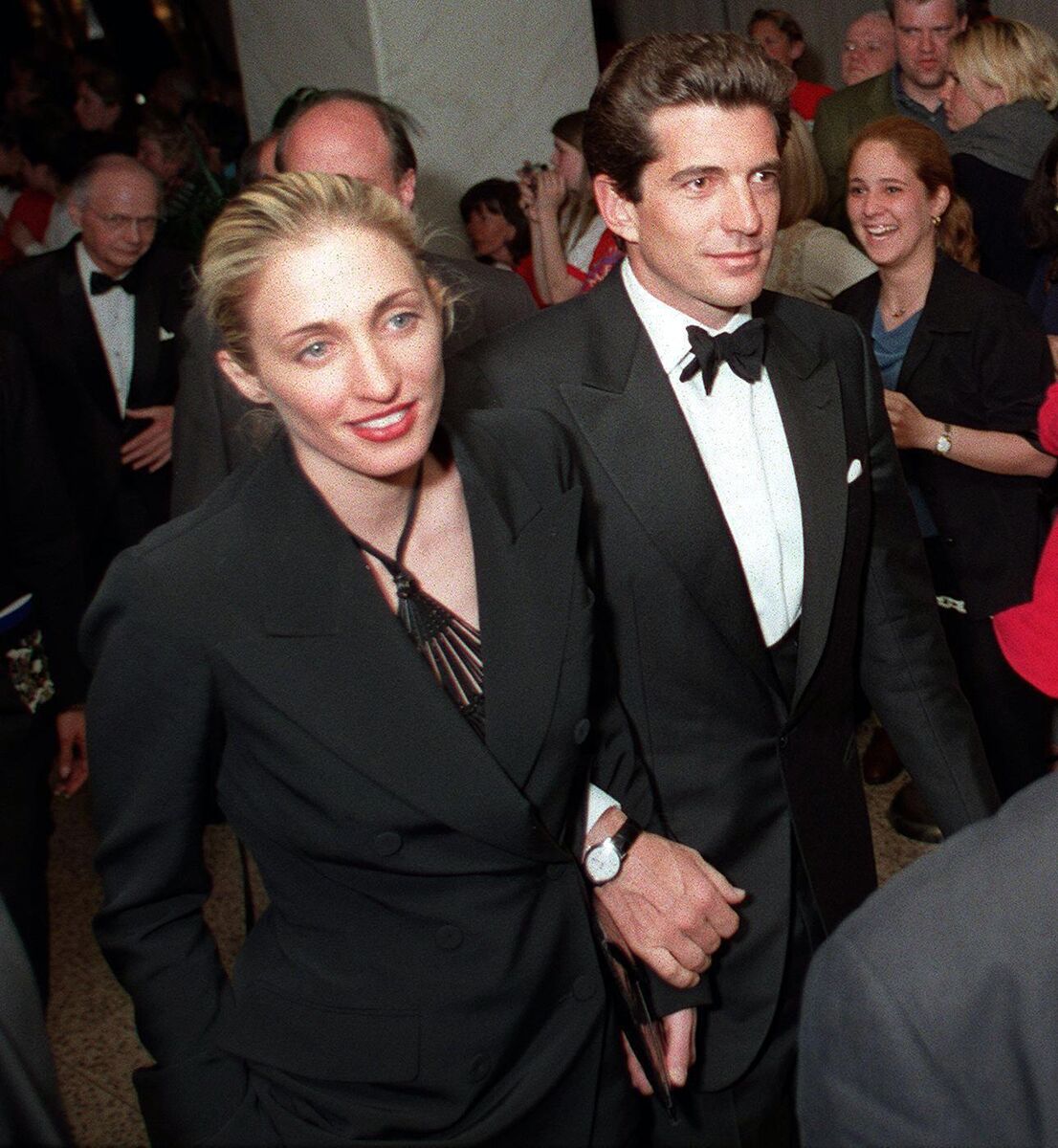
At the time, John F. Kennedy Jr was more than a man — he was a kind of American inheritance. The toddler who saluted his father’s coffin had grown into the most photographed bachelor in the United States, then into the polished publisher of magazine, equally at ease in Manhattan media circles and on the lawns of Hyannis Port.
Handsome in an unstudied way, athletic, charming, carrying both the glamour and the burden of his surname, he was routinely described as American royalty — the closest thing the republic had to a prince. For two Irish girls on J1 visas, the idea that he might stroll on to the lawn in front of them was not just celebrity sighting territory; it felt like brushing up against a unicorn.
“We were so excited,” Catherine admits. “We were only young. We knew he was gorgeous. Trying not to act like idiots.”
John was due to fly in with his wife, Carolyn Bessette-Kennedy, and her sister Lauren. Catherine never met them.
The intercom went off at six in the morning. "Catherine, Maria, pick up." "We’d been in bed about three hours.” They ignored it - until the PA burst into the bungalow.
“The plane is missing. JFK is missing. Carolyn and Lauren are missing. The wedding is on hold.”
“It was surreal,” Catherine says. “You didn’t know how serious it was yet. We were told, just go around, make tea, coffee, water — whatever people needed.”
She remembers atmosphere more than headlines: the way the compound narrowed, how people drifted in and out, how grief filled rooms before confirmation arrived.
There was mass in the living room. “The room was packed. Individual prayers. For the rescue teams. For hope. I never went to mass as much.”
The search stretched on. Outside the gates, paparazzi gathered. “They’d lie on the bonnet of the car as you tried to drive in or out. Cameras in your face. It was relentless.”
The girls were sent on constant errands. “There must be hundreds of pictures of us driving in and out that week.”
Inside, it grew quieter. “They were devastated. But it was private devastation.”
One small mass during that week has never left her. “It was tiny. Ethel, Douglas, his wife, me, Maria and the priest. And he goes, ‘Over to you, Catherine.’”
“I thought, what am I supposed to say? I’m a student from Kiltimagh at a Kennedy family mass.”
She prayed for John, Carolyn and Lauren. Then added: “I’d also like to mention my family and friends at home.”
“They loved that. ‘Yes, we pray for them too.’”
She remembers the day the Coast Guard helicopter landed on the lawn to take Senator Ted Kennedy to identify the body. “Ina said she’d seen everything in that house — and she’d never seen that.”
The helicopter lifted. The sea remained indifferent. “It was just incredibly sad.”
Catherine does not sentimentalise Ethel.
One evening, serving dinner, she cleared the table and the salt and pepper touched with a small clink. “She lost her train of thought. And she was furious.” From then on, she picked them up separately. "Always.”
It is easy to laugh — and Catherine does — but she understands it now. A life marked by chaos can cling to control in small things.
And yet, there was tenderness. On the jetty one afternoon, Catherine lost a sandal between boat and shore. “Ethel went down on all fours to get it for me, crawling along the jetty on all fours making a joke about how that definitely was not her job!”
The most elegiac memory is quiet. After the funeral, Ethel returned late to the compound.
“The house was dark and everyone was gone. I made sure the lights were on and the place was ready for her, the way, I guess, you might do for a neighbour at home.”
“She looked like she’d aged 20 years.” Catherine waited up and watched her, dressed fully in black, enter the house alone. She followed.
“I just called out that I was there. In case she needed anything. She appreciated it, I think. I was nearly afraid to do it. But at that moment, I know she appreciated it.”
She won’t say it, but listening to her tell it you understand that is how Catherine became trusted — not through proximity to power, but through instinct. Through keeping someone from walking into an empty house alone after burying the dead.
Rory’s wedding, meant for Cape Cod, was postponed; it was later held quietly in Greece. The compound slowly emptied. Family members left envelopes and invitations.
“Come stay in Chicago. New York. Anytime.”
Ethel even offered her time at Hickory Hill in Virginia. Catherine twisted her ankle and never made it. And then she went home.
Hulu’s new series revisits glamour and scrutiny. But Catherine’s memories sit behind the camera — in pantry corridors, living-room masses, tea trays and waiting.
Her story is not myth. It is the domestic underside of myth — where history is not spectacle, but a stunned summer, and the most important thing you can do is bring tea, keep the room steady, and wait up for someone walking into the dark.

CONNECT WITH US TODAY



Be the first to know the latest news and updates