Donnacha O'Callaghan and Tommy Bowe on retirement and embracing vulnerability
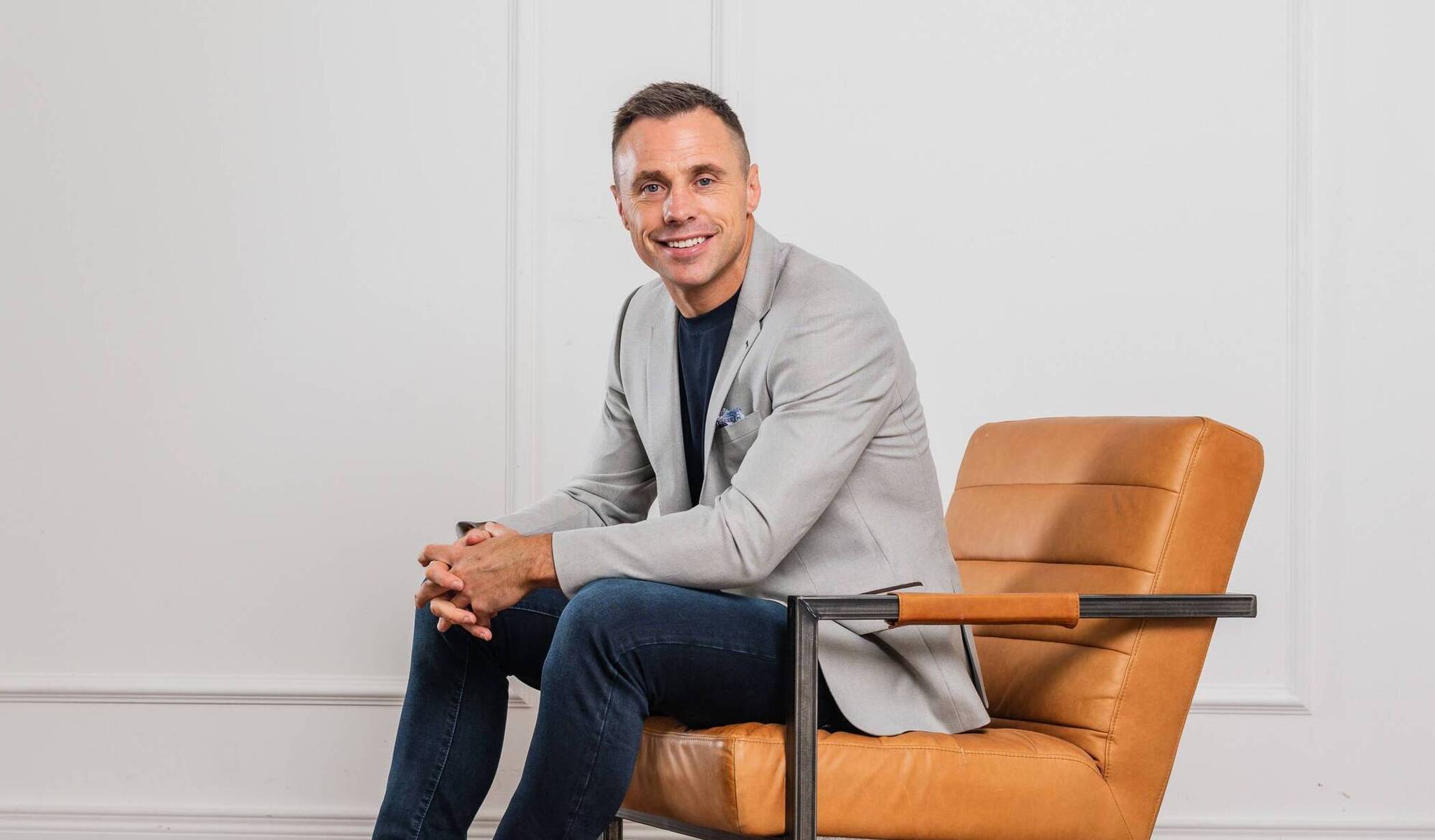
Tommy Bowe, Television presenter and former professional rugby player
Because The Offload — the hit podcast Bowe shares with Donncha O’Callaghan, now touring as a live stage show and soon to be in Cork — is built on the premise that polished isn’t the same as honest. And honesty, as both men have learned the hard way, is rarely tidy.
We are the intersection of winter and spring, so our conversation has a very natural onramp — the Six Nations, the rhythm of expectation and disappointment, the odd cruelty of watching a match as an ex-player with too much knowledge and not enough control. Even in retirement, rugby still tries to climb into your nervous system. But it doesn’t take long for the chat to shift from Ireland’s form to a bigger question: what happens when the thing that shaped you – your tribe, your identity, your daily structure – ends?
Plenty of former internationals take the well-worn path. They step from changing room to studio, from matches to opinions, from one uniform to another. Bowe and O’Callaghan did that too. But both were
determined, as they put it, not to become “just another pundit”. “It’s hard to say without being disrespectful to rugby,” O’Callaghan explains, “because we’ve had the best times, we’ve had a lot of fun… but I wanted to challenge myself.”
That word – challenge – keeps surfacing, as if it’s a private rule they’ve both agreed to live by. Not because they’re thrill-seekers, but because they know what stagnation looks like. They’ve seen it happen to teammates: men unmoored after retirement, trying on “three different jobs within six months,” unsure where they’re going. For O’Callaghan, the fear wasn’t the day after retirement — it was the years after, when the novelty wears off and you realise you’ve mistaken familiarity for purpose.
So he planned. Properly, deliberately. He sought people out. He asked for help and he made lists.
“Sometimes I find it easier to write down what I don’t want,” he says. “I remember that being a goal for the first five years away from the game… If you’re in a tracksuit, you’ve failed.”
It’s a brutal line, funny and half-serious, but it reveals something deeper: a refusal to drift. Rugby can be a seductive trap because it’s so total. And when it ends, the temptation is to hover around it forever.
Bowe felt the same pull. He’d watched the conveyor belt in action: a former player becomes an analyst, stays relevant until the next former player arrives, and then gets nudged down the pecking order.
“You’re only good as a pundit,” he says, “until the next fella retires. There’s no exact science to being good or successful at it, so you might think you’re doing great…and suddenly the phone doesn’t ring.”
“I also felt a little unqualified for punditry,” Bowe says, somewhat surprisingly. “I spent my career out on the wing, waiting for a pass. That’s a long way from the nuts and bolts of where the majority of the game is played, so for me to suddenly be an expert on everything felt a little… disingenuous.”
Given his public persona, such humility from Bowe is believable. There’s no bitterness in his observations about the analysis game, just clarity. The industry moves on. Bowe knew he didn’t want to spend his post-rugby life waiting for a call that didn’t come.
So he did something that sounds obvious until you remember how unusual it is for a successful sportsman: he went back to school. “I did a diploma in journalism,” he says, “And I chased experience, figured it was better if I learned the work from the ground up.” Not because he had to, but because he wanted to be able to stay in the room once rugby’s reputation stopped opening doors. That’s the hinge of their story, really. Both men know that a famous name can get you through the first door. It cannot keep you there. “You have to show you’re capable and adaptable,” Bowe says. O’Callaghan nods to the humiliation baked into that process. Because learning something new as an adult is one thing. Learning something new as an adult while the public watches is another.
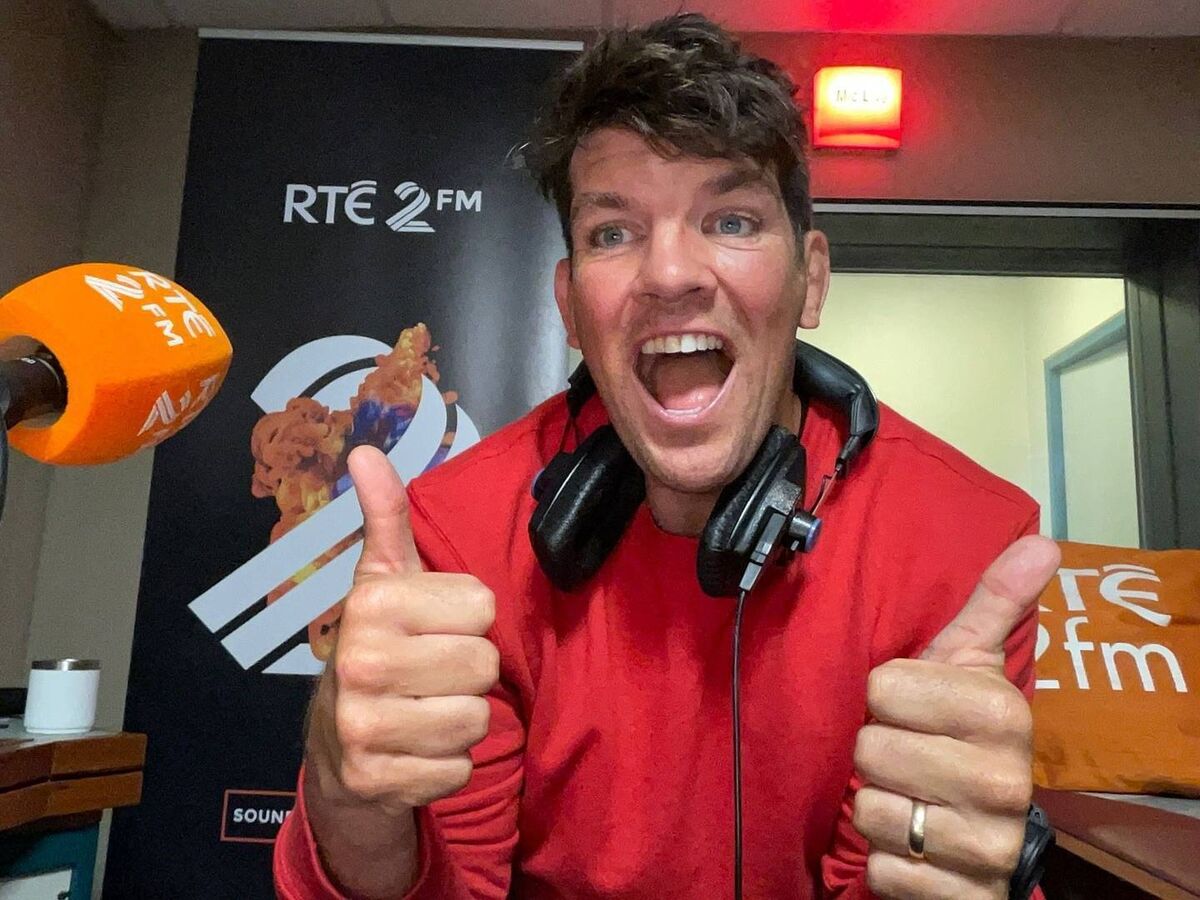
He describes radio as a kind of exposure therapy: live, unforgiving, impossible to hide behind. When he started presenting on the 2FM Breakfast show, there were mornings when his voice would shake – an involuntary quiver that didn’t care how much he’d practised. He’d ring Bowe. “I knew the only one that could understand was Tommy…,” he says. “I’d tell him the balls I made of it.” Bowe, for his part, laughs at the memory and then says something more revealing: the trick is being “vulnerable enough” not to become robotic. Rugby trains you to speak in safe sentences, but the daily exposure of live performance punishes you for it. And so the invisible work was in unlearning the protective habits that kept them functioning as players. In television, Bowe says, he initially thought the job demanded seriousness: tie on, and a measured tone. Then he realised something that should be obvious but often isn’t: you’re a guest in people’s homes.
“If you’re privileged enough to be on people’s televisions,” he says, “they want to be entertained.” And that, too, is what they wanted The Offload to be about. It’s not that rugby doesn’t matter.
“It’s that rugby alone isn’t enough. A good broadcast isn’t a lecture; it’s a conversation that makes people feel included. And that’s where The Offload found its identity.” The pair talk about “the market being flooded” with podcasts that feel like press conferences: dry, hypothetical, dense with terminology. They wanted something closer to a dressing room.
“There’s so much about rugby that bored me as a player,” O’Callaghan says, “so I can only imagine it’s off-putting for your average fan to be subjected to so much technical talk. Dressing rooms are intense and to the point, but they’re also great craic, and that’s what the pod wants to convey.”
As for the live show? “We want to give people a night out that — unlike a November international, say — doesn’t require a hotel in Dublin,” O’Callaghan says. “The show is about celebrating the game and widening who feels welcome in it.”
O’Callaghan rails against the notion that rugby is a “class” sport, something for the affluent.
“It wasn’t how I grew up with it. And it’s not how I want to practise it now.” Underneath the jokes and the touring schedule, there’s a bigger portrait emerging: two men trying, consciously, not to calcify into their past selves. Do they tire of it? The constant performing — first rugby, then punditry, on to radio and now the Offload and live shows? O’Callaghan counters: “It’s not a performance. I think we both present ourselves in public and on the shows we do exactly how we are. So, it’s not some big act. Being authentic makes it more sustainable.”
It’s not without its confusions. When your output is so broad, it can be hard to simplify for your most discerning audience — your kids. “They’re always asking — “Dad, what do you actually do? — just so they could better explain it to their friends whose mums and dads have more regular jobs... It’s funny, but it’s also grounding. Because the further you get from elite sport, the more you realise that identity isn’t a trophy you win once. It’s something you have to keep earning.”
Maybe that’s what links everything: rugby, broadcasting, podcasting, touring, even the charity work. (Just this week O’Callaghan launched the inaugural Re-turn Awards, to recognise the community spirit shown by students in embracing Ireland’s Deposit Return Scheme, whether through fundraising initiatives or innovative recycling campaigns.)
Both men are still chasing the feeling that sport gave them — the demand, the stakes, the growth. Except now the scoreboard is private. The opponents are ego and comfort, and the temptation to coast.
“I think it’s about being open enough,” Bowe says, “to show your personality and not be afraid to make mistakes.” In other words: not being afraid to fail, publicly, in pursuit of getting better. It’s a brave thing for anyone. It’s braver when you’ve already been very good at one thing — when failure feels like regression rather than progress. And yet, listening to them talk, you sense the relief in it too. The freedom of not having to be a finished product. The permission to be learners again. That, perhaps, is the real offload: letting go of the version of yourself that the world expects you to stay, and choosing — awkwardly, diligently, with plenty of dropped passes along the way — to become something else.
- The Offload Live comes to University Concert Hall (UCH), Limerick on March 4, Dublin’s Ambassador Theatre on March 5, and Cork’s City Hall on March 13. Tickets from uch.ie and ticketmaster.ie.


CONNECT WITH US TODAY



Be the first to know the latest news and updates