I've been going to sound baths for six months — here’s why I think you should try sound healing
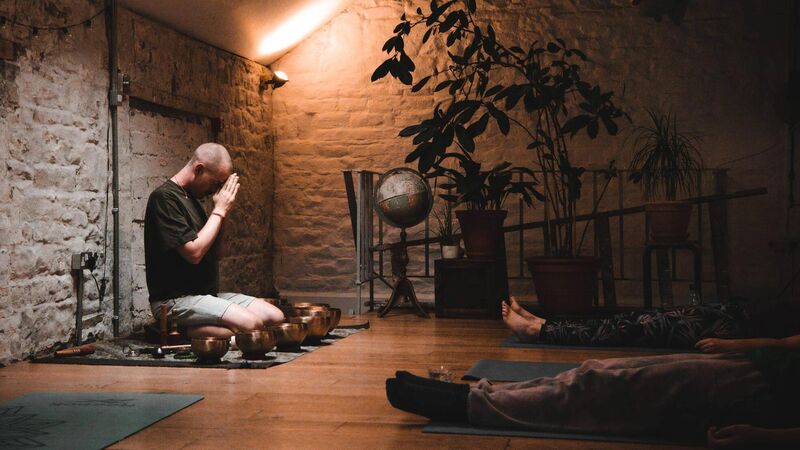
Ché Fegan. Picture: annamellostudios
Once a month, on a Thursday evening, I leave the office and head to The Space Between — a yoga studio tucked away on a quiet side street in Dublin’s city centre — for a practice called Soma Sounds. Led by breathwork coach Ché Fagan, the class blends gentle yoga, somatic movement and guided breathwork, concluding with the element that feels like a balm for the soul: a sound bath.
Sometimes, I arrive on a relatively even keel, with time to pause as I remove my make-up and change into comfy athleisure. Other times, I arrive flustered and breathless, having legged it from a stressful day where it felt like the keyboard had me in a chokehold.
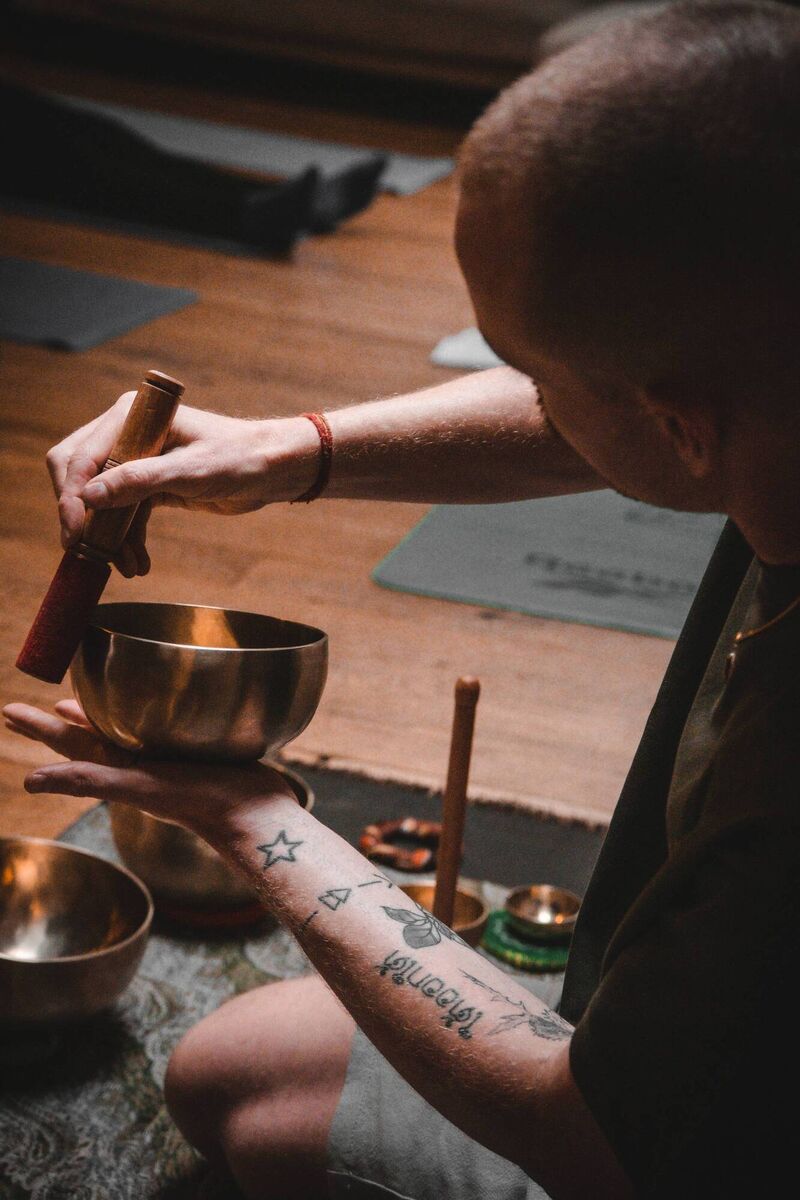
Regardless of how I show up, post sound bath I always leave with the same feeling — like a weight has been lifted. My racing thoughts slow. The heaviness in my chest softens.
It’s a state I’ve occasionally managed to reach through meditation or guided cacao ceremonies, but never as quickly, or as reliably.
Fagan, who agrees to meet me for a pot of tea before one of his classes, isn’t surprised when I tell him about my experience.
Anyone with a history of anxiety or chronic stress will be deeply familiar with the sympathetic nervous system — the part of our physiology responsible for triggering the fight-or-flight response. While it serves an important purpose, many of us in the modern world seem to live in it. It is our baseline – which is far from ideal.
By contrast, the parasympathetic system — associated with ‘rest and digest’ — is the state that doctors, therapists and anyone selling a self-help book, are constantly nudging us anxious folk to work towards.
Despite being well aware of the benefits of practices like meditation and yoga, I struggle to a) commit to them consistently and b) actually tune in to them. Ironically, my perceived inability to meditate properly or leave a yoga class feeling reborn has only added to my feeling of stress, frustration, failure.
As Farzana Ali, sound therapist and author of explains, the practice is “essentially passive”.
“Sound meditation requires no effort on the part of the listener,” she notes. “Your practitioner does all the hard work. The learning and acquisition of skills is our responsibility. We master the playing techniques that influence your brainwaves. You simply listen.” In a world where so many of us exist in a near-constant state of overwhelm, is it any wonder that a practice which shifts the responsibility elsewhere is gaining traction?
The science around sound baths is still emerging, but several studies have linked the practice to measurable reductions in anxiety, depression and negative mood.
Exactly how sound baths deliver these effects isn’t yet fully understood, but one theory suggests that the slow, resonant sounds produced by instruments such as crystal bowls, gongs and chimes may help nudge the brain toward patterns associated with deep relaxation and rest.
For Fagan, it was a powerful personal experience that led him to train as a sound bowl facilitator.
“It was after covid, and it was my birthday,” he tells me. “My friend’s yoga teacher had just completed his sound healing training and brought his bowls into a class. She said, ‘I have a friend who would love this — is there any way you could do a one-to-one session with him?’”
Fagan remembers lying on a mat in the middle of a yoga studio, alone with the practitioner, the bowls positioned just above his head.
“He started playing, and I’d never heard sounds like it before,” he says. “Instantly, my body started vibrating.”
“I had no thoughts, no worries. I was just presently there, in a sense of bliss.
“Now, when I have a sound bath, I just instantly fall asleep. But that time I was just so present. I think I was really holding on because I’d never experienced anything like it before.”
He describes it as a “weird, out of body experience”, where he felt as though he was “witnessing [himself] having the experience.”
When the experience ended, his only thought was: “I want more.”
Looking back, my own first sound bath with Fagan was profound in its own quiet way.
While I didn’t feel a “vibration” in the way Fagan and many others report post sound bath, nor did I experience a clearing of all thoughts, what I did experience was a sense of calm that felt foreign. When the session ended, I felt unexpectedly emotional.
Thoughts about work, life admin and general nonsense still surfaced during that first session and in the months since, but they arrive differently. Rather than feeling suffocating, accompanied by a tight chest or racing mind, they pass more gently, like clouds drifting overhead. I might pause on one and think, “ah yes, I must email Ciara”, but I don’t feel it in my body in the same way.
During my conversation with Fagan, we touch on many of the purported benefits of sound baths — some supported by science, others more anecdotal — as we try to pinpoint why they’re becoming an increasingly common offering at wellness centres and events.
"I think, not only sound healing, but yoga, breathwork, all these things are getting so much more popular because it's a way back to self-practice, and that’s something I think that people are really craving."
“With the increases in anxiety, depression, and just general stress, everyone feels so busy, and no one really makes time for themselves," he notes.
Maybe, he suggests, they’re becoming really popular “because it's an excuse to actually just switch off for an hour.”
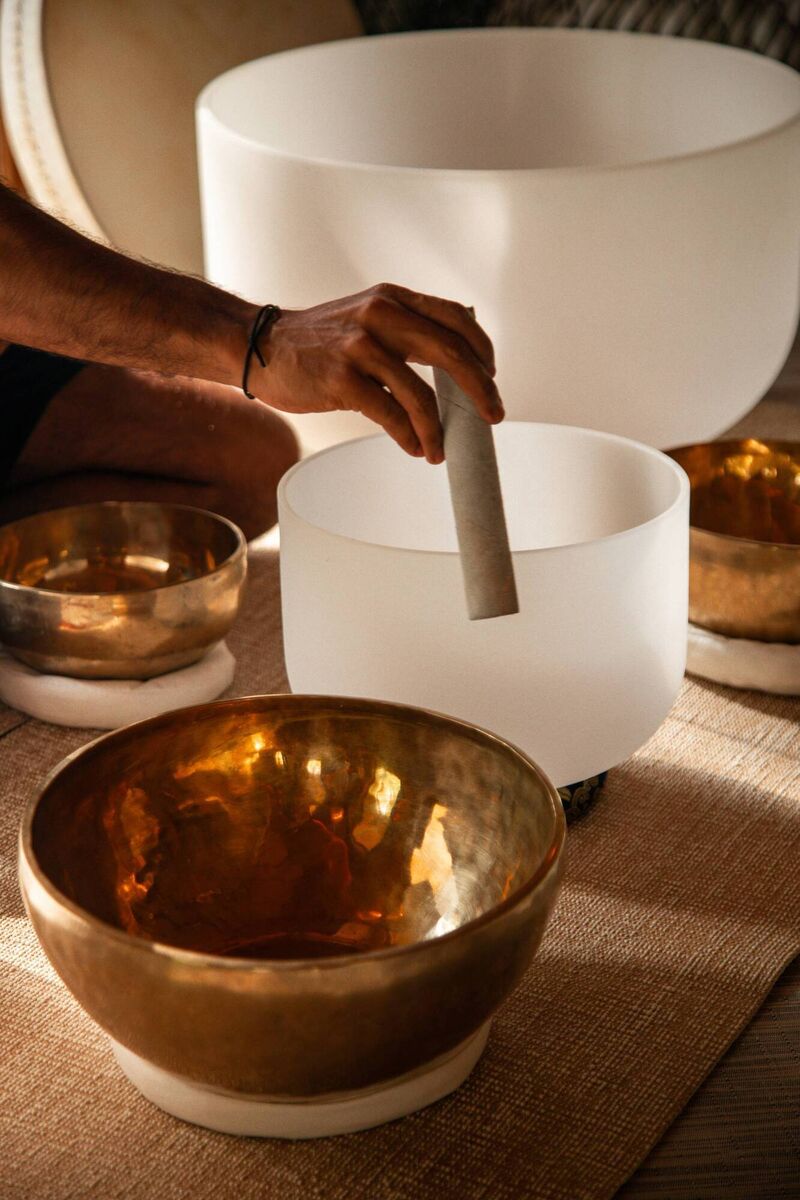
Katie Donovan, founder of one of Dublin’s new wellness destinations, Align Wellness — which offers heat (sauna), cold (ice baths), breathwork and sound experiences — feels sound baths are becoming more sought after as people are more informed about the benefits.
“Nervous system regulation is so mainstream now,” she says. “Everyone is talking about it.
“People understand that you can’t operate from a dysregulated state, and the sound bath is a really nice, calm way to help that nervous system move into the parasympathetic state. You don’t need much energy yourself to just listen, so it’s great for people who are overloaded or burnt out.
“The sound bath will meet you wherever you are.”
Like most wellness trends, sound baths aren’t a magic panacea for those of us navigating stressed, busy lives. But in a culture where constant hustle is the baseline, they offer something we’re increasingly struggling to make time for: respite, renewal, rest — without asking anything of us.
Except, of course, to listen.
- Ché Fegan hosts 'Soma Sounds' at The Space Between, thespacebetween.ie.
If you can't find a local studio offering a sound bath experience, there are plenty of YouTube channels providing hours of content that might help you float away. Here are three we have tried and tested.
1.
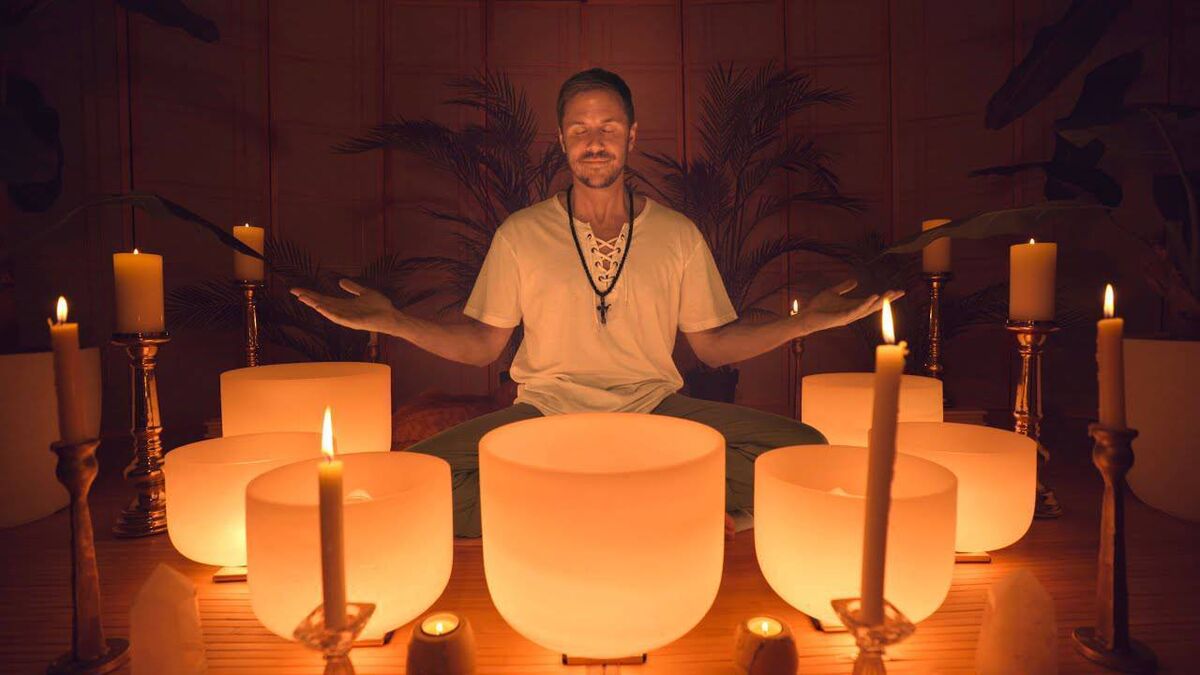
With some of their most popular videos reaching 10million views, friends Travis Schumacher and Drew Griffin's channel features long immersive sound baths utilising crystal singing bowls and gongs, alongside light and colour, to "slow the pulse, release muscular tension, and create a clear, focused state of mind".
2.
The traditional Tibetan singing bowl takes centre stage on this chanel which provides sound baths designed for deep yoga, meditation, or as a sleep aid.
3.
Not technically a soundbath, but Marten's handpan music is one of our favourites to drift off to sleep to. With 1.31M subscribers, we can only imagine we aren't alone. If you've never heard a handpan before, you're welcome.


CONNECT WITH US TODAY



Be the first to know the latest news and updates