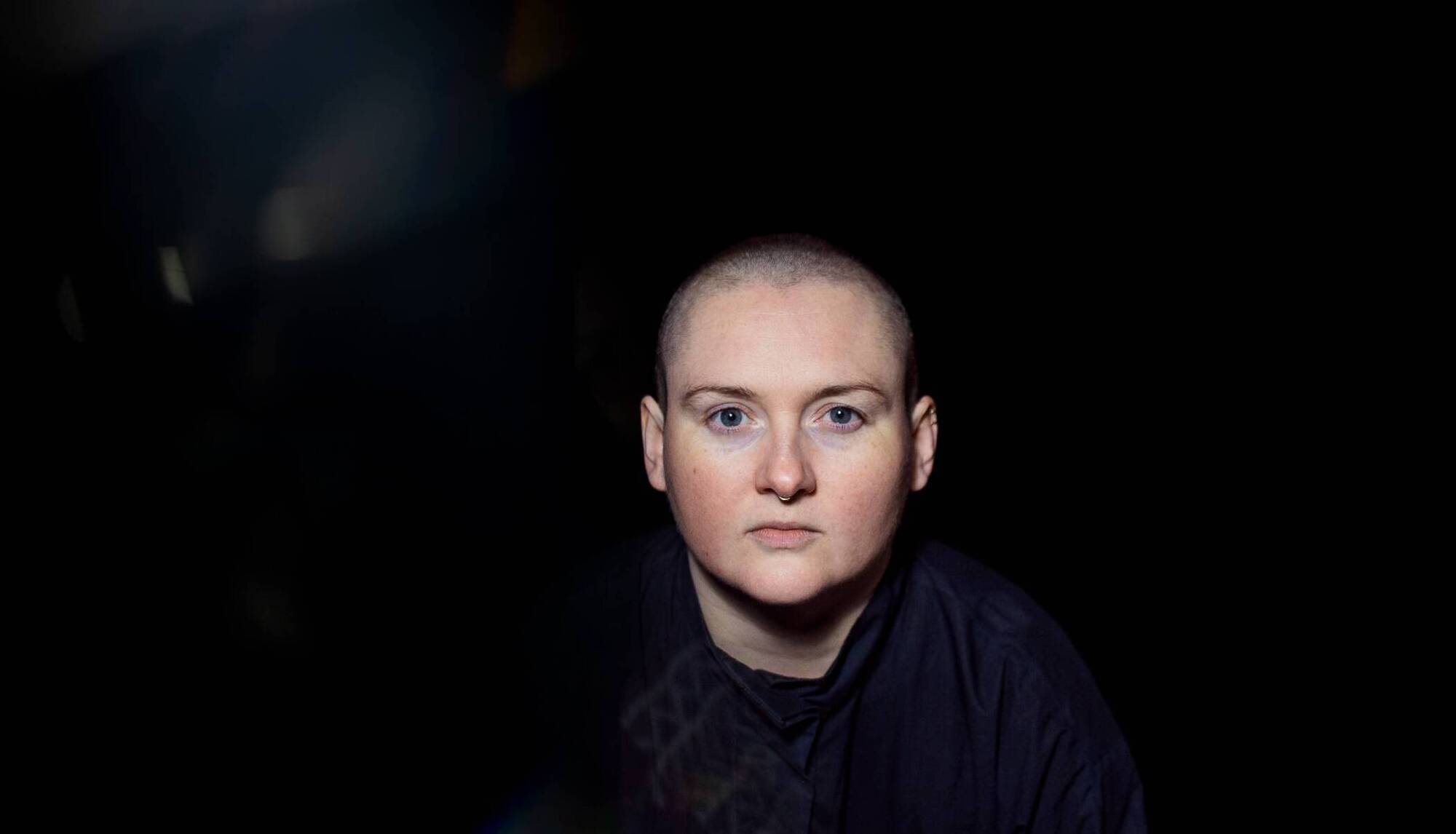
Dani Larkin is building a reputation as one of Ireland’s finest contemporary songwriters.
Praised for her rich contralto voice and the emotional depth of her work, she has toured with artists including Snow Patrol, Lisa O’Neill, Ye Vagabonds, and Glen Hansard, while her debut album Notes For A Maiden Warrior earned her critical acclaim and many award nominations.
Her latest record, Next Of Kin, builds on that foundation, pairing her signature storytelling with adventurous new sounds and exploring themes such as love, grief, courage, and connection with a sensitivity that feels increasingly rare.
Growing up in a small village along the Armagh–Monaghan border shaped both Larkin’s sense of self and the type of artist she endeavours to be.
“Living on a border is a very different mindset and physical space to occupy,” she says. “I think you really feel that in my work. You have these traditional songs from a border area, and then also this kind of liminal space of light and dark, and how those cycles revolve around each other.”
Reminiscent of Sinéad O’Connor with a touch of haunting Lankum-esque harmonies, the album is gripping.
“It’s been a couple of years in the making,” reveals Larkin, who came up with the album’s name at a festival back in 2021. “I woke up the morning after playing a big headline show, and I was like, ‘Oh, the next record is going to be called Next of Kin.’ That was just shy of five years ago.
It’s taken that length of time to write the songs but then to get to know them in a different way. When you’re finished, you begin to understand them more and more. That’s when things start to click into place.”
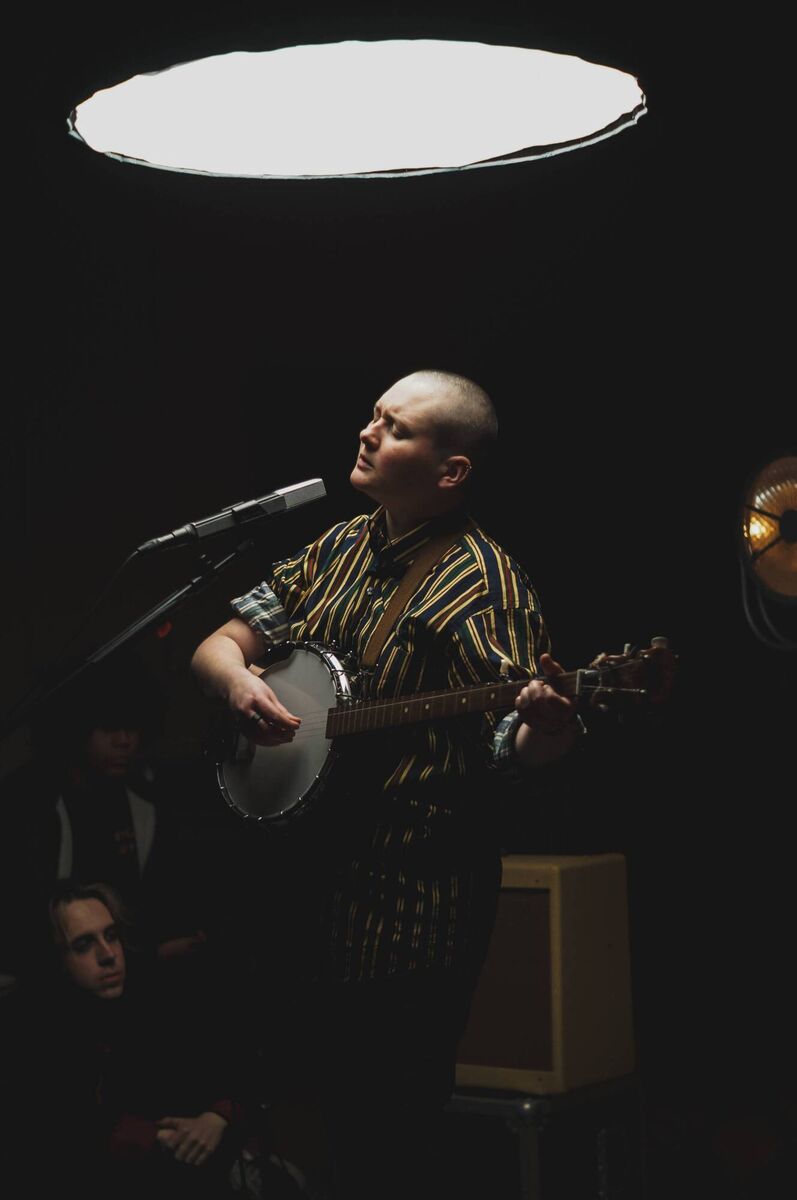
Before music became Larkin’s primary focus, she spent many years interweaving the stories of place through sound as a conflict transformation facilitator in Palestine, Colombia, and Indonesia. In many ways, it was through those experiences that she learned the true, transformative power of music. In fact, those encounters changed the way she understands listening.
“Listening is something I had to learn,” admits Larkin. “Now, for me, it’s like breathing. But it’s not just about music, it’s not just about sound; it’s also about silence and space and breath. When all of those things come together in a room — whether that’s in a community setting, at a gig, or on stage with 3,000 people — when all of those ingredients are there in the room, that’s when the magic happens.
Every experience that we have changes us
“I have been changed very many times by the surroundings I [found] myself in and, at times, that’s been really difficult to move through and integrate into a world when you come back — you’re ultimately a different person.
“And, of course, people can relate to that in lots of different ways. It doesn’t just have to be in a conflict zone or in a facilitation space. For me, I try to move through the world with kindness to myself and to other people. And I try to not be so hard on myself... moving from a place where we can see the best in people doesn’t always feel possible but, for me, that’s a big part of integrating back into a world without,
arguably, direct violence.
“We live in quite a fragmented world that’s really hard to navigate. There’s definitely responsibility there that I will never shy away from. I think it will always be present in the work, especially when it comes to Palestine, Colombia, Venezuela, and Indonesia. You know, those things will live with me forever and I’m grateful for that because it teaches me about myself and my place in the world.”
With her latest work, Larkin aims to explore the milestones that impact us all, no matter where we are in the world. Tracing a path from birth to death, the album is structured as a sonic trilogy. The opening track, Morning — an arrangement of the 1931 hymn Morning Has Broken — sets the tone.
“That’s a testament to the fragmented world that we live in,” Larkin explains of the choice. “As you move through the record, it’s a reminder that there’s [still] a glimmer of hope and love and dance and joy.”
High King is the first taste of true love on the album and delves into “what it means to move through the world as companion to another”. This one is especially close to Larkin’s heart, who, alongside her musical aspirations, dreams of being a wedding celebrant one day.
“I told my friend recently, ‘I really would love to be at weddings,’ and they were like, ‘Well, you’re actually more of a funeral person — I think you’d be really good at funerals’,” she laughs.
The album closes with Danny Boy, chosen partly to honour the late Sinéad O’Connor, who performed a cover of the song on The Late Late Show in December 1993, and partly as a “bit of mischief”. As Dani herself puts it: “There’s always a little bit of mischief or fun to go along with despair.”
On whether her process differs if she’s writing a happy song versus, say, a more poignant one, Larkin says: “I don’t shy away from the depths of darkness that we can experience as humans on this Earth but that’s certainly not where it starts and ends.”
For those coming to her music through this new album, she hopes that people “find something in it for themselves”.
The songs themselves are your next of kin. They’re there for you in all the seasons of your life
Collaboration was very important to Larkin when working on this album, which is co-produced with Ruth O’Mahony Brady, a pianist, vocalist, producer, and composer who has worked with a range of artists, including Sam Smith, Gorillaz, and Feist.
According to Larkin, it’s a partnership that just worked. “We really complemented each other. Ruth comes from this incredible world, sonically, of piano and synths and is classically trained. Whereas for me, I’ve never studied music. It’s all by ear and feeling… For me, music is about being in the room and playing together. The more we do that, the more enjoyable it can become and the better the work becomes.”
While each time she releases work is different, the feeling of nervous anticipation is a constant. “I’m just really excited about this record and putting it out. Once it’s out, it’s actually not mine any more, which is such a strange feeling.
“You kind of hand this thing over to the world for people to receive. It’s everything [to you] and then you let it go and you hope that it lands.”
Once the songs are out there, they take on lives of their own, shaped by those who carry them. For an artist so attuned to breath, silence, and what lies between, it makes sense that Larkin’s work reflects that. In an era obsessed with urgency, her music is a welcome reprieve — encouraging us to sit, reflect, and really listen.
- Dani Larkin plays Coughlan’s in Cork on March 20. danilarkin.com

CONNECT WITH US TODAY
Be the first to know the latest news and updates