Stardust redress scheme 'makes a shambles of the State apology now', say survivors
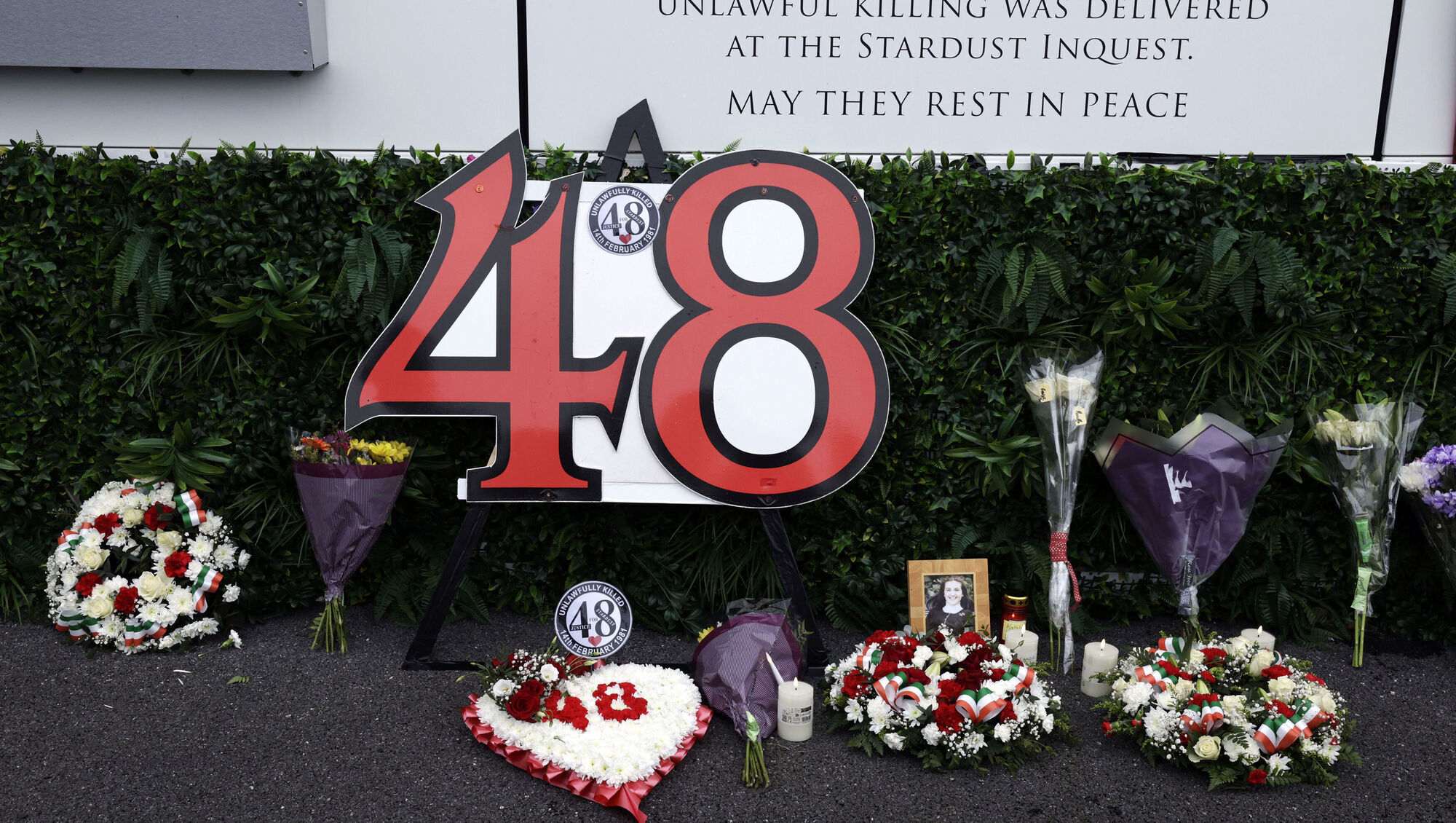
Some of the offerings left next to the Stardust commemorative wall last Saturday at the site of the Stardust nightclub fire where 48 people died on Valentine's day in 1981. Photo: Conor O'Mearain/PA
After being boxed into a “take it or leave it” offer for the guts of 40 years ago, Stardust survivors say they now face into a redress scheme based on that same “flawed” principle.
This week, a redress scheme for survivors of the tragedy, where 48 young people lost their lives following a fire at a north Dublin nightclub in 1981, formally opened.
Now that it is open, it is abundantly clear that you have to have been offered compensation from the original tribunal set up in the 1980s to be eligible now.
It doesn’t matter if you felt too traumatised to come forward then, or if you only developed health problems connected to the fire in the years after.
It doesn’t even matter if you were disfigured for life in the fire, you have to be one of those 823 people who received compensation back then to get the blanket €20,000 redress offer now.
Read More
“We had no idea this announcement was coming,” said Jimmy Fitzpatrick, who suffered life-changing injuries in the fire that require ongoing healthcare.
“This kind of makes a shambles of the apology now. Moving forward we thought decisions would be made based on engagement with us.”
It took 43 years of campaigning until families of victims and survivors eventually heard an inquest rule that the 48 young people were unlawfully killed.
A jury looked at the evidence of the carpet tiles on the walls that didn’t meet the required standard, and some of the emergency exits being chained or obstructed, and determined — as well as the fire likely having started due to an electrical fault in the hot press — that each of the deceased was unlawfully killed.
In the meantime, families of those who died and survivors had had to live with the stain of one of their own being labelled an arsonist while fighting tooth and nail with a Government long unwilling to budge for fresh inquiries as to what happened to their loved ones.
Just a few days before the 45th anniversary of the disaster, minister for justice Jim O’Callaghan announced the redress scheme for survivors of the Stardust fire in a move that blindsided these very survivors.
The press release issued by his department was clear that it would be “recognition payments to survivors who were injured” in the fire. This is the second such tranche of redress after families of the bereaved victims received payments.
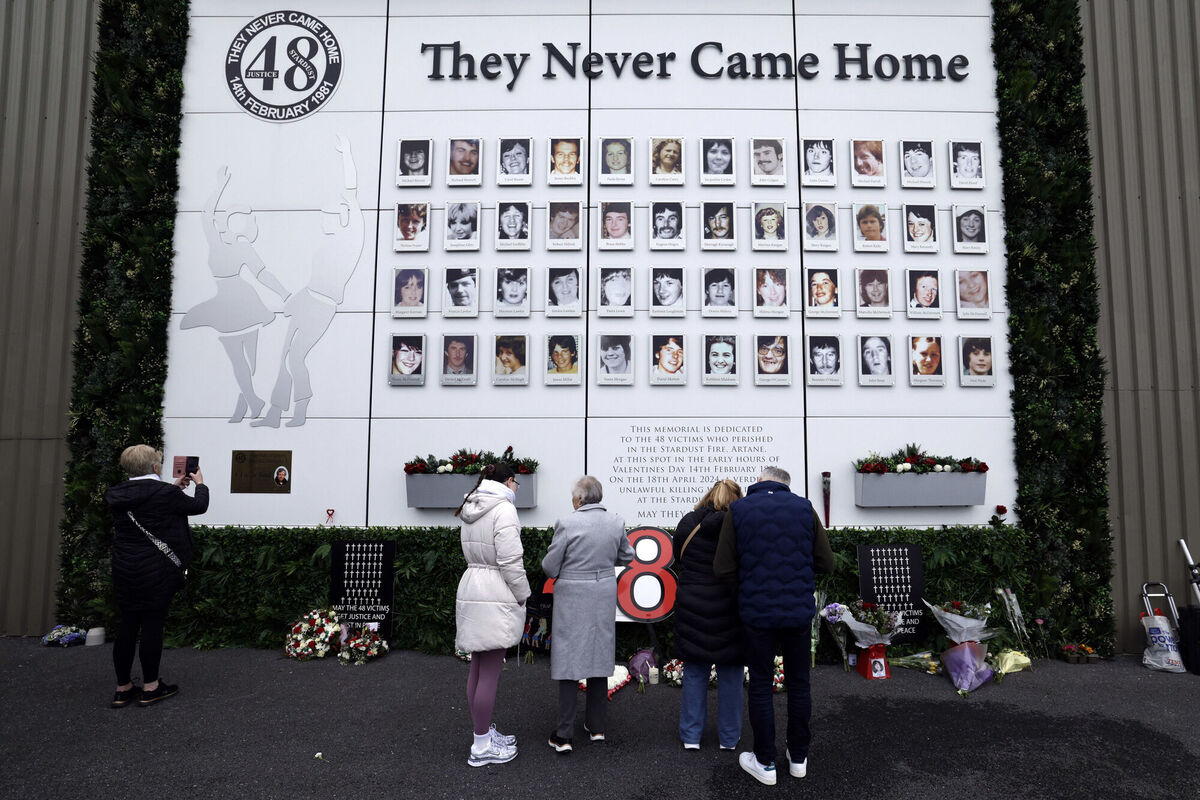
The statement also said that “all survivor beneficiaries of the original Stardust Victims Compensation Tribunal will be solely eligible for this recognition payment”, and that as 823 people received compensation from that original Tribunal, the potential maximum cost of this redress scheme is €16.4m.
It is notable the Government has based this scheme on the previous Compensation Tribunal, which was set up in the mid-1980s to offer redress to those affected by the Stardust tragedy.
This was no altruistic effort by the State to do right by those who had suffered because of the Stardust fire. It was in part to avoid an unedifying spectacle that would be played out in the courts where the State stood against victims who sought compensation.
The owners of the Stardust had already successfully sued for malicious damages on the basis that the first tribunal set up into the fire concluded that the fire was “probably” started deliberately.
If you signed up to this Government scheme to offer redress, then you had to give up your court case. And if you accepted whatever money was offered, you couldn’t challenge it later.
John Keegan, whose daughters Mary and Martina died in the fire, wasn’t compensated as the Compensation Tribunal decided “one could not award compensation for mere grief however intense”.
Basing this new scheme on one that was itself heavily criticised at the time speaks to how critics claim it is a “one-size-fits-all" approach that ignores the lasting impacts that have lingered well beyond the first Compensation Tribunal made its awards in the 1980s.
“At the time, most of it was given out on basis ‘if you don’t accept this, your parents could lose your house’,” Mr Fitzpatrick said.
“That’s what we were told would happen [if you kept with the court cases]. You’d sign anything. Now they’ve gone down the same route.”
Linda Bishop, who was in the Stardust that night with friends, said the new offer of redress feels very much like the compensation tribunal back then.
“They probably expect us all to snap the hands off them for €20k because of this idea we’re ‘poor’ and live in Coolock, from the north side and all that kind of thing,” she said. “It’s insult to injury not to have engaged with us on it before they announced it.
“Health issues have plagued many people since.
And, even though a verdict of unlawful killing was delivered almost two years ago, a garda review into the case is still ongoing which further compounds concerns felt by many families and survivors.
“This is all adding more trauma and stress now,” Mr Fitzpatrick added. “I’d urge the Tánaiste and Taoiseach and minister to sit down and talk to us on this. They need to really have a think about this.”
The sent a set of detailed questions to the Department of Justice regarding the scheme and if they’d re-examine how it operates.
A spokesperson said on Friday night: "On February 10, the Minister for Justice, Home Affairs and Migration, Jim O’Callaghan, announced Phase Two, a scheme of ex-gratia recognition payments to survivors who were injured in the Stardust fire.
"Phase Two (Ex-Gratia Stardust Recognition Payment Scheme) for survivors is open for applications since Monday, February 16.. Full details, including terms and conditions, frequently asked questions and contact details, are available at www.stardustrecognitionpayment.ie.
"The payments now being made are a recognition payment for the delay in establishing the truth of what occurred on the night of the Stardust tragedy. It is important to note that this Phase Two payment is not a payment of compensation for injuries, as that was the scope of the original Tribunal.
"The Department can confirm that over 100 applications for the scheme have been received since it opened and are currently being processed."

CONNECT WITH US TODAY



Be the first to know the latest news and updates