'We are taking her back' — Why St Brigid is being reclaimed by modern Irish women
As a bold reimagining of St Brigid arrives in bookshops this weekend, Gemma Fullam speaks with author Kim Curran and fellow admirers to explore why Ireland’s newest patron saint is resonating so strongly with women today
'We are taking her back' — Why St Brigid is being reclaimed by modern Irish women

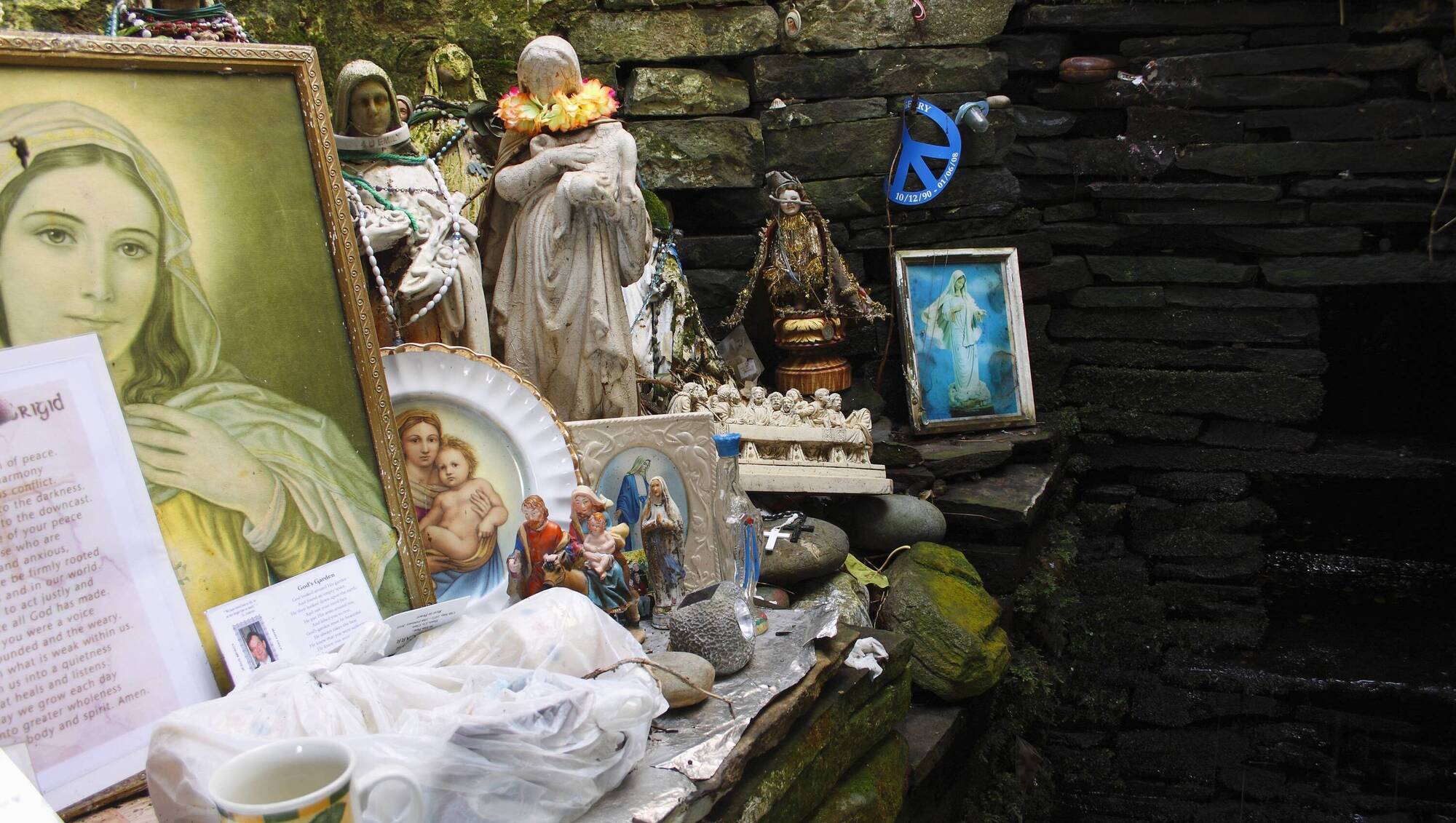
St Brigid's Well, Liscannor, County Clare, Ireland

“She's quite a petty bitch at times.”

Kim Curran, author of Brigid, is speaking to me over Zoom and doing a stellar job of humanising Ireland’s only female patron saint, who, it appears, had a zero-tolerance streak. “A leper she heals isn’t grateful enough, so she gives him his leprosy back.”

It’s unsurprising to hear that Curran approached writing about Brigid with a degree of trepidation — not least because Lá Fhéile Bríde and Brigid’s woven cross of rushes remain enduring traditions in Irish life, tipping the saint-slash-goddess into sacred cow territory — but the deeper she dug into ancient texts and medieval manuscripts, the more the author realised Brigid deserved a radical reimagining. “There was this complexity to her,” says Curran. “She wasn’t this perfect, saintly woman.”

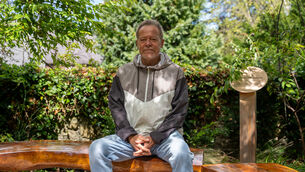
Kim Curran by Robin Christian

Legend has it that Brigid, whose name means ‘exalted one’, was born on the cusp of dawn in Faughart, Co Louth, on the threshold of a barn, with a column of fire announcing her arrival. The Annals of Ulster record the year of her birth as 452AD.

“One thing I find fascinating about her is that she’s an incredibly liminal person,” says Curran. “She’s born to the son of a pagan chieftain and a Christian slave, and is literally born in a threshold. She exists in this time between the Pagan and the Christian.”

With secularism now usurping Catholicism, Ireland is in a similar space of in-betweenness, Curran says. Brigid “stands in that space”.

Stainglass window of St Brigid

Brigid’s liminality, the fact that she’s “a threshold figure”, is also a favourite aspect for theologian, spiritual singer and interfaith minister Nóirín Ni Rian, not least because it speaks to the paradox with which we all live. “We’re all torn between the masculine and the feminine, the good and the bad, the dark and the light.” Standing on the threshold, as Brigid does, you can see both sides, says Ni Rian, noting that Wednesday, the middle day of the week, is dedicated to Brigid. “That was the day she died, the day she was consecrated [a bishop], the day she was born.”

In today’s polarised society, does Brigid’s appeal stem from her ability to exist in the middle ground? Is it her nuance we need? Latterly, it’s been impossible not to notice that her star has been on the rise. We have her to thank for our newest public holiday, St Brigid’s Day, but her reemergence is down to more than just a day off work. In recent years, she’s cropped up in discussions around feminism, Irish identity, sustainability, food heritage, spirituality, the arts and activism.

Her renaissance arguably began in 2018, during the Repeal the Eighth campaign, when pro-choice advocates claimed medieval manuscripts provided evidence she’d performed an abortion on one of her nuns. (“There’s no other way of looking at it,” is Curran’s opinion of that interpretation of those texts.)

Then, in January of 2022, the government announced a new permanent public holiday to begin the following year. It would honour Brigid and the ancient Celtic festival of Imbolc (which translates as ‘in the belly’), marking the start of spring.

St Brigid's Cross
St Brigid's Cross

So who was this woman really? “I fully believe that there was a goddess and a woman,” says Curran. “I think there are two separate things.”

Brigid the goddess — also known as Breo-Saighead, the fiery flame — was “one of the Tuatha de Dannan”, a mythical tribe of gods that ruled Ireland in ancient times, and she was “either the daughter or a sister” of the goddess of war and fury, The Morrigan, Curran explains.

Brigid, she says, has a son who was killed in a great battle, and she silences the battle with her keening. She is the first person to keen, and they say the first time a woman cried in Ireland, it was Brigid.

It’s a mythical tale, but it speaks to the pain of generations of Irish women and their reasons for weeping. It also illustrates the power of Brigid to transcend time and how relevant her message, as a goddess and as a saint, still feels today. Maybe we are all a little bit Brigid.

“Brigid is very much part of our imaginative psyche, and that’s why it’s so important that we are retrieving her,” says Ni Rian, who also feels it is significant that Brigid’s revival is coinciding with a
revival of the Irish language, while “the crumbling of the Church” is allowing us to “really celebrate Brigid”.

“We are taking her back as a symbol of everything that she stands for.”

What does she stand for? So much. Fire, fertility and food, particularly dairy; brewing; springtime; healing and renewal; poetry and learning. There’s a bang of modernity off Brigid, even today. She was inclusive, welcoming both sexes to her monastery at Kildare. She both broke boundaries (she was the first woman bishop) and set them (when her brother tries to pressure her into marriage, she makes his eyes explode. That zero tolerance again.).

Her personality and value system were shaped by intergenerational trauma. Her mother, Briocsech, who “was worth three milk cows,” and was “essentially a sex slave”, was sold when she was pregnant with Brigid, says Curran. Her mother’s subjugated existence contrasts sharply with Brigid’s self-determined path, while her dispossessed life gives context to Brigid’s rejection of marriage and her willingness to use violence when necessary. “There’s a deep anger in her,” Curran says. “And it delighted me as a writer, because suddenly she wasn’t just kind and giving. She had boundaries.”

Brigid’s boundaries extended to rejecting the beauty standards of the day. As a young girl destined to be married off, Brigid prays that God will make her so monstrously ugly that her prospective husband will reject her, which is exactly what happens. “And that becomes her freedom,” says Curran. In 5th century Ireland, a woman’s beauty “would’ve been the thing that was the most important and the most valued about you,” she adds. “So to refuse that, I think, is glorious.”

To choose nunhood in the period in which Brigid lived was to choose power, freedom from marriage and childbirth, and the quiet pleasure of a life of learning. Living the life you want to live is one of the great themes of Brigid’s life, Curran says, as is power: “How does a woman born with no power hold it and gain it? And once you have it, how do you keep hold of it without it destroying you, without you becoming the thing that you have been fighting against?” World leaders, take note.

We need the spirit of Brigid now, says Irish food and drink consultant Santina Kennedy, who has always been a Brigid fan. “My granny was a Brigid. My daughter’s second name is Brigid. Like most people in Ireland, I learned how to make a Brigid’s cross in school, and I always wondered why Patrick had a day and Brigid didn’t.” (The fact that St Patrick’s Day is fixed to the saint’s feast day and St Brigid’s Day is not irks Ni Rian, who believes Brigid should have “parity of esteem” because she is an “equal patron saint”.)

Santina Kennedy with Brigids Cross. Picture: Katie Bowe Photography

Kennedy believes Brigid is “for life, not just for February. Those qualities of inclusiveness and celebrating the real, getting out in nature and doing something tactile, tasting beautiful Irish food and supporting each other — I think those qualities are things to be celebrated on the day, but lived out throughout the year.”

Kennedy sensed Brigid was gathering momentum long before her newly minted holiday was announced, and was determined the day would be “grounded in real Irish culture and history” rather than become a Brigidine equivalent of Paddywhackery. Keen to draw on all that Brigid encompasses — including Irish heritage, embracing newcomers, the feminist movement — Kennedy began hosting Brigid’s Day events with Irish producers, many of them women.

“She’s the patron saint of dairy, brewing, fishing, hen-keeping, among other things, and she’s the goddess of poetry, healing, and fire — there are so many threads to pull on to create different stories.” (Kennedy hosts an Instagram page @st_brigids_day dedicated to highlighting events and experiences celebrating Brigid.)

Through the many events she’s created and facilitated since St Brigid’s Day became official, Kennedy has noticed that people feel at ease with Brigid.

“A lot of St Brigid’s work was around the marginalised, the prostitutes, prisoners and people living on the fringes. [She was] helping rather than preaching, and she lived out her attributes rather than talked about them. She’s been really enduring, I think, for a reason.”

Brigid book cover Kim Curran

  • Brigid by Kim Curran, published by Michael Joseph, is out now. She will be in conversation with Donal Fallon for Brigid: Power, Myth & Rebellion, at the Abbey Presbyterian Church, in Dublin at noon today, exa.mn/brigid

Celebrating Brigid

Dublin

Imbolc Fair in Temple Bar returns for its fourth year this Monday from 11am to 5pm as part of Brigit 2026: Dublin City Celebrating Women, featuring music, food crafting and hands-on experiences. Highlights include; Brigit’s Table with Ali Dunworth and Santina Kennedy, which explores Brigit’s food and drink connections with stories and tastings from artisan producers, and a spring wreaths workshop with Flowerpop to craft your own wreath using fresh,
seasonal flowers.

Tickets for individual events at exa.mn/imbolc

Kerry

The Mid-Kerry Biddy’s Day Festival runs in Killorglin until February 2, with a host of workshops on Saturday, followed by The Biddy’s Parade through the town at 7pm, then a Sunrise Sea Offering on Cromane Beach on the morning of La Fheile Bríde, a Kids Biddy Ball that afternoon, foraging and storytelling on the Monday, and much more.

biddysday.ie

Cork

Today, Macha Shewolf will hold a two-hour Goddess Brigid (St Brigid) Cross making workshop Imbolg ritual/community event, which is an homage to Goddess Brigid. Sliding scale of donations, kids are free. From 11.30am to 1.30pm.

exa.mn/imbolgritual

Limerick

Today, Rev. Nóirín Ní Riain and Lucia Guerin host Brigit’s Flame 2026 at Glenstal Abbey. The day-long retreat leans into the monastic rhythm Brigit herself lived by; a way centred on simplicity, presence, and shared humanity.

listeningfield.ie/brigid-retreat

Kildare

The Brigid Spirit of Kildare Festival is an inclusive county-wide celebration, with a five-day programme of music, art, culture, and family-friendly activities that celebrate Brigid’s enduring legacy and spirit.

Highlights include a collaborative performance from Lisa Hannigan, Gemma Hayes, and Paul Noonan tonight, and a live show from Ireland’s number one bilingual podcast, How to Gael, on Monday.

spiritofbrigid.ie

x

More in this section

Lifestyle

Newsletter

Eat better, live well and stay inspired with the Irish Examiner’s food, health, entertainment, travel and lifestyle coverage. Delivered to your inbox every Friday morning.

Cookie Policy Privacy Policy Brand Safety FAQ Help Contact Us Terms and Conditions

© Examiner Echo Group Limited