How a free app and a stylist helped me shop less and find my style
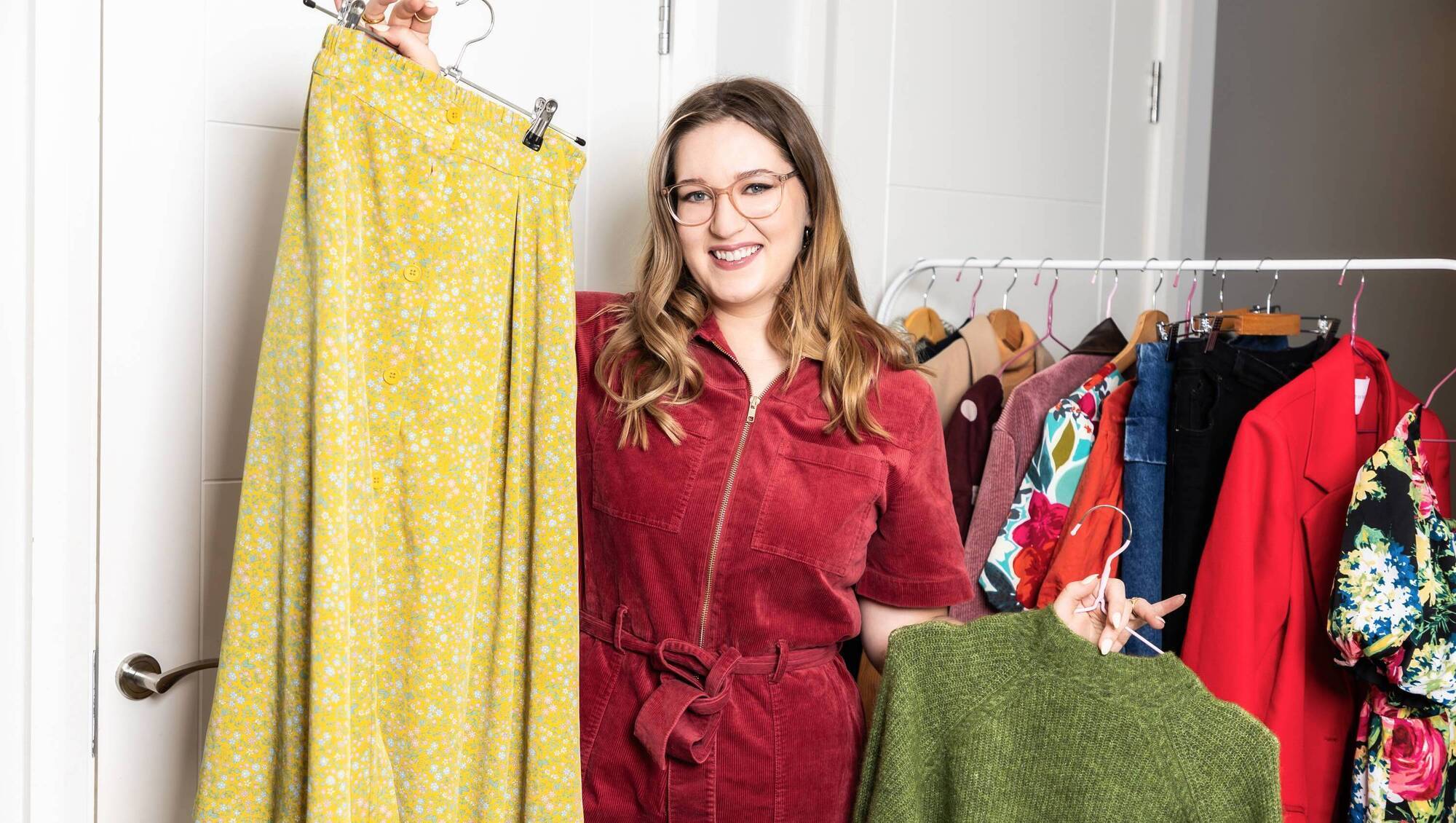
Nicole Glennon enlisted a stylist, a psycologist and a wardrobe app to help her become a more sustainable shopper while still feeling stylish. Pictures: Nina Val / @nvksocial
For the past four months, I’ve found myself telling every woman in my life about a free app.
Pitched as a ‘digital wardrobe’, it has completely reshaped my relationship with my closet.
That, and a chance meeting with a stylist to whom I made a confession she assured me was very common: I couldn’t stop shopping, yet I felt like I had nothing to wear.
Getting dressed often left me feeling overwhelmed. If I had an event coming up, I’d panic slightly and convince myself I needed something new, the dopamine rush of clicking add to cart quickly replaced by a gnawing guilt. I knew I’d become trapped in a cycle of overconsumption, contributing to one of the world’s most polluting industries.
I wanted to do better, to buy less. But I also wanted to feel more confident and stylish day-to-day.
CLIMATE & SUSTAINABILITY HUB
I wasn’t sure those goals were compatible. The good news? They are.
Over the past four months, I’ve moved from having passive good intentions to shop less, to a system that’s changed how I dress and how I shop. Here’s exactly what I did.

In a world where next-day delivery is required to ensure your purchase hasn’t dropped off the trend cycle before it even reaches you, it can feel revolutionary to just... pause.
“The first step of breaking any habit is awareness,” says Dr Dion Terrelonge, a psychologist working in the fashion space.
“People are habitually and unthinkingly scrolling shopping websites. They’re not really processing how they’re going to wear it, where they’re going to wear it, what it goes with, or whether they really need it.
“People are often second-screening as well, so they’re not even giving [shopping] their full attention.”
We’re shopping on autopilot, and that means it’s even easier to be swayed by whatever the algorithm and our social media feeds throw at us. If, like me, you feel you don’t have a great sense of your own personal style, it can become even harder to resist, as Terrelonge explains: “Any structure without strong foundations wavers. You need a framework to help reduce all of the fashion noise that’s out there.”
To help me build that framework, I brought in stylist Laura Jordan. I met Jordan at an event just before Christmas, where she told me about one of the services her fashion consultancy StyleSavvy offers: the wardrobe edit.

Here’s what it looks like: you discuss your current style and lifestyle with a stylist, identify what your goals are for your wardrobe, and get an image consult to help determine the styles, shapes and colours that work best for you. An add-on service includes outfit pairing. What it isn’t, Jordan assures me, is an excuse to go shopping.
“When I do corporate events, people arrive saying, ‘I know I’m gonna spend a fortune this weekend, I’ll want to go shopping’. My answer is, ‘I’m going to teach you how to save money by only shopping with a considered goal in mind.”
The process starts with a chat, where Jordan quizzes me on what an average week looks like for me — how often I work from home, what the culture is like in my office (formal or more casual), how often I go out and what that looks like.
“So many clients will say Meghan Markle in is their style inspiration,” she tells me. “That’s great — but if you cycle to work, a pencil skirt isn’t very practical.” Essentially, she explains, we need to ensure my wardrobe serves my real self, not the fantasy self so many of us shop for.
First to go are the items that no longer fit. I immediately falter at a green boilersuit from Oliver Bonas. Previously one of my most-loved items, but it hadn’t fit me properly in months.
“We all have those pieces,” Jordan reassures me, “but we need to remove them from the everyday wardrobe. There’s nothing worse than being confronted with something that doesn’t currently fit us. It’s demoralising.
“If it doesn’t fit you today, it won’t fit you on Wednesday. Put it in a drawer, or on a high shelf,” she advises. We move on.
Anything I won’t wear within the next three months? Out.
Anything I just don’t like? Out.
“A lot of people wear most of their clothes in small rotations,” Jordan says as she zooms around the bedroom.
As we pull pieces from my wardrobe, we identify patterns. I realise I lean heavily on “one-and-done” pieces like dresses, dungarees, jumpsuits.
“There’s value there, but if you wear a dress or boilersuit to the office tomorrow, you probably feel you can’t wear that again for two weeks,” Jordan explains. “With separates, you have a lot more flexibility.”
She also offers a useful tip when it comes to the makeup of my closet.
“Aim for double the number of tops to bottoms. You can rewear the same pair of jeans three days in a row in the office without anyone noticing, but you couldn’t wear the same shirt. Our eyes are drawn to the top half.”
Jordan shoos me away for a half hour, and when she calls me back, she is ready to airdrop me 50 images of outfit pairings she has created.
“You can dress yourself from your phone now,” she smiles. See step four for just how true that becomes...
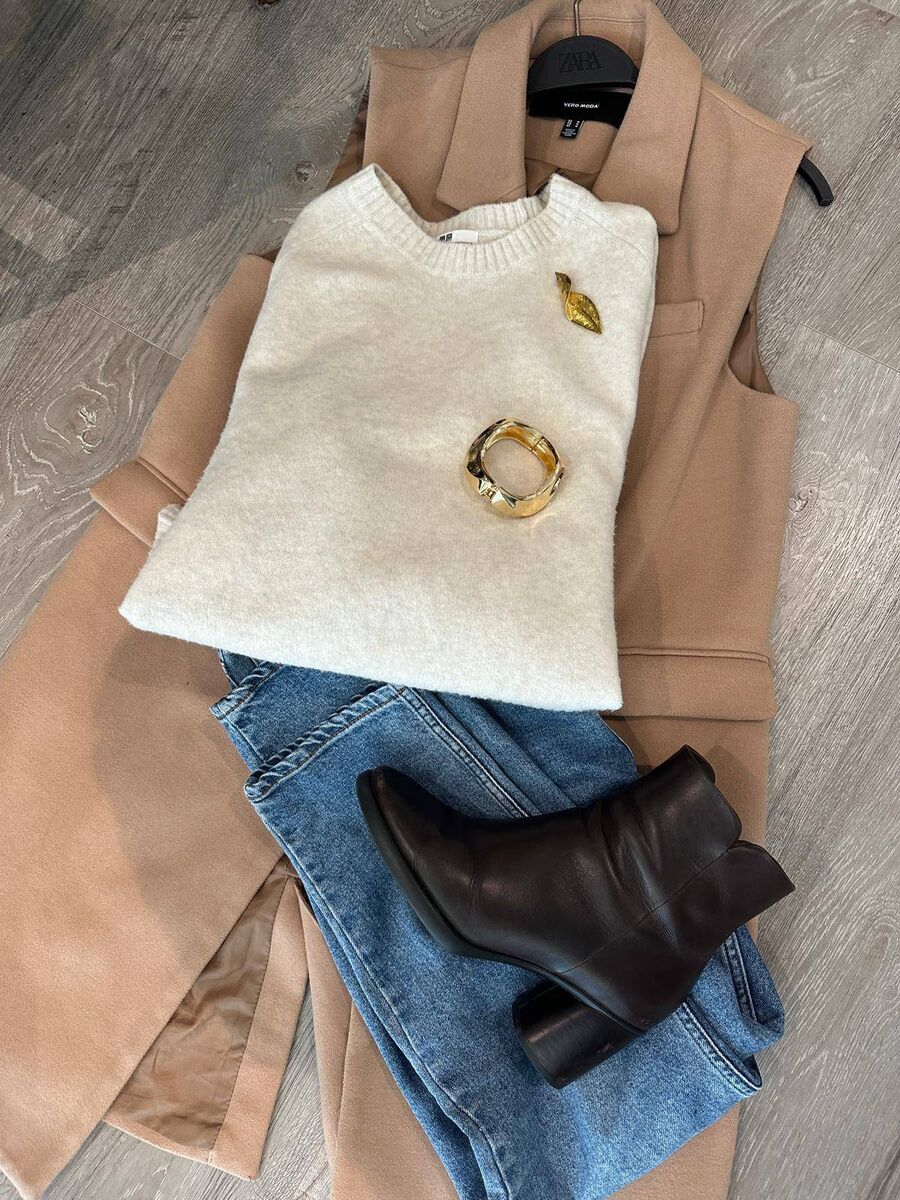
Following my audit, Jordan gives me a short “shopping prescription”: a navy blazer, a white T-shirt, cream trainers, a new style of jean, and a simple necklace. Each item is chosen to work with what I already own.
Colour and shape analysis played a role, but not in the rigid way social media often suggests.
“The only time that you have to be really conscious of the colours that work best for you is the colour that’s directly under your face,” Jordan explains. “That’s what we call the magic V.”
As for shape? She suggests I try wide-leg and straight cropped trouser styles to balance my proportions, but again, this is more a suggestion than an edict.
Next, the most transformative aspect of my wardrobe journey: creating a digital wardrobe with an app called Indyx.
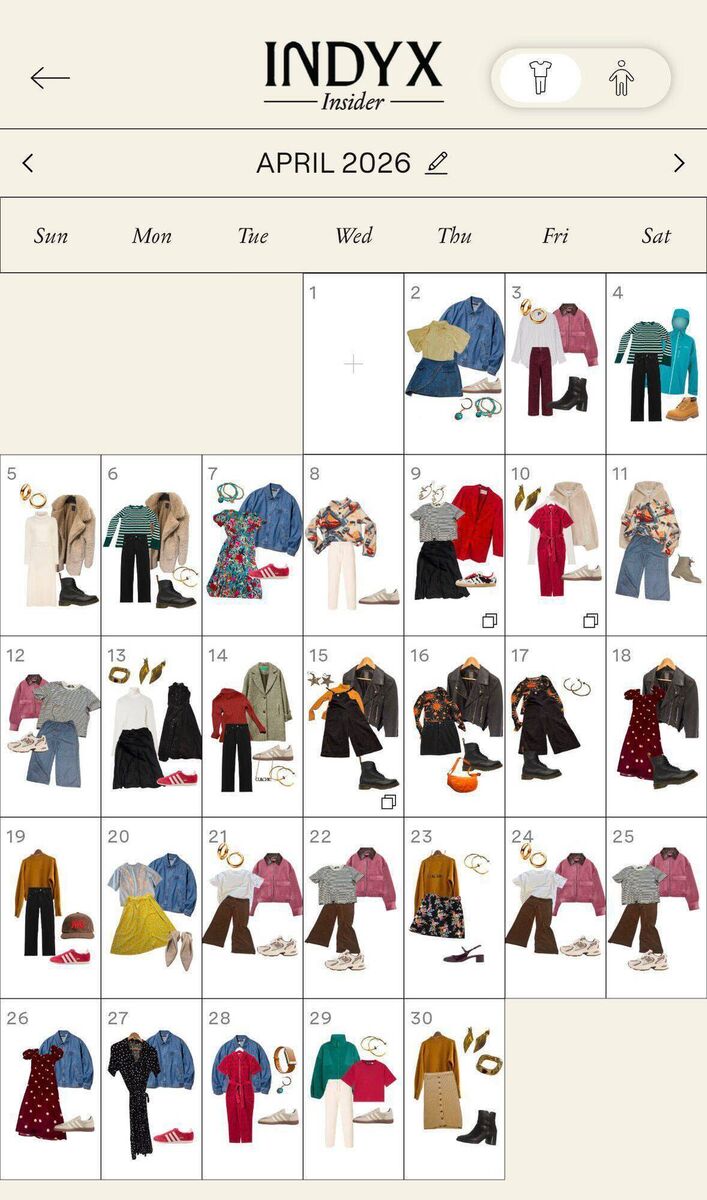
The concept is simple. You photograph every item in your wardrobe, upload it to the app, and track what you wear every day. You can scroll through your wardrobe and create potential outfits at the touch of a button, with filters like ‘most worn’ and ‘cost per wear: lowest’ helping you identify the pieces that are doing the most work. Contrastingly, ‘least worn’ and ‘cost per wear: highest’ can help you identify which items you might want to wear more, or choose to take out of your wardrobe altogether.
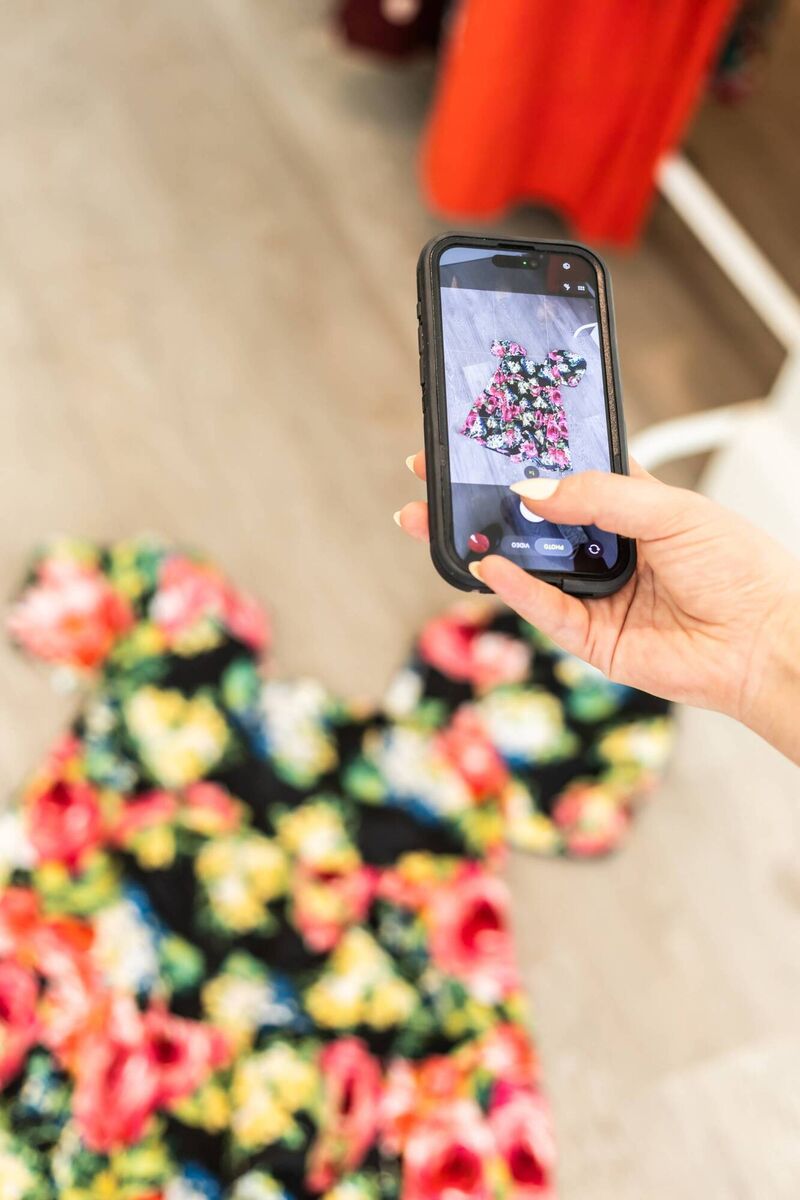
Yidi Campbell, the founder and CEO of Indyx, who previously worked for fashion brands Gap and Athleta, said the inspiration for the product came from the belief that the biggest disconnect in fashion is styling what we already own.
“Most of us can’t really remember or account for all the things that are in our closet,” she says.
“We all have multiples of the same item. When you see an inventory of what you own, it’s really helpful.”
So on a quiet Saturday in January, I rope my boyfriend in and take on the task. Item by item, he snaps the photos, and I upload them, filling in the product info as best I can. How much you choose to add here is up to you, but the information I have found most
useful in the weeks since includes source (purchased, gifted, secondhand or self-made) and price. This helps me stay on top of how much of my wardrobe is second-hand, and track the cost-per-wear of each item.
Aside from a simple inventory, the really clever thing about the app is how it allows you to view the wardrobe you already own in a similar way to a fast-fashion site.
“The idea is that the concept of shopping within your own closet becomes sort of real,” Campbell explains. “Your closet is in constant competition with everything you could possibly buy.” By making your wardrobe scrollable and aesthetically pleasing to the eye, it can help bridge the gap, so instead of scrolling through new items, you can scroll through your own wardrobe and create outfits with your existing items.
“Many users have told us when they get the itch to shop, they open the app instead,” she adds.

I start by adding the 50 outfit pairings stylist Laura Jordan created. Over the next few weeks, instead of scrolling Vinted on my lunch break or while watching TV, I am creating outfits with my own clothes on the app. Currently, I have over 200 outfits created from the 198 items in my wardrobe.
In the three months following my style consultation and downloading Indyx, I felt like I was on a new path. I’d reviewed my wardrobe, made the considered purchases, and tracked my wears daily.
I had the data to show there were dozens of potential, yet-to-be-worn outfits in my phone. And yet...
“Mrs Delivery,” my boyfriend quips, as three new Vinted packages arrive at our door.
Even with a system in place, I still found myself shopping unnecessarily.
I had shamed myself off the fast-fashion sites, physically banned myself from physical stores (unless I was on a weekend away and it was a communal activity with my mam or my friends... I know, I know, excuses), unsubscribed from the mailing lists, and deleted every app from my phone. Except Vinted.
Because Vinted was second-hand. That was okay, right?
I knew the answer deep down.
“Rather than breaking the habit, what you’ve done is something called habit substitution,” Terrenlonge explains.
“You had identified one element that was important to you, which was being more ethical, being more sustainable. But you hadn’t identified your triggers for why you were shopping. The next step is identifying the trigger.
“If a trigger for you is that you shop when you’re bored, or when you’ve had a tough work week, or whenever you have a friend’s wedding or birthday and you haven’t consciously identified, I shop unnecessarily when X, then you’re still going to do it.”
When I think about the last few months, or even before I started this process, I realise shopping, for me, is often a response to stress. Indyx has helped me redirect a lot of that mindless scrolling, but the urge to allow myself a “little treat” for making it through a tough week hadn’t gone away.
Truthfully, I realised, I was also struggling to let go of the idea that every birthday, wedding or significant event required a new outfit to underscore its significance. That idea, I knew, was something I had developed from clever marketers and growing up in a generation that lived their lives online, acting as each other’s paparazzi. It wasn’t something I actually thought was important; I’d just gotten caught up.

“You are already recognising the patterns,” Terrenlonge says. “Now, any moment where you find yourself going into that unconscious behaviour, what you need to do is just pause.”
As we head into May, with summer on the horizon, I am reflecting on what’s changed for me. I still shop, just with increasing consideration. I try not to buy anything without first uploading it to Indyx and seeing how it fits into my wardrobe. If it doesn’t work with at least five outfits and serve a real purpose in my wardrobe, e.g. adds something new or fills an existing gap, I don’t buy it.
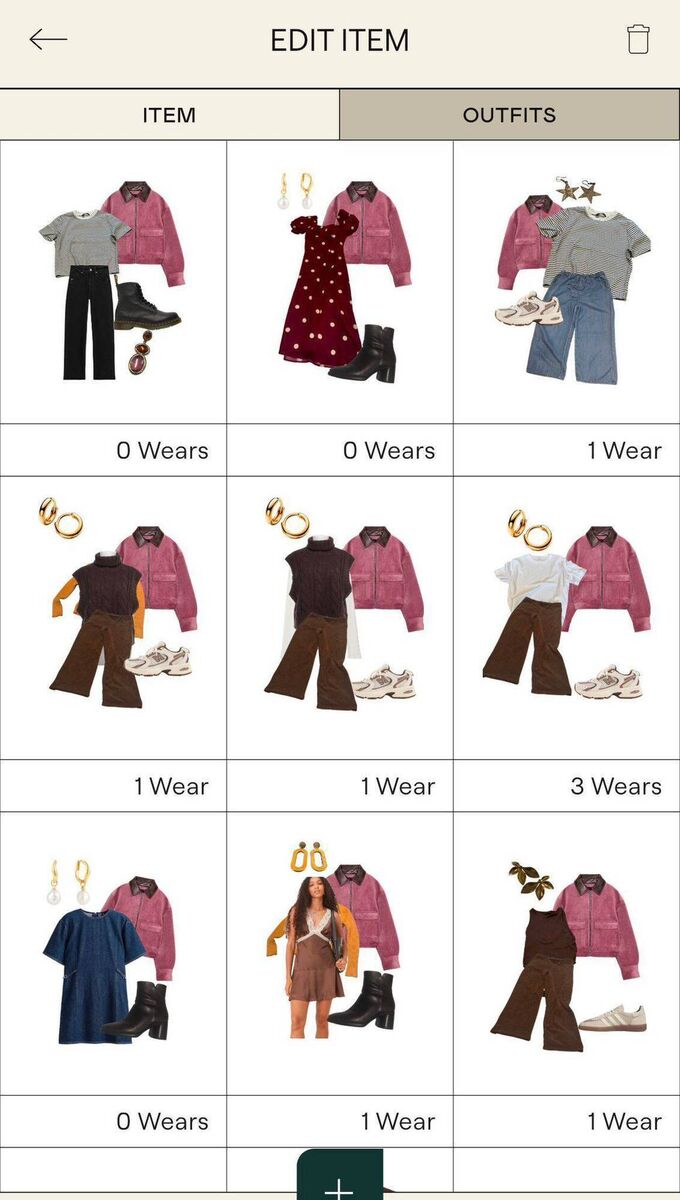
This is how that looks in practice: On January 26, I bought a pink corduroy jacket with a brown leather collar. Before purchasing, I uploaded the item to Indyx to see how it would fit into my existing wardrobe.
After pairing it with 10 different outfits, I knew this wasn’t just a fleeting love affair. Purchased for €53, I’ve already worn it 21 times this year, with a cost- per-wear of €2.52.
I also used the app to pinpoint the pieces in my wardrobe that I never really wore and pass them on — like a vintage brown leather jacket that was a great find but never really worked in my wardrobe, a Sézane jumper I loved in theory but couldn’t wear because the alpaca wool irritated my skin, and an M&S skirt that creased instantly no matter how much I steamed it, always looking like I’d just pulled it from the bottom of the laundry basket.
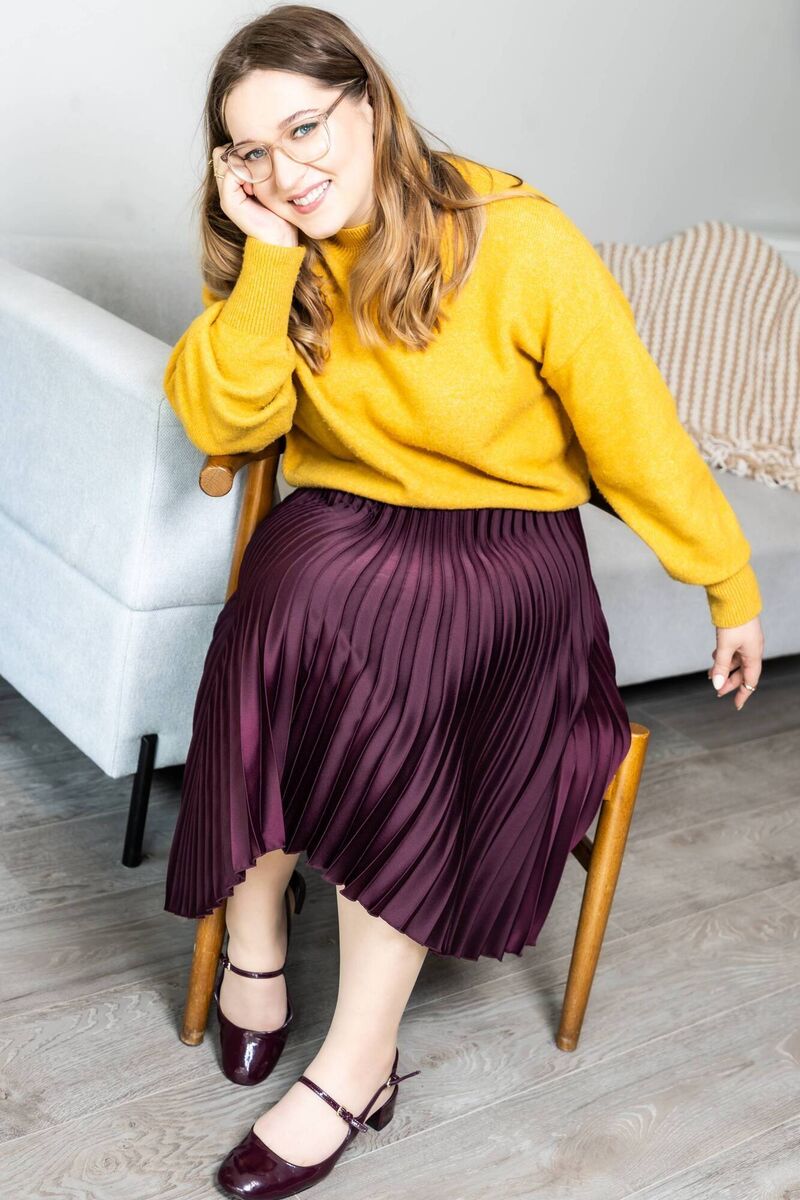
I sold them on Vinted and used the money to buy the tulle skirt, €8, mustard jumper, €10, and purple pleated skirt, €9, I’m wearing in these photos.
With what was left, I replaced my well-worn green Oliver Bonas boilersuit with this red version I found for €43, less than half its original price. I’ve already worn it nine times, bringing the cost per wear to under €5.
I am making a concerted effort to shift my mindset around rewearing items, and to wear more of what I already own. My next goal? I want my cost-per-wear to get as close to €0 as possible for every item in my wardrobe.

- A wardrobe edit with Style Savvy starts at €465, stylesavvy.ie.
- The Indyx app is free to download, with most features available without a subscription. The ‘Insider’ yearly subscription, which unlocks full analytics, is €13.99 per month, myindyx.com

CONNECT WITH US TODAY



Be the first to know the latest news and updates