Eoin McGee: 'The accident gave me a wake-up call — life wouldn’t last forever'
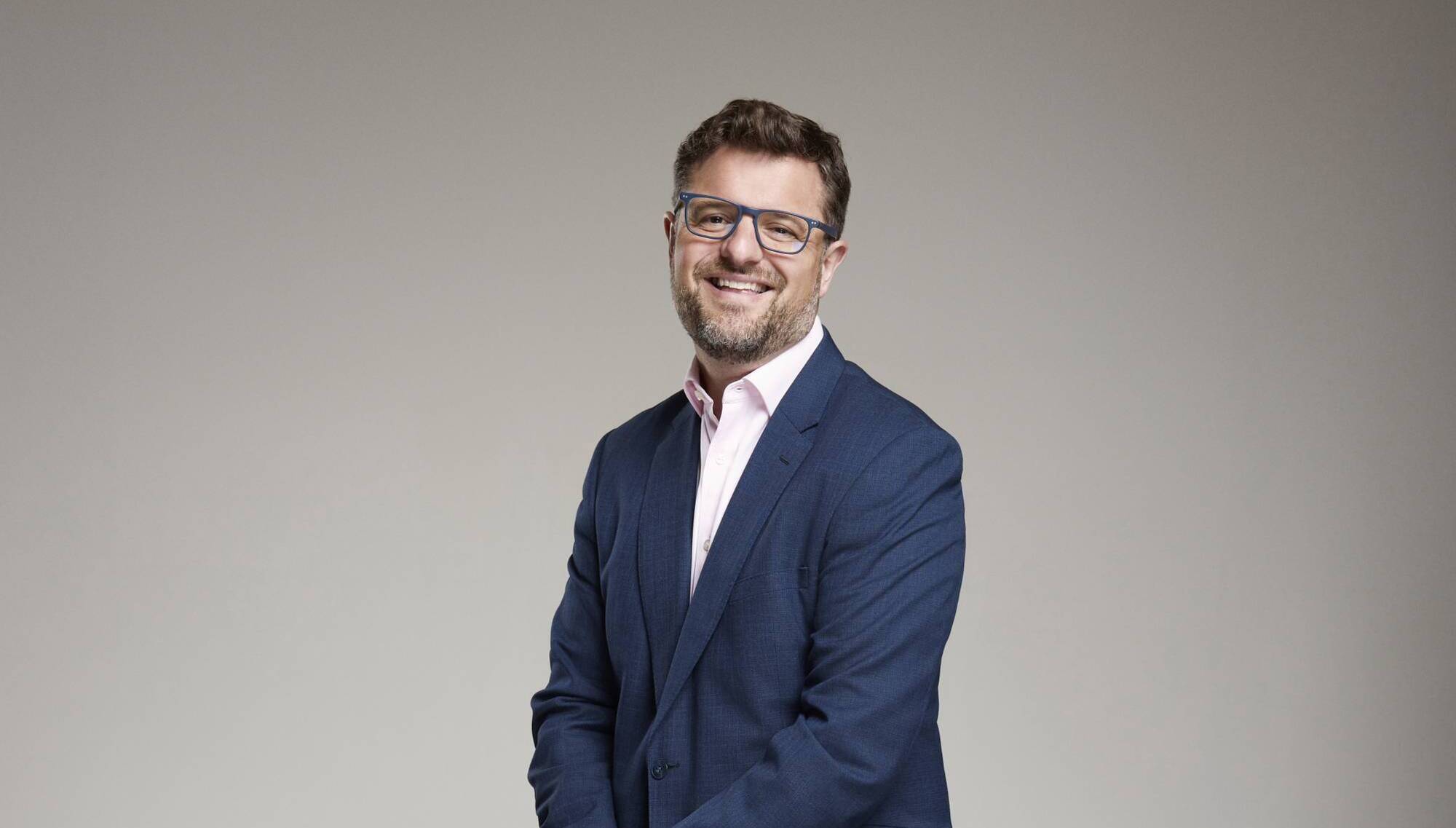
Elle Gordon meets financial planner and broadcaster Eoin McGee to talk about wealth, health, happiness - and taking his new live show on the road
Eoin McGee: 'The accident gave me a wake-up call — life wouldn’t last forever'

Eoin McGee: "I was the youngest of four boys and my dad was quite sick, so I grew up quickly."

Eoin McGee is one of Ireland’s most recognisable voices on personal finance. From founding his company Prosperous and fronting the hit TV series How To Be Good With Money to authoring several books — his latest, How To Achieve Financial Freedom, is out this month — his work has reached audiences nationwide.

His message has always focused on helping people gain confidence and clarity with their money, guided by pivotal personal experiences that continue to shape his work.


“I had a teacher, Ellen O’Rourke, who gave me a love of business studies,” he recalls. “I was the youngest of four boys and my dad was quite sick, so I grew up quickly. She instilled that love for business and money, and now – she won’t mind me saying – she and her husband are clients. It really is full circle.”

Reflecting on growing up in Ireland during the 1980s, he says it was a very different place then.

“It was very expensive,” he says. “In general, we weren’t flush with cash in the country. And you saw people get by in a very different way than what they do today. And you watched how the dinners were the same — we literally had meat and two veg. The only thing that changed every day was the meat. I grew up on spuds. And, you know, that’s a mad thing to say, right? But that was how it was. It was a stable diet. It was good for us.

“I think I learned an awful lot from what was going on in politics at the time, in the global economic world, but also just witnessing the little things.

“I remember going to Superquinn with my dad. He was a brilliant character, who lots of people would have a lot of respect for within the community.

“And he was very involved in the community once he gave up work due to his health. I used to watch him talk to the likes of Fergal Quinn, who would happen to be visiting the Blanchardstown Superquinn, and chatting to him about the service and what’s being delivered, and picking him out on it, saying, ‘You could do better on this,’ and ‘You could do better on that.’ So I watched and I witnessed people actually responding to him and wanting to hear what he had to say.

Eoin McGee presents How To Be Good With Money on RTÉ One

“I was fascinated by this, how the world of business can work. My mother, as well, had a big influence. She had been a midwife, gave up work, then retrained as a psychotherapist. If I have any compassion, it comes from her.”

These early influences shaped how he runs his business but an accident seven years ago — a fall that fractured his skull in three places — was a turning point.

“I think that was a sign from the world to say, ‘You need to slow down,’” he says. “I was in a very unhappy place and the accident gave me a wake-up call — life wouldn’t last forever; don’t put things off; balance living today with planning for the future.”

Before the accident, he would drive home from work each evening, asking himself, ‘Did I add value greater than my salary today?’

He explains: “That was my measure for myself. After the accident, I flipped that to life. I really just try and try to assess each day and say, ‘Did I enjoy today? Did I make the most out of my day?’”

I can say, without a shadow of a doubt, that the accident was the best thing that ever happened to me.

“As a result of that, I made a lot of changes. I looked at my career and I said, ‘When was I happiest?’ And when I was happiest was when I was working in Irish Life. And why was I happy? I was happiest because I was a financial adviser or financial planner at the time and all I had to deal with was my clients. And I sat back and I said, ‘How do I create a position where I can just deal with clients?’ The obvious answer was to bring in a CEO to my business, and that’s what I did.”

Running has also become central to his wellbeing. “Running became my sanctuary for mental health and then, after the accident, I was told I couldn’t run for 12 months. And I think it was after about four or five months into my recovery, the doctor said, ‘Look, we actually think it would be good for you to start running because there’s more than the physical health going on here. We need the mental health right as well.’

“I set myself two goals,” he says. “One was a parkrun and one was the New York marathon. I did New York in aid of Temple St the following November, so 18 months later.”

But he points out that it takes constant work to maintain his best rhythm.

“One of the things that I have learned in 2025 is that I haven’t done enough running, I really haven’t. I’m really feeling that. I’m feeling that on my waistline. I’m feeling that on my mental health from every aspect. I had a very disappointing Boston marathon earlier this year, from my perspective, and I think that’s because I just didn’t put enough training into it as I was busy with writing my book, so I plan to get that back on track this year.”

Beyond health, financial wellbeing is crucial. “First
of all, we have to acknowledge that having no money is miserable,” he says. “You can be on €30,000 a year and really be struggling but you can also be on €300,000 a
year and really struggling. Money problems… they’re
agnostic to the actual level of wealth you have.

“So what I would say is, when you’re having money problems, absolutely, money can make you miserable but the opposite is not the case. Having loads of money doesn’t mean you’re going to be happy — far from it. If you’re chasing happiness through money, when you get to twice as much, it just doubles again. And it’s a never-ending spiral or ladder that you’re trying to climb.”

McGee often sees contrasting attitudes within couples. “What I will see coming into the office is where you’ve got a couple and one of them is really worried about, ‘How are we going to afford bread and milk when we’re 75?’ The other person in the couple is saying, ‘Borrow, we could be dead tomorrow.’ So you can have very extreme attitudes and that’s usually why they’re in front of me, because they’re looking at it, going, we need some outside help here.

“It’s the importance of having a structure, whether you’re in a good place or a bad place. Putting that structure in place will give you that reassurance. The purpose and the goal of a financial plan is to get you into financial independence as early as possible but not at the detriment of today. We have to enjoy today.”

Later this month, McGee’s new live show, How To Tackle Your Finances, takes centre stage. “My hope for this is people get informed, get educated, get inspired, but they also get the tools to tackle the year ahead. I think this is to bring people together, to empower people to have the tools at their disposal, the knowledge at their disposal, and we’ll do it entertainingly.”

With his new book out as well, he is busier than ever. Asked what he would say to his pre-accident self, he laughs: “‘You’re going to fall next week. You’ll be very scared and it’s all going to work out OK. It’ll be the best thing that ever happened.’”

Eoin McGee brings How To Tackle Your Finances to Limerick on January 20 and Dublin on January 29. Tickets, €40, are on sale now from the Lime Tree Theatre, limetreebelltable.ie, and The Helix, thehelix.ie. How To Achieve Financial Freedom, by Eoin McGee, published by Eriu, is out now.

x

More in this section

Lifestyle

Newsletter

The best food, health, entertainment and lifestyle content from the Irish Examiner, direct to your inbox.

Cookie Policy Privacy Policy Brand Safety FAQ Help Contact Us Terms and Conditions

© Examiner Echo Group Limited