Are you a 'wrap star' or do you struggle with sticky tape and uneven corners on your wrapping?
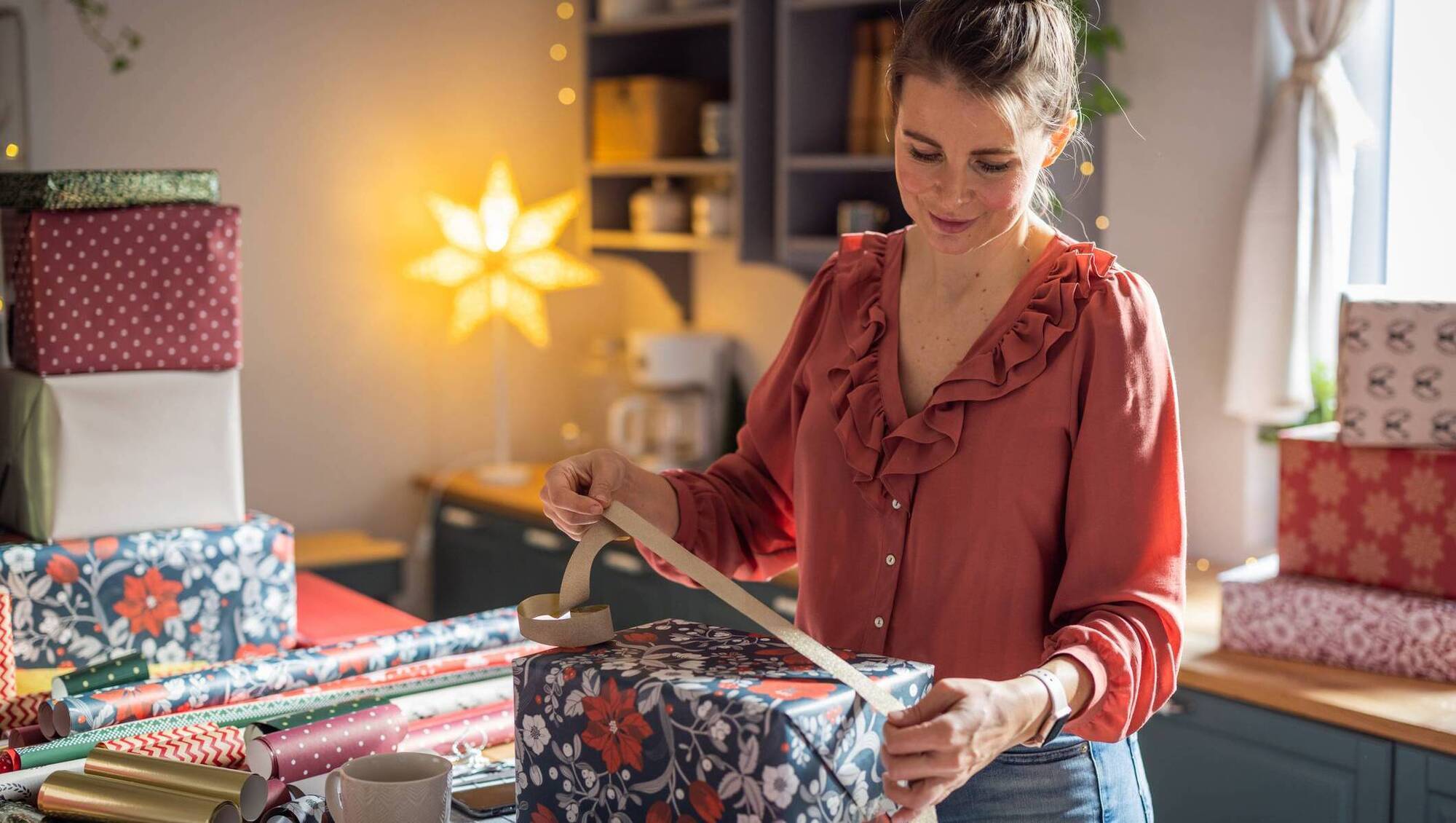
Christmas, all wrapped up. We take a look at why we wrap presents and how the tradition has evolved
Are you a 'wrap star' or do you struggle with sticky tape and uneven corners on your wrapping?

The tradition of wrapping presents goes back a long way but the rolls of patterned paper we use today are believed to have originated in the US in 1917.

It’s difficult today to imagine Christmas presents not swathed in colourful paper — seems like the shops have been stuffed with it since we got back from our summer hols.
Surprise, surprise!

Same with the Three Wise Men, who brought the very first Christmas presents. They didn’t expose the precious gifts they carried to Bethlehem for all the world to see, and just plonk them down willy-nilly in the stable before the crib.

According to the Gospel of Matthew, they hid their gold, frankincense, and myrrh in ā€œtreasure chestsā€, and only revealed them at the appropriate moment.

A 6th century mosaic in Ravenna, northeastern Italy, depicts them concealing their presents in
elaborate dishes and bowls, presumably to preserve the element of surprise.

Wrapping paper can be traced back to Ancient China, where the imperial court rewarded public officials with an annual gift of coins confined in a red envelope called a ā€˜chih pao’, made from rice straws, bamboo fibre, and hemp.

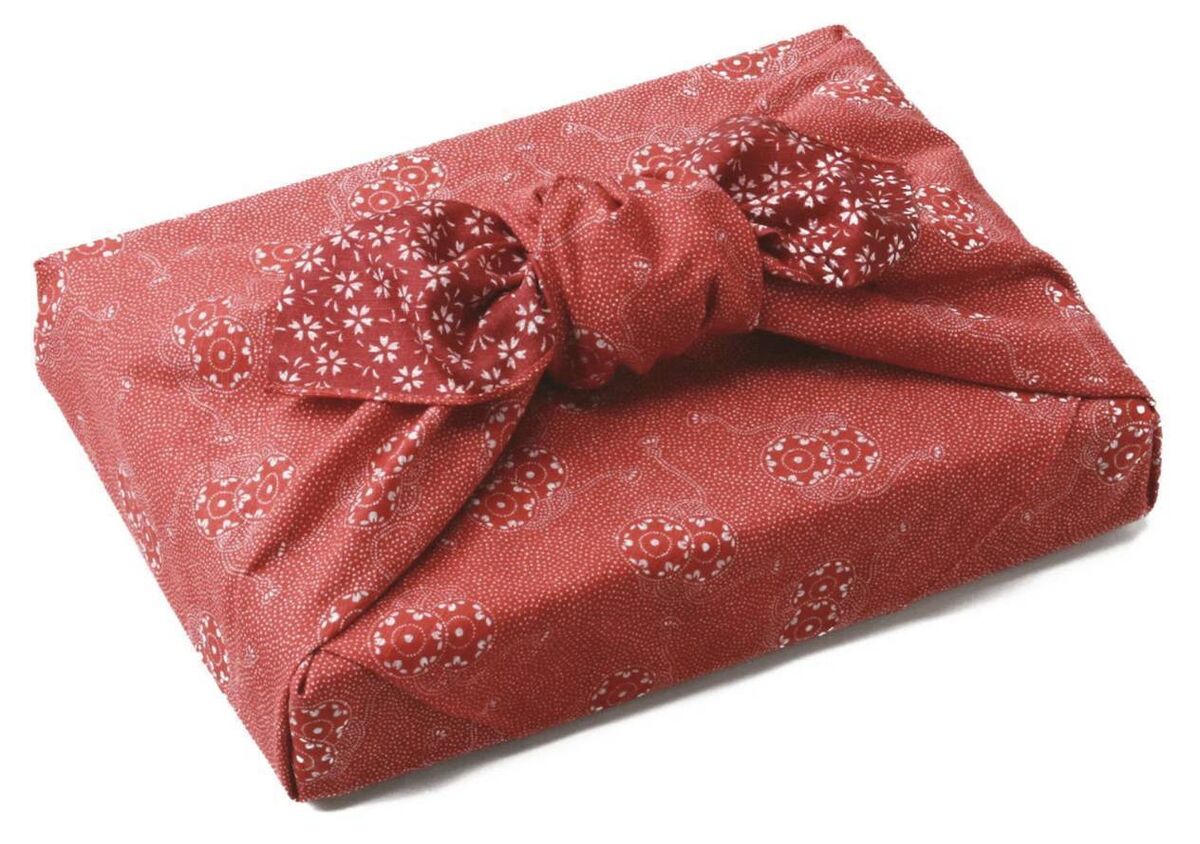
A Japanese 'Taiko Furoshiki' (Japan Objects Store)

When we trim down the tatty corners of last year’s paper and smooth it out for re-use, we’re
following in the steps of the Japanese who were flaunting their fully recyclable silk ā€˜furoshiki’ way back in the 8th century. Originally used by rich men at the bathhouse to bundle their kimono and personal belongings together to stop them getting ā€˜mixed up’ with those of the lord changing next to them, Japanese people at large came to wrap gifts in them, tying the top into a flamboyant bow.

In England, elaborate silk purses were used to parcel Christmas gifts during Queen Elizabeth I’s reign. The purse was often the most valuable part of the gift, while the contents of sweets, perfumes or coins were just a bonus — a bit like the famous green and gold Harrods bag today! Wallpaper began to emerge at this time, and was also used to wrap presents.

The surprise factor remained important. In his diary on December 21, 1660 Samuel Pepys recorded that he left his wife at Whitefriars while he took the boat to Whitehall to go buy a muff and a mantle for her, which he’d wrap up and stash away — probably in the drawer of his desk — until the big day.

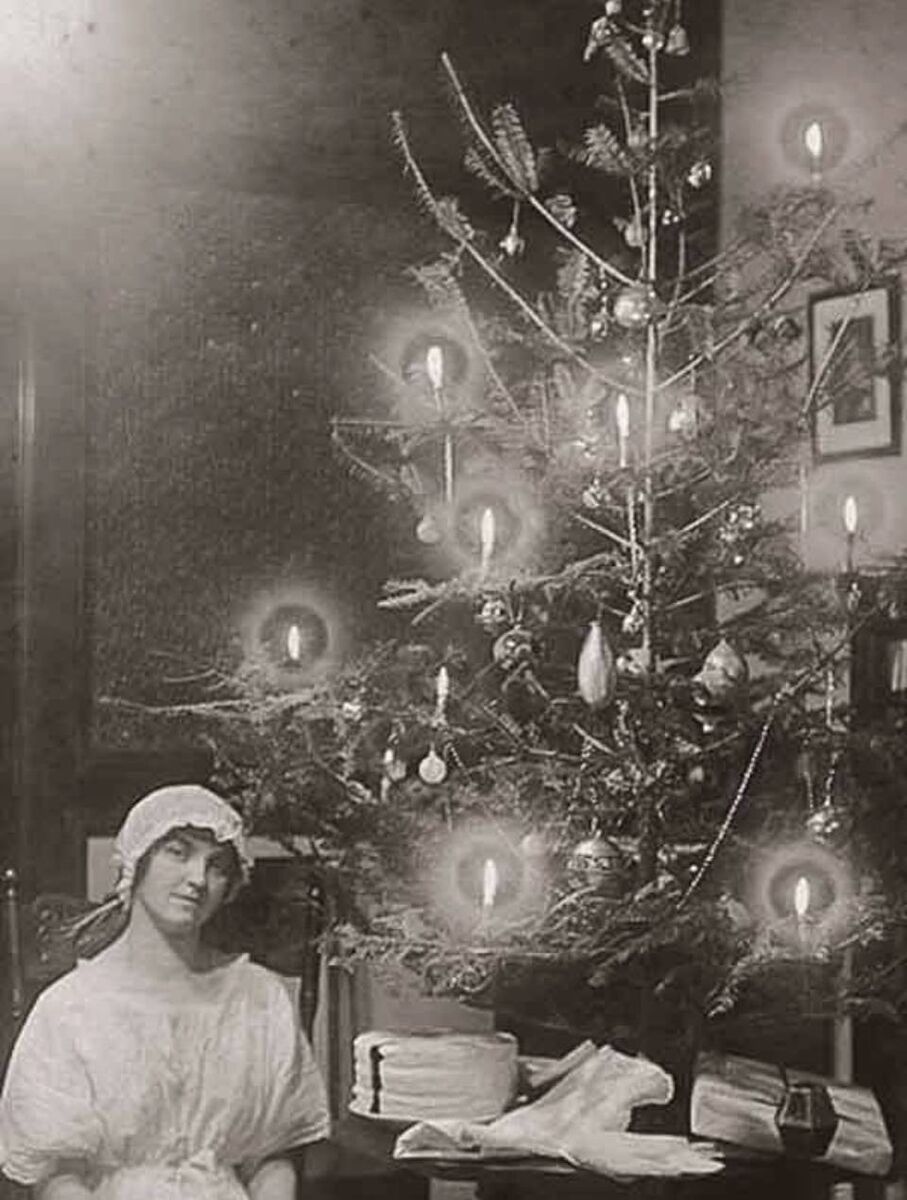
Packages wrapped in thick white paper beneath a Victorian Christmas tree (Sew Historically)

On a roll

During the 19th century, wrapping up Christmas presents became an
obsession. In her novel Persuasion (1817), Jane Austen referred to ā€œsome chattering girlsā€ sitting by a roaring Christmas fire, ā€œcutting up silk and gold paperā€; while a photo of a
Victorian Christmas tree shows packages wrapped in thick white paper and secured tightly with twine.

Encasing gifts in tissue, or paper decorated with bells, holly and mistletoe, were also popular. The highest standards were expected. At a wrapping competition held in Cork at Christmas 1883, two local traders, A Greer & Co. and James Ryan, received ā€˜honorary mentions’ for their excellent wrapping paper.

ā€œIn this day of pretty flowered boxes, ribbons and coloured papers, there is no excuse for a slouchy, ragged, uninviting Christmas parcelā€, declared the Ins and Outs of Housekeeping (1898). A few years later, the Kerry Weekly ReporterĀ recorded the new popularity in Ireland of covering Christmas gifts with crĆŖpe paper, commenting somewhat uncharitably: ā€œwe have taken as tutors the Heathen Chineseā€.

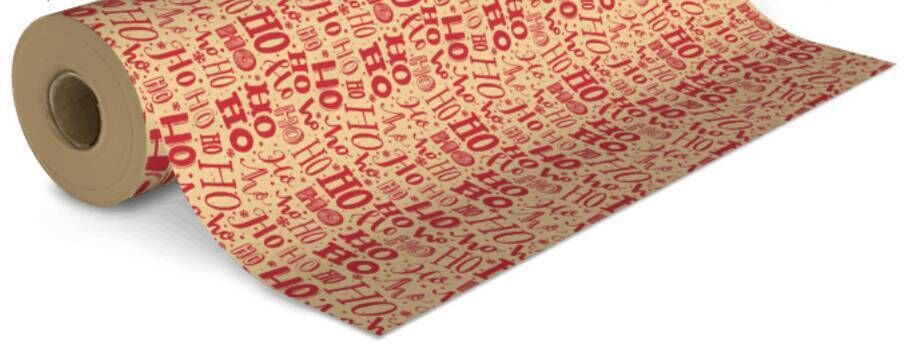
Eco-friendly ā€˜Ho ho ho!’wrapping paper from Cork’s family-run Alliance Packaging Ltd

But some people continued to use brown wrapping paper. In 1904, S Irwin and son of Dublin
manufactured the stuff in three different thicknesses, including ā€˜Irish parchment’. Used newspapers, tied with bits of string also protected and concealed gifts: ā€œI have a few
hundredweight of clean, old newspapers suitable for wrapping, packing, & Christmas parcels and hampersā€, announced stationer Mr Roe, Earl Street, Dundalk, at Christmas 1903.

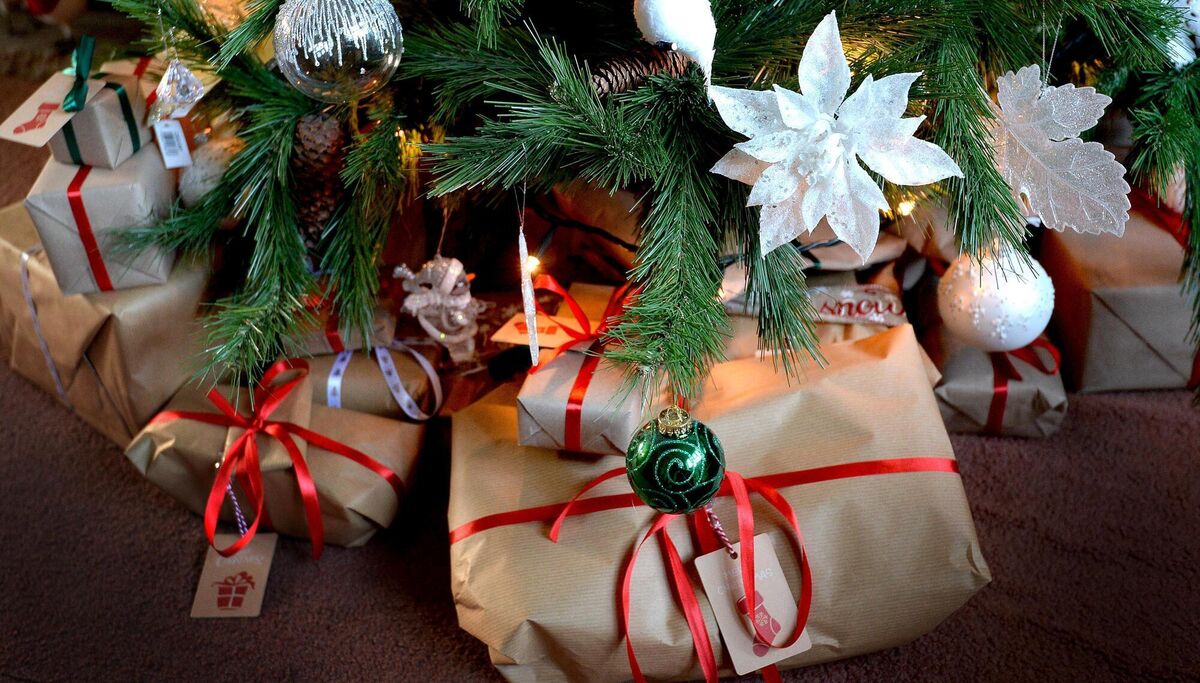
Environmentally friendly wrapped Christmas presents, using biodegradable plain brown paper and biodegradable cloth ribbon. Picture: Nick Ansell/PA Wire

The mass production of the highly patterned wrapping paper we know today seems to have originated in the USA. The story goes that in 1917, a shop in downtown Kansas City,
Missouri, owned by John Clyde Hall and his brother Rollie, ran out of its popular Christmas tissue paper, so offered customers sheets of French decorated paper that was really meant for lining the inside of envelopes. When the paper flew off the shelves, the Halls jumped at the opportunity to print their own, which they stacked up next to the cash register, priced 10 cents a sheet.

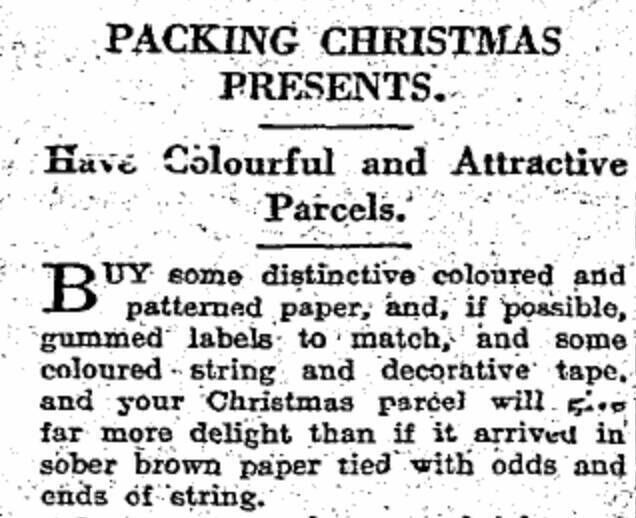
ā€œNo possible excuse for a drab,uninteresting-looking parcelā€

By the early 1920s in Ireland, J Quinnell & Sons Ltd of Tralee were offering a huge range of fancy foreign wrapping paper and twine; while The Northern Standard suggested
transforming a humdrum-looking parcel into a bon-bon by rolling crinkled paper around it and twisting up the ends with ribbons.

With bright packaging, tinsel tape, coloured string and ā€˜Don’t open me till Christmas morning!’ tags, ā€œthere is no possible excuse for the sender of a drab, uninteresting-looking
parcelā€, commented the Leitrim Observer, in December 1929.

ā€œSilver and gold papersā€ make gifts appear very attractive, agreed the Sunday Independent, in 1930. ā€œNever use soiled paper or newspaper. Both look equally sordidā€¦ā€

A gift for wrappingChristmas presents

Newspapers have for many years offered readers advice on ā€˜how to be a wrap star’: ā€œCut the paper to a suitable size (too much or too little will mar the whole)ā€, continued the Sunday Independent, at Christmas 1930. ā€œThe ends must be neatly folded… it is often well to seal them with sealing wax. This wax should be gold, silver, or a contrasting colour to the paperā€.

How to be a wrap star (Sunday Independent, 21 Dec. 1930, p.11)

The Evening Herald (1931) warned: ā€œthe smaller the gift, the more imagination it needs in the packing… Brown paper parcels are well enough 364 days in the year, but let us see something more exciting on Christmas Dayā€.

Exactly a century ago, in his book The Gift (1925), French anthropologist Marcel Mauss emphasised the importance of giving each other presents, which he referred to as an act imbued with ā€œthe spirit of the giverā€. What better way to transform and personalise a mass-produced, shop-bought item than by wrapping it up in paper we have taken the trouble to choose ourselves.

Bits and bobs

  • A letter from a prisoner in France, addressed to England’s Princess Margaret, plopped out of a roll of Christmas wrapping paper bought by a Mrs Noose in Rock Island, Illinois, 1962. The writer, a Fernand Cauchois of Fresnes-Seine, was serving a 23-year sentence for a ā€œmoralā€ crime, and begged the Princess to help him gain his freedom.
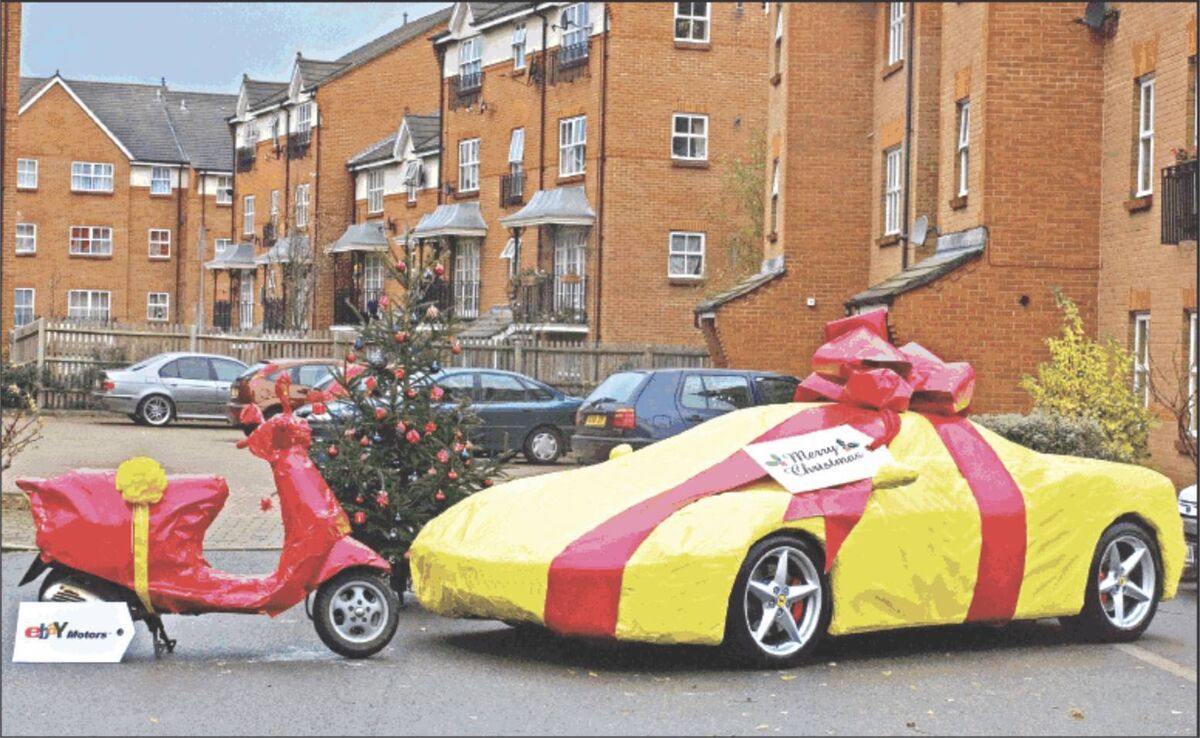
A gift-wrapped car and scooter (Ulster Herald, 14 Dec. 2006, p.62)

  • At Christmas 2006, a UK company offered an indulgent bumper-to-bumper, wrapping service for cars, vans and motorcycles — complete with festive ribbons, an enormous bow and a fabulous gift tag. Price: Ā£400, or Ā£119 for its DIY kit, which included a whopping 150 meters of wrapping paper. It was billed as: ā€œthe ultimate Christmas present… it gives the perfect finishing touch and makes a lasting impressionā€. No doubt!
  • Four million tons of wrapping paper are annually thrown away in the USA at Christmas. ā€œThat would be about the weight of four Empire State Buildings… and we’re talking about thin, light-weight paper hereā€, says writer Amber Lemus.
  • According to the Guinness Book of Records, the fastest time for a team of eight to wrap up a person inĀ  Christmas paper currently lies at 41.10 seconds (Estes Park, Colorado, USA, July 5, 2022).

x

More in this section

Lifestyle

Newsletter

The best food, health, entertainment and lifestyle content from the Irish Examiner, direct to your inbox.

Cookie Policy Privacy Policy Brand Safety FAQ Help Contact Us Terms and Conditions

Ā© Examiner Echo Group Limited