Discover the Cork GP who introduced Turkish baths to Europe
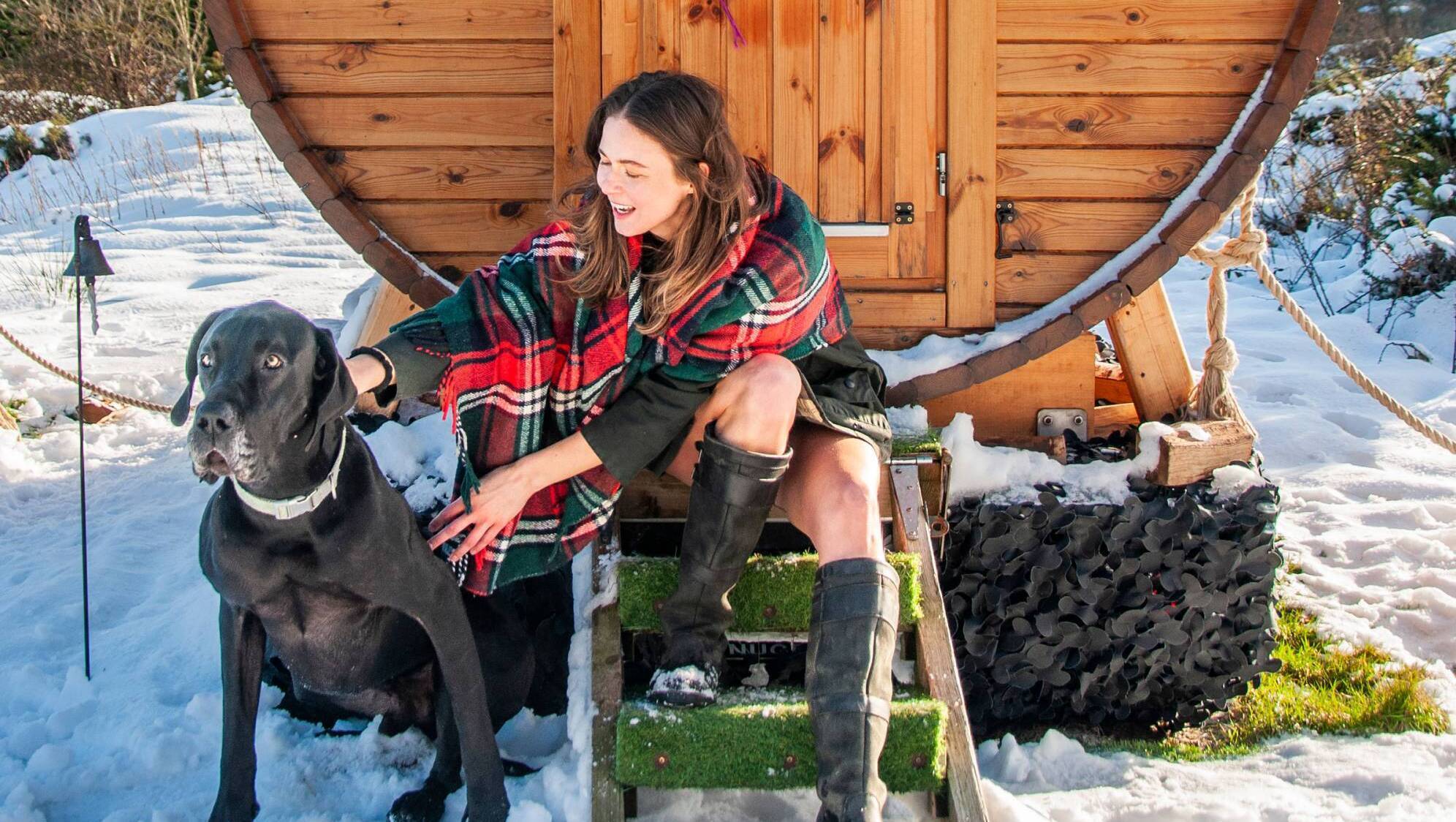
Rosanna Cooney explored our obsession with saunas in her book, Sweathouse. As part of her research, she discovered its origins go back to the 19th century, and a Cork GP who introduced Turkish baths to Europe. Here, she tells his story
Discover the Cork GP who introduced Turkish baths to Europe

‘Sweathouse’ author Rosanna Cooney researched how Turkish baths emerged in Cork.

Richard Barter never really got his due. The Cork-born GP’s invention played a role in the diverse realms of the RMS Titanic, James Joyce’s Ulysses, and the Irish Civil War — yet his name is largely lost to history.

The mushrooming culture of wild and mobile saunas around Ireland has now brought Barter’s innovation back into the zeitgeist.

Considered a rebel by his medical peers, Barter was the pioneer of the 19th-century Turkish bath phenomenon in Ireland. It was a hot-air movement that attracted both the hedonistic, leisure-seeking bourgeoisie, and the most marginalised people in society, but it has largely been forgotten.

As people in Ireland find themselves drawn to the heat of saunas, it’s important to remember how our desire to sweat and be seen to do so is nothing new.

At St Ann’s Hydrotherapy in Blarney, Co Cork — which had its own farm, fish hatchery, tennis courts, and 80 bedrooms — Barter created something akin to a modern wellness retreat centre. It was here that Barter, who believed in Hippocrates’ 2,000-year-old dictum, “give me a fever and I’ll cure any disease”, built the first ‘Turkish Bath’ outside of the Ottoman Empire in 1857.

It was an innovation that had far-ranging consequences, as Barter’s iteration of the Turkish baths — which he originally called the “new and improved Irish baths” — quickly spread across Ireland, Britain, Europe, the US, and Australia. Turkish baths became so ubiquitous that they were even considered a requisite for the transatlantic passengers on-board the ill-fated Titanic.

While the hot-air baths, or hammams, of the Middle East tended to be steamy affairs, Barter realised the drier the air, the more heat the human body can tolerate. It is the same concept so familiar to us now: We can tolerate a Finnish sauna of 90C, yet a steam room at anywhere near that temperature is unbearable because the high humidity prevents sweat from evaporating from the skin.

Combining elements of the ancient Roman baths and the Middle Eastern Hammam, Barter designed a series of cool, warm, and hot rooms, through which patients would pass. The doctor patented this design, in which a furnace provided underfloor heating, and steam was kept to a minimum by being extracted along vents in the floors and side walls — allowing temperatures to be kept consistently high.

The interior of St Ann’s, Blarney, Co Cork. Pictures: NLI.ie

But part of what made the baths so alluring was their exoticism in Ireland. Orientalism was in vogue at the time, and so the architecture of the baths often included arabesque tiling, horseshoe windows, large minarets, and towers.

When The Cork Examiner visited St Ann’s Turkish baths in July 1857, just days before it opened, a reporter declared the baths to be a sumptuous new addition to the county, describing “an arched ceiling, supported by pillars, neatly carved, of polished oak, it is most profusely hung with drapery of a rich character and with a capital eye to the position of colours, rich stained glass has been used”.

Barter’s belief in self-healing through sweat came at a time when public health in Ireland was abysmal. Cholera outbreaks were rampant, more than 1m people had died during the Great Famine, disease was rife, and basic medical care and hygiene were out of the reach of most people.

The baths provided a panacea solution, the power of deep penetrating heat. Certain he was on to a good thing, Barter wasted no time in expanding the Turkish baths across Ireland and Britain. 

For the wealthy in Irish society, Turkish baths went from a medical treatment to a fashionable pursuit, and it was among the sybarites and the hedonists, the leisure-hunters and the loungers, that they flourished. 

Throughout the 1860s and 1870s, Turkish baths opened across Belfast, Carlow, Waterford, and Kerry — as well as seven in Cork, 11 in Dublin, three in Limerick, and many others as knowledge and demand spread. Records show at least 75 Turkish baths once operated in Ireland and a further 700 in Britain.

Men and women were separated by allocated hours or entirely separate entrances and rooms, and in all of Barter’s establishments, children could enter for half price with their parents. As well as bathing, the baths offered massage, shampooing, and scrubbing, and could be places of both repose and raucous chatter — offering smoking rooms, coffee, snacks, and alcohol.

An evocative passage in James Joyce’s Ulysses brings the baths to life as the novel’s protagonist, Leopold Bloom, pays a visit to the baths on Lincoln Place, beside Trinity College Dublin. Bloom imagines lying naked in “a womb of warmth, oiled by scented melting soap, softly laved”.

In Joyce’s time, the Turkish baths at Lincoln Place offered hot-air baths of varying temperatures, massages, and slipper baths of hot and cool water. Servants in long scarlet flowing dressing-gowns and pointed slippers served coffee in china coffee cups to bathers reclining on couches in decadent surrounds.

To sweat and to be clean began to be seen as a citizen’s right, and successful campaigns were launched to build Turkish baths for the poor in hospitals, prisons, workhouses, and mental asylums.

 Turkish Baths, Cork City, Co Cork. Pictures: NLI.ie
Turkish Baths, Cork City, Co Cork. Pictures: NLI.ie

Thomas Power, the resident physician in Cork District Lunatic Asylum, worked with Barter to construct one there in the 1860s, and Power was effusive about the results.

In an anecdotal report, he claimed after six months of the bath’s operation that 124 patients had used it, and of these, 10 had been discharged and another 52 had “improved” or were “improving”. Power also reported a placebo effect among patients whose belief that the baths were helping them was having a positive impact.

As the credibility of the baths as a curative practice grew stronger, vets started to build baths for farm animals and horses. The baths were reported to restore the sheen of a horse’s coat, making it glossy and its constitution strong.

But while the Turkish baths, for humans, were declared a substitute for exercise, an aid against insanity, and a pathway to greater contentment in life, they had detractors and tragedies too.

For Mountiford Longfield of Castlemary, Co Cork, the Turkish bath became the scene of his sudden death in the winter of 1863. A father of 12, a Cork MP, and a giant in horse-racing circles, Mountiford Longfield developed a “mania” for Turkish baths and built one in his country manor for himself and his family to use.

It was here that a servant found him “breathing his last and before the arrival of professional aid, life was extinct”.

Convinced of their danger, many in the medical community disputed their effectiveness and raised concerns that the hot-air bath “inflames the blood, convulses the heart, smithes the brain and drives distracted [the] spleen and liver, stomach and kidneys”, as Dominic Corrigan, a prominent Irish physician, did in the columns of the Irish Medical Press.

Rosanna Cooney is a journalist and the author of the bestseller ‘Sweathouse: The New and Ancient Irish Sauna Tradition’

Away from the hyperbole, there was a more generally accepted premise that the baths promoted recovery in some, as well as relief from rheumatism and skin diseases, and more generally a sense of peace and relaxation.

However, this didn’t prevent their demise.

Ironically, despite their current location at the bottom of the North Atlantic Ocean, the Turkish baths on the middle deck of the RMS Titanic, which sank in 1912, are one of the best preserved. Photos from film director James Cameron’s photo exploration of the Titanic in 2005 show the blue-green tile mosaic of the cooling room on board, the decaying carved teak panelling and bronze lamps still hanging in place.

The Hammam Hotel on Dublin’s Sackville St, a much favoured haunt in the capital, was erased in explosive fashion. In the summer of 1922, the hotel was at the epicentre of the violence. Éamon de Valera and his anti-Treaty supporters barricaded themselves inside the hotel and other buildings along the same row. In a desperate bid to get de Valera and his supporters out, the Hammam Hotel was shot at with an “eighteen-pounder gun” and “incendiary bombs” placed in front of its red doorway. Its façade was pitted with bullets before soldiers went in search of the anti-Treaty men.

Finding it devoid of life, it was quickly set alight and “Hammam’s was soon a roaring furnace”, as The Times of London reported in 1922.

Other baths fell away in the early 20th century as fuel costs were rising and they became more expensive to run. It also became more common for people to have hot and cold running water in their homes. Following the First World War, there was an exponential growth in medical knowledge and the availability of drugs as
painkillers — which killed the use of the enjoyable but time-consuming Turkish bath as a curative agent.

There are none left in Ireland, and just nine are still operating in Britain.

“There are a few stragglers that might survive,” says Malcolm Shifrin, the author of Victorian Turkish Baths, the definitive book on the subject. “But they really are almost dead.”

Yet tiny details of the baths remain in place, albeit hidden. At Grenville Place in Cork City, where apartments have been added to the top of the former baths, there is detail in the brickwork and an arched doorway that hints at its sweating heritage — while diners at Jacobs on the Mall restaurant, not far away, may not know they are sitting in what was once the cooling room of Alf Jacob’s Cork Turkish Bath Company.

All that remains of St Ann’s Hydrotherapy is the clock tower, its grand interiors and cooling rooms eradicated. This grand era of Irish sweat-bathing ushered in by Barter carries fresh significance now as the sauna movement continues to spread around Ireland, drawing people from all walks of life into the deep heat.

  • Rosanna Cooney is a journalist and the author of the bestseller ‘Sweathouse: The New and Ancient Irish Sauna Tradition’ published by Irelandia Press.

x

More in this section

Lifestyle

Newsletter

The best food, health, entertainment and lifestyle content from the Irish Examiner, direct to your inbox.

Cookie Policy Privacy Policy Brand Safety FAQ Help Contact Us Terms and Conditions

© Examiner Echo Group Limited