Upcycling: How to get wise, get sustainable and get sorted at home
From garden hacks to getting creative with waste and making an extra push to recycle more we can make changes that really add up
Upcycling: How to get wise, get sustainable and get sorted at home

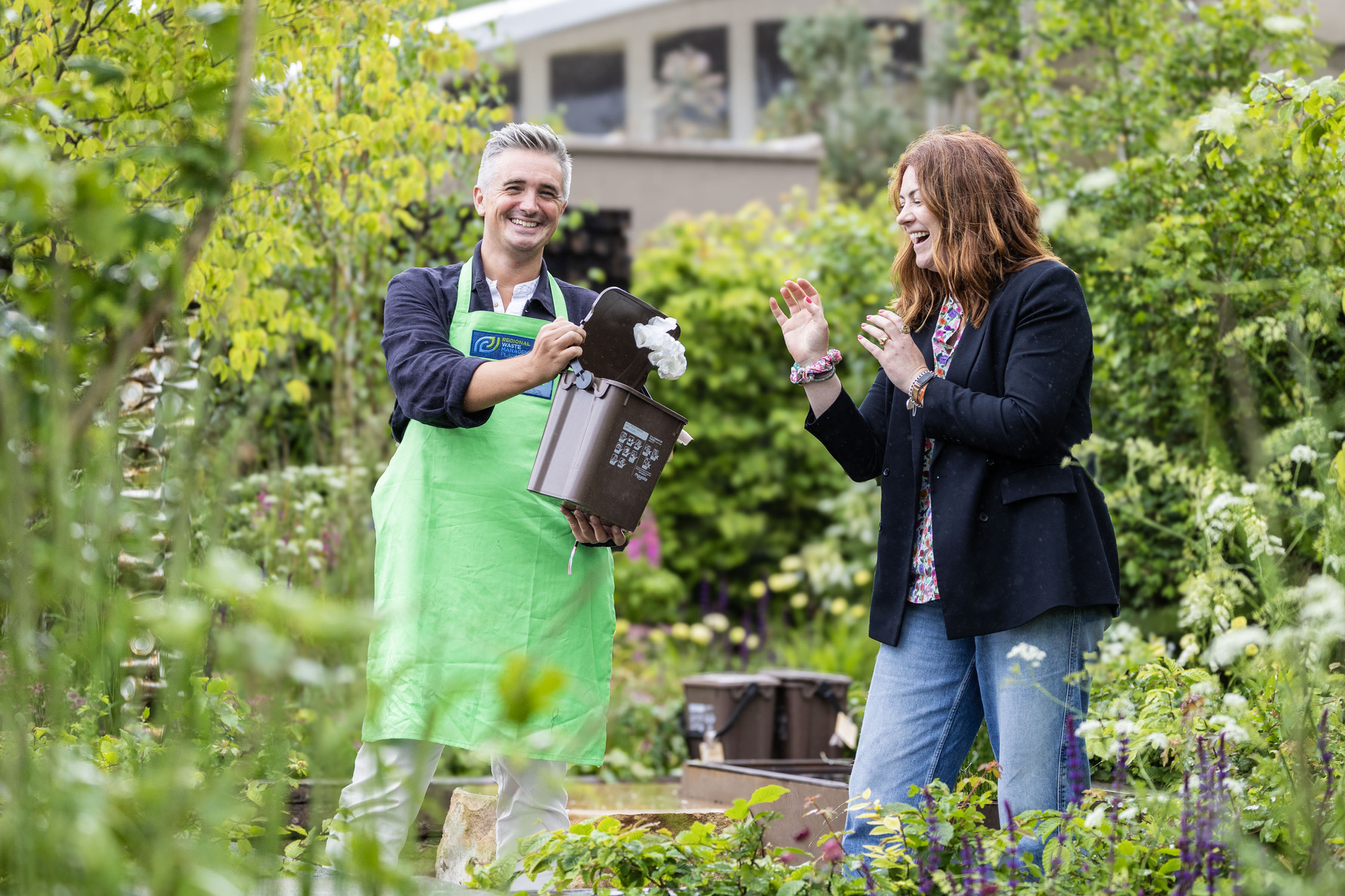
Pictured at the Repak Most Sorted Garden of Bord Bia Bloom 2025, TV host and food writer Donal Skehan and sustainable living advocate Eimear Hutchinson learns about waste segregation and what goes in the brown bin. Visit MyWaste.ie to discover how you can become a "bin champion" at home, work or play. Photography: Fintan Clarke, Creative Coalesce.

Recently, while the sun shone bright, I spent my days in the garden carefully taking the labels and tape off cardboard boxes before using them as a base to suppress weeds for new no-dig garden borders. 

This garden hack is not new, but more and more people are digging into the concept of reusing materials in the garden not only for workable DIY solutions but also as a conscious effort to use sustainable and eco-friendly workarounds. 

In fact, according to new research from Repak, Ireland’s environmental not-for-profit organisation, three out of five people have used empty packaging for gardening purposes such as seed-starting, watering, or plant labels.

“There are so many small but impactful things every household can do this summer and beyond,” says sustainability advocate Jo Linehan.

“Reimagining what we regard as waste is always a great place to start. For instance, why not keep the kids busy by making their own bird feeder from an empty plastic bottle? Simply punch holes in the bottle, add a string on top to hang it from a branch in the garden and fill it with birdseed.”

CLIMATE & SUSTAINABILITY HUB

Jo Linehan, sustainability journalist and consultant

Getting creative with household waste is an all-round win as we keep items out of landfill:

  • For instance, the aforementioned cardboard hack to suppress weeds
  • cutting milk bottles in half and refashioning them as DIY cloches in the vegetable patch
  • using old plastic trays for starting seeds, not forgetting the ingenious hack of using toilet roll tubes as seed pots.

Linehan reminds us to remember to leave a bowl of water for birds in your garden, too, as they can get thirsty during summer: “If you’re lucky, you might even see them taking a bath”.

“If you’re a big coffee-drinking household, you can save your coffee grounds and add them to your garden plants and flowers. The grounds are rich in nutrients and can boost soil health.”

The same goes for crushed eggshells or making your own compost. And if you own a drill and a saw, why not try repurposing pallets into planters. 

Sustainable and eco-friendly garden options are vast. Every little helps says Linehan who suggest that some of the best sustainable hacks and practices households can manage this summer include collecting rainwater in buckets and basins to water your garden.

“It may sound basic,” she says, “but our water systems can be under pressure in hot weather. The most important tip is to get outside and enjoy your garden space. The more connected we feel to nature, the more likely we are to look after it.”

A GROWING PASSION FOR UPCYCLING

Repak research notes a growing national passion for upcycling and a growing confidence among the Irish public when it comes to recycling. 67% of Irish adults rate their recycling knowledge highly.

However, the research, carried out around of the launch of Repak’s Most Sorted Garden at Bord Bia Bloom recently, also recognises gaps remain around how people recycle. 

Findings suggest that less than half can correctly identify which bins tinfoil (44%), cosmetic jars (45%) and deodorant cans (50%) should go in, while 71% don’t know how to recycle bleach bottles correctly.

It’s worth noting that Repak has a useful guide highlighting What Goes In My Bin on their website. Some items listed may surprise you.

Zoe Kavanagh, CEO of Repak

“Irish people clearly care about sustainability and it’s brilliant to see how many are upcycling packaging in creative ways,” says Zoe Kavanagh, Repak CEO.

“However, creativity in the garden needs to be matched with clarity at the bin. By tapping into the public’s enthusiasm for upcycling, we want to inspire a national recycling reset. By recycling one more item daily we can make a huge difference and achieve our EU recycling targets.”

To help close the gap in consumer knowledge, Repak’s Most Sorted Garden, designed by award-winning garden designer James Purdy, welcomed thousands of visitors with hands-on tips and practical inspiration for better recycling habits at home and in the garden. Repak’s Most Sorted Garden is a living, breathing showcase of the circular economy in action, to help visitors understand how to recycle better at home.

MORE THAN JUST A DISPLAY

Pictured at Repak’s Most Sorted Garden at Bord Bia Bloom 2025 are Emilia (3) and Ella Bleus (6). For more information, please visit repak.ie/bloom-2025

If we do the maths, small changes really add up. If each of the expected 100,000 Bloom visitors recycled one extra clean, dry, and loose item every day of the week, it could mean an extra 36.5 million items avoid being sent to landfill every year. According to Repak, this is enough to cover 28 GAA pitches. Incredibly, if every person in Ireland recycled one extra item a day, it adds up to 1.9 billion items being diverted from landfill every year. Creatively, Repak shares that this is equivalent to 4,000 double-decker buses — 48,362 tonnes of waste.

“Repak’s Most Sorted Garden is more than just a display,” says Kavanagh. “It’s a movement. Every element exists within a closed-loop system, where resources are regenerated, materials are repurposed, and nothing goes to waste. We’re calling on people to make this small change. Recycle just one more item each day. It starts at Bloom, but the impact can stretch across the nation.”

Recycling has almost become second nature for most of us. However, it requires a conscious effort to recycle appropriately (clean, dry, and loose), to choose wisely (avoid single-use plastics and minimise packaging) and to close our knowledge gap of what can be recycled.

More in this section

Lifestyle

Newsletter

The best food, health, entertainment and lifestyle content from the Irish Examiner, direct to your inbox.

Cookie Policy Privacy Policy Brand Safety FAQ Help Contact Us Terms and Conditions

© Examiner Echo Group Limited