Caitríona Redmond: Why do we feel like we have less money for groceries?
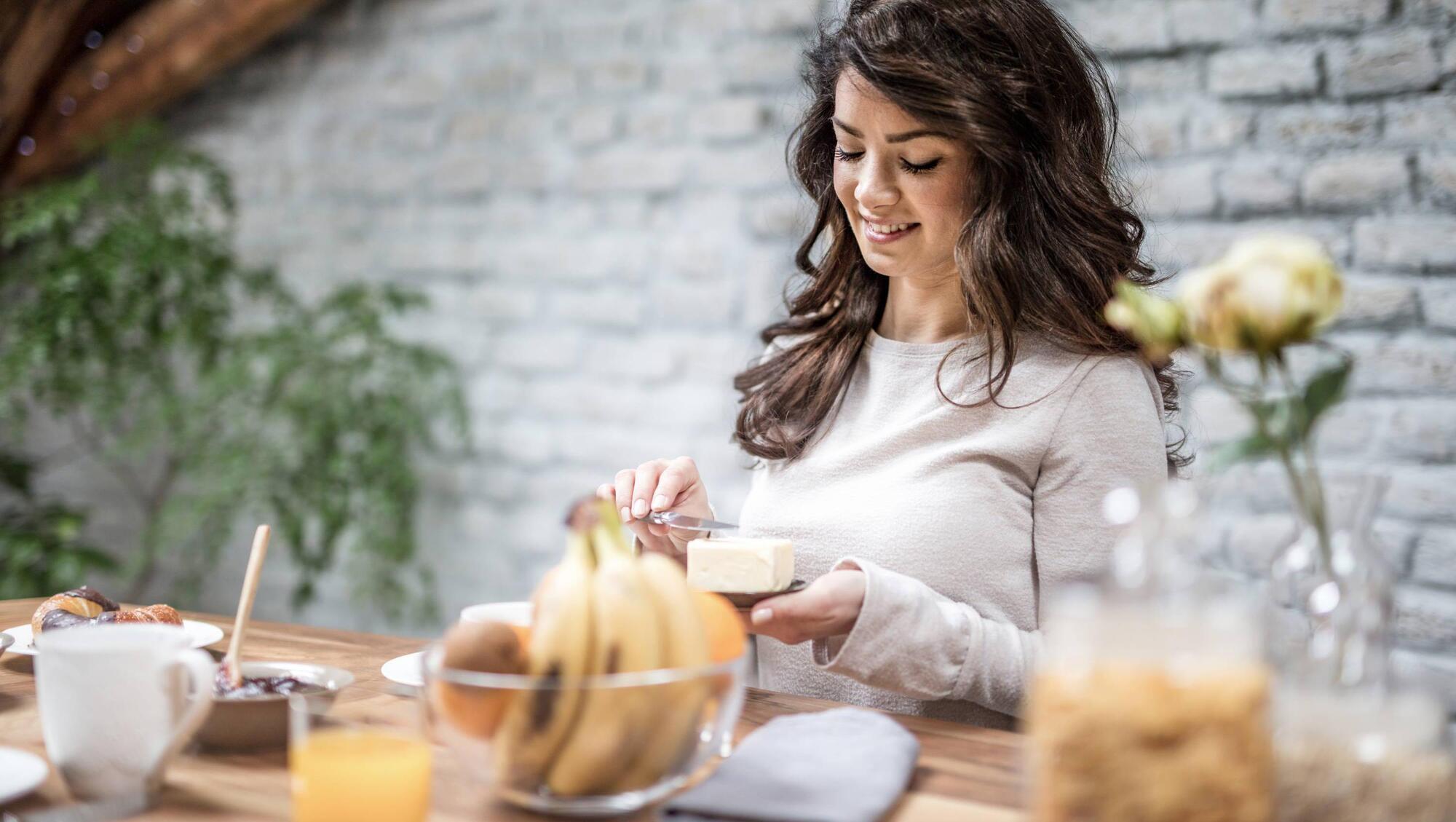
According to the most recent CSO data, the cost of butter has risen by 9.4% in 12 months, which is no surprise when you consider the price of whole milk has increased by 8.4% in the same period.

"Can you please take a look at the price of butter?” wrote a reader recently.
“It has increased in price so much I’ve started to use less.”
I may be aging myself here when I reveal that I remember the days of the butter vouchers paired with social welfare payments.
The price paid for one of Ireland’s most famous golden products has always been a contentious debate.
According to the most recent CSO data, the cost of butter has risen by 9.4% in 12 months, which is no surprise when you consider the price of whole milk has increased by 8.4% in the same period.
The biggest increases in food in the space of a year are olive oil (16.2%) and chocolate (14.2%).
When every food item that the CSO tracks is mashed into its big shopping trolley, there’s been an overall increase of 2.4% in the cost of food over 12 months.
This seems rather low when I look at the big ticket increases above.
Using the CSO cost price index calculator, I can clearly see when prices started climbing radically and we all started to feel the pinch. February 2021 marked the bottom of a steep climb.
If we take a basket worth €100 back then, we’d need €119.62 to buy the exact same items this year.
Why therefore, do we resent the cost of butter rising but not certain other purchases?
The answer is that there a few non-negotiable items in our shopping baskets and butter is one of them.
It’s a staple that is bought regularly and used frequently in our households.
There are a few items in this house that I never let us go without; tea, milk, and butter, so this makes perfect sense to me.
As I buy it every week, I’m more sensitive to price increases or fluctuations and it’s a fresh item that can rarely be stored for more than a few weeks.
Although, you can absolutely freeze butter if you manage to pick up a few pounds at a reasonable price.
Chocolate is a product that is beginning to move towards a luxury purchase recently.
You’ve probably noticed that the weight and size of Easter eggs this year are on the decrease as well.
That’s due to the increased wholesale price of cocoa pods which are extremely vulnerable to climate change, plus the increased cost of transport and staff.
In fact, some brands synonymous with chocolate for decades have decreased the cocoa content in their bars to such an extent that they can no longer be described as chocolate bars under EU regulations.
I’ve also been feeling the pinch in the supermarket when I get to the checkout.
Every week there seems to be something that has changed price, and I find myself putting some bits and pieces back onto the shelf to save money.
Anecdotally, I’ve heard of small bakers and restaurants buying their eggs, butter, and sugar directly from the supermarket rather than wholesale because small businesses are feeling the pinch also.
I didn’t believe a word of this until I went to my local shop last week only to find those exact shelves empty, leaving none of my essential baking ingredients left for my weekly batch cook.
The manager said they would have to introduce a cap or limit on the number of items customers could buy in the very near future.
This was small comfort to my hungry lads who had to go without their beloved lunchbox muffins until I could pick up more ingredients.
It’s a case of let them eat less cake!
We also feel bad when we can’t indulge or buy a ‘treat’ item in the supermarket.
As the cost of living increases, we will prioritise essential key purchases such as that lovely Irish butter over something that we can manage without.
While we save money, we feel hard done by without something nice to soften the blow.
The grocery shop is a chore for the most part and it can sometimes be made a little more enjoyable by sneaking something nice into the shopping trolley; to be enjoyed in peace.
With less money left over every week, the chore becomes less enjoyable and anticipated, more dreaded and loaded with upset.
Of course, if you are buying a certain brand name, you can always save a little bit more on your groceries by switching to a private label or own-brand product that may be similar or even identical to the real thing.
Remember, the money is always better in your pocket than in somebody else’s and if you, or your family, can’t tell the difference then you are better to make the saving in the long run.
There’s a lot of uncertainty ahead when it comes to food prices thanks to threats of tariffs and the cost of energy on the increase.
That doesn’t help that feeling of being hard done by when we leave the supermarket.
For now, I’m afraid we may be spreading our butter a little bit thinner, just like our household budgets.
What’s that got to do with the price of eggs?
You may be aware that there is a mandatory housing order which requires farmers to keep their poultry indoors due to the threat of avian flu (bird flu).
It’s not the first time this has occurred, and farmers are well used to (reluctantly) keeping their flocks in a secure, enclosed area that prevents them interacting with other wild birds and their droppings.
For now, the label on this produce remains the same, and you can still buy eggs labelled as ‘free range’ or chickens labelled ‘organic’ for up to 16 weeks from when the housing order came into effect.
After that time, if the birds are still enclosed, the products will have an extra label to inform you of this.
Just as in the USA at the moment, however, there is a chance that the cost of poultry products may increase consequently. This is one to watch.

CONNECT WITH US TODAY



Be the first to know the latest news and updates