A West Cork town is aiming to address the pervasive issue of food loss with their ‘Waste Not, Want Not’ campaign, writes Helen O’Callaghan
Every week you compile a conscious shopping list, buying only what you know you’ll use. You compost vegetable peelings and used teabags. You gift unwanted, unopened food items to friends who’ll use them.
You think: What’s the use, I’m only one person?
However, what if you knew that the local supermarket is taking definite specific steps to reduce food waste — along with the school up the hill and others in the whole farm-to-fork chain of your community?
Wouldn’t you feel that “yes, together we can make a difference”?
CLIMATE & SUSTAINABILITY HUB
This is exactly the scenario envisioned by a collaboration between environmental charity Voice Ireland, Clonakilty Tidy Towns, and Clonakilty Community Resource Centre to tackle food waste.
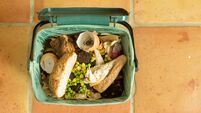
It aims to revolutionise how communities address the pervasive issue of food loss, where every year in Ireland we throw away about one-third of our food.
Dubbed “Waste Not, Want Not”, the 18-month holistic initiative — which began early this spring and which will run until April 2025 — is engaging every stakeholder in the Clonakilty community, from farmers and retailers to schools and vulnerable groups.
Unlike previous food waste interventions that focused on isolated sectors such as households, retailers, or hotels, Waste Not, Want Not adopts a farm-to-fork strategy, connecting separate, individual efforts into a cohesive community-wide approach.
“Food waste doesn’t occur in just one space but all along the way, from production to processing to transport to retail, all the way to households and the food services sector. The idea is we take one whole community and look at how we can work together to reduce food waste,” the Voice Ireland policy director and project lead on Waste Not, Want Not, Abi O’Callaghan-Platt, says.
“We’re shifting the narrative from individual responsibility to collective effort. It’s not just about what each person can do at home, it’s about understanding the entire food chain and collectively making a difference.”

So far, a series of meetings have been held in O’Donovan’s Hotel with sectors from householders and community, to hotels, cafés and local businesses, to farmers, food producers and manufacturers.
These meetings brought insights from groups and individuals around how, where, and why food is wasted.
“From those discussions, we came up with a suggestion map detailing how to stop food waste,” the Voice Ireland head of communications, Lyndsey O’Connell, says.
“From the level of local engagement, the timing is right. People are ready and open,” community liaison officer Allison Roberts says.
“Statistics say fruit and bread are the most wasted items, but one big retailer said it’s actually ready-made meals with a short shelf-life — especially ready-to-go sandwiches — because the biggest sin in retail is empty shelf space, so keeping short shelf-life food overstocked creates more waste.”
Householders spoke about children’s school lunches creating a lot of waste. A session with the local direct provision centre attracted 20 participants.
“We asked where they see waste in Ireland, how it compares with where they are from. Some described how in Nigeria you go to the grocery store, half the shelves are empty, it’s all expensive and whatever you buy you eat. They said they waste more food here because it’s cheaper and easily available,” Ms Roberts adds.
It was hoped getting people in a room together, who cared about food waste, would ignite action and result in spin-off projects. “And it has,” Ms O’Connell says.
The newly-formed Clonakilty Women’s Shed organised a meet-up all around food waste.
Pam McNulty, a women’s shed member, says there was “great knowledge” in the room about old recipes and how to use leftovers.
“One woman had a cookery book, which I also had at school, and we all talked about the wise instructions it had on how to use food,” Ms McNulty, whose grown-up sons are very waste-conscious, says.
“We up our standards when they visit, but it’s not just my sons who grew up educated about green issues — it’s also older people in the community who have big ideas from long ago that were sustainable.
“What they’re bringing to the table is really valuable.”
There are moves to map where Clonakilty’s surplus food is and to link it up with where it can be used.
“We’re talking about businesses working with community groups to redirect food and distribute it to community projects — Meals on Wheels, community café, community pantry,” Ms Roberts says.
Director of Clonakilty Meals on Wheels Norma O’Sullivan says the organisation has been sourcing food from FoodCloud (not-for-profit social enterprise connecting businesses with surplus food to charities needing it) since 2022.
“We go to FoodCloud in Little Island on Wednesdays, and we go to Aldi in Clonakilty twice a week.
“We haven’t bought potatoes since pre-covid.
“We cook according to what we get in. We waste very little, only the peelings that go in the compost.”
Ms O’Callaghan-Platt says Waste Not, Want Not is encouraging businesses not already using FoodCloud to join up. She points to another big initiative: Stop the Sachets.
“It’s a plastic waste-reduction initiative. Under EU legislation, sachets will be banned from 2030. This is getting ahead of the curve.
“Some Clonakilty takeaways have already got rid of sachets . We’re hoping to roll it out across town.”
A meeting has also taken place with a local secondary school about food waste in that setting.
“We’re working with the school, its canteen and home economics course to minimise waste.
The Green Schools team will audit food waste, food items most wasted, and why.
“They’re looking at having surveys about portion size, and offering more than one portion size,” Ms O’Callaghan-Platt, who hopes to replicate this effort in the town’s other second-level school, adds.

Four local hotels are offering a Green Wedding package.
“They’ll each have their own way of doing it,” Ms Roberts says.
“Fernhill House Hotel and Celtic Ross Hotel will offer it as an option, while Dunmore House Hotel and Camus Farm will offer it as what they do for weddings.”
Ms Roberts says the initiative will include actions such as a chef’s choice for vegetables, canapes, and desserts.
“There’s big waste in desserts. If you put five [elements] on a plate, people take a bite out of each — so why not have them bite-sized in the first place? ”
At Dunmore House Hotel, Carol Barrett says green is a given.
“We say there’s no need to bring anything to the hotel in the line of wedding favours. We have suggestions such as seed packets or a little jar of local honey.”
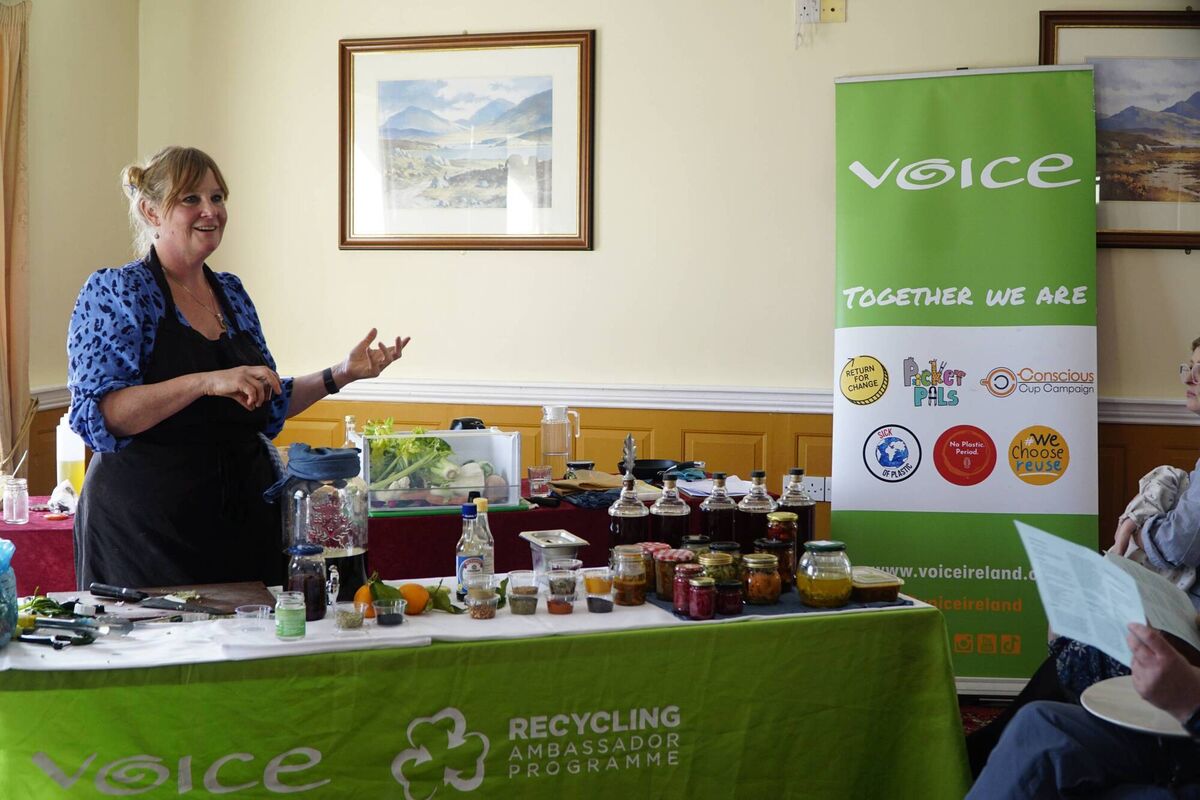
Waste Not, Want Not inspired a pickling workshop held by chef and author Caitlin Ruth. “It was full. It was great to see people who wouldn’t normally go to something like this,” Ms Ruth, who did five recipes, says.
Ms O’Connell says much will be learned from the Clonakilty experience that can be replicated in other communities.
“Our plan is to use these findings to form a blueprint for other community groups around Ireland.”


Continue reading for €5
Unlock unlimited access and exclusive benefits
Already a subscriber? Sign in
Cancel anytime
CONNECT WITH US TODAY
Be the first to know the latest news and updates

More in this section