Did you know the first Irish stamp was designed by a Corkman?
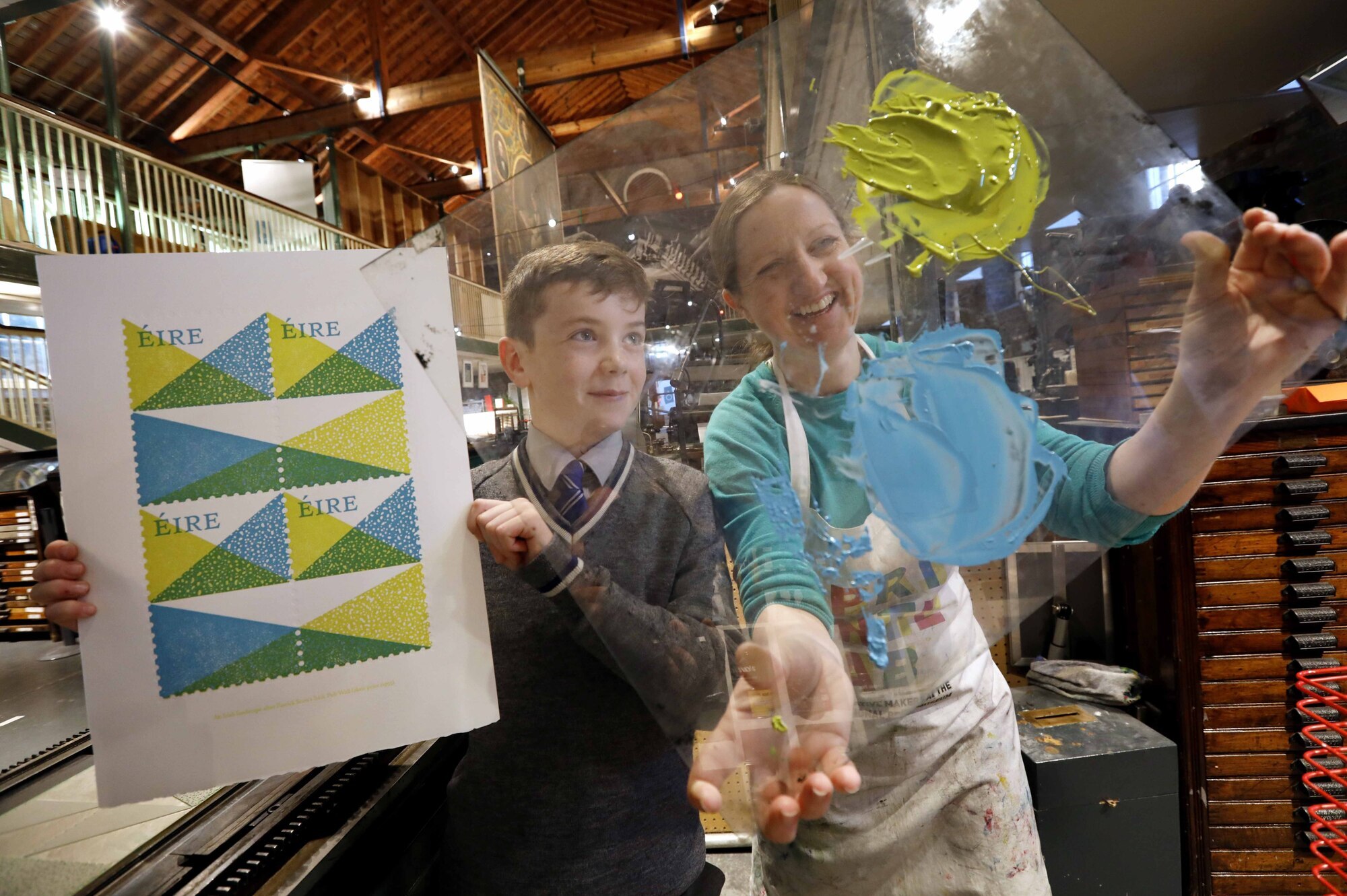
5th class student at Saint Michael’s College, Dublin 4, Andrew McNally (11) and letterpress printer Mary Plunkett who with graphic designer Niall McCormack collaborated to produce a limited-edition letterpress print to mark the exhibition and celebrate a century of Irish stamps. Pic: Mark Stedman
Ireland’s first stamp was a simple but powerful statement of its autonomy.
Economically and logistically crippled by years of war, the new state was too poor to print something unique but needed the world to know we were now free from the shackles of empire.
“One of the first things the new government did was appoint a postmaster general,” says Stephen Ferguson, An Post Archivist and Museum Curator.
“This was a man named JJ Walsh from Cork. He knew that it was important for the new country to represent itself as an independent nation and one way of doing that was through the issue of our own stamps. He got permission from the post office in London to overprint King George with Rialtas Sealadach na hEireann - provisional government of Ireland.”
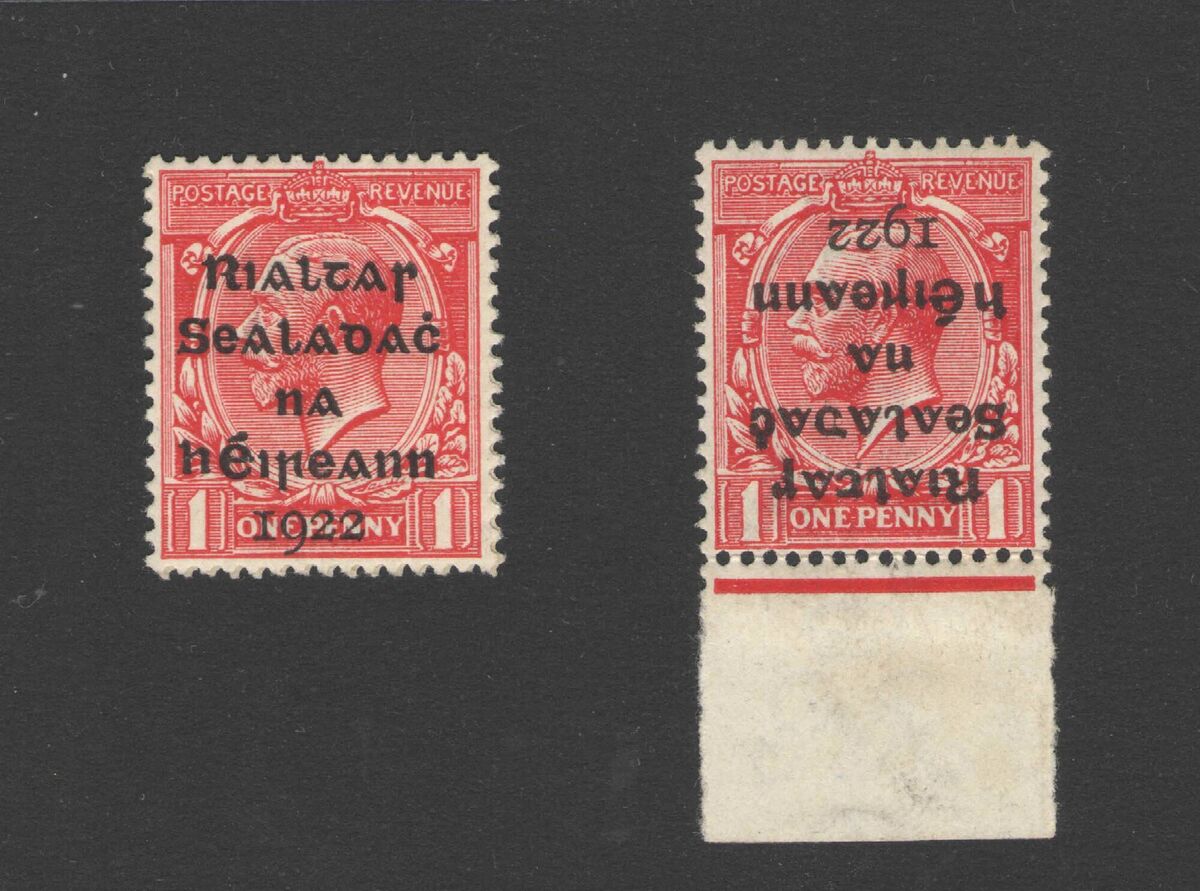
The overprint, in bold black ink, obscures the profile of the British monarch and declares the year of Ireland’s rebirth, 1922. This first stamp is just one of many on display at Miniature Masterpieces at the National Print Museum in Dublin. This fascinating exhibition, which runs until May, examines how Ireland’s cultural identity and independence were expressed through both the artwork and messaging on the humble stamp.
“Most people look at stamps simply as their receipt,” says Stephen. “The main purpose of the stamps is, of course, to send a letter. But if they look a little more closely, then you can get into the interesting facets of how we see ourselves or maybe how we wish to be seen as a people and as a country by what is on the stamp. Over the last century, that vision and perspective of ourselves has changed quite a lot.”
As the state got itself to its feet, JJ Walsh got to work on producing something that would be ours alone. He opened a competition to the public asking them to submit their designs and ideas with the caveat the design should not show a person. No doubt this was driven by the raw and fractured loyalties to powerful political personalities that still existed in the country.
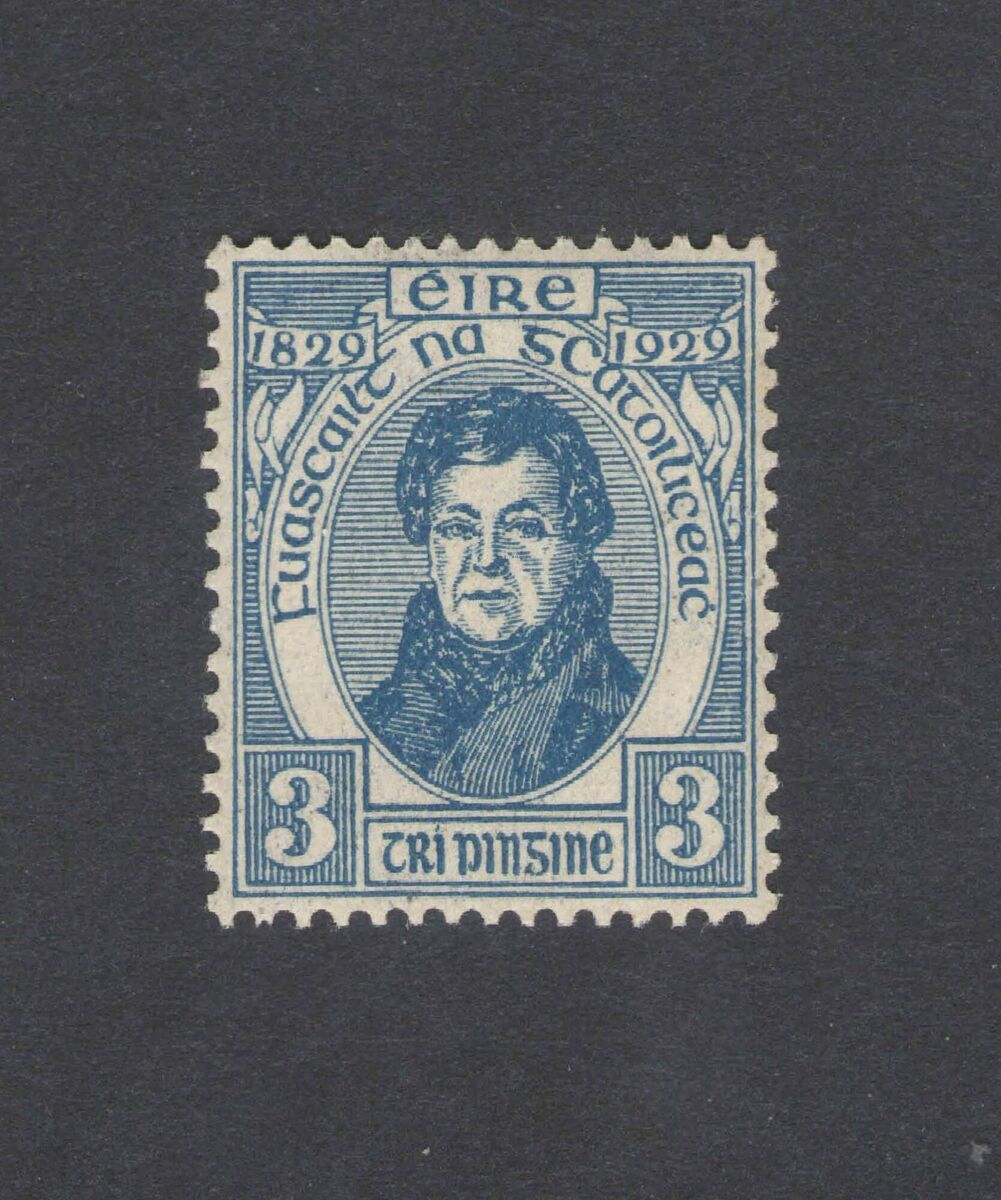
Over eight hundred submissions were made from which a committee, headed by former printer Arthur Griffith, chose four designs - a map of Ireland, a Celtic cross, the arms of the four provinces and the sword of light. These designs would stay in circulation for nearly fifty years and represented Ireland as both independent and Catholic. Those were the predominant themes in the majority of the early commemorative stamps too. In 1929, for example, one hundred years of Daniel O’Connell’s Catholic Emancipation success was commemorated, in 1933 the Eucharistic Congress and in 1937 both St. Patrick and the new constitution were celebrated. The latter, a stunning design by the inimitable Harry Kernoff, has definite echoes of the handing down of the Ten Commandments.
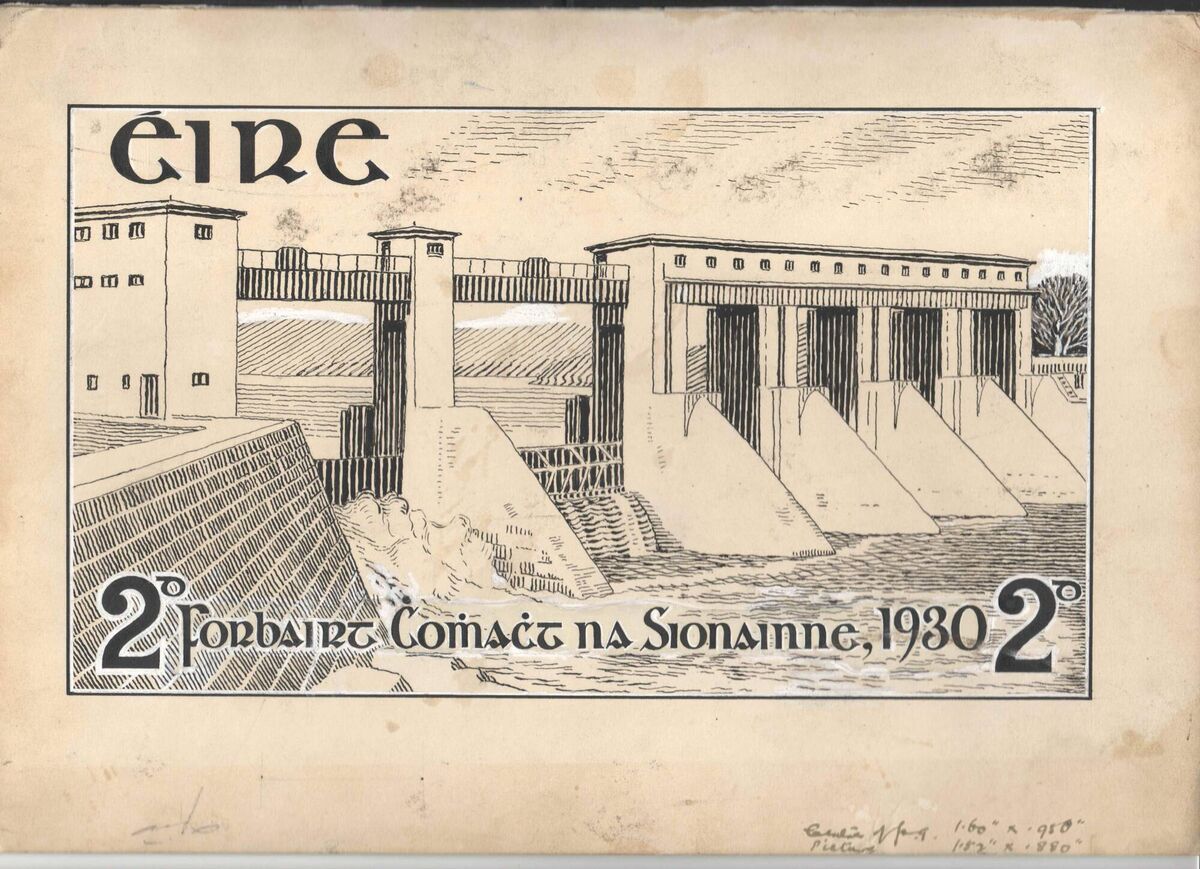
Some designs occasionally went off-script. The 1930 double-sized stamp commemorating the completion of the dam at Ardnacrusha conveys an image of industrialisation and modernity very much at odds with the saints, scholars and patriots' image in most of the earlier designs. It wasn’t until later decades that our stamps began to move away from those central themes and look outward at our place in the wider world.
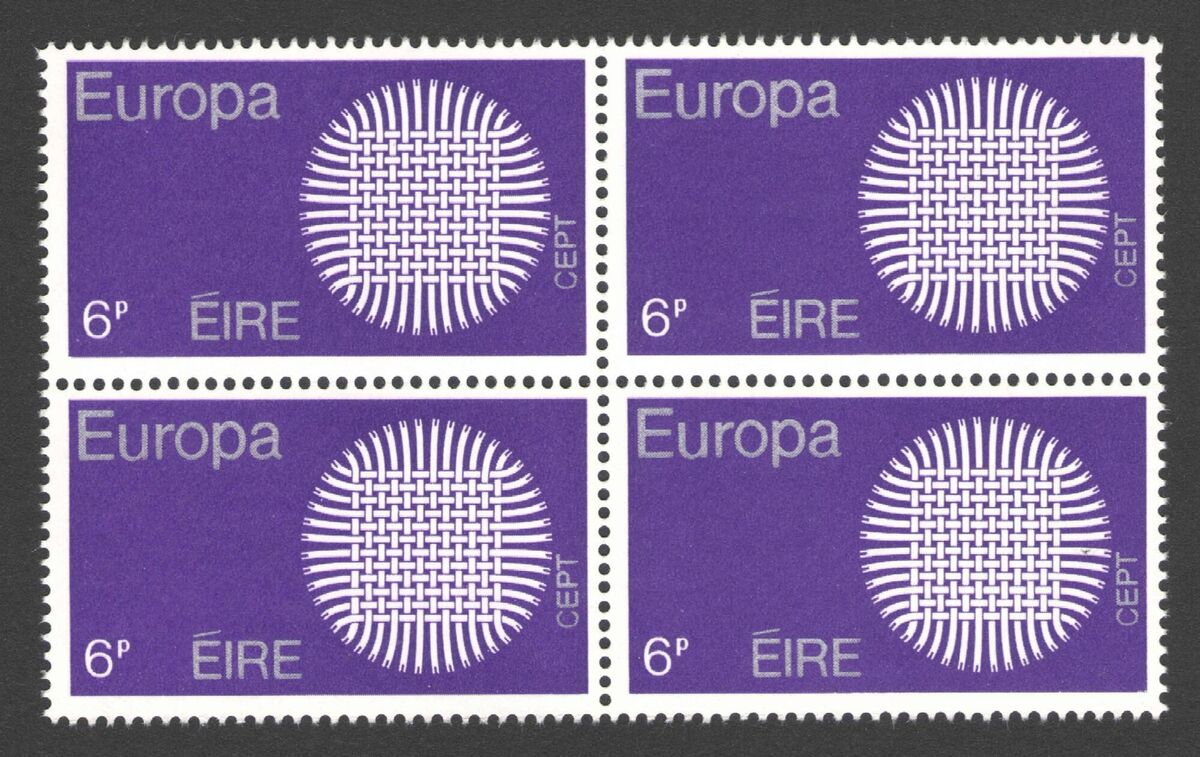
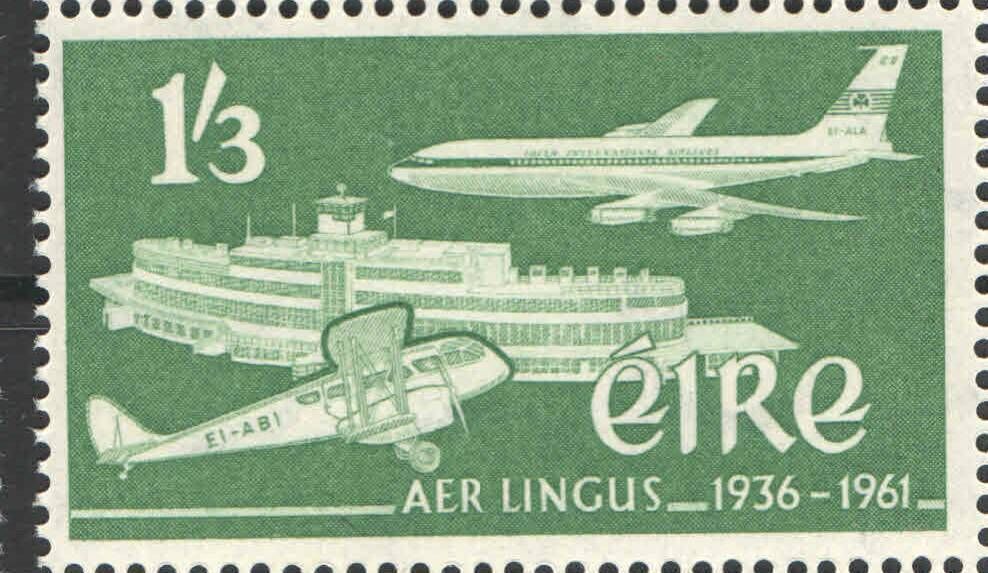
“I would say from the late 1960s and early 1970s, you’ll begin to see changes in design,” says Stephen. “You have examples such as the celebration of Aer Lingus, so again, modern Ireland. We’re also beginning to mark international events.
"You have a design by Louis LeBrocquy called Flaming Sun that celebrates the idea of Europa. He actually won the competition run by the European Conference of Postal and Telecommunications Administrations in 1970.
"That stamp was issued by various post offices throughout Europe. So you begin to see modern art coming into the design.”
As well as a slow change in style, the broadening of messaging and representation has continued. In recent years, those commissioning designs have been keen to depict as many sections of Irish society as possible.
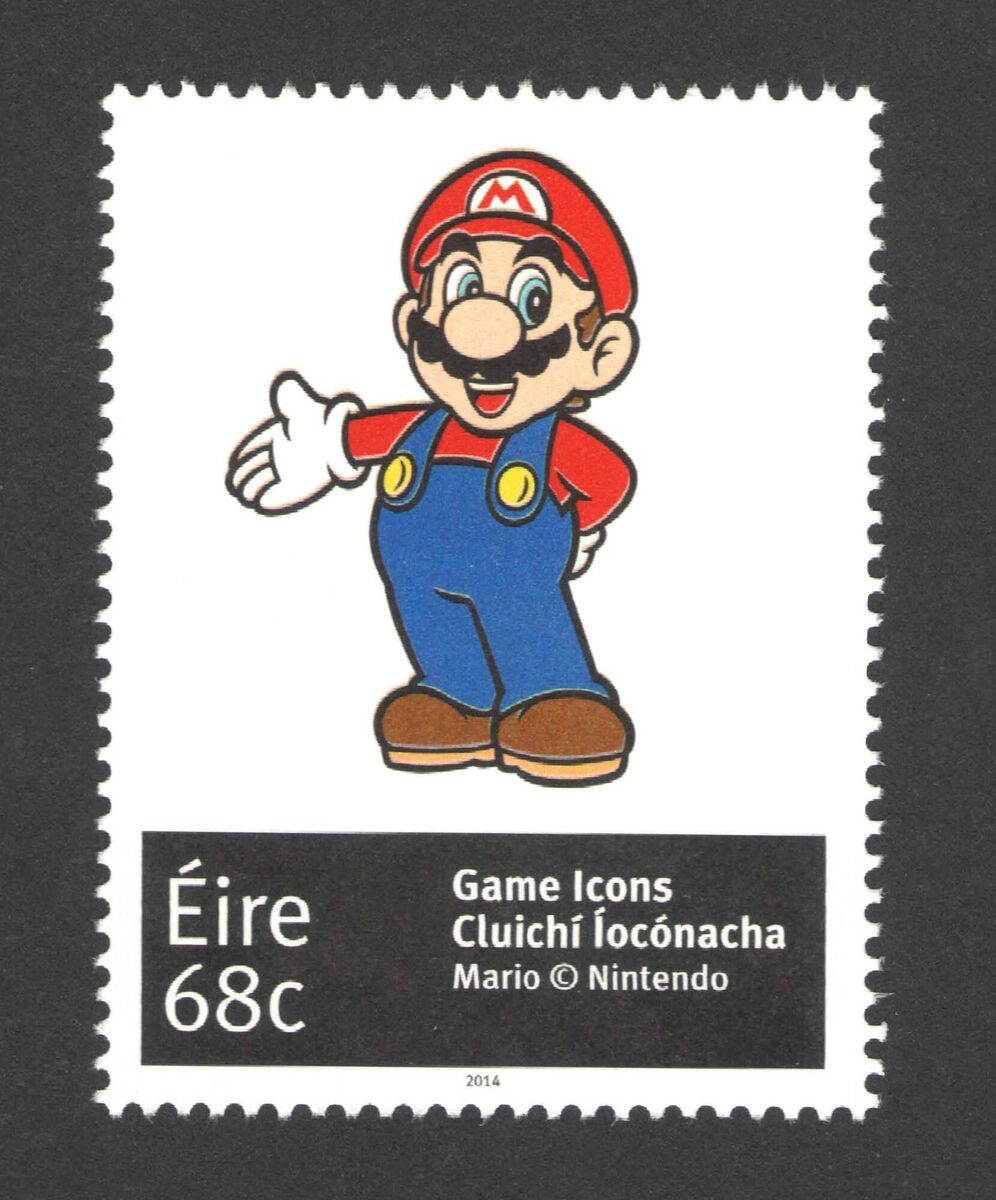
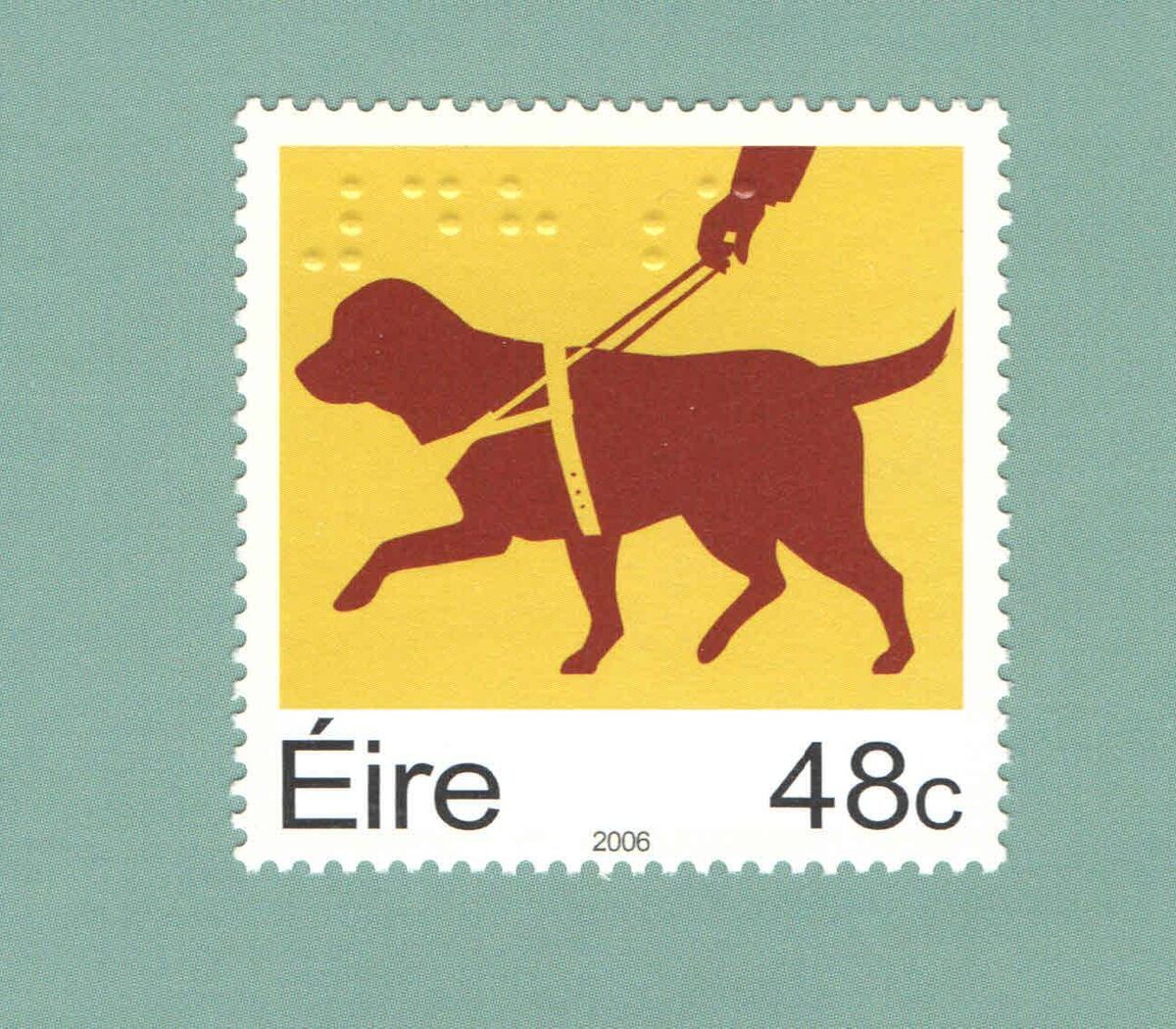
“The policy has been more inclusive,” says Stephen. “You'll find recognition for minority Protestant religions, Methodists, Presbyterians or whoever it is. Different groups are represented, people living with disabilities, for example. We used Braille, for instance, in 2006 for the Irish Guide Dogs where you can actually feel the Braille on the stamp. All sorts of things get represented on stamps now. We recently had a series on urban art, there was one with emojis and another set celebrating computer games like Pac-Man, Super Mario, and Space Invaders.”
Modern print production has also broadened the capabilities of stamps. Stephen points to a commemorative stamp for 1916 which allowed users to scan a QR code that brought them to a page where they could find out more about events in the Rising.
But for all the positives that modernity brings, there is no denying the stamp is in decline. For obvious reasons, stamp production is on the wane and commemorative stamps are no longer distributed as widely as they once were.
“I would like a slightly wider circulation,” says Stephen. “In a way, the ambassadorial role of stamps has been curtailed a little because we don’t send letters as much. But you can’t change the way things are going.” That ambassadorial role that Stephen speaks of is perfectly represented in what is his favourite series of stamps.
“Over a period of maybe fifteen years from the mid-1960s, we issued a small number of special stamps for airmail letters,” he says. “They were double-size and they showed an angel going over an Irish landmark. So you have the angel Victor who is bringing the voice of Ireland - VOX HIBERNIA - throughout the world. They're beautifully designed stamps. They are recess printed, which means you can actually feel the lines on the stamp itself.
"But they’re also clever because they’re representing Ireland and its beauty spots - Lough Derg, Glendalough and the Rock of Cashel. So you’re doing two things: you’re maintaining the Irishness of everything with that saints and scholars image while at the same time, you’re showing Ireland as a place where we have numerous beauty spots which you could come and visit if you were so minded. And these were the stamps that especially went throughout the world as airmail. If I were to pick one, I’d probably go for one of those.”
Miniature Masterpieces goes a long way in a small space. Our stamps represent a fascinating and underappreciated visual reflection of Irish history and culture.
“There are still a few young people who collect stamps,” says Stephen. “And if you can get them interested, the hook very often now is postal history where people get interested in the actual letter and the story in the letter as well as the story on the stamp. It’s an interesting part of our social history and as long as stamps are produced they will be a record of home.”
- Miniature Masterpieces runs at the National Print Museum until 3 May 2024. Admission is free and all are welcome.
- Opening hours: Tuesday – Friday (10 am-4 pm), Saturday & Sunday (12 noon-4 pm). No booking necessary.


CONNECT WITH US TODAY



Be the first to know the latest news and updates