Empathy/Íonbha: talking about a revolution
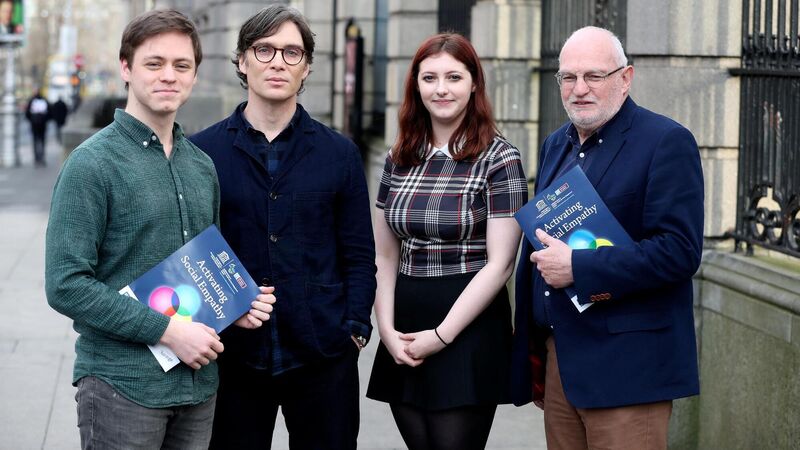
Cillian Murphy has called for an empathy revolution in this country and now that the Activating Social Empathy programme will be embedded into Irish school curriculum perhaps that revolution is about to start.
Empathy/Íonbha: talking about a revolution

UNESCO Chair Professor Pat Dolan and actor Cillian Murphy launching the initiative to introduce Empathy education for secondary school students in Ireland, in 2020. Pic: Jason Clarke.

When you think about why we cook for other people, yes, it is to nourish and feed them, but there is very often much more to it than that. 

We want to show the person how much we care, we want to see them enjoy what we have created, and often we want to celebrate something special with them. 

These desires and emotions are the same across the world. 

Traditions and rituals have grown around food sharing, some as simple as a cake for a birthday, others as intricate as the tea ceremonies of Japan, or as bountiful as the wedding feasts of India. 

Food is a way of creating interconnectedness between people, even in circumstances where those people do not have a shared language they can cook and eat together and develop a tacit understanding of each other.

I often think back to an article I read that quoted Senator George Mitchell, who had worked tirelessly to broker the Good Friday Agreement in Northern Ireland. 

He used the phrase the unyielding men and women of the north, he described how for weeks and months there was a deadlock between parties, and how he was at pains to know how to progress the talks. 

One evening he organised a big, grand dinner. He invited those from all sides to sit down and to eat together. 

He announced at the beginning of the meal that no one was to talk about politics. Over the table that night the conversation went from the weather, to fishing, to a dawning realisation that there was a shared love for the same place. 

Mitchell described that evening as a pivotal point in the negotiations. He said from that time onwards there was a softening, an empathic bond started to develop and talks began.

Empathy is an important human trait, the foundation of our relationships and helps those around us to feel valued and loved. 

We may not however think of empathy as a skill that can be learned, yet there is growing research that says empathy is something we can build throughout life.

Professor Pat Dolan, who holds the position of Unesco Chair for Children, Youth and Civic Engagement, has been researching the benefits of teaching empathy. 

His work with Unesco focuses on broadening our understanding of youth civic engagement internationally, with an aim to build emotional awareness and social connections that lead to social cohesion. 

Pictured with actor Cillian Murphy, and UNESCO Chair Professor Pat Dolan Unesco, Child and Family Research Centre NUI Galway were students Nathan de Bustos, Conor Eivers and Seamus Flannery from CBS Monkstown Park, Dublin. Pic: Jason Clarke

Pat Dolan’s work is supported by Cillian Murphy who is a patron of the Unesco Child and Family Research Centre, in Galway, where they have been working with young people for the past 35 years. 

The youth are taught to become researchers in their own right, to investigate things that matter in their lives, and to engage others in seeing things from their point of view. 

Out of this work has come a groundbreaking educational programme called Activating Social Empathy. 

It was formed in conjunction with Penn State University and Foróige. Foróige is an Irish organisation that works with over 50,000 young people aged between 10 and 18 each year. 

They do this through volunteer-led clubs and staff-led youth projects. The Activating Social Empathy programme was designed in conjunction with young people, it looks at areas in their lives where they see, or experience empathy, be that in sport, art, or music, or in other situations at home or school. 

Topics such as ‘Why is hate speech sometimes used instead of welcoming speech’ are addressed through modelling and roleplay. 

The students decide what to work on during the classes, and delve into the topics that are of most relevance to them. The peer-led aspect of the programme, as well as its interactive hands-on nature, allow the participating young people to move from a passive form of empathy to an
active social empathy.

Empathy is the ability to perceive another person’s emotions, it is innate, it is in animals as well as all of us. 

But this empathy can have a social dimension when it incorporates the ability, or the desire, to not just perceive, but to understand the other person’s emotions. 

This is the stage where you can cultivate empathy, which is key to empathy education. There is a powerful ability to create connections which can lead to caring actions toward others, these actions are the foundation of human relationships.

Up to now, the Activating Social Empathy programme did not incorporate food, or how people across the globe can relate and connect to each other through the creation and sharing of food. 

I was approached by Pat Dolan to work with his team, and with Foróige, to build food into their existing programme. 

Over the past few months we have been exploring how aspects of food education can play a part in helping young people to connect, and to link empathy with food. 

A four-week course has been developed. It was piloted by Foróige groups throughout the country. 

It not only linked food and empathy but engaged the young people to cook together. The groups collected recipes, discussed where in the world these recipes originated and looked for similarities between them, they created new celebrations around food and talked of ways food is used to celebrate milestones throughout the world. 

During each class, they not only cooked together, but also sat and shared what they had created. 

These sessions provided space for young people to reflect on their relationships with culture, belonging and the place that food plays within their lives. 

As Dolan says, empathy education through food leads to relationships and connections which are particularly key in adolescent and teen years.

The young people who participated in the Food and Empathy pilot came together earlier this month in a day of celebration. 

Each Foróige group brought a collection of food and images they had created, and they displayed them for each other to see. 

We were treated to Slovakian desserts, Nigerian rice, Ukrainian borscht, a wonderful array of dishes that meant something to the groups who prepared them. 

We talked and chatted about their experiences over the past few weeks and how creating and sharing food evoked an empathy for other people and cultures. 

If food is a universal language of the soul so too is empathy. Cillian Murphy has called for an empathy revolution in this country and now that the Activating Social Empathy programme will be embedded into Irish school curriculum perhaps that revolution is about to start.

  • If you would like to learn more about empathy in Ireland íonbha the Irish book of empathy is available in bookshops around the country. All proceeds from the book go directly to costs in delivering the empathy education programme in Irish schools and youth work organisations.

x

More in this section

Lifestyle

Newsletter

The best food, health, entertainment and lifestyle content from the Irish Examiner, direct to your inbox.

Cookie Policy Privacy Policy Brand Safety FAQ Help Contact Us Terms and Conditions

© Examiner Echo Group Limited