'Let them all die': A century on from Ireland's biggest hunger strike
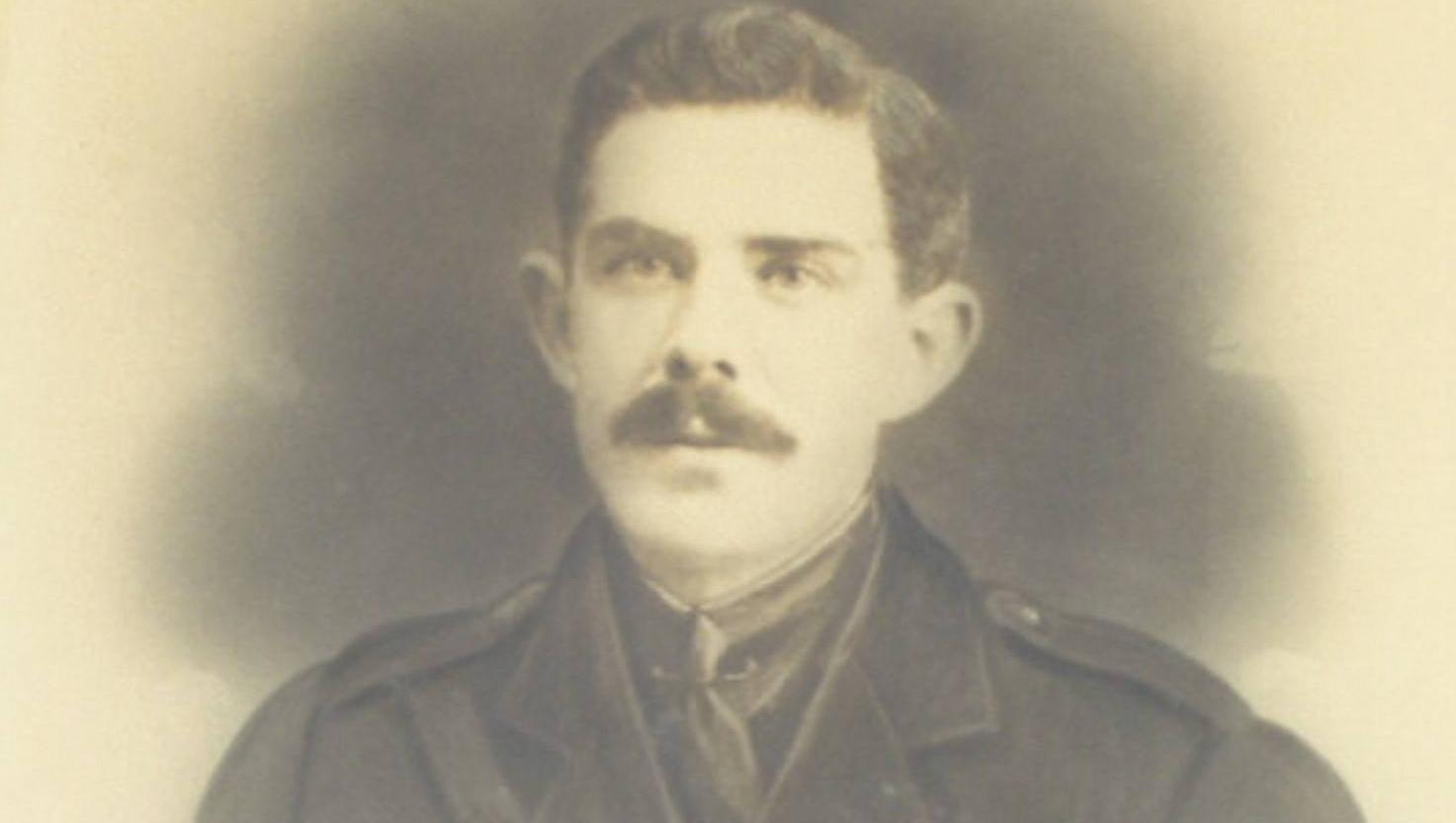
Denis Barry, from Riverstick, died on 20 Nov. 1923, after refusing food in Newbridge Internment Camp (Wikipedia)
That was the promise sworn by over 8,000 prisoners in Ireland, 100 years ago.
At midnight on 14 October 1923, some 462 prisoners in Mountjoy Prison, Dublin, “hopeless of gaining redress of grievances”, and desperate to regain their freedom, took the drastic decision to go on hunger strike.
Thousands of Republican inmates in at least ten other prisons and internment camps across Ireland were ‘invited’ by IRA headquarters to follow suit.
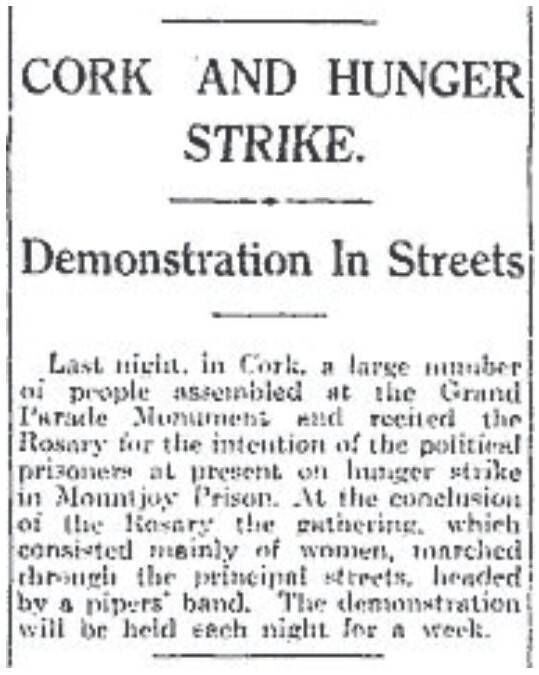
By October 24, the Cork Examiner estimated that almost 8,200 prisoners were refusing food.
They included 3,900 in the Curragh, 1,700 in Newbridge, 711 in Gormanston, 350 in Kilkenny, 263 on the prison ship ‘Argenta’ in Belfast Lough, 200 in Dundalk, 100 in Hare Park, and 70 in Cork City Gaol.
Soon to join them were 51 of the 86 women prisoners in North Dublin Union barracks.
Earlier hunger strikes in Ireland had been on a significantly smaller scale: 143 men and 2 women in 1918, and 78 prisoners in Cork County Gaol in 1920.
Those refusing to eat in 1923 complained of being beaten and having hoses turned on them.
Interned without charge and a proper trial, they demanded immediate release, since the only ‘crime’ they had committed was to oppose the Anglo-Irish Treaty, 1921.
Not every prisoner joined in: some at Mountjoy said they needed all their energy to finish digging an escape tunnel!
Others believed hunger strikes were futile and would never achieve the mass release of prisoners being sought.
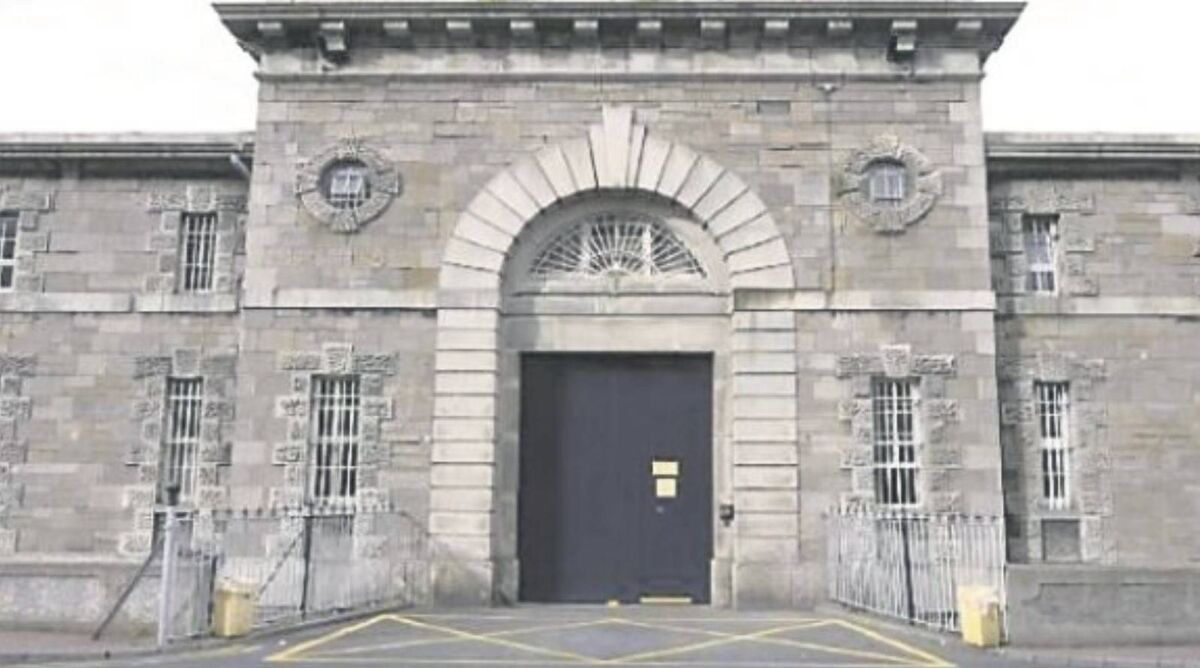
Peadar O’Donnell, leader of the Mountjoy group, recalled: “the decision to go on hunger strike was made when none of us knew we had a stomach… There is an idea abroad that after ten or twelve days the hunger is dulled and there is little further suffering. I do not think that is so. I knew that I was hungry all along.”
O’Donnell’s comrade at Mountjoy, Republican writer Ernie O’Malley, commented that hunger striking was “an unknown quantity… I was frankly afraid, but I could not see boys of sixteen and eighteen take their chance whilst I could eat and be excused… I could not let the side down”.
On 19 October, a large contingent of mostly women, fronted by a band of pipers, marched from Grand Parade, Cork City, through the main streets, in support of the Mountjoy men. They marched each night for a week.
The hunger strikes persisted. At Mountjoy, prisoners “scornfully rejected” food offered by doctors and police officers, and threw it down into the hall, which was left in an “indescribable condition”, according to the Cork Examiner.
Managing to keep warm presents a serious problem for anyone not eating.
In the Curragh, men tore down partitions and doors in order to keep the stoves going. Many took to their beds.
For some, it was too much, and they abandoned the campaign.
In Newbridge, the cookhouse was raided by an “uncontrollable mob” of starving prisoners.
An eyewitness described the scene as “awful and pitiable”.
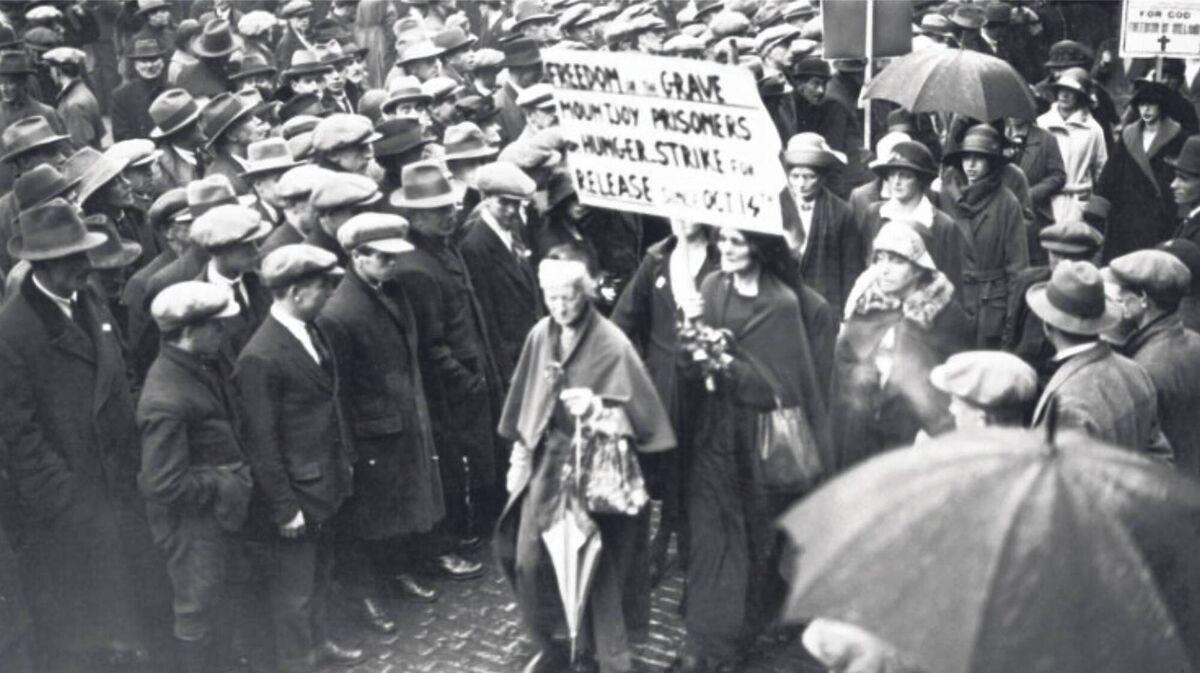
Many eminent figures condemned the hunger strikes.
The editor of the Irish Statesman, George Russell, declared those who took part were insane.
Priests claimed the prisoners’ actions were suicidal. Cardinal Michael Logue, Catholic archbishop of Armagh, labelled the strikes “foolish”, “ineffective”, and “of very doubtful morality”, and called on participants to abandon their “dangerous” and “unlawful” actions.
Doctors refused to treat protesters, and the government threatened never to release them: “let them all die”, was its attitude, claims James Healy (‘The Civil War Hunger Strike’ – October 1923’).
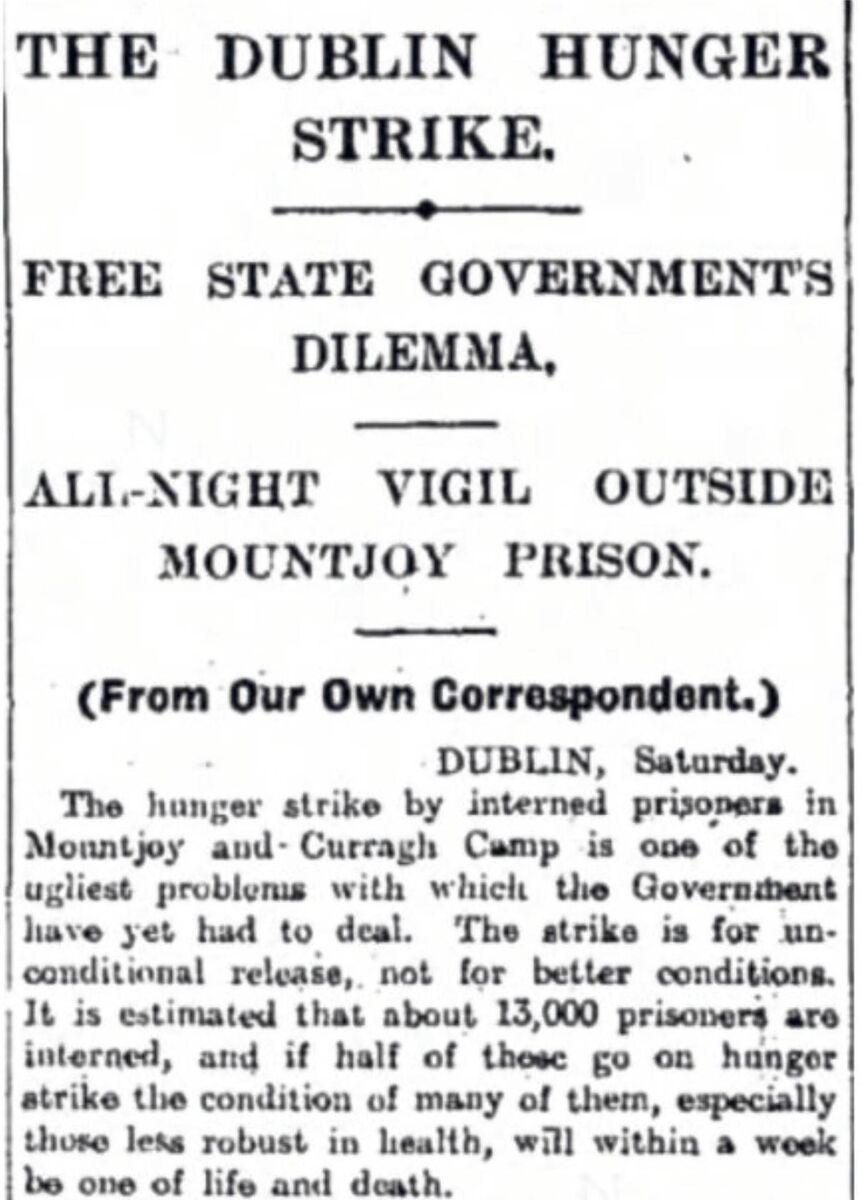
Public reaction is harder to fathom. Sheila Humphreys from Limerick, who was on strike for thirty-one days in the North Dublin Union prison, maintained: “the Irish public had forgotten us”.
In reality, women on the outside, led by activists Charlotte Despard, Maud MacBride and Constance Markievicz, kept up a relentless campaign throughout the autumn to get them released.
Markievicz's own arrest allowed her to join the strike during its final three days.
By late October many prisoners had started eating again, some too weak to hold out, others influenced by forged orders purporting to come from the IRA, telling them the strike was over.
Two protesters died of hunger: Andy O’Sullivan from Denbawn, Co. Cavan, interned in Mountjoy Prison, and Denis Barry from Riverstick, Co Cork, an inmate in Newbridge, who died in the Curragh Military Hospital.
When Barry’s corpse was brought to Cork City, it had to lie in Sinn Féin HQ on Grand Parade, for Bishop Daniel Cohalan had banned it entering any church.
No priest was allowed to attend his funeral in St Finbarr’s Cemetery on 28 November, so David Kent TD sprinkled holy water over the grave, while Annie MacSwiney, sister of Cork’s late Lord Mayor, recited the rosary in Irish.
On 23 November, after 41 days, Republican leaders toured the camps and officially called off the strike.
The following day over 500 inmates were released from prisons across Ireland on condition they signed an oath of loyalty to the Irish Free State.
Another 500 were released in December 1923.
However, 420 hunger strikers refused to sign, and remained locked up, some until January 1926 – without charge, or a proper trial.

CONNECT WITH US TODAY



Be the first to know the latest news and updates