Sarah Babiker: Irish and Arabic are two languages a world apart - connected by the sun
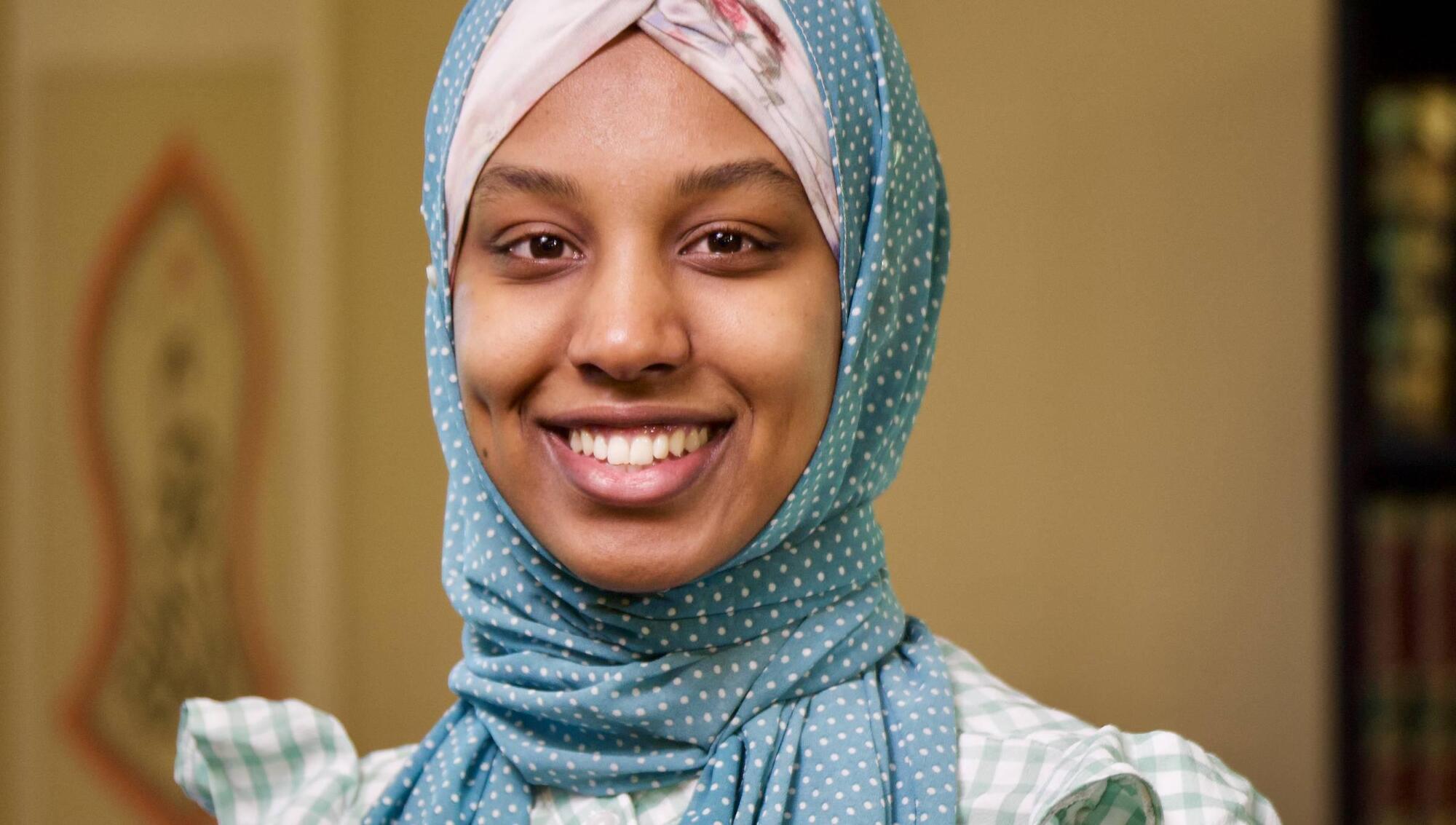
Journalist and historian Sarah Babiker discusses an essential commonality between two ancient linguistic traditions
Sarah Babiker: Irish and Arabic are two languages a world apart - connected by the sun

Sarah Babiker: "I spent five months conversing with scholars, teachers, friends, family, neighbours and artists, trying to understand why Arabic and Irish refers to darker skin tones as blue."

I’ll never forget the time we were reading an Irish text in class that suddenly mentioned, “ daoine gorma.” Blue people. 

We all looked at each other, wondering who these blue people were. When our teacher explained, I realised that she meant me. 

In Irish " daoine gorma" refers to people with darker skin tones.

After the initial surprise, bells began ringing in my head. 

I often hear my Sudanese family describe darker skin tones as “ azraq” ... in Arabic, this means blue. 

This made me wonder what trope, what way of seeing, knowing, and relating to the world configures the connection between Irish and Arabic insights?

I spent five months conversing with scholars, teachers, friends, family, neighbours, and artists, trying to understand why Arabic and Irish refers to darker skin tones as 'blue'. 

Theories I came across stretched far and wide, from the blue men of the Sahara to the Blue Nile of Sudan. There came a moment, when I asked whether how the Irish and Sudanese refer to their own skin tones could help me understand how they refer to the skin tones of others?

Referring to people or to skin tones as “black,” or “white,” has a history of its own, yet I found that the foclóir still reflects Irish’s indigenous way of seeing in translating these modern terms.

‘White people,’ translates to ‘ daoine geala’, which can mean bright, or white. Interestingly, gealach, is a derivative that means the moon. In its verbal form, it describes the brightness of the sun: ghrian geal

Similarly, the majority skin tone in Sudan is described as asmar, the root of which is arguably moonlight. 

Edward Lane’s Lexicon explains it as “the colour of what is exposed to the sun.” 

Strikingly, the roots of both geala and asmar are inseparable from the sun and moonlight.

I was astonished to find this sunwise orientation captured in the book Thirty-Two Words for Field

Author Manchán Magan explains that he has to orient himself differently if he’s giving directions in Irish. 

You can’t just say left, right, straight ahead, you must say southwest, northeast, for example. In other words, in Irish, you must orient yourself in relationship to the sun. 

I wondered whether this habit of navigating our world through the brightest light above us, embedded in both languages, stretched beyond physical dimensions.

Irish and Arabic reorient us one splash of colour at a time, propelling us to ask: what light do you see yourself in? What light do you see others in? The same light? And is that light bright enough to reveal and orient our common humanity and simultaneous diversity?

  • A graduate of Zaytuna College, Sarah Babiker’s research explores the connection between the worldviews embedded in Irish and Arabic and how they may enlighten contemporary discourse on social and ecological justice. 
  • She has presented research at Harvard, Scoil Scairte and TEDx Trinity College.
An bhfuil Gaeilge agat?

x

More in this section

Lifestyle

Newsletter

The best food, health, entertainment and lifestyle content from the Irish Examiner, direct to your inbox.

Cookie Policy Privacy Policy Brand Safety FAQ Help Contact Us Terms and Conditions

© Examiner Echo Group Limited