International Day of the Seafarer: What's it like to spend your life on the sea?
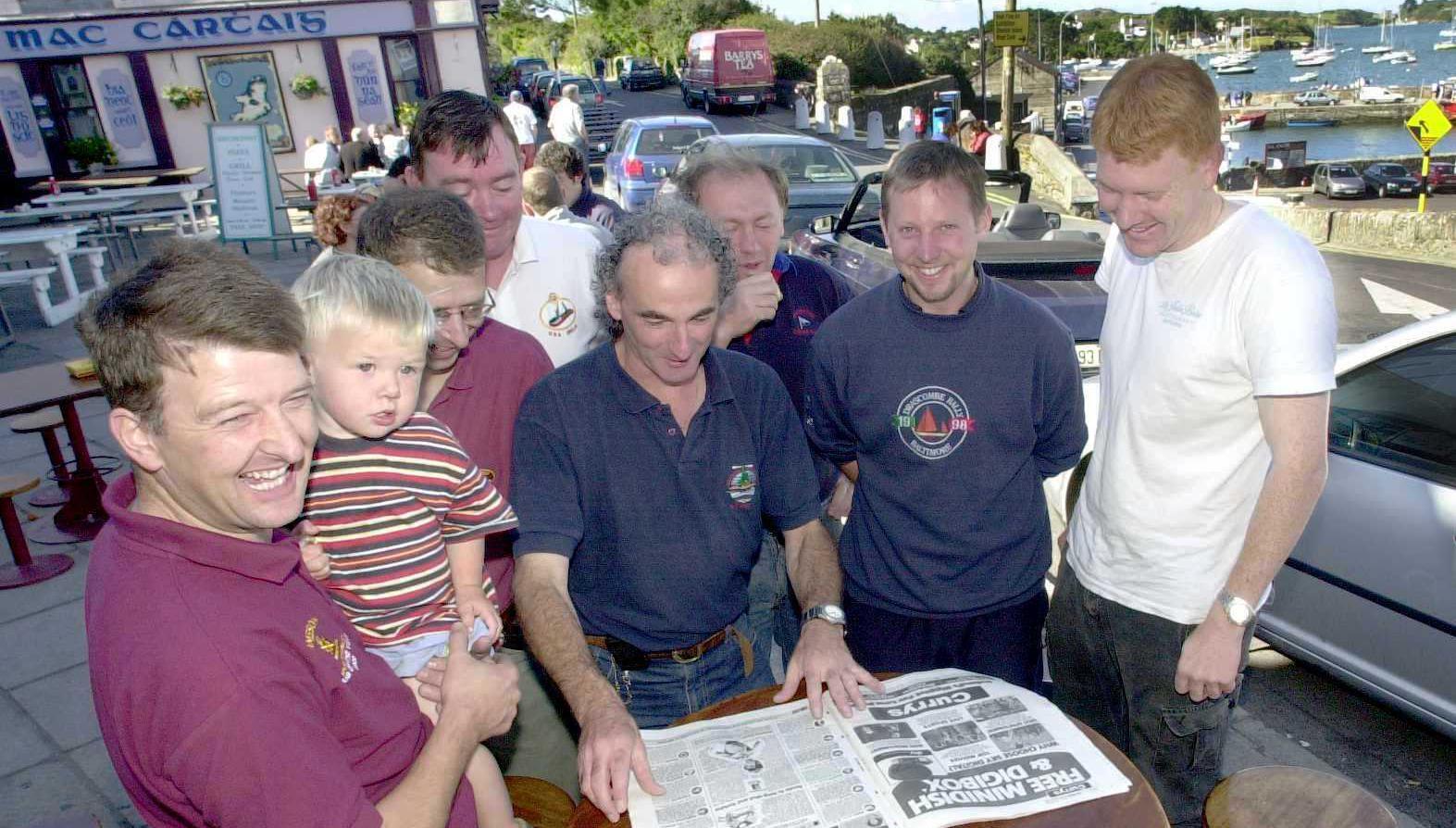
Members of the Baltimore lifeboat crew - Aidan and Tom Bushe Cathal Cotterll, Ronnie Carthy, J, J, Cotter, Kieran Cotter, and Brendan Cotterell. Picture: Richard Mills.
Brendan Cottrell has spent his life on the sea. Like many of his neighbours, the Baltimore boatman was born into a life on the ocean waves.
“I started on the ferries to Sherkin Island when I was about ten,” says the forty-five-year-old. “My father is from Baltimore and my mother is from Cape Clear Island.
My family were stuck in fishing for years and we’re kind of into tourism now. I’ve never had any other job, never worked in a bar or anything like that, only worked on the sea.
When I was in school, I was on the ferries on the weekends and my holidays. When I turned eighteen, I went to college and studied Nautical Science.”
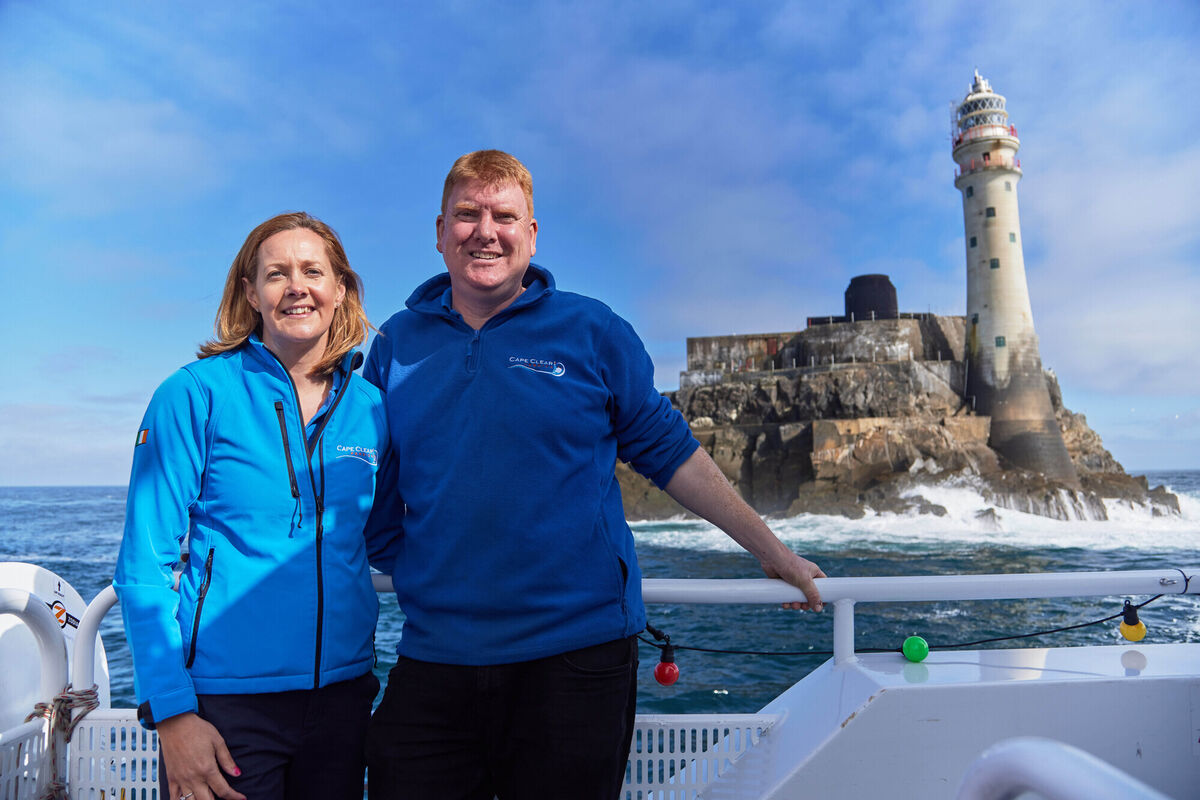
Of the 20 students who joined him in his first year at college, only five completed the course. Not everyone is cut out for life at sea and it’s not hard to see why.
“When I first started, I used to do five months away and then come home for two months,” recalls Brendan. “It was a hard slog and the money wasn’t great. I was getting sixty euros a week for four years and only when I was on the ship. That’s how it was at the time.
“But that’s what I wanted to do and I could see the bigger picture. I know a lot of people dropped out but it never crossed my mind. I was always going to be on the sea and if it wasn’t in the merchant navy it would have been fishing. There was never anything else. When you’re young and you work with these things you get a passion for them and that's what happened to me.”

That passion has taken Brendan all over the world. He has worked out of ports in India, Dubai and Trinidad & Tobago, captained flotels in Singapore and Norway and docked in many of the world’s biggest and busiest ports.
Though he sailed around the planet and saw its rich diversity, there was always a plan to come back to Cork and work closer to home.
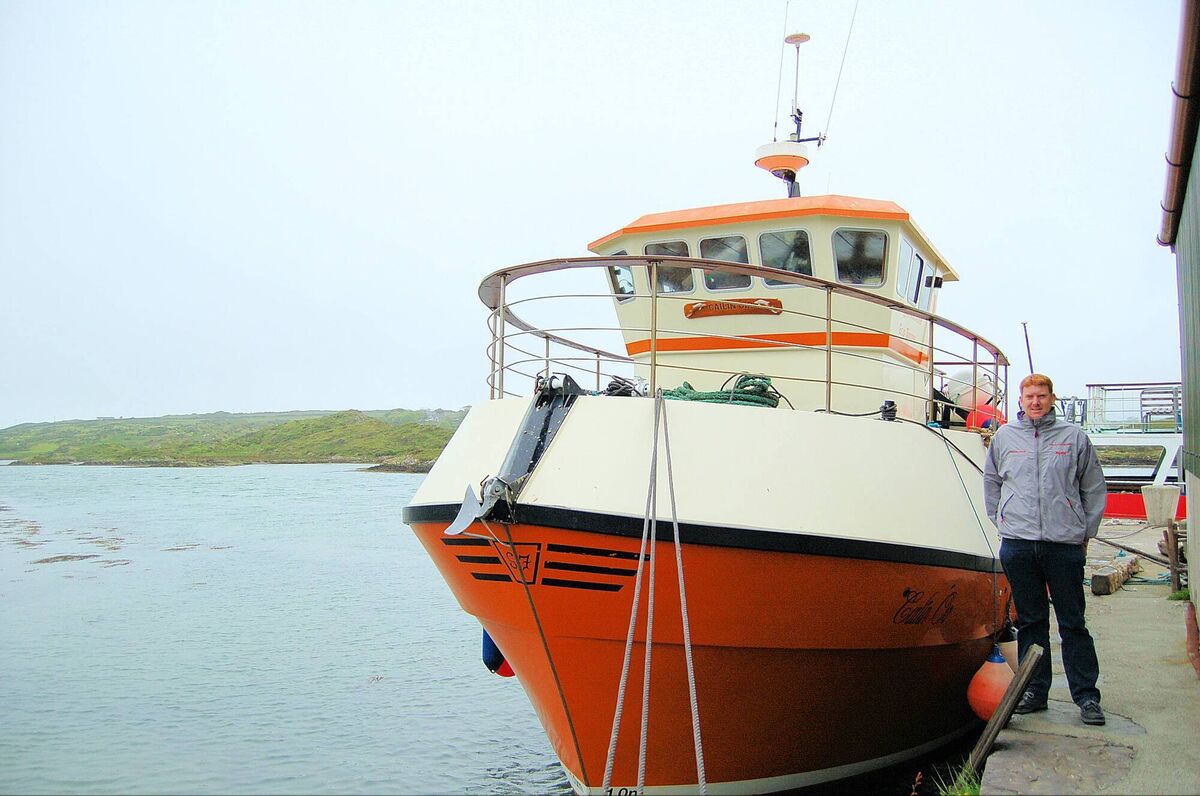
In 2007, Brendan and some local investors bought the Cáilín Oir Ferry and ran the summer route from Baltimore to Cape Clear Island.
Cape Clear Ferries was born and some years later, the company obtained the licence to run the route year-round. That meant buying a second ferry, the Dún an Oir to which he has recently added two new boats including the 200-capacity Carraig Aonair.
“I used to still work at sea and was month on and month off,” says Brendan.
“I’d manage the ferries on and off. I worked at sea until last August but now with the introduction of our new fast ferry to Cape Clear, I’ve come home to run it.”

For Brendan, the sea offers more than just a living. When he’s not ferrying people across to the islands, he is sailing or visiting the islands himself with his young family. Even holiday plans are influenced by his love of all things maritime.
“If we go away, I’d be looking to go to a port or a harbour, somewhere near the sea,” he says.
“My wife would be giving out to me about the bloody boats but I grew up on it. I know nothing else. It’s like meditation or something. When you’re out there, you’re not in an office, you’re out in nature. It’s in my blood.”
Indeed as islanders, the sea is in the blood of most Irish people. Though many of us know very little about it and interact with it even less.
“As a nation, I think we forget we’re islanders in general,” says Macdara Ó Cuaig, who works with the Marine Institute of Ireland.
“Historically, we’ve thought more of the land rather than the sea. But even territory wise we have over eight times more territory under water than we have above water.”
“Through no fault of their own, and it is changing by the way, I think the people who ran the country for a long time didn't have as much exposure to the sea and therefore didn’t appreciate the true value of it as this wonderful resource.”
That's despite the fact that Irish port traffic accounts for over 90% of imports and exports moved in and out of Ireland. Dublin port alone deals with approximately 7,500 ships, 36 million tonnes of cargo and 1.5 million passengers every year. Over thirty-two thousand of us make our living off the sea in some capacity.
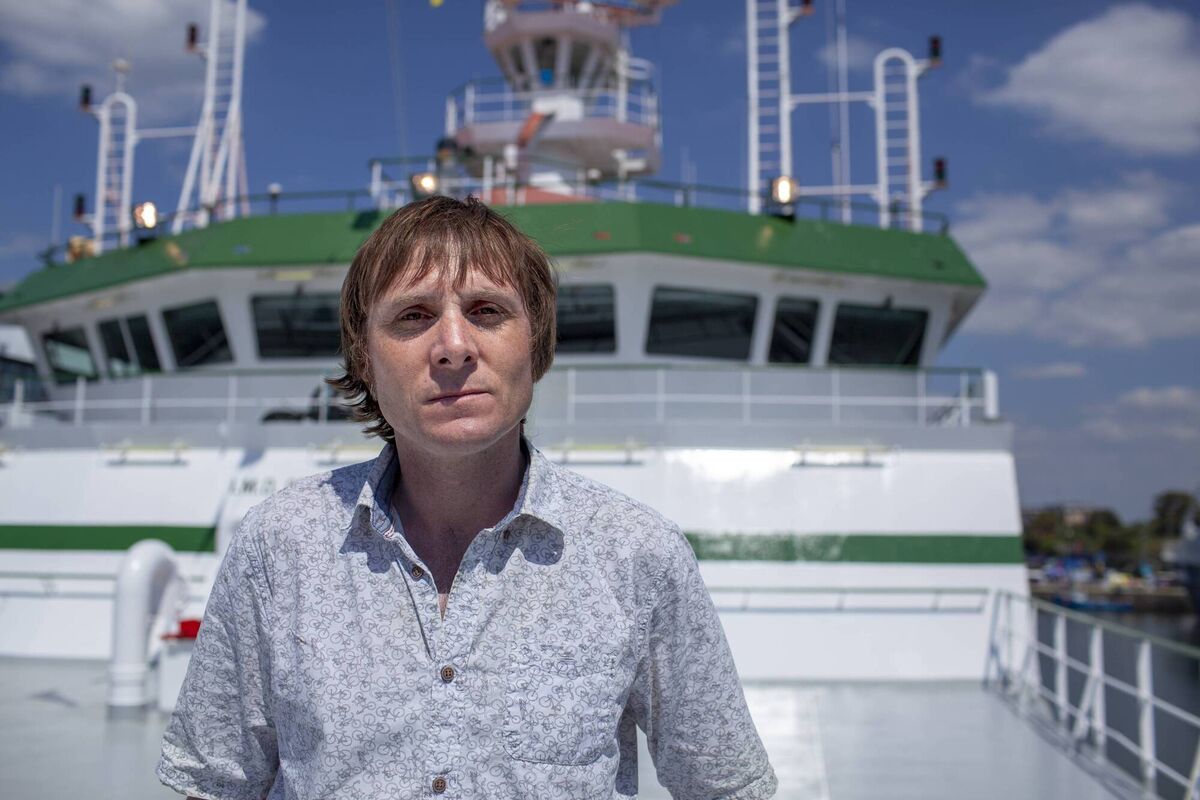
“To me the sea is opportunity,” says Macdara. “When I look out at it I don’t see a barrier, I see a roadway, a vector, a way to get from here to anywhere in the world.
Then there’s the nature value of it in terms of biology, oceanography and the climate and what the sea brings us; oxygen, weather, food. It is endless opportunity.”
Born and raised in Carna, Macdara grew up fishing with his uncle Cóilín along the shores of Connemara.

On finishing school, he went on to study Marine Science at the National University of Galway and University College Cork where he was able to apply his lifelong knowledge of the sea to his studies.
He has since made a career collating data for fish stock assessment - or as his wife, Aoife, explains it to their two kids, Oscar and Ailbhe: “he counts fish!”.
Ireland’s relationship with the sea is changing according to Macdara and that has been reflected in recent policy shifts.
“People think Ireland is on the edge of Europe but if you look at it from a maritime point of view we are bang in the middle,” he says.
“We are where you want to be for research and that’s been highlighted in recent years in the investment in our research vessels which wasn’t there in the past. It wasn’t as tangible to them as livestock in a field or industry on the land. It was harder for them to get their head around. But the state is becoming more aware of the resources that we have because of our location and they are now investing in it with the likes of research boats such as the Tom Crean and the Celtic Explorer.”
And there is a chance for those that work on the sea to get involved in conveying the importance of where they work and what they do.
“I feel there’s an opportunity there for people who work on the sea to educate people about the responsibility we have and how much the sea means to us,” says Macdara.
“Whether they be a mechanic or a captain or whoever it is, because the seafarer has the advantage of seeing that the sea will take you everywhere that the sea connects us all. Not everyone has that opportunity and it is good to share that perspective with others. We see that connection in our history and even in our genetics. It is in us all but the seafarer can help educate us on what a special, precious place it is.”
“The enjoyment for me is next to nothing," says Brendan. "I make my living from it and I wouldn’t want to change that. I’m lucky in that I have a wife who understands that too and wouldn’t want me to change either. There are days when the weather is bad and you want to get out of it but every day is different and I enjoy that about it.”
CONNECT WITH US TODAY



Be the first to know the latest news and updates