'As a mother of a child with a disability, it’s very hard — we’re not all heroes'
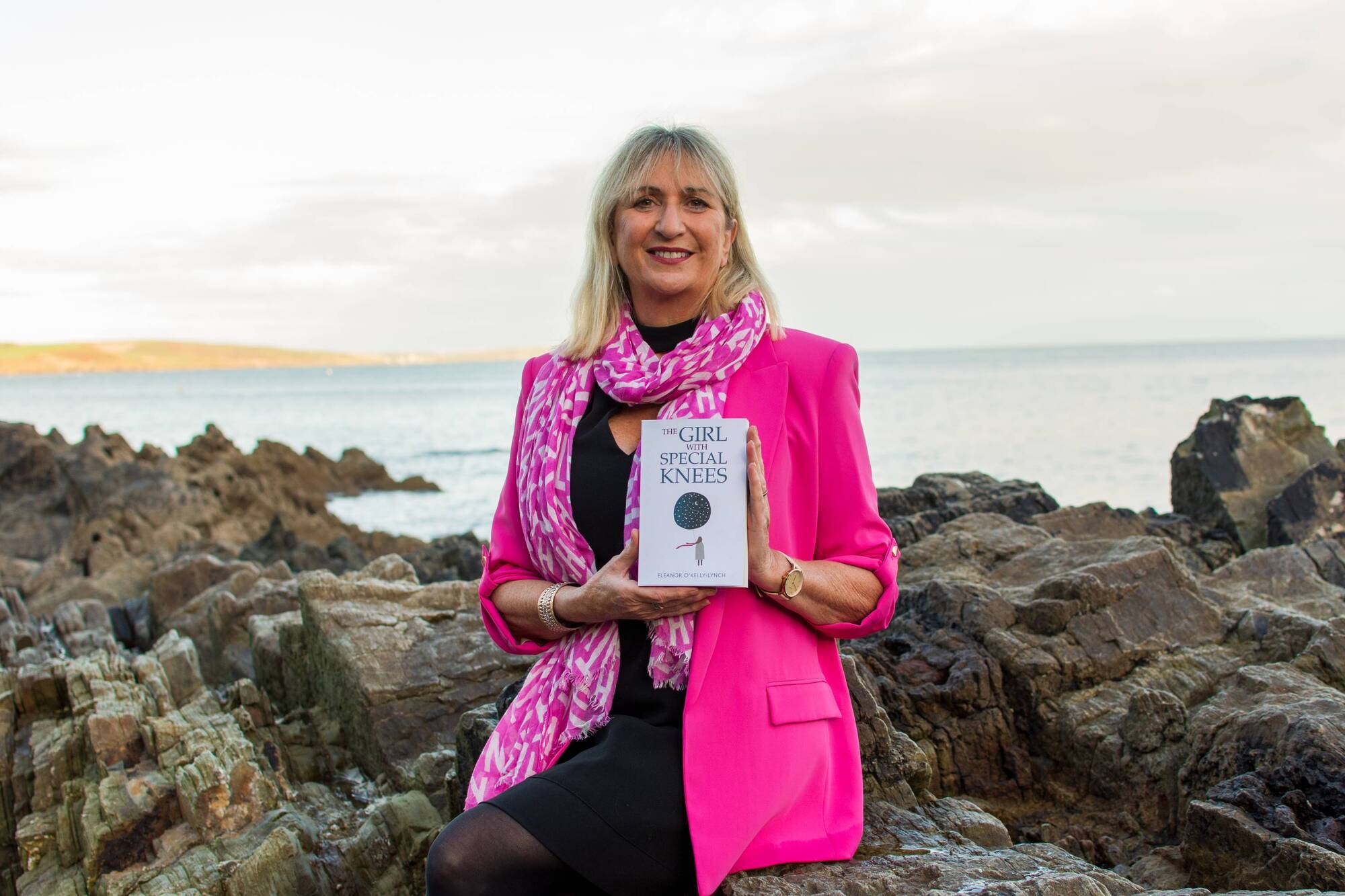
Eleanor O'Kelly-Lynch with her book, The Girl with the Special Knees. Photo by Owen Good of Narration
However, this mother-of-three and grandmother-of-two, has ventured into new territory herself, having published a novel inspired by Lauren. Entitled ‘The Girl With Special Knees’, Eleanor stresses that it’s a work of fiction but adds that she couldn’t have written it without her experience of a child with special needs.
Lauren has a rare genetic disorder, Cornelia de Lange Syndrome (CdLS), which affects approximately one person in 30,000.
She is unable to talk, has frequent chest infections, recurring reflux and anxiety. CdLS babies have a very low birth weight.
Lauren, who weighed just three pounds and five ounces when she was born prematurely, is very small, about the size of a nine year old girl. She has to wear nappies and can only eat pureéd food.
But after battling for better services for her daughter, Eleanor now has “peace of mind” since Lauren was accepted for full-time respite care through the COPE Foundation in Cork which supports children and adults with intellectual disabilities.
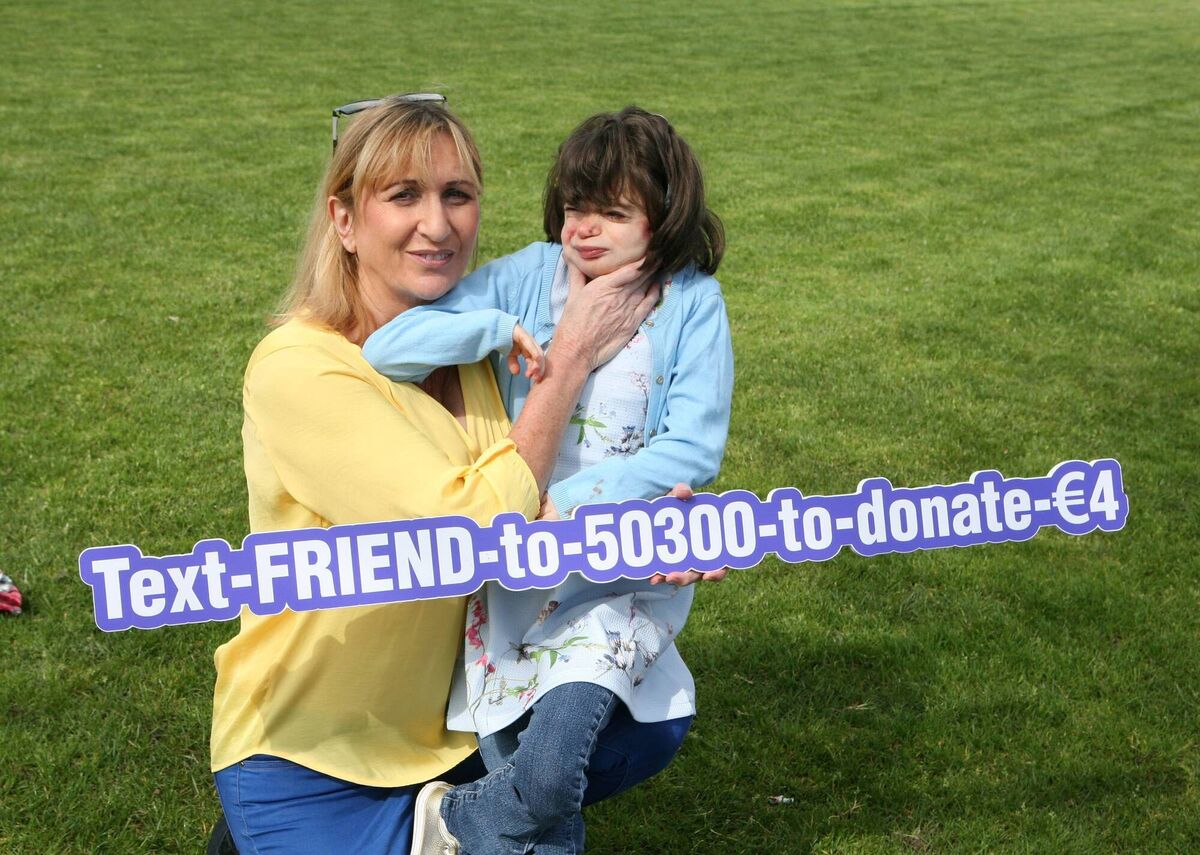
For years, Lauren attended – and still attends – the day care centre at COPE. And now, she is looked after in a home run by the charity where there are three other people with disabilities, under the supervision of carers and a nurse.
“This means we’re not on our own anymore. Lauren has been in respite care since before Covid. The house is the one she used to go to for respite at weekends. The people looking after her are lovely and kind.”
Lauren often comes home to stay with her family in Glanmire. Eleanor bathes her using lavender oil, making everything as comforting and relaxing as she can. She gives her a bottle of hot chocolate, which Lauren loves.
On a good day, Lauren is content to be tucked up on a couch with a bottle to drink from. Sometimes she’ll go out for a walk.
On a bad day, she will gnaw at her face with her thumbs, self-injuring. Eleanor says this is very distressing.
“Lauren has been on anti-depressants for the last few years. Initially we saw a jump in her mood but it sort of fell back. There is maybe a very slight improvement.
"On her bad days, she curls up and pulls a blanket over her head. She doesn’t want to know. You can see she’s not happy.”
Eleanor and her husband, Derek, have taken Lauren to healers over the years. The first time they brought her to bio-energy healer, Michael Doherty, there was a transformation in Lauren that lasted for nine days.
“We got a glimpse of the real Lauren; it was fantastic. We’ve gone back and we’ve gone to another guy and his wife but we never saw a repeat of that first time.”
As Eleanor says, it’s not easy for Lauren.
“I don’t know how much she understands. I never think of her as 30. I think of her as a one or two year old. There’s the odd giggle. She can smile. Things are calmer now. Lauren is in a relatively good place. She is quite healthy and never got Covid. We have to manage expectations and accept that she’s well look after. Once she is changed, fed and shown love and compassion, that means a lot.”
Eleanor, a former teacher who now works part-time as a customer service trainer, always wanted to write a novel and joined writing classes over the years.
Her book, which features a disabled girl called Doll as well as her mother, father and sister, “explores the idea that this little girl could escape from the miserable life she was living and live another life in a parallel universe.”
While acknowledging that parallel worlds are in the realm of science fiction, Eleanor researched the idea.
“There are scientists out there who say there are multi-verses. We live in one kind of existence. In the religion we were taught, we were told that we’d have a better life in heaven. There may be other lives lived in another dimension. I had that in my head for at least three years.”
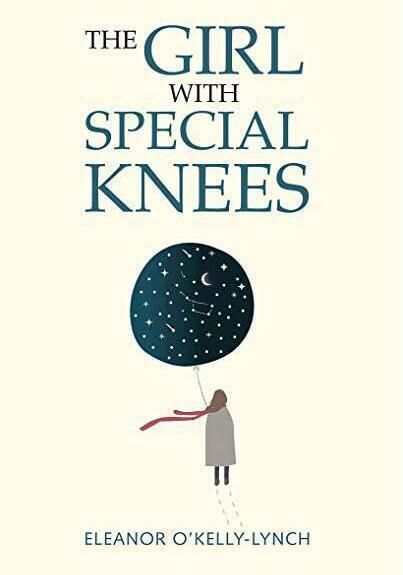
Initially, Doll has no interest in the African soul doll called Nana but she ends up being mesmerised by her. Nana takes her by the hand and the pair sail through the sky to another place in the universe called Almazova.
“We get her thoughts about leaving her old life behind. Doll doesn’t know where she is going but she knows she’s on a mission. There is a quest that needs to be completed by her alone. So uphill, down dale, across rivers in this new world, Doll can speak, write and doesn’t feel any pain.”
The novel is aimed at adults and so, there is also a focus on Doll’s mother, Sally; her sister who is going out with a bad boy and her father who is tempted to have an affair.
Eleanor says that there is “a lot of sugar-coating about disability and things like depression and anxiety. People say to the mother, ‘aren’t you wonderful.’ People used to say (a disabled child) is a blessing but they don’t say it so much nowadays.
"I don’t want to speak for any other parents. In the book, I’m not Sally.
Brought up to always put her best foot forward, Eleanor says: “You do your best, march on and no complaining. It’s actually a good thing because people whinge a bit too much these days. But Sally goes on a journey in the book.”
Suffice to say that she realises it’s ok to ask for help.
“You don’t have to be superwoman. Sometimes, courage is about not marching on silently. It’s asking for understanding.”
Eleanor admits that she has felt despair.
“I was that soldier. I couldn’t write about it if I didn’t experience it. Courage is not always about the stiff upper lip.
"In the book, each character shows courage in the end. Doll’s sister, Andi, is bullied. I was occasionally bullied as a child so I know that feeling. Andi wins out in the end after showing great gumption. And the father in the book resists the charms of another woman.”
As for Doll’s quest - you’ll have to read this charming well-written novel to find out.
- ‘The Girl With Special Knees’ published by Orla Kelly Publishers is available through Amazon and is in selected bookshops.
CONNECT WITH US TODAY



Be the first to know the latest news and updates