Santy School: What it takes to become a professional Santa Claus
‘Tis the season when professional Santas go to school. Suzanne Harrington joined them to see what it takes to represent the man in red
Santy School: What it takes to become a professional Santa Claus

Suzanne Harrington investigates the Santa School, Ministry of fun. School for training Santas for their Work in December as they prepare the final presents and talk to their customers, sorry . . . .young little ones who are hopefully going to receive their wanted Christmas present. SPECIAL FOR THE IRISH EXAMINER

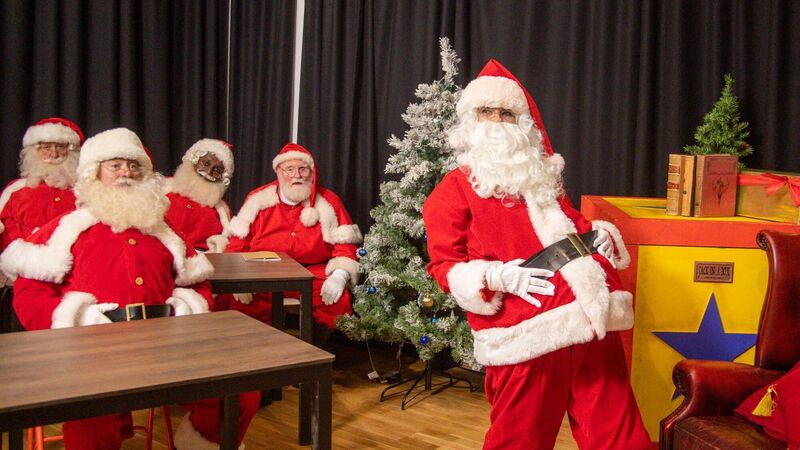
Ever wondered where Santa’s representatives on earth learn their trade? Wonder no more. Instead, follow me through the mean streets of London’s Elephant & Castle, into an industrial unit, where through a series of doors, I step into a classroom decorated with ivy, an old leather armchair, wrapped presents under a tree, a lifesize wooden toy soldier, and rows of desks.

Behind these desks sit half a dozen Santas, with copy books open in front of them. An elf with a clipboard – stripy tights, pointy elf hat, bright green elf suit, baubles in his beard – ushers me in. The Santas – all red velvet, luxuriant white beards, big bellies, twinkly eyes and gold glasses half way down their noses – greet me noisily. These are actors in full character, plummy and theatrical, who remain so throughout.

“Settle down Santas!” shouts the man at the front of the classroom, the only one in ordinary clothes. “Enough of the Santa banter!”

This is Matt Grist, Santa trainer and managing director of The Ministry of Fun, an initiative founded 25 years ago which runs an annual Santa School. The Santas today are seasoned acting professionals on a festive refresher, before being despatched to their various grottos; although too discreet to specify, these Santas appear at places like “a well-known department store in Knightsbridge” and “a famous toy shop on Regent Street”. These are high-end Santas, ho-ho-hoing like Brian Blessed and bantering like Christmas crackers.

“We train people in the art of representing the great man, Santa Claus, on the very rare occasions when he can’t be there in person,” says Grist. “We do it with huge humour and energy, but at the heart of it is being Father Christmas, and bringing something magical to children.”

Santas-in-training confer in class. Picture: Andrew Dunsmore.

The Santas thump their desks and bellow in agreement. He explains how Santa School came about in response to what he calls ‘bad Father Christmases’ – the ones who say ‘hello, what’s your name, how old are you, what do you want for Christmas’.

“Good Father Christmases know all that, or if they don’t, they make out that they do – so that the child feels recognised,” says Grist. “Santa is the first celebrity that children meet. And not only is he magical, but he’s also their best friend – so the way to imagine this experience is to flip it. Instead of thinking they have waited an hour to see you, you have to imagine you’ve been waiting an hour to see them, so it’s as joyous for the performer as it is for the child.”

When it comes to being a Good Santa, there are more don’ts than do’s. Don’t ask the child if they’ve been good; don’t promise any specific gifts because you have no idea what they are getting for Christmas; remain non-committal if they ask for ponies, puppies, cash etc. Say that animals are scared of being so high up on the sleigh, suggests one Santa, or that there are no cash machines at the North Pole. “Or include the grown-ups,” interrupts another. “Something like, ‘Have we had the talk about livestock on the sleigh? Or the quarantine?’”

A third Santa pipes up, “I ask if they have been kind. And say to them that the kinder and nicer they have been, the more Christmas magic happens. We steer away from the naughty and nice idea.”

Then there’s a whistlestop quiz. Apart from children, what else is St Nicholas the patron saint of?

“Sailors! Aberdeen! Liverpool! Clerics! Pawnbrokers!” yell the Santas.

“How many homes does he visit on Christmas Eve?

“All of them!”

“843 million,” says Grist. “And how does he do that?”

“Magic!”

“How many reindeers does he have?” Grist asks me.

“Six?” I guess, sweating slightly.

“Shoddy!” everyone shouts. “Nine!”

Santa David reels them off: “Donder, Dasher, Cupid, Vixen, Dancer, Prancer, Comet, Blitzen and Rudolph.”

And what do reindeers eat?

“They’re very partial to a parsnip,” says another Santa.

“You should chop the carrot into nine,” says a third.

Suzanne Harrington sits in the hot seat as part of her Santa training

The portrayal of Santa, says Grist, is just as important as pretending to know all about the child in front of you, even though you have never met before.

“Santa is ageless,” he says. “Not youthful or sprightly. He has a gravitas, and uses lovely warm wholesome words – not ‘brill’ or ‘fab’, more ‘marvellous’ and ‘wonderful’.

“The most iconic thing about him is his ho ho ho.”

Cue the Santas standing up and booming a volley of belly-deep ho ho hos. First as a group, then individually. Then they make me do it. Mine is puny, but they all clap enthusiastically.

I feel like I’m doing quite well, until they ask what I’d say if a child told me there was no chimney in their home.

“Break and enter?”

There is a horrified roar of “Shoddy!”

“A secret key, of course,” says a Santa.

“Or magic dust to shrink everything, then more magic dust to make the presents large again,” says another.

Silly me. Then the photographer and her assistant arrive, and are greeted by the Santas with the unbridled joy of well-fed Labradors. The photographer looks utterly non-plussed.

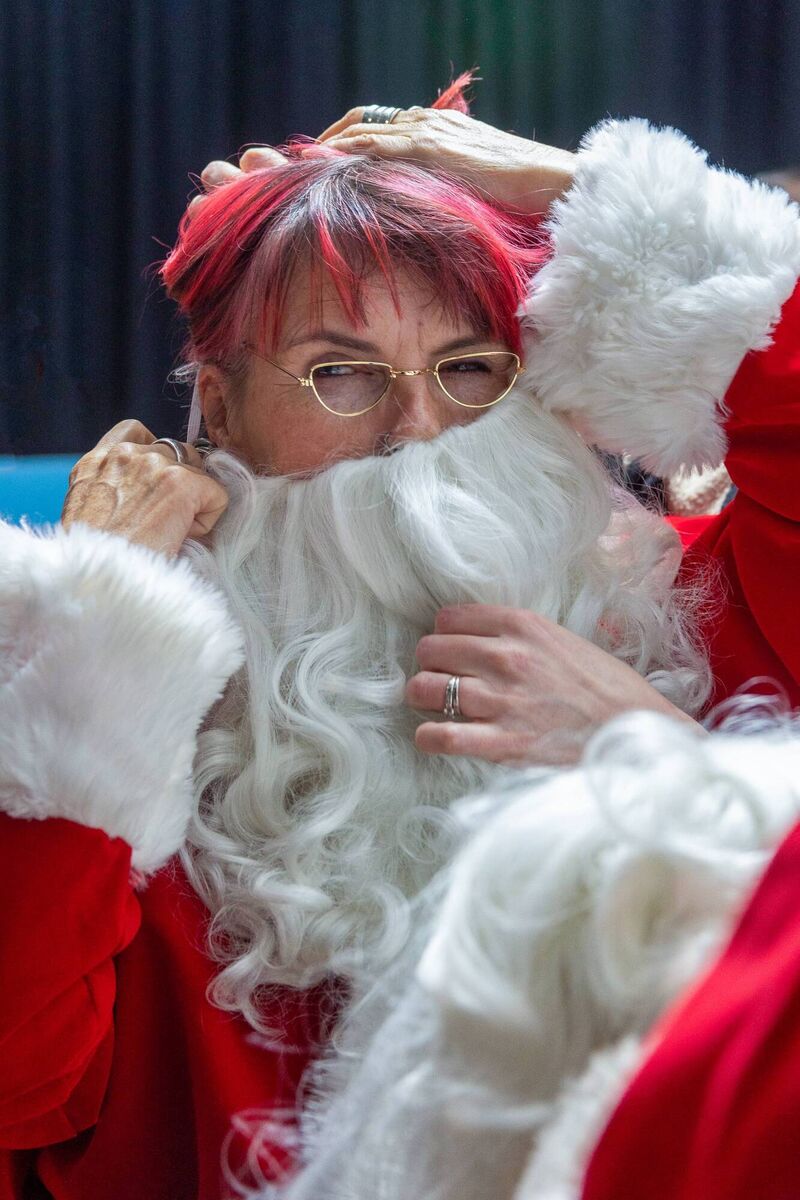
Suzanne Harrington tries the Santa makeover. Picture: Andrew Dunsmore

It’s my turn to transform myself from middle aged grinch into non-binary Santa. One of the Santas has to help – it’s a two person job. First the beard, then the hat and glasses. A big foam belly is tied around my middle, and I step into giant red trousers, before being velcro’d into the iconic red coat and size ten wellies.
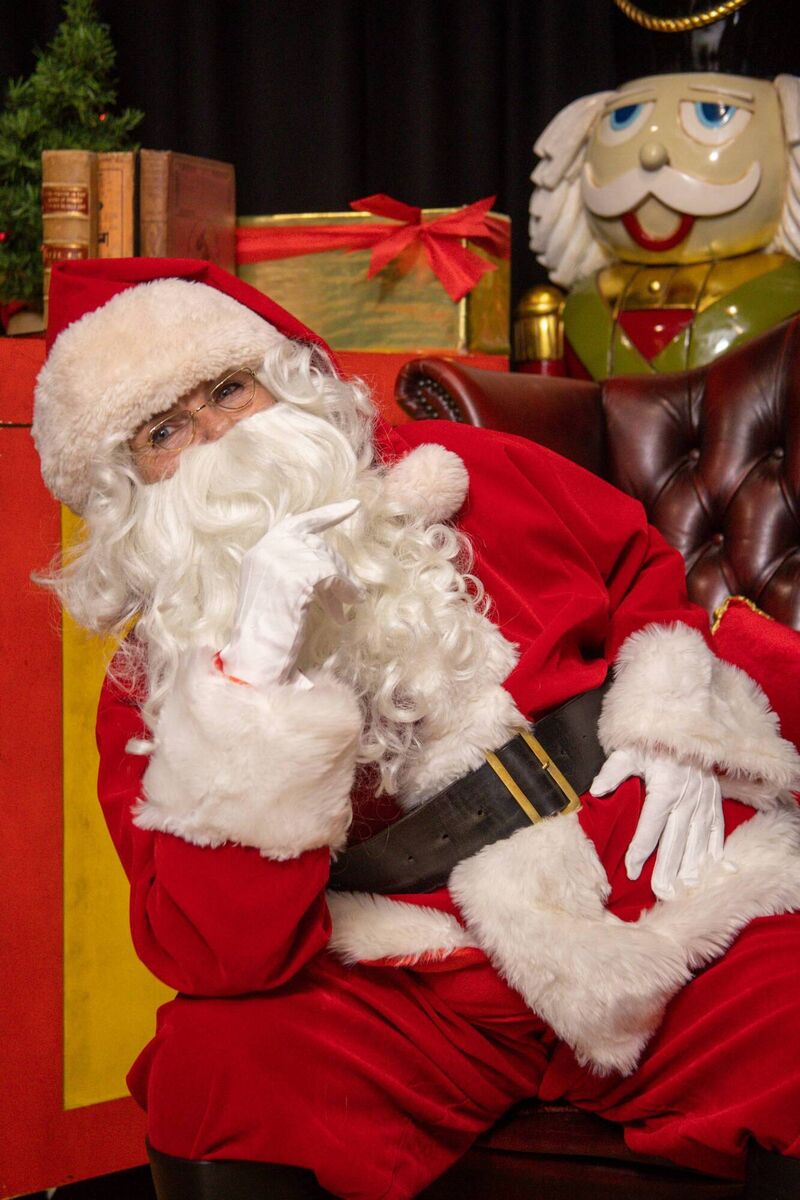
“The only thing the children can see is your eyes,” says Grist. “So you have to be very twinkly.”

I am melting inside all the nylon, velvet and fake fur as the photographer snaps away. I wonder aloud how they deal with this heat all day long in a grotto, covered in children.

“We’re professionals, darling.”

“The world of Santa is real,” says Grist. He describes how one of his former Santas wrote extensive notes about the world of the North Pole, to lend authenticity to the role. That although Santa’s house looks like an ordinary log cabin from outside, inside there are 416 floors; that after the presents have all been delivered, the rest of Christmas Day is spent having the annual North Pole snowball fight, where all the elves over 712 years old play against all the elves under 712 years old.

“The more real the backstory, the better,” says Grist.

And never ask a child a direct questions – always start with ‘remind me’.

“In most situations we can get the name of the child beforehand,” says Grist. “For their age, you can say ‘Remind me how old you are?’ and then interrupt yourself with ‘No, don’t tell me – you’re 536,’ and the child will say no, so you then go more ridiculous with the second guess – ‘No, of course not, you’re 4,027’.

And when the child says, ‘No I’m six,’ you can say, ‘Of course you are, because last year you were five.’ You already knew, you were just being reminded.”

Also, avoid saying ‘parents’ – say ‘grown-ups’.

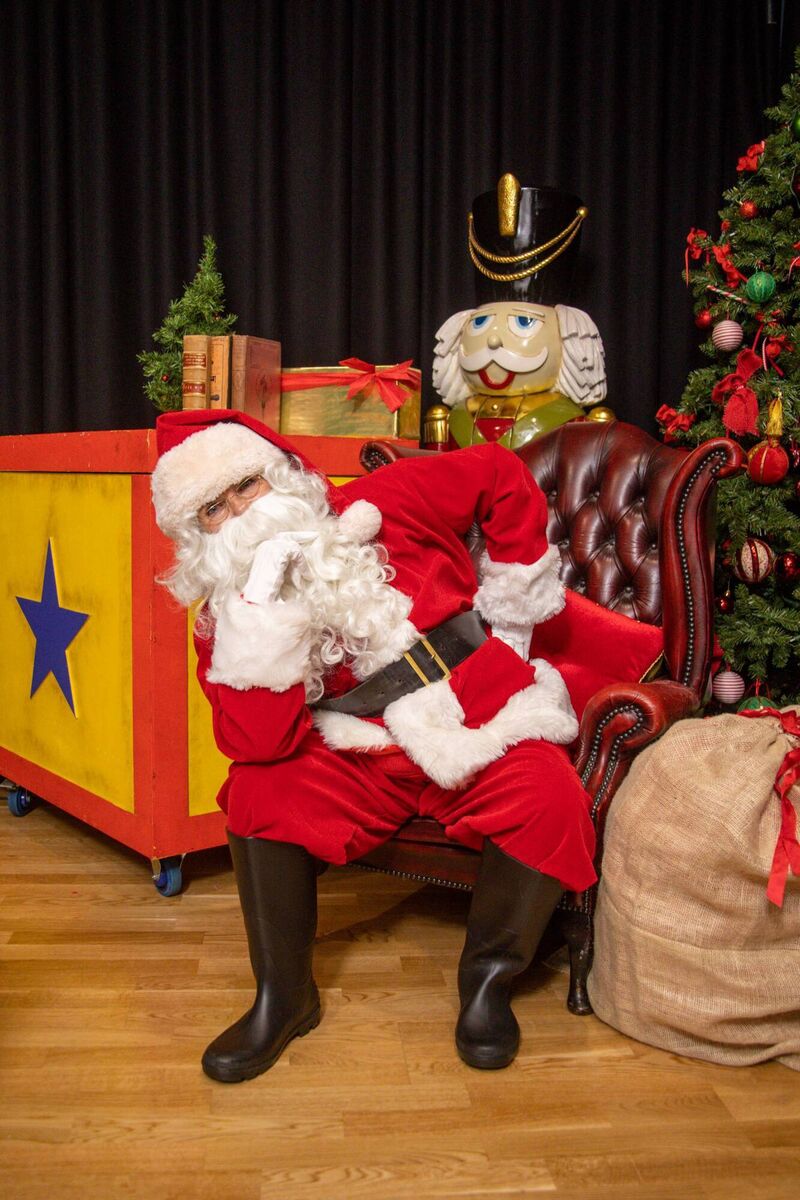
Suzanne Harrington: ready to represent the man in red. Picture: Andrew Dunsmore

“Or you could ask the child, ‘Who are these lovely people?’” says Grist.

“And then go, ‘Oh hello Mummy, I remember visiting you when you were little…’”, interrupts a Santa.

“Strong work, Santa, strong work,” say all the others in unison.

As well as avoiding drink-driving gags when it comes to mince pies and sherry, Grist advises avoiding anything that could be contentious.

“A boy could ask for a Barbie, or a girl could ask for a traditionally male toy, so don’t go there,” he says.

“You can go ridiculous, though – that’s always ok: ‘Ah I remember what you asked for, it was a bag of smelly socks! And a pickled egg!’”

Grist finishes by saying how the most important thing about being Santa Claus is not trying to be funny or clever, but to make it so that the child feels they’ve had a magical time.

“It’s all about the child,” he says. “It’s hard work at times, but it’s so rewarding.”

“Wonderful!” shout the Santas. “Marvellous!”

Afterwards, as I walk back out into the cold grey city streets, a sparkle of magic dust seems to follow, melting my decades away.

It does indeed feel unexpectedly warm and marvellous.

More in this section

Lifestyle

Newsletter

The best food, health, entertainment and lifestyle content from the Irish Examiner, direct to your inbox.

Cookie Policy Privacy Policy Brand Safety FAQ Help Contact Us Terms and Conditions

© Examiner Echo Group Limited