Season of ritual: Four migrant women share what Christmas means to them
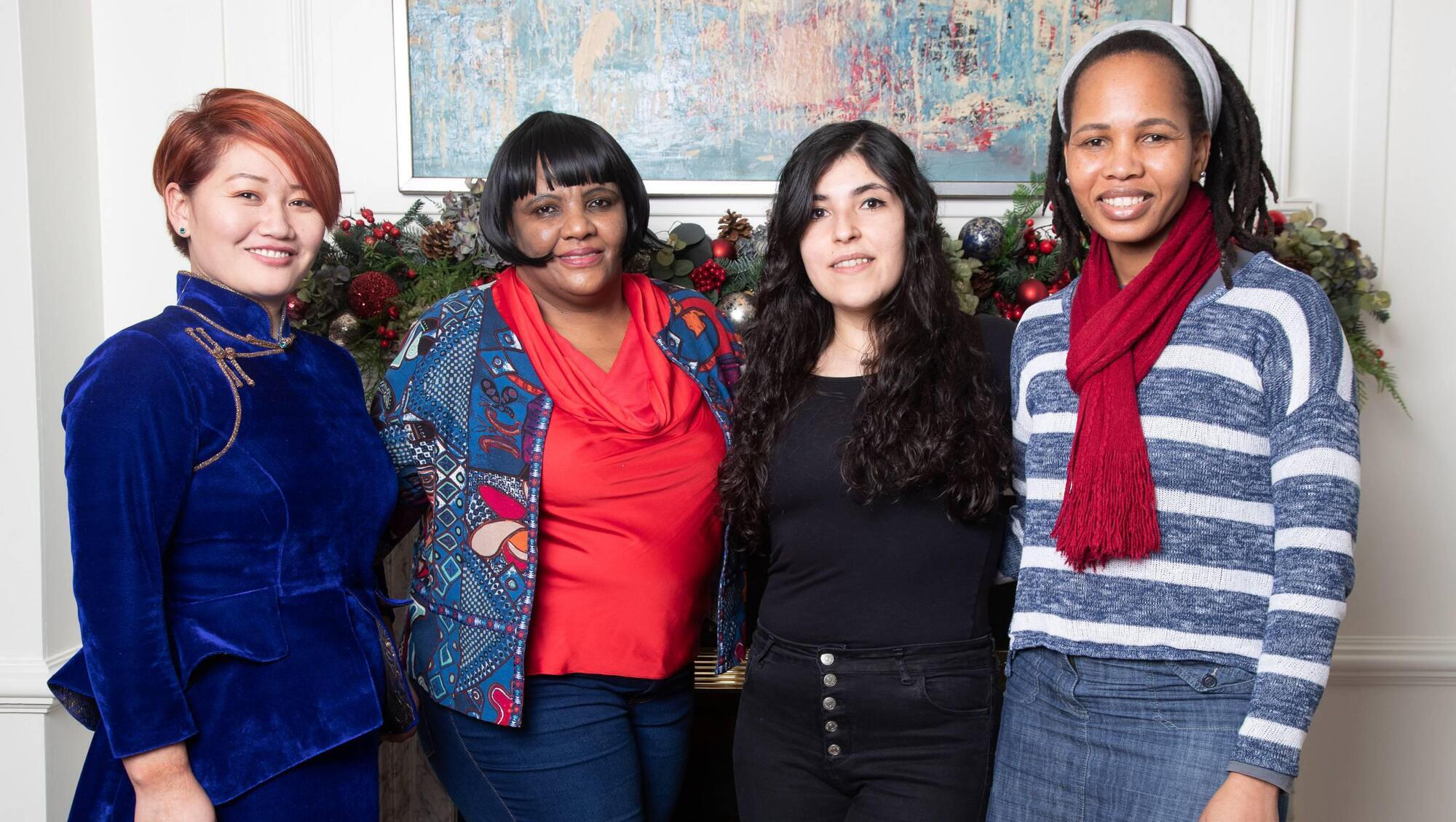
Gonchigkhand Byambaa, Neo Florence Gilson, Natalia Ferreyra Carroll, Mariaam Bhatti. Picture: Emily Quinn
Author Chimamanda Ngozi Adichie warns against the single-story narrative, or characterising people, places and communities through one perspective only.
Single-story narratives distort reality. While seeming to make a lesser-known place or group more accessible to another, they, in fact, create and perpetuate reductive stereotypes by flattening the many dynamic dimensions of human experience.
The Library of Migrant Women was conceived of a desire to break the single-story pattern of a public narrative about migrant women in Ireland. This participatory arts project has been a space for us migrant women to claim and shape public discourse that defines us and our existence.
The initial focus of the project was to put seldom-told stories of migrant leadership in context in Ireland. As writing tutors and editors, we also considered diversity in the arts, not just through the prism of the writers’ identities but also in the authenticity of their expression as migrant women writing in English as a second language.
As we continue to expand the public narrative about migrant women, we now consider the many varied experiences of this season of rituals.
At the foundation of both religious and secular traditions at this time of year, is a marking of the passage of time, be it through Hannukkah’s commemoration of Jerusalem’s recovery, Winter Solstice’s death and rebirth, Advent’s waiting for the coming of a Messiah, or New Year’s Eve’s hopes and resolutions.
We gather to share meals, gifts, connection, and memories. But while the traditions have common themes, rituals also bear the local character of the people and places to which they belong.
Rituals carry something over from previous generations, but they also change and evolve, and this is because humans are not static beings. We create and recreate our cultures and traditions continually.
This is even more true for those of us who partake in the age-old tradition of migration. Leaving one home country behind and finding a new one is a ritual in itself.
Making home is about creating a sense of the familiar in an unfamiliar space, and it is also about remembering and grieving lost rituals.
Migration makes us distil a rich, shared heritage (that we may have initially taken for granted) down to what’s most important to us. Here, four migrant women share reflections about the rituals that mark this season for them.
Have a happy season of rituals.
- Teresa Buczkowska is a Polish-Irish migrant rights activist, and a writer. She is the 2022 Obama Scholar and the 2021 Social Change Initiative Fellow. She works as the Integration Manager at the Immigrant Council of Ireland and is a member of the board of the Arts Council of Ireland. Teresa writes in English as a second language.
- Oana Sânziana Marian was born in Romania, educated in the US, and now divides time between Ireland and France. She is a poet, translator, visual artist, and educator, who is currently researching implications of Christian theology for Irish contemporary poetry. Her work as an activist and creative practitioner is through the lens of politicised healing, and particularly, politicised grief work.
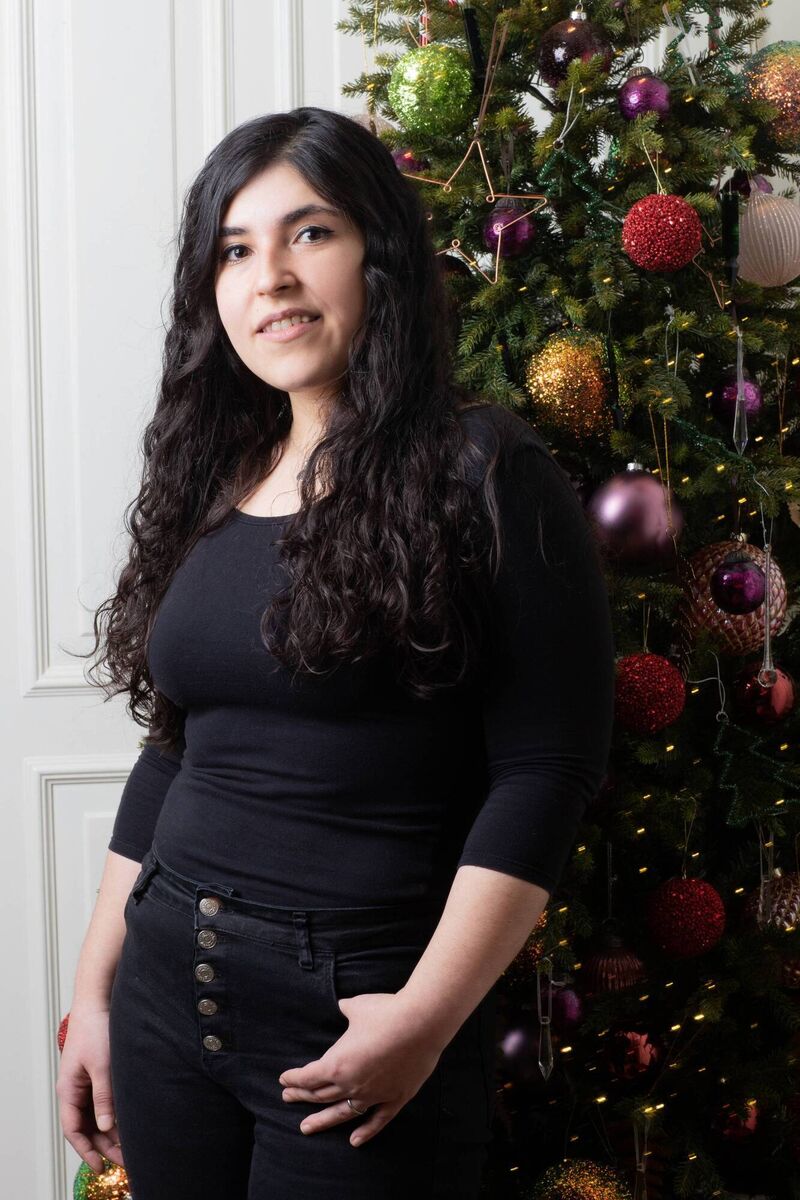
In the south of the world we don’t have ‘white Christmases’. Latin America’s sunny Christmas traditions vary, but they do not include that sort of precipitation.
Outside of movies that we sometimes saw growing up, there is no such thing as snow during Christmas. Even in the southernmost part of the American continent, in Patagonia, where I grew up, and where we are used to snowy Julys.
Migration happens geographically but it also takes place within relationships and in the way people experience rituals. In my experience Christmas migrated from the warmth of December to the coldness of July long before I migrated to Ireland.
The seasonal shift happened for the first time one Christmas when my parents worked through the holiday, and then many other times after they got divorced.
It meant putting up the tree and decorations and wearing our most colourful dresses for a frosty Christmas day celebration in the middle of the year. Later it also meant repeating those rituals more than one time a year in different parts of my home country with one parent at a time. Each time as cheerful as the other.
More memories made with people I love and more chances to invite over friends that became family in different latitudes of a wide spread of territory that we all called home.
The migration of those traditions in time and space made my expectations for pretty much every ritual to be quite flexible.
From a young age I understood that traditions are ours to make and no movie could tell me how they should look like or when they should take place.
Rituals do have a purpose of marking the passing of time and consolidating a sense of belonging to a group, to the group’s values and beliefs. To me, their symbolic importance is the main value, rather than the performance of the ritual itself. Maybe I am just very conscious of the little time we all have on this earth.
Even more so, I am mindful of the little time we have together. Because for years now most of my family members are sprinkled in different corners of the world, it is almost a miracle that I get to experience special occasions with the amazing people in my life. I believe there is no better way to do any rituals than by shaping them together.
I have never felt there is any sanctity to the architecture of rituals, but the sanctity rests instead in the people taking part in it.
The true beauty of repeating a ritual every year is not the act, but the people who come together to perform it. Allowing people to bring what they have learnt and want to share with others and adding it to the Christmas celebration. In that way, people own the ritual, and not the other way around. In that way, people feel welcome and understood.
Even my wedding day unfolded in a less than traditional fashion: the celebration of one of the most cheerful events of my life began with my now wife, her mother, and I walking down the aisle of a small Italian restaurant in Dublin to the theme tune of Star Trek Deep Space 9.
There was handfasting and jumping the broom, and, although the pandemic did not allow loved ones from different parts of the world to be here with us, they all were all there in different ways.
When it comes to Christmas celebrations in my life, some have been bigger and surrounded by many loved ones and some others have been just our small family events. Funnily enough, most of them have included my step dad singing Irving Berlin’s all-time movie classic “White Christmas” and storytelling about fishing in different latitudes.
Some have taken place in December, some in any other month. All Christmases have been filled with love and the profound conviction that the miracle is that time and space have allowed us to be together once more.
- Natalia is a migrant queer Latin woman who came to Ireland almost four years ago from Patagonia. She studied law in the University of Buenos Aires and holds an LLM in International Human Rights from UCD. She works in the NGO sector while volunteering with Dublin Lesbian Line.
- She says, “the decision to leave one’s home country has irrevocable consequences. The shared experience of migrants is rooted in living between the inescapable loss of places, people and familiarity, and the gain of new relationships, ways of understanding life and possibilities to create new destinies. These new destinies become a life richer than you could have imagined, but there is no detour around the grief.”
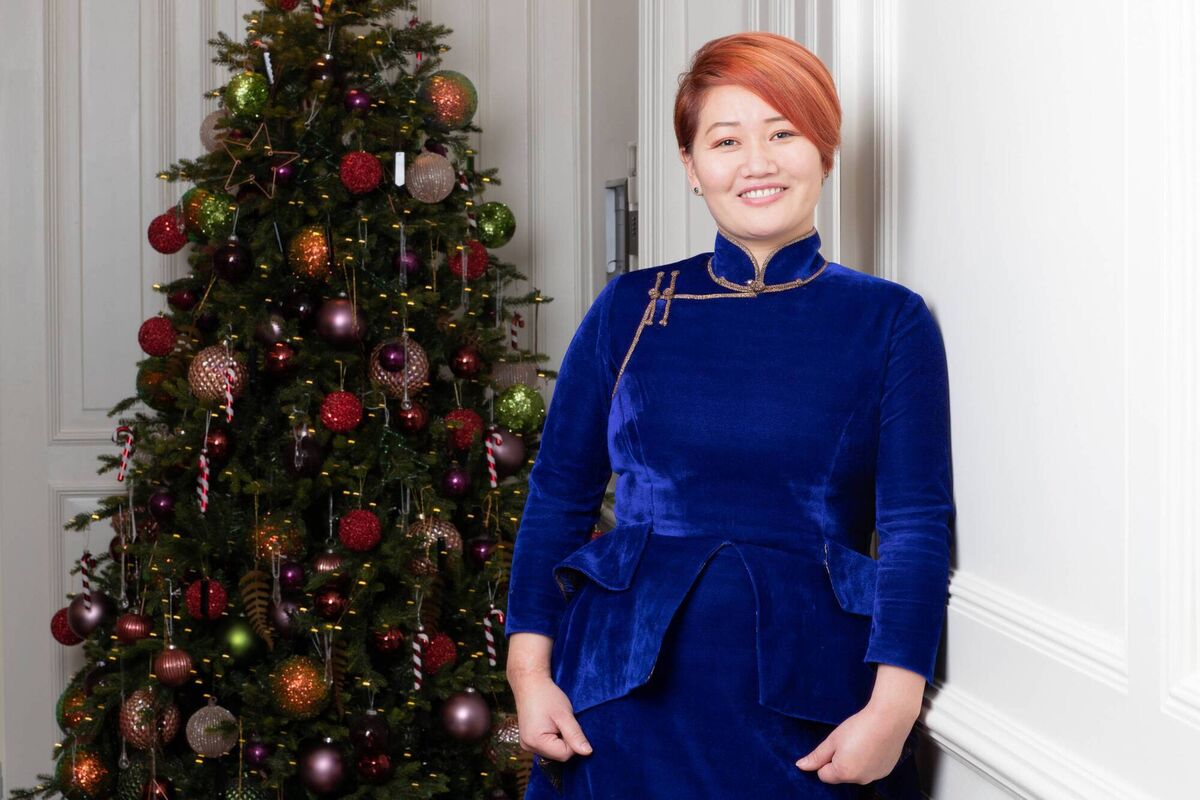
I was only nine years old when I found out about Winter Papa. That year he gave me a present based on my school grades. Ever since, I studied hard and appreciated the winter papa’s kindness.
I woke up in boarding school to the dormitory teacher’s calling. ‘Wake up, wash your hands, eat breakfast, and don’t forget to clean your room and make a fire before leaving for school.’ It was my alarm.
That day was the day. I was about to find out if I’ll get a present from Winter Papa so I could go home proud. I hadn’t seen my family since the end of August, and it was time to show them that I had been doing well in school.
Winter Papa brings a new year to everyone [in Mongolia] and rewards kids with good grades. My worry was that teacher may forget to send my name to the Winter Papa’s assistant. While I was caught up in my worry dormitory teacher opened my room’s door.
“Amar, a friend of mine, visited your home yesterday. Your parents cannot pick you up from school for this winter break; there snowed heavily. But they sent your horse to you. You can leave today. Your school is closing next week; I will talk to your school teacher about your circumstances.”
The teacher continued, “Can you go home alone? I suppose you should leave after breakfast and if you can’t get home before it gets dark, please find a family to stay with for the night, don’t risk yourself. Can you do that? I only allow you to do this because of your parent’s request. Do you have warm clothes? I will give you an extra breakfast to eat on the journey.”
I couldn’t contain my happiness and interrupted the teacher with an eager YES. I then apologised for my rude behaviour.
That morning, I got two slices of bread, three scoops of sugar, and two cups of tea. My extra breakfast made my day even better.
I ate fast and went to my room to prepare for the journey. My long-awaited journey was about to start, and my parents believed in my ability to make the horse ride alone. What an honour.
It was up to me to ensure that I wore deel trousers with sheepskin, Mongol gutal, a hat with fox skin, and cashmere gloves.
December is the coldest month of the year. I reminded myself that I shouldn’t sweat too much and ensured that my ears and cheeks were warm throughout the day.
I still didn’t know about Winter Papa’s present; I became courageous and decided to go to school and ask my teacher.
On my way to the schoolhouse, I saw my horse outside the dormitory. I ran to the horse and greeted it with a gentle kiss on her forehead. My horse recognised my voice and gave back a smooth push.
“We are going home. Only you and I," I said to my horse. ‘Please wait for me a little longer; I need to see my teacher’.” And I ran to the school.
When I knocked on the door, my school teacher and dormitory teachers were having a meeting.
I apologised for the interruption and closed the door, but my teacher called me into the classroom. I was wearing the warmest clothes, and the classroom fire was on. I felt heat instantly.
My school teacher Garamaa said, “I assume you are here to ask about the Winter Papa’s present and to tell me that you need to go home today?” I nodded and looked at her teacher with hope.
Teacher Garamaa said, “Well, Winter Papa already decided to whom to give presents this year, and I’ve checked the names. Your name is on his list. I will give you your present now on behalf of the Winter Papa.”
Teacher Garamaa opened the drawer, handed out the present to me, and wished me well for my journey.
I left with pride, put my present into my deeling enger, and walked out of the classroom to start my journey home.
- Gonchigkhand is a social worker and writer from Mongolia. Coming from a traditional nomadic background to Ireland in 2016, she holds a BA in Social Work and a Diploma in Human Rights and Equality. She is one of the initiators of ‘We Are Here Too,’ a campaign of women in migrant communities around Ireland that seeks to raise awareness and support victims of domestic and gender-based violence in Ireland.
- Paper and pen give her strength when she is going through difficult times. She is proud of her nomadic heritage and passionate about improving minorities’ rights in Ireland. Gonchigkhand wishes to contribute positively to Irish society, which she deeply admires.
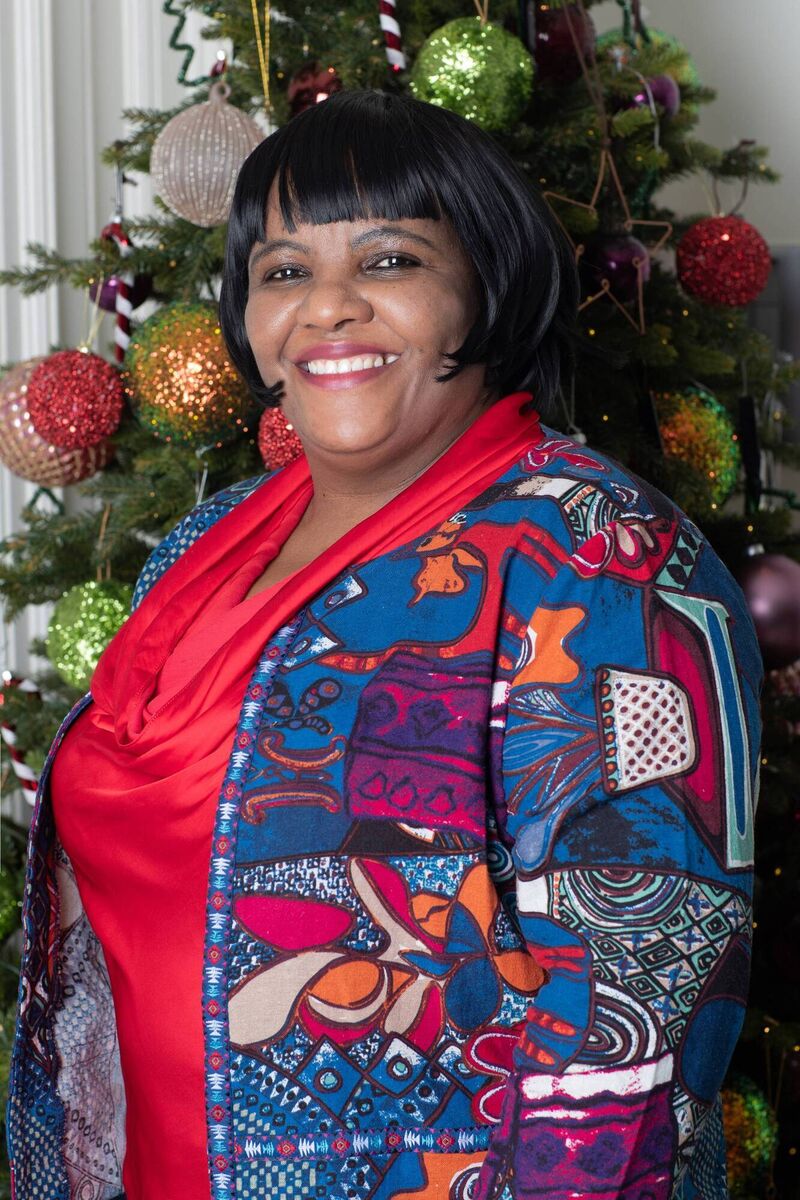
It's the subtle reality that tradition is the basis of every holiday, igniting anticipation and nostalgia, whether it’s to add a little magic to our lives by travelling to an exotic destination, spending time with loved ones, or finding time for a hobby.
The lovely hues of the seasonal customs cannot be avoided. Sylvia feels simultaneously overwhelmed with conflicting feelings of ecstasy of experiencing snow for the first time and sadness of missing her family in Africa. It is a year already since she and her husband and son moved to Glasgow in Scotland.
Migration to another country means forging their own tradition for the family, it means celebrating differently, buying a Christmas tree for the first time, and wearing matching jumpers.
“You cannot feel at home unless you assimilate to the country’s heritage and culture,” her husband’s encouraging words echo in her ears.
It almost feels like there is an opportunity cost to being a migrant during the month of December. She feels deprived of the much-needed catchup time with cousins, siblings, parents, and other family members due to families being in different time zones.
The church community’s invitation to lunch will at least make up for the absence of a sizable family gathering. The women will be hanging up decorations, and everyone will gather for a Thanksgiving lunch while dressed in their traditional attire and eating dishes from several nations, including South Sudan, Nigeria, Slovakia, and Romania.
Sylvia finds herself smiling as she reminisces of the road trips, the hills that are curved, and the untamed coasts of rural Eastern Cape in South Africa. The radiance of the sun shining in her eyes and the surroundings of the settlement that’s covered in a lush of green.
The atmosphere is filled with the sound of euphoria from afar. December marks the beginning of the wedding season in South Africa when expensive cars race through the villages and townships’ dusty streets. Typically, a convoy of cars made up of friends and relatives follows the bride and groom while blaring their horns and some playing loud music. The spectators cheering on the newlyweds with ululations.
Prior to the wedding festivities, the custom of lobola, or marriage settlement, is followed.
In southern Africa, the practice of “lobola negotiations” is not new. During these talks, the family of the groom presents a present for the family receiving the new daughter — previously livestock, but these days it’s usually cash.
In the past, factors such as the potential bride’s educational background, wealth, or physical appearance were not considered when determining lobola.
Sylvia’s family interprets their traditions a little more literally than most, all families have rituals and traditions that make sense only to them. Since she got married, holidays have had to be split between her family and her in-laws.
Culturally, she is a Makoti to her “in-laws “a woman married into the family".
Makoti must travel to her in-laws’ home to assume her role as the daughter in the family. Additionally, this means changing regalia, wearing Amadhaki or the “traditional print dress,” doek on the head, scarves. This signals the end of weaves.
The yard is swept very early the next morning, and a fire is set to heat water for tea and for the elderly to take a shower. The entire house is then cleaned.
Numerous African huts or rondavels can be found in rural South Africa. She then begins making lunch, dinner, and breakfast. This becomes her routine, which she follows happily and honouring the elders until the end of the holiday.
Sylvia recalls seeing her neighbours take advantage of the weather in the bustling, multi-cultural community. Children used to get up at early in anticipation of witnessing the sun dance when they were informed it was only visible around Christmas.
Most people visit churches to celebrate the birth of Jesus, then have family lunches and spend time at the beach.
One of her uncles doesn’t celebrate Christmas, He always asserts that “people need to cease mixing religion and spirituality”.
Meanwhile, her aunt identifies as a Rastafarian and observes Kwanza during the holiday season.
Seven principles of life “which include harmony, individual agency, collective accountability, social economics, purpose, creativity, and faith”, are remembered and given special attention each day for a week starting on December 26 and ending on January 1.
Her family’s New Year’s Eve custom is to spend five minutes offering thanks and reflecting. At midnight on New Year’s Eve everyone in the township participates in the custom of walking to the road, banging cans, and shouting happy new year.
Rituals are made by people and are subject to change since the next generation sometimes quits performing them.
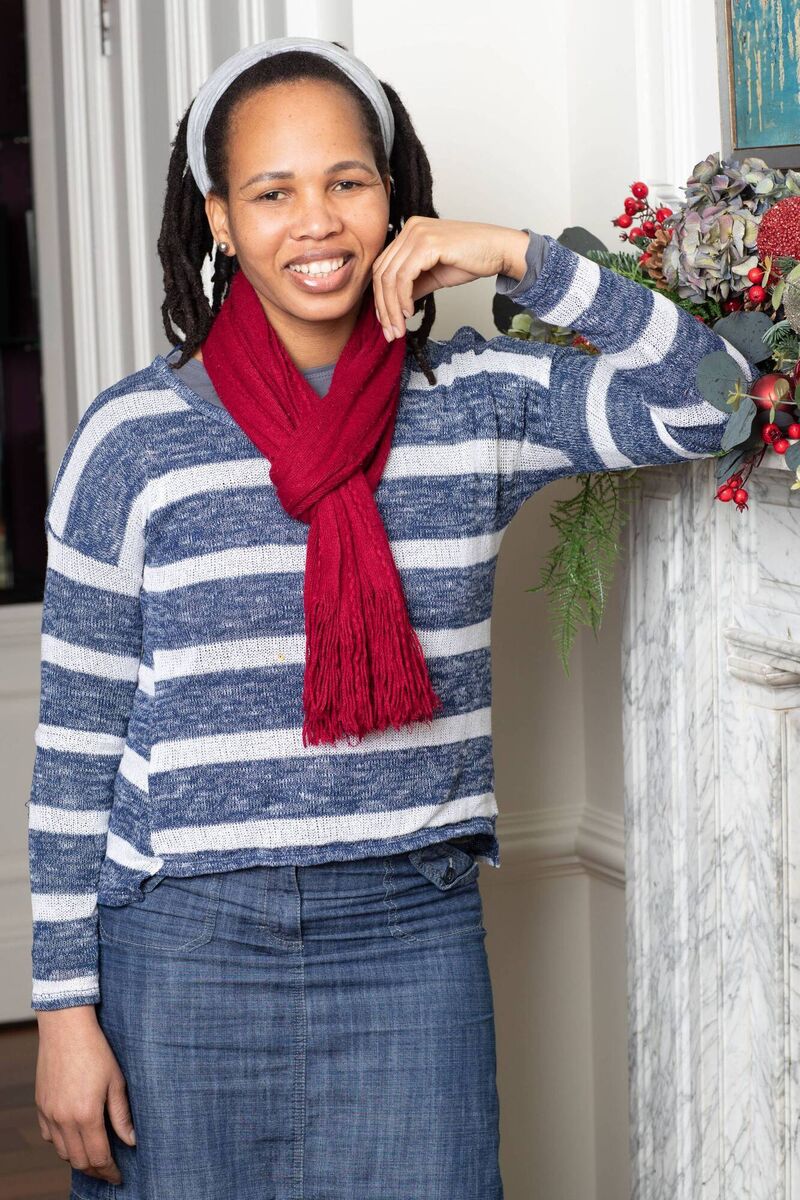
I remember my first visit back home, seven years after initially coming to Ireland. I visited my maternal grandad’s grave who had passed on a year before I could visit. I remember kneeling beside his grave, after Granny took me to it, knelt down and ‘informed him’ that I had come home. She then took a few steps away and gave us a private moment.
I regretted having had to go away, attempting to build a better life and therefore missing his final years, although we often spoke on the phone monthly until about two weeks before he passed away. I was overwhelmed with grief to see that the man I loved so much having been reduced to a pile of stones.
Nonetheless, I spoke my heart out, tears flowing, I said how much I missed him. I even jokingly ‘teased him’ that he deliberately missed my much-awaited graduation from my first degree, which had taken me almost two decades to achieve since I left secondary school. He would have been proud of it.
In my grandad’s eyes I was a clever child. I think this was because he could not read or write, so anyone who could write was clever. I was also his first grandchild so of course he was going to always praise me.
Every culture under the sun has its own ways of valuing family time. Prior to Christianity, many African societies practiced African spirituality, which is essentially believing that we are looked out for by our departed ancestors. Our ancestors need to be appeased, consulted in important decisions and ‘spoken to’.
Christmas offers great opportunities for many traditional African families to gather and practice traditions and rituals they feel are important, such as visiting the graves of family to ‘notify’ ancestors of important events, to ask for guidance or protection from evil, or even to ask for forgiveness for shortcomings with family duties or wrongs committed.
Even if many of us know that it’s just bones in the grave, we still treat these rituals with significance and respect, because we know they mean a lot to our elders.
Knowing what I know now, about the need to reset the mind, I can see why people feel a sense of being connected with their ancestors and inner being. Even the belief in itself that appeased ancestors will ‘open the ways’ is bound to make one at peace. We think clearer and act less impulsively when feeling at peace.
Apart from the opportunity to be with family, in many African rural areas, at least in the southern African region that I am familiar with, Christmas is about connecting with others in the community, eating and sharing with others the foods they normally wouldn’t eat throughout the year. For many children in the rural areas, this might be the only time they get a new set of clothes and shoes and walk around in the village to show them off to their peers.
I miss waking up in the morning on Christmas day and saying hello to each other and the neighbours and starting the day by preparing a lot of food as one can never know who will knock at the gate to say hello.
This year I hope to be in such an environment, to reflect on many things about life and its meaning. I think I am ready for those family rituals again. I am ready to escape the Dublin Christmas frenzy and go and say hello to my grandad again, this time lying next to him is my aunt, granddad’s youngest daughter.
- Mariaam is a qualified community development and social policy practitioner with extensive experience of advocacy and community organising. For over a decade she has worked on various national and global campaigns and provided peer support to migrants in low paid work sectors. She has also facilitated groups and workshops in Ireland and at a European level.
- Mariaam is the co-founder of The Great Care Co-op; 2019 UN Fellow (Programme for People of African Descent) and was one of the 100 Most Influential People of African Descent Under 40 Worldwide 2020. She is also a Member of the European Commission’s Expert Group on Migration.
CONNECT WITH US TODAY



Be the first to know the latest news and updates