Pete the Vet: I love feeding wild birds but how can I make sure my cats won't hunt them?
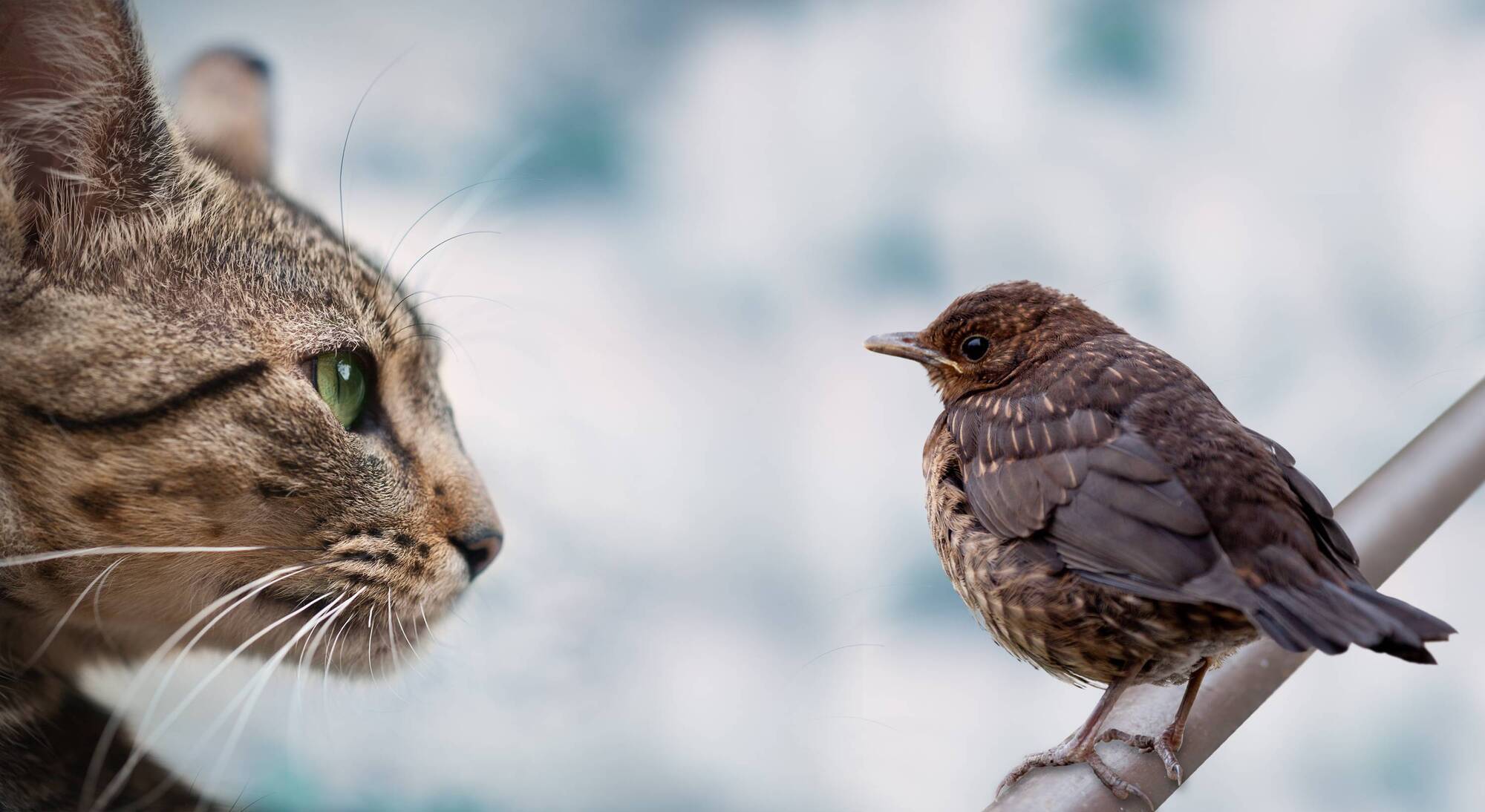
Pete the Vet: Cat watching a bird
There must be something about this new couch that he finds immensely appealing: that’s the only reason he would go to such great bother, past your barriers, to lie on it. There are many possible factors: the softness, the feel of the surface, the warmth of the location, the ambient sounds from that part of the room.
It’s very hard for us to judge the subjective experience that a dog feels. Once a dog has developed a new habit, it can be very difficult to persuade them to change their mind. The only practical answer is a physical barrier of some kind. Could you put him in a different room, perhaps with his own couch, with the door shut to stop him coming into the same room as your new couch?
My own favourite answer for this type of issue is to crate-train a dog. This means teaching them to enjoy sleeping inside a wire mesh indoor kennel, in a metal crate of the type also used for dogs when travelling in cars or vans. The idea would be to buy an ultra-comfy (e.g. memory foam) bed, and place this in the crate.
Then you would leave the door open, but encourage him to go into it regularly, by giving him treats and food-stuffed toys to chew on while in the crate. Then when he is used to spending time in the crate, you can shut the door for short periods, gradually lengthening the time he is in there. Ultimately, you would then be able to leave him in the closed crate overnight, making it into his private bedroom.
Crate-training is the easiest way to ensure that dogs are physically excluded from areas of your home where you don’t want them, but you do need to manage this with sensitivity and patience. You cannot, ever, just shut a dog into a crate when they don’t want to be in it. Most dogs do adapt well to crate-training, learning to enjoy having their own comfortable personal space.
The early socialisation of puppies is critically important: if a puppy lives in an isolated situation for the first three months of their lives (e.g. in a puppy-farm type environment) it’s common for them to be anxious when they move into a normal home. It sounds like this may have happened here.
Buy a plug-in pheromone diffuser which will fill the air around her with reassuring odourless vapours. Talk to your vet about the possibility of short-term anti-anxiety medication to help her stay relaxed while she learns about her new life. Set up a regular routine for her, with twice daily walks, a comfy bed, and regular tasty food.
Talk to a local dog trainer about teaching her simple obedience work, which will help to bond her with you, as well as providing her with safe, predictable, boundaries for her in your home. You can’t change her start in life, but you can take these steps to reassure her, and hopefully she should gradually gain confidence.
My priority would be feeding the wild birds, as they often depend on help like this for survival. It is not cruel to tempt cats by letting them see birds: they seem to enjoy the process of prowling, stalking and planning a hunt, even if they don’t actually succeed in catching anything.
I would get a cat flap with a time-linked lock, so you can keep the cats in at the busiest feeding times. Also, review what you feed the cats: studies have shown that cats who are fed moist, meaty diets are less likely to want to hunt than cats that are fed solely on dry kibble.