The Changemakers: Cork-born Quaker Anna Haslam who fought for women’s rights
The first of a six-part series where Clodagh Finn shares the stories of the women who changed Ireland for the better
The Changemakers: Cork-born Quaker Anna Haslam who fought for women’s rights

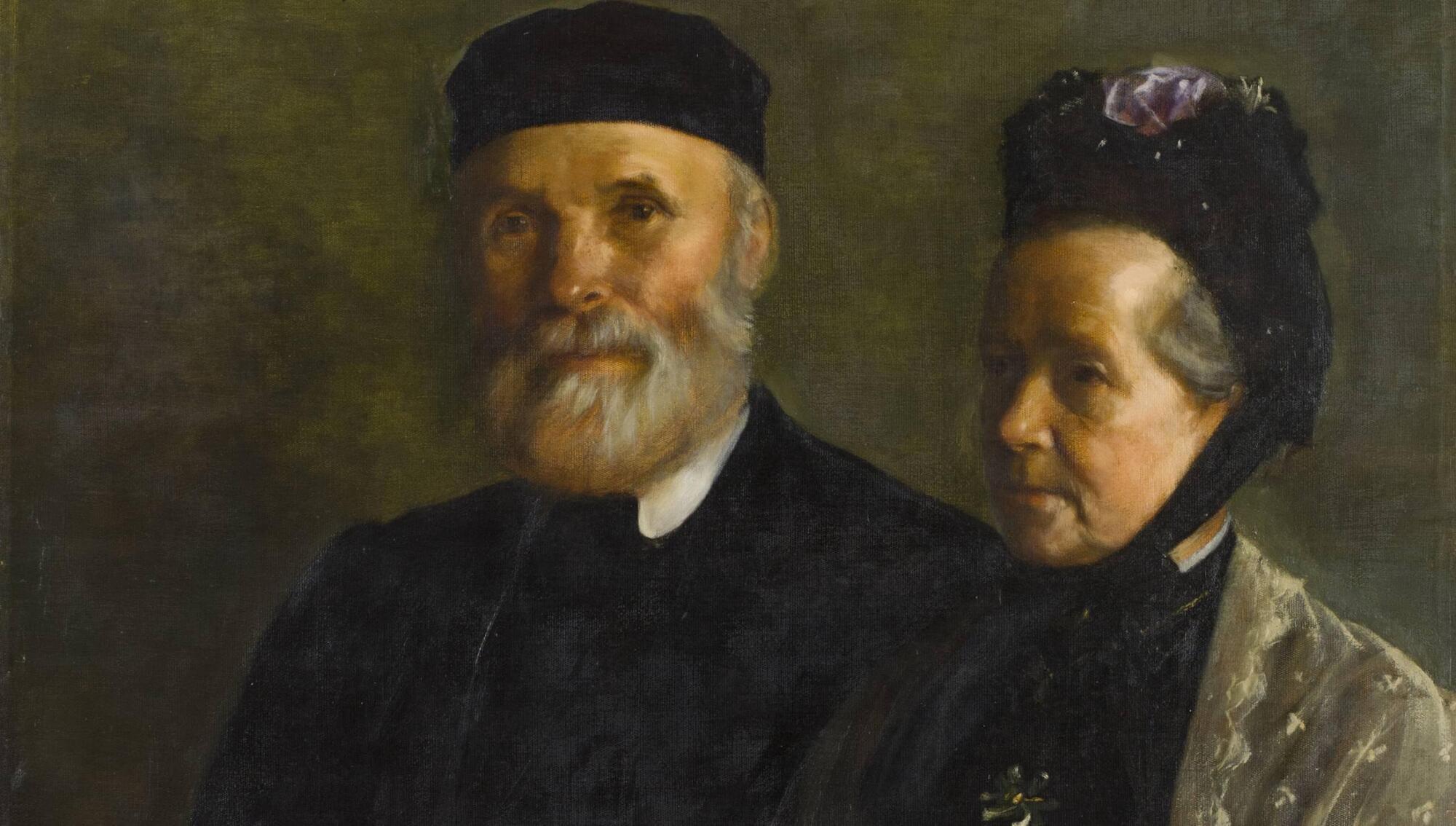
Anna M. Haslam, with her husband Thomas, in a portrait painted by Sarah Cecilia Harrison in 1908. Collection & image © Hugh Lane Gallery

When Anna Maria Haslam cast her first vote in 1918, at the age of 90, she was paraded to the polling booth by several jubilant members of the suffrage movement.

Radicals and moderates alike were keen to show their appreciation to this woman, the 16th of 17 children born into a middle-class Quaker family in Youghal, Co Cork, who had spent her life campaigning for women’s rights.

The idea of equality had come to her naturally, she said, and she fought for equality for all people.

She opposed slavery, campaigned for education for all and fought for social reform.

Indeed, the scale of her interests is dizzying. She practiced homeopathy, was a member of the Rathmines Literary Society, wrote campaigning, “forceful” letters to the newspapers and joined a number of social reform groups, from the Irish Society for the Prevention of Cruelty to Children to the Fresh Air Society, a body that brought city-centre children to spend a day by the sea or in the fields.

HISTORY HUB

If you are interested in this article then no doubt you will enjoy exploring the various history collections and content in our history hub. Check it out HERE and happy reading
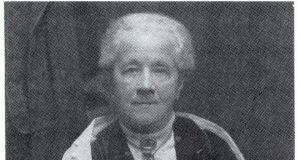
Anna Maria Haslam was also a businesswoman and the family breadwinner. When ill health forced her husband Thomas Haslam to stop working in 1866, she supported both of them— there were no children — by running a small stationery and toy shop from her home in Rathmines, Dublin. Yet, she still found time to campaign for the vote for women and to do so with such vigour that her name was known not only at home, but in England and America.

How did this woman, born into a busy household in Cork, become such an important figure in the history of Ireland?

It certainly helped that Anna Maria Haslam got a better start than most. While she was the second-last of 17 children born in April 1829 to Jane (née Moor) Fisher, philanthropist and anti-slavery campaigner, and her husband, Abraham, theirs was a relatively affluent household. Abraham Fisher was an insurance agent and miller and, as Quakers, Anna’s parents believed girls should have the same right to education as boys.

That meant Anna had access to books. As a young girl she was a voracious reader who was drawn to such writers as novelist and essayist Maria Edgeworth, and Harriet Martineau, considered the UK’s first female sociologist.

She had the privilege of a full education too and attended Quaker boarding schools in Newtown, Co Waterford, and Newgate in York, England.

After her education was complete, she returned to Youghal in 1845 to help her parents run a soup kitchen to help those devastated by the failure of the potato crop.

 Anna Haslam (1829-1922)
Anna Haslam (1829-1922)

She also saw a need to do more and, with her sister Deborah, set up a workshop in the family kitchen to teach young girls to crochet and knit.

Soon, the workshop developed into a flourishing business, employing more than 100 local young women.

When she met and later married Thomas Haslam in 1854, she found a kindred spirit. He was a fellow Quaker and supporter of women’s rights and when the couple moved to Dublin four years later, they both actively promoted women’s suffrage.

While she is best remembered for co-founding the Dublin Women’s Suffrage Association with her husband in 1876, she was involved in several social reform movements.

She was a committed champion of women’s education and founded the Central Association of Irish Schoolmistresses and Other Ladies Interested in Education. The title of the organisation might have been a mouthful, but it helped to chip away at attitudes that kept women out of education.

She also fought for the rights of female sex workers. With Belfast journalist and feminist Isabella Tod, she campaigned for the ‘Repeal’ movement of the day.

They fought to repeal the Contagious Diseases Acts of 1864, initially introduced to control the spread of sexually transmitted diseases in the British army and navy.

The acts, however, were deeply unfair and imposed a double sexual standard by allowing the arrest and detention of prostitutes who were then subjected to an examination for venereal disease. Men, on the other hand, went free. The acts were finally repealed in 1886.

While Anna Haslam was radical in many senses, she opposed physical force and once labelled women who used it to further their aims as “vociferous vixens”.

As the Freeman’s Journal put it: “She was in heart and soul a propagandist of the peace-loving, politic school, and nothing did she more cordially detest than the physical-force methods adopted by the extremists of her sex to further their policy.”

She was more traditional in other ways too, saying that she was glad to adopt her husband’s surname.

For instance, she regularly addressed Hanna Sheehy Skeffington as ‘Mrs Skeffington.’

Both Hanna and her husband Francis had adopted each other’s surnames to make a point, yet Mrs Haslam was not for turning.

Politically, she differed from many other women in the suffrage movement too as she remained a unionist and a member of the Women’s Liberal Unionist Association all her life. She was sure that social reform was more likely within the union than under home rule.

Despite those differences, Anna Haslam was a woman who garnered widespread respect. When she died in 1922, shortly after witnessing the introduction of votes for all women, the Freeman’s Journal described her as “one of the most remarkable characters who figured in the public life of Dublin for the last quarter of a century”. It added that even those who disagreed with her, “acknowledged her earnestness and sincerity of purpose in all her efforts”.

The Irish Independent noted some of those efforts, praising her life-long work aimed at improving the lives of women: “The protection of homeless girls, the health of women workers and kindred problems engaged her earnest attention for many years, and with very profitable results,” it said.

A year later, Albert Power sculpted a limestone bench in St Stephen’s Green, Dublin, to commemorate Anna and Thomas Haslam. The inscription celebrates their “long years of public service chiefly devoted to the enfranchisement of women”.

On the centenary of Anna’s death, which was reported on 30 November 1922, we might take a moment to remember her at that bench, or in her birthplace, Youghal.

  • Clodagh Finn is co-author with former Lord Mayor of Dublin Alison Gilliland of 'Her Keys to the City', a book that honours 80 women who made Dublin (www.fourcourtspress.ie) Her history of Ireland in 21 women, 'Through Her Eyes' (Gill Books), is just out in paperback, €14.99

x

More in this section

Lifestyle

Newsletter

The best food, health, entertainment and lifestyle content from the Irish Examiner, direct to your inbox.

Cookie Policy Privacy Policy Brand Safety FAQ Help Contact Us Terms and Conditions

© Examiner Echo Group Limited