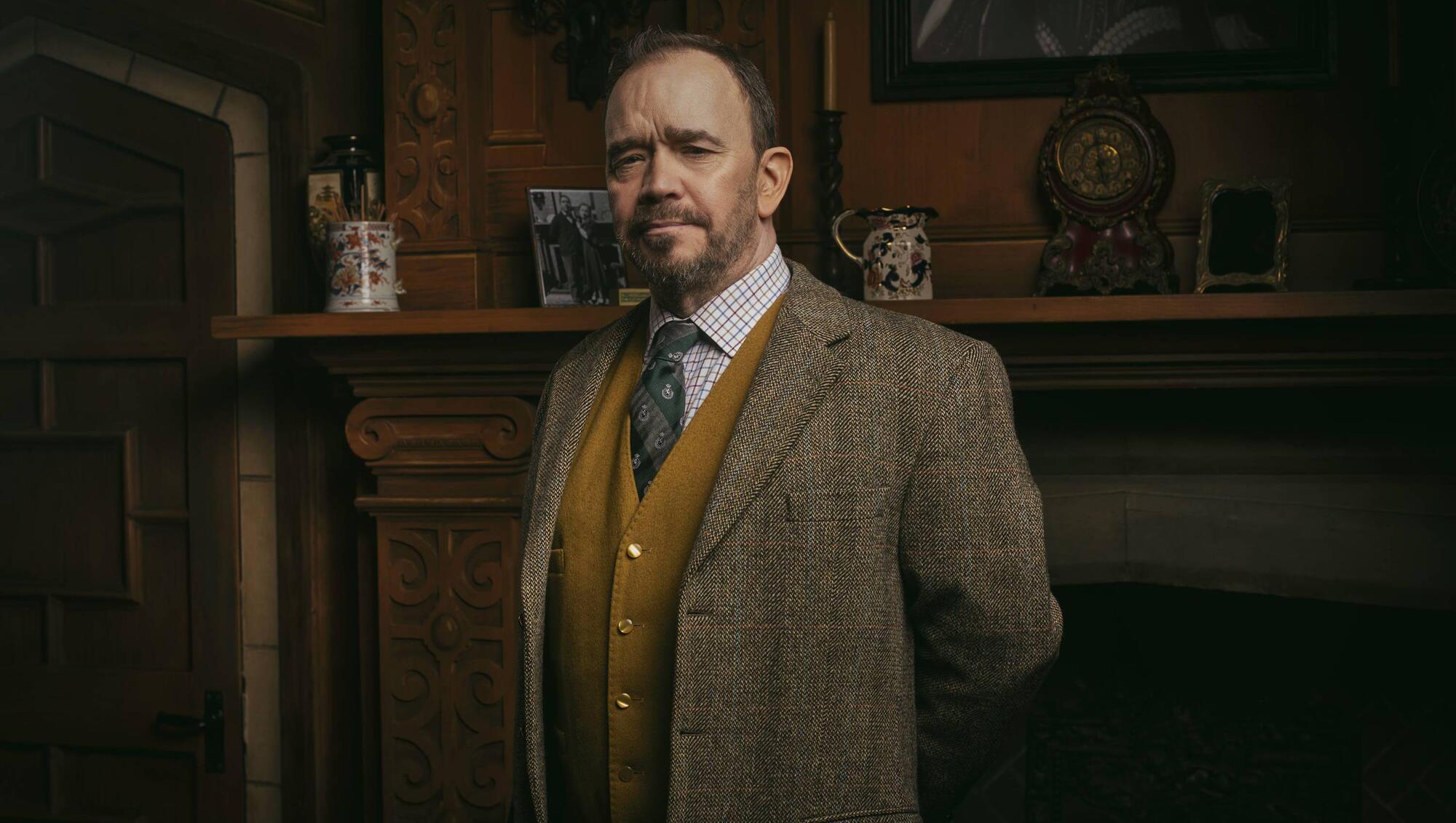
With high-profile parts in Grange Hill, EastEnders and The Bill to his credit, actor Todd Carty has been famous his entire adult life. The actor, now 59, remembers vividly the moment it all changed for him and the big time came knocking.
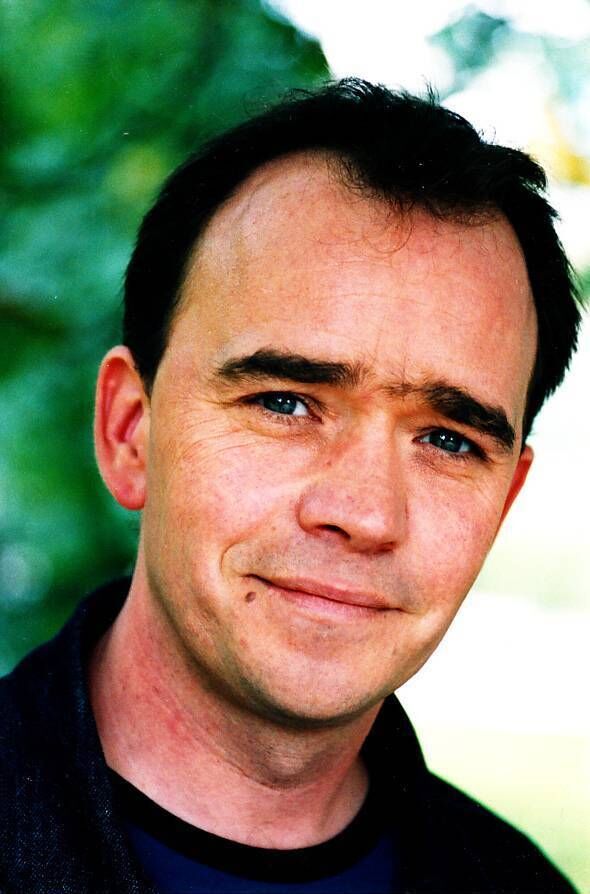
“Let’s say for argument’s sake Grange Hill started in February 1978, on a Tuesday. The day before – the Monday – I’d go to school quite happily. But by the time Wednesday came, my whole life had changed. Grange Hill was out. It completely changed my life. Anonymity – that was a thing of the past. Grange Hill got up to 12m viewers. You had three channels. But it was a fantastic experience. It grows you up very quickly. It gives you a good footing.”
As Tucker Jenkins in Grange Hill, he brought an cheeky charm to living rooms across Ireland and the UK. And he will be going out to meet his public all over again with a role in a new production of Agatha Christie’s evergreen whodunnit, The Mousetrap, which has run in London’s West End for 70 years and comes to Cork Opera House, October 17 to 22.
The appeal of The Mousetrap is easy to explain he says. It’s an old school whodunnit. There is a body, a list of potential killers and lashings of amateur sleuthing. Who could resist?
“It goes across the spectrum of ages. I saw it first about 40 years ago,” recalls Carty, taking a break from rehearsals for the play in London.
“Then I got involved in this production and went to see the show [in the West End]. In the aisle besides me, there was a nine-year-old girl, a seven-year-old girl and a 13 year-old-boy. They should really be playing Playstation or Xbox or that kind of thing. In the interval them and their mom and dad were working out who did it: ‘they look a bit creepy’ or what have you. To be away from the world of Playstations, watching this 70-year-old play – it’s fantastic.”
The Mousetrap is one of the most successful dramas of the 20th century. It had its world premiere in Nottingham in 1952 and opened in London the following month. Reviews were positive (the London Times praised the characters as “nicely assorted, individually labelled and readily identified”; the Express approved of the atmosphere of shuddering suspense”).
Nonetheless, Agatha Christie was not anticipating long-term success. “Eight months perhaps,” she said, when asked how long she expected The Mousetrap to run.
How wrong she was. Aside from the Covid lockdown, The Mousetrap has run continuously in the West End – and is the subject of the new whodunnit pastiche, See How They Run, starring Saoirse Ronan (a reference to Three Blind Mice, the nursery rhyme from which The Mousetrap takes inspiration).
See How They Run tells the fictional tale of an American director trying to secure the cinema rights to The Mousetrap from Agatha Christie (Shirley Henderson from the Harry Potter movies). There are thrills and spills and Saoirse Ronan turns up as a police officer investigating a suspicious death related to the play.
Don’t expect to see The Mousetrap itself in cinemas, however – Christie stipulated there could be no film adaptation until six months after the theatrical run closed. And obviously that is unlikely for the foreseeable future.
“There’s nothing quite like doing live theatre. And The Mousetrap is a very cult thing,” says Carty. “I’m used to doing cult shows, like Monty Python’s Spamalot, which I did on and off for five years. The fourth wall is your audience. It’s not like doing a straight play. These people in the audience are trying to work out what’s going on and who they think is the suspect, who the perpetrator is. Seventy years it’s been going, this thing. Dear old Agatha most have got something right.”

Bringing the play to Ireland will be an emotive experience for Carty. His mother, Margaret, was from Limerick and he has extended family in Ashbourne, Co Meath. And so every trip across the Irish sea is freighted with meaning.
“I have strong connections with Ireland. My cousins are in Ashbourne. I did Spamalot at the Bord Gáis [in Dublin]. And I met them then. Munster rugby team are my favourite rugby team. I’ve been to Limerick quite a lot as a young man. My mother came over to England when she was 15, 16. Trained to be a nurse, worked with the NHS for 40 years. Then became a dental nurse. She is still with us aged 82 and still speaks with the same accent as when she moved here all those years ago.”
He was just a teenager when he auditioned for Grange Hill. In retrospect, he feels, the fact he breezed into the audition without a care in the world, ultimately got him the job.
“I used do a lot of adverts and had small parts in things like Z-Cars, playing little tearaways. And then one day this series called Grange Hill came along. And they were looking for a young fellow called Tucker Jenkins, this cheeky chappy. I went around with about 500 kids. I got the part eventually. I think I got it because I was a bit cheeky – exactly the same cheekiness as Tucker Jenkins had. And so the director gave me the job.” Grange Hill was one of the most watched show of its time. Yet Carty escaped typecasting and then became famous all over again as cuddly Mark Fowler on EastEnders. And then he played against type as the unhinged PC Gabriel Kent in The Bill. Without Grange Hill he wonders would any of it have been possible.
“There’s that old cliche, the University of Life. I slipped into that slipstream. When you’re playing an adult on a well known show you have that experience of working with actors, turning up on time, knowing your lines, getting on with people. That’s what it’s all about. You can learn as much as you like in drama school or stage school. The real McCoy comes on the shop floor itself.”
He was on EastEnders for 13 years. Such longevity on a soap is, he reports, a mixed blessing.
“There are no guarantees in life. But particularly in a freelance business like acting. You’ve got to take it on the chin and grow a thick skin. The thing about being on a long-running thing is getting regular money, every single week. Eventually you get itchy feet. Luckily with EastEnders, the executive producer of The Bill said, ‘I’ve got a really juicy part for you. Basically Todd, he’s a psychopath’. I said, ‘I’ll do it’. It was completely different from nice guy Mark, nice guy Tucker. Every actor will say it’s nice to play a baddie now and again.”
With The Mousetrap there is a feeling of going full circle. It brings him back to watching Margaret Rutherford as Christie’s busybody detective, Ms. Marple.
“It’s lovely. I was brought up in the 1960s. I used to love the Margaret Rutherford films. That’s how I got into Agatha Christie. To be asked to come and do it – to play Major Metcalfe– it’s like something from a time gone by. It reminds me slightly of my childhood, all the black and white films I used to go and see. It gives you a lovely warm feeling.”
- The Mousetrap is at Cork Opera House, October 17 - 22
CONNECT WITH US TODAY
Be the first to know the latest news and updates
More in this section