'I used to know a man who was in the Famine': An extract from John Creedon's new book
In this extract from An Irish Folklore Treasury, the broadcaster and writer salutes the national project that has preserved so much of our vanishing social history
'I used to know a man who was in the Famine': An extract from John Creedon's new book

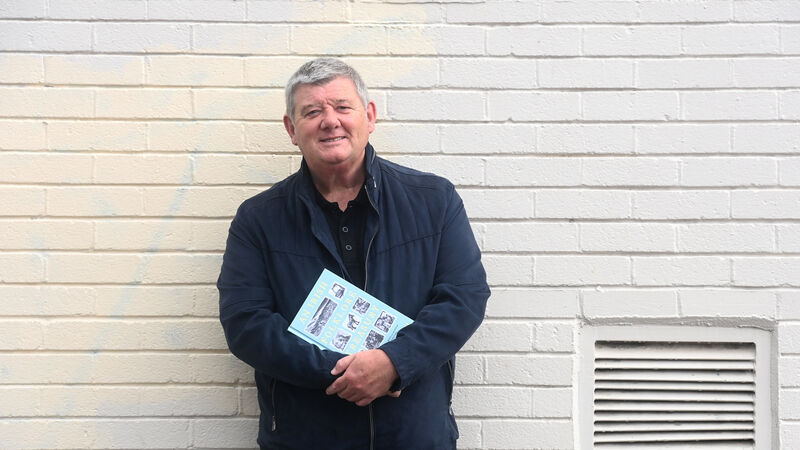
John Creedon with his book 'An Irish Folklore Treasury'. Picture: Larry Cummins
For the most part, my father never theorised much about anything. It was always a narrative, always a story to illustrate his understanding of a subject. I once asked him if he believed in angels. “Mother of God, I don’t know anything about that, but did I ever tell you about the time your grandfather thought he saw a ghost out towards Graigue?”

On this occasion, I pressed him for an opinion. “Do you think the people who suffered in the Famine would be happy or disappointed with us? You know what I mean, winning independence and the Celtic Tiger and all the rest of it?”

“I have no idea about that, but I used to know a man who was in the Famine,” he said, staring straight ahead.

“In the Famine?” I chuckled. “How could you possibly have known a man who was in the Famine? Sure, the Famine was 150 years ago.”

“Well, I’m telling you now, I did know a man who was in the Famine.”

“Go on, so — tell me.”

“From the time I was five or six years of age, I used go out with Denis Lucey in my father’s truck to deliver meal around Bantry. Denis used call to an old man, named Sullivan I think, who grew up in Glengarriff and who lived well into his 90s. That man told us, not once, but several times, that when he was a small boy, the Famine was raging back West along. He said there was a man who would come out from Bantry Workhouse in a pony and wicker cart, known as the ‘ambulance’, to collect the dead and dying. One day, the driver stopped in Glengarriff and tied the horse outside where the hotel is now.

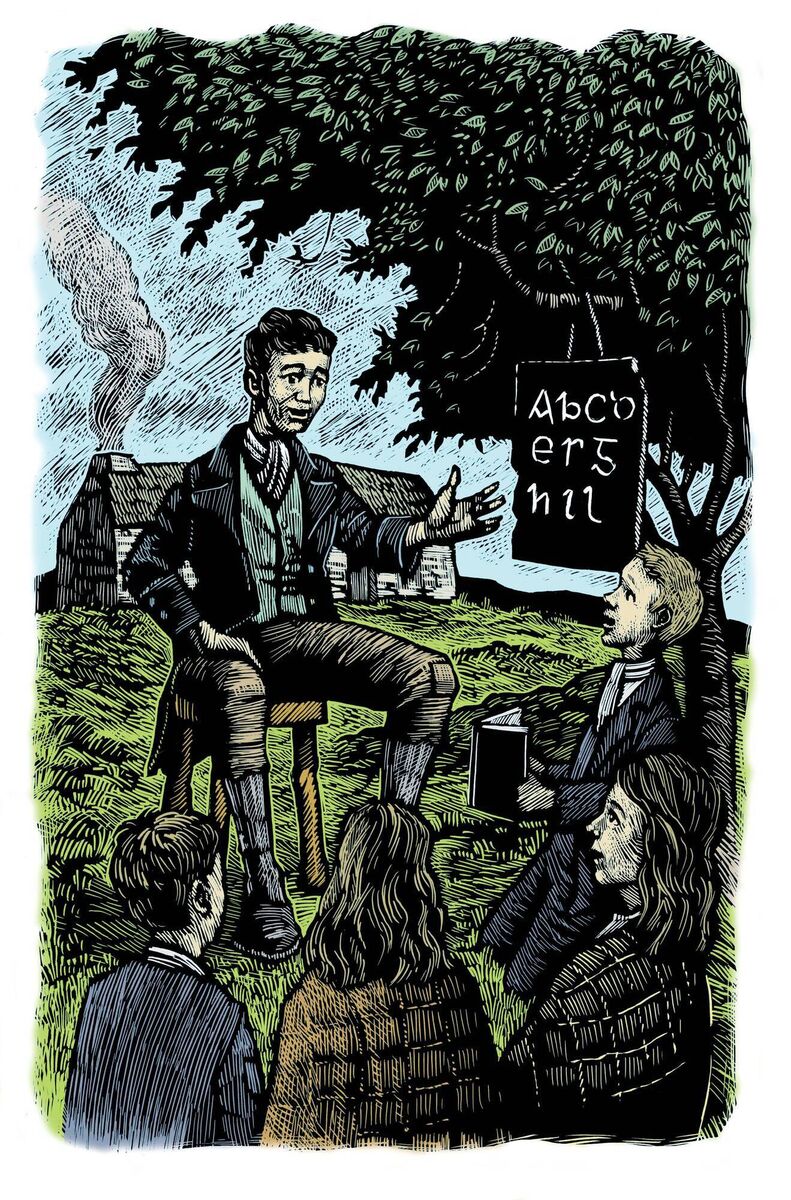
An illustration from An Irish Folklore Treasury

“Sullivan said, ‘I was with some other children, and we ran up to see the bodies inside the ambulance. I had a little sally rod that I pushed in through the weave of the wicker and poked a dead man in the shoulder. But the man managed to raise a hand and push the rod away. Clearly, he was still alive, but he was on his way to the workhouse nonetheless, God help us. And although I was only a small boyín at the time and didn’t know any better, it’s to my immortal shame that I did such a terrible thing’.”

I struggled with the maths. The Famine raged from 1845 to 1849. My father was born in 1919 and would have met Mr Sullivan in the mid-1920s. If, as old Mr Sullivan said, he was only a ‘small boyín’ during the Famine and went on to live to be over 90, then he could easily have been recalling his eyewitness account right into the 1930s, not to mind telling my father a decade earlier. So there was indeed ample time for each man’s life to have overlapped the next.

Floored by this revelation, I said to my father, “How come you never told me this before?”

“Because you never asked me,” he replied, trying to pin the blame on me. In truth, he had forgotten all about it, until John Behan’s memorial sparked the memory and then, suddenly, there I was, listening to a man recall a firsthand account of the Great Famine. Little did I know that my compadre was going to ride off into the sunset himself the following January. The great lesson I took from that trip is 
 ask!

That’s precisely what the Irish Folklore Commission did when they set up the Schools’ Folklore Collection in 1937. They asked.

They asked schoolchildren to ask their parents and grandparents for their recollections.

There was no time to lose. Here was a people whose culture and ways had been driven underground for centuries. Now there would be a drive to secure their stories in a national memory bank.

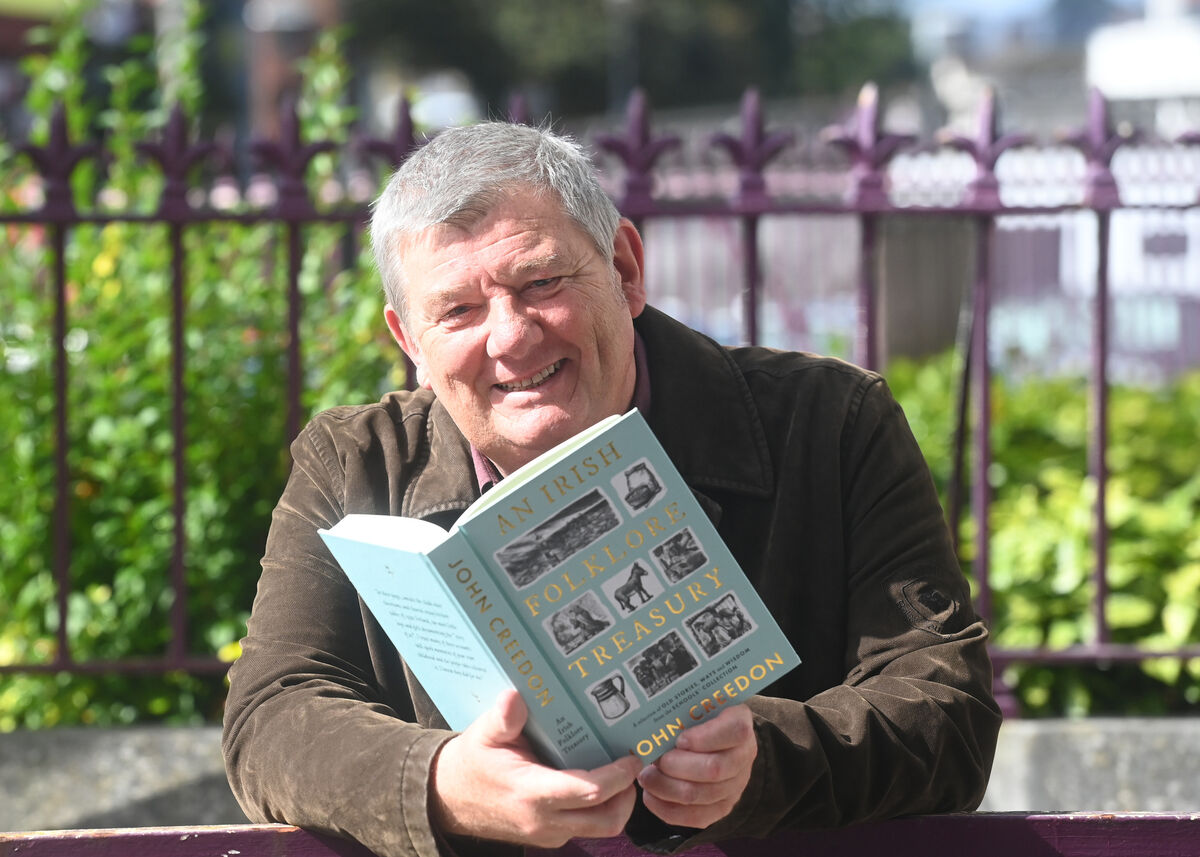
John Creedon with his new book. Picture: Larry Cummins 

Just 15 years earlier, in June 1922, during the Irish Civil War, the Four Courts came under heavy shelling from Free State troops. The subsequent fire at the adjoining Public Records Office destroyed a wealth of births, deaths and burials information. These priceless written records were erased forever, but now this oral history project would attempt to gather a social history from the memory of the living. The project’s scale and significance cannot be underestimated. The Department of Education responded to the Irish Folklore Commission’s call with enthusiasm. With the support of the Irish National Teachers’ Organisation, they enlisted 50,000 schoolchildren in the 26 counties. They would write over half a million pages of manuscript. BailiĂșchĂĄn na Scol, or the Schools’ Collection, is the result.

Today, whether we like it or not, virtually every detail of our existence is recorded on CCTV, phones and online databases. It’s unlikely our story will fall through the cracks ever again. But in these pages, amidst the chalk-dust classrooms and cleared-away kitchen tables of 1930s Ireland, we meet little boys and girls documenting, in their best handwriting, the ‘story of us’. Many of their elderly sources had little education and could neither read nor write themselves. But the Irish word for folklore is, bĂ©aloideas, literally meaning ‘mouth education’ or ‘instruction’, and that’s exactly what happened. Thousands of old people dictated their own first-hand experiences from the 1800s and the traditions that dated back centuries further. With every story we’re introduced to a little boy or girl, with their own personality and turn of phrase. In some you can almost hear the melody of the local canĂșint. I trust many of these accounts will spark memories of your own childhood and the people who coloured it. I know they did for me. I am so grateful for those long car journeys where my father told and retold his stories.

I also recognise the huge debt of gratitude we all owe the thousands of Irish schoolchildren who formed the great folklore meitheal of 1937. This golden harvest is their great legacy to us.

FOOD

“I was elected by the plain people of Ireland,” declared Jackie Healy-Rae on foot of his surprise election to the Dáil as TD for Kerry South in 1997. When quizzed by TV journalist Brian Farrell as to who exactly “the plain people of Ireland” might be, Healy-Rae thundered, “The plain people of Ireland are the people who have their dinner in the middle of the day.” Healy-Rae’s statement carried a lot of truth even when reconstructed to read, “The people of Ireland had a plain dinner in the middle of the day.” I expect the best of them still do.

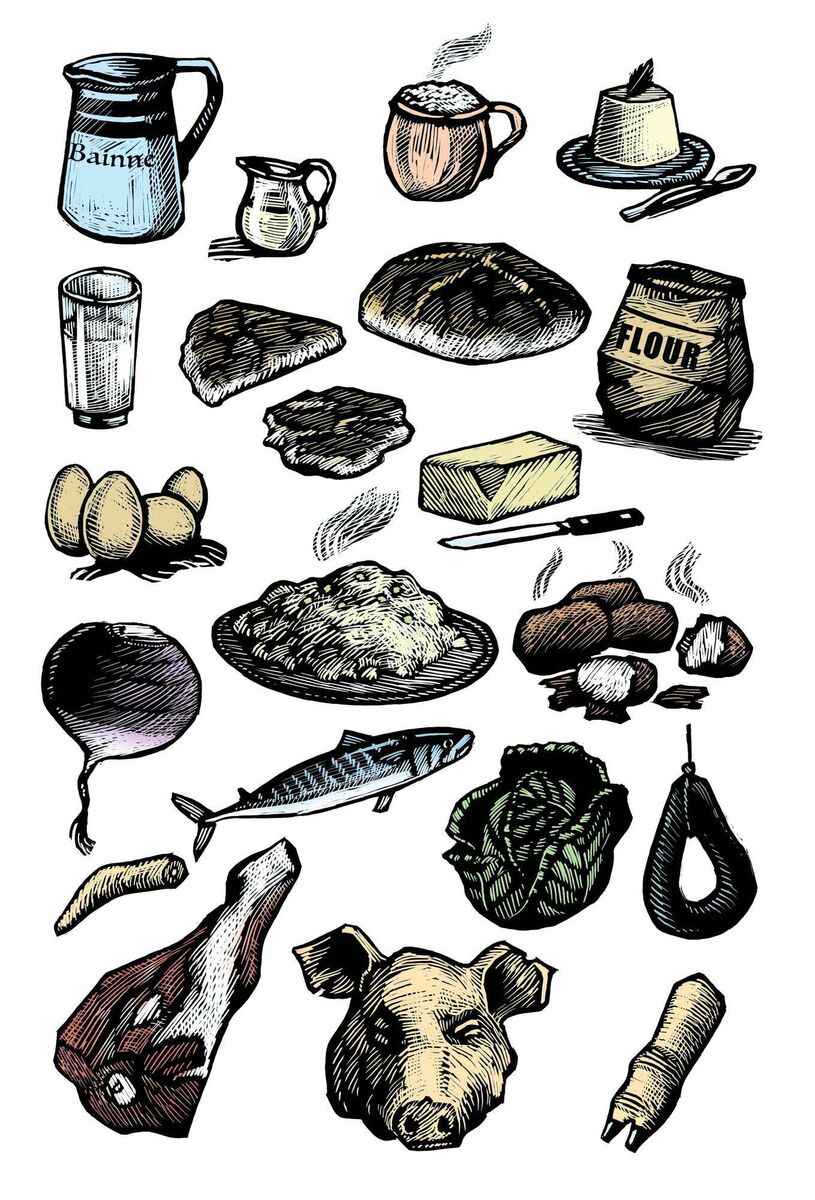
The testimonies gathered for the Schools’ Collection suggest that as late as 1939, poorer farming households depended primarily on milk, potatoes and flour. Not unlike the diet of today’s global poor, many of whom survive on a basic diet of rice, the mainstays of the Irish menu were also white and bland. When the opportunity arose, a little pork or salted fish was a welcome bonus. Cabbage or turnip was another pleasing addition and in some areas, oats or Indian meal were staples. Either way, dinner was in the middle of the day and it was plain. 

An illustration from An Irish Folklore Treasury

The Inuit are reputed to have 50 words for snow. The Irish had 50 recipes for spuds. A pinch of salt, a spoon of sugar, a splash of milk or a fist of flour would transform the humble spud into boxty, pandy, griddle cake, farls, and a huge range of recipes, new to me. Young Eddie Carroll of Derrynahinch, Co Roscommon, notes the sweet and sugary flour-based ‘flummery’ and the savoury ‘scailtín’.

The plain people of Ireland were equally creative with milk. My father, whose family ran the Inchigeelagh Dairy Butter & Egg Company, spoke of thick milk, sweet milk, sour milk, buttermilk, cream and Grade A butter. He truly was a connoisseur and had no difficulty swigging and rating sour milk. When yoghurt came on the scene in the 1970s, he thought it was hilarious that such a thing would be viewed and packaged as ‘fashionable’. A glass of cold fresh milk to wash down the last of a stew or a bacon dish was usually marked with “Ahh 
 bainne an bó breac” (“Ahh, the milk of the speckled cow”), regarded as the sweetest, creamiest milk of the herd.

I didn’t realise at the time that his blessing on the cow was actually a play on the Irish word for the cowslip, bainne bó bleachtáin. Either way, my father’s Grace After Meals was a fine addition to the already extensive list of Irish toasts and blessings. I still salute a cold, refreshing glass of milk with his words. I, too, love a glass of sweet milk and firmly believe there is no place for red wine on a table serving boiled potatoes. Red wine with pasta or beef, of course. But with boiled potatoes? A pint of plain (milk) is yer only man!

Given Ireland’s well documented love affair with tea, it might come as a surprise to be reminded that it only became widespread after the Famine. It first arrived from India to Ireland in the early 1800s, but was regarded as a luxury product and the preserve of the wealthy, whose tea parties were highly fashionable social events. One informant from Castletown, Co Donegal, reports tea only became popular in that area as late as the 1890s.

We have a fascinating and detailed account from Newtown, Co Tipperary, of the waste-not methods of keeping and slaughtering a pig. Every single part of the pig was put to good use. I’m reminded of the story of a Victorian visitor to Cork’s English Market who, on viewing the array of pigs’ heads, trotters, tails and puddings on display, was moved to remark, “It appears the only part of the pig not eaten by the Irish is the oink!”

Gratitude for a full belly is a recurring theme amongst the informants. Given the hand-to-mouth existence of tenant farmers, nothing was taken for granted, and a prayerful Grace before and after meals was recited in many of the kitchens of my own childhood. My sense of gratitude has deepened with age. So at mealtimes I have taken to simply acknowledging how fortunate I am to have such quality and variety of nutrition before me. It truly is a blessing.

IN THEIR OWN WORDS

A basin of porridge and a can of milk

(School: Droichead na Ceathramhna, Derrycashel, Co Roscommon. Teacher: S. Pléimeann. Collector: Eddie Carroll, Derrynahinch, Co. Roscommon. Informant: John Gildea, 57, Derrynine, Ballyfarnon, Co Roscommon)

Long ago the people used to take three meals a day — breakfast, dinner and supper. Before the breakfast the people would do two hours’ work; then they would take a basin of porridge and a can of milk and eat it with wooden spoons. Then they would take potatoes and buttermilk and sometimes they would take ‘scailtín’, which consisted of flour, onions, pepper and salt all boiled on milk and water. They used to take porridge for the supper or sometimes meal-bread or oatmeal cake. The oatmeal cake used be made with oatmeal and wet with water and then baked on a tongs. The young children used to take ‘flummery’, which was flour boiled on milk and sweetened with sugar.

Before they set sail for America

(School: Clochar na TrĂłcaire, Navan, Co Meath. Teacher: An tSr. Concepta le Muire. Collector: Eileen Watters, Flower Hill, Navan, Co Meath. Informant: Mrs. Watters, 45, Flower Hill, Navan)

Long ago the people had no tea. They used to take porridge for their breakfast and supper, potatoes, bacon and cabbage for their dinner and often potatoes for supper.Very seldom meat was used only on special occasions, at Christmas, Easter and on big feasts. Long ago they used to have cakes made of wheaten meal. The people used to make oaten bread before they set sail for America and take it with them. The table was usually placed in the centre of the floor. The people used to go to work before breakfast in the mornings and come home for breakfast.

An Irish Folklore Treasury: A selection of old stories, ways and wisdom from The Schools’ Collection is published by Gill Books, price €24.99

x

More in this section

Lifestyle

Newsletter

The best food, health, entertainment and lifestyle content from the Irish Examiner, direct to your inbox.

Cookie Policy Privacy Policy Brand Safety FAQ Help Contact Us Terms and Conditions

© Examiner Echo Group Limited