Feeling the pinch: 'It’s soul-crushing to have to say ‘no’ so much'

The cost of living crisis is overwhelming. From psychological support to practical help, Helen O’Callaghan turns to the experts for advice
Feeling the pinch: 'It’s soul-crushing to have to say ‘no’ so much'

Pictured is Sally Vicary from Bagenalstown, Co Carlow. Photograph: Patrick Browne
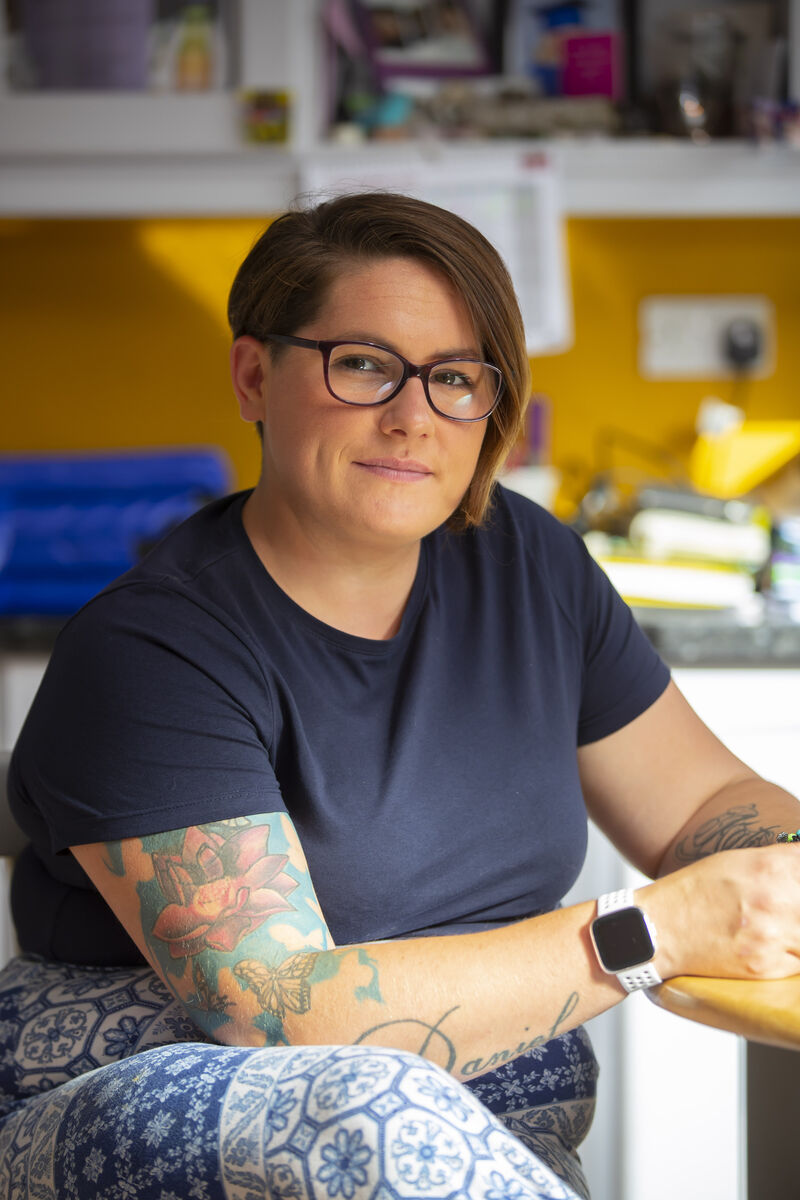

Sally Vicary is watching how many times a week she turns on the oven.

“I decide what the kids and I will eat for the next four days and I do it all in one day to save on cost. I’m more likely to use my slow cooker than the oven — it’s not as expensive to turn on,” says Vicary, a single mum of three children aged 12, seven and five.

Like huge swathes of the Irish population dealing with the cost-of-living crisis, the Carlow-based mum — who’s on social welfare — is on constant economic vigilance.

“I go around unplugging things, turning off light switches. It’s a circle of constant watching.”

She can’t afford to give the children pocket money and the usual day trips weren’t possible this summer, though she managed a day’s outing to Avondale Forest Park before school started.

“It took three weeks to save the money. After buying the ticket, I spent €11 on drinks for the kids. I treated myself to a coffee. I couldn’t afford the food so we brought a packed lunch with us. I said ‘no’ to a teddy in the gift shop. It’s soul-crushing to have to say ‘no’ so much.”

Vicary has been “watching the numbers” since January when she started the year with five debts.

“I started paying off debts then. I thank the Lord I did because interest rates have risen. I’m down to two debts now and only one’s high-interest.”

Determined not to get another loan this Christmas, Vicary’s focus is on affording food and heat. “I’m looking at fluffy blankets under the Christmas tree — anyway we can heat ourselves without turning on the heating system.”

'It’s a circle of constant watching', says Sally Vicary from Bagenalstown, Co Carlow. Photograph: Patrick Browne

Karl Cronin, the national spokesperson for MABS Ireland, says personal debt is occurring now because of factors outside our control.

“It’s important everyone recognises personal debt happens because of things that happen to people — rather than them doing it to themselves. It’s because of the conflict in Ukraine and interest rates increasing.”

Cronin outlines steps to take control of our finances, beginning with a financial health check.

“Draw up a household budget. What exactly is coming in every week? And what’s going out? Prioritise expenses. Not paying your mortgage or rent risks losing your home. Not paying your electric bill risks disconnection. Food and medicine are other priority costs. Look at your remaining financial commitments: personal loans, credit card repayments, car loan repayment. What can be rescheduled or re-negotiated to a lower payment? Identify your discretionary spending. What can be reduced or ruled out if things aren’t balancing at month’s end?”

Cronin says that it is important to know where to look for advice and support.

“MABS Ireland is free, State-funded and non-judgmental. Abhaile, a Government scheme for anyone three months or more in mortgage arrears, offers court mentor support should you find yourself in court threatened with repossession. There’s also a range of insolvency options. MABS can identify one most suiting your needs and guide you through the next steps around contacting an insolvency practitioner.”

The Department of Social Protection has an ‘exceptional needs payment’ that we can avail of, Cronin points out.

“This is a once-off payment to help meet a once-off exceptional cost, eg electricity bill has been estimated for 12 months, arrears have built up and you owe €1,000. It alleviates that pressure. You first meet with a welfare officer to discuss.”

Cronin says many people, if they can’t pay the full balance due on a bill don’t pay anything at all. “They’re surprised to hear ‘well, pay what you can afford — maybe €50 this week, another €50 in a fortnight’. Doing this shows you’re addressing the situation, not ignoring it.”

He says that it is important to engage and communicate with lenders or creditors. Ignoring the issue leads to increased stress. “More often than not, lenders or creditors will come to an arrangement. It’s in everybody’s interest not to let arrears build.”

'People are in dire straits'

Ann-Marie Gaynor, founder of Irish Budgeting Mammy (irishbudgetingmammy.com) and author of The Budget Book, says many — unused to financial stress in the past — are now suffering.

“I haven’t gone below 300 messages weekly in my inbox since July.

“People are in dire straits. A lot of my followers are Gardaí, nurses, civil servants. Many of them aren’t making ends meet. Fuel and food are the big costs.”

Ann-Marie Gaynor of Irish Budgeting Mammy.

Deirdre, who prefers not to use her surname, worked as a staff nurse for 30 years. Her grown-up children no longer live at home. “I’m not in the throes of the financial crisis just at the moment, but I’m trying to make choices that’ll see me through the winter.”

Based in Co Waterford, she’s noticing how much more expensive it is to fuel her pellet stove.

“The cost of a 15kg bag of pellets last April was €5.90, now it’s €8.30. That’s a big jump.

“I’m thinking about whether I should buy an imported or an Irish brand — the imported one’s cheaper but not as good quality.

“I’m more conscious in all aspects of managing my house, my housework. For example, I’ve found it cheaper to buy a laundry egg in an eco-friendly shop and to refill it than to buy any brand (even own brand) of liquid or powder detergent.”

Fiona O’Malley, CEO at mental health charity Turn2Me, says mental health can decline with financial stress, setting up a vicious cycle.

“It can make it even harder to focus on managing bills. People may stay off work and lose income. Money problems get bigger and mental health declines further.”

She recommends self-care strategies to manage psychological distress:

  • Exercise – even a little – boosts mood and energy.
  • Relaxation techniques such as breathing exercises, yoga, meditation, can all help.
  • Get your sleep. Tiredness increases stress levels.
  • Eating diet rich in fruits, vegetables, whole foods and omega-3 helps mood and energy (can be done on a budget).

And don’t forget the positives — easy to do when under financial pressure.

“Take a moment to appreciate what you have,” urges O’Malley.

“Close relationships, your health, your pet, the beauty of the nearby beach, sunset in your garden.

“Give yourself a break from the worries. Soak in the beauty. Worrying doesn’t solve a situation. Actions do, so [make a financial] plan and stick to it.”

In Carlow, Vicary has a new hobby — for 246 consecutive days, she has been cold-water swimming.

“If I’m very stressed I get into the water. In cold water you have to be in the here-and-now. You can’t be thinking about the numbers. You have to focus on your breathing. So you relax.”

  • Turn2Me runs weekly support groups (online, anonymous, free) to assist with anxiety/low moods (turn2me.ie)

Irish Budgeting Mammy founder Ann-Marie Gaynor on the steps she takes to reduce financial stress:

  • Do just one shopping trip per week, all you need for the week in one shopping trip, avoiding need-more-milk trips, and coming out with with something you don’t need, like fizzy drinks.
  • Do a meal plan, trying to use what you’ve already got in the got in the kitchen. Know your supermarket, to buy just what you need. Use a small trolley.
  • Use ethnic supermarkets. “I use buy giant bags of rice at my Asian supermarket for €10 – two last a year.”
  • Put €20-€30 aside for occasional spending (a takeaway coffee). Once it’s gone, that’s it.
  • Losing a TV package brought €75 monthly back into Gaynor’s budget.
  • Can you pay a weekly sum online towards various bills?
  • Don’t stress if you can’t pay a yearly bill in one go. Pay monthly by direct debit – anything to take away that financial burden.
  • Plan early for big events. Christmas, First Communion, Confirmation. Set money aside throughout the year.
  • Talk straight to kids about money. ‘We’re not going to do that this week. I’m short – I’ve to pay this bill.’
  • Separate into envelopes set amount of weekly money for food, fuel and fun – in Gaynor’s case beauty products. “If one week my food money runs out, I tap into beauty product money. An advantage of cash is the psychological feeling of spending – you break a note, you feel psychological loss. So you’re less likely to spend.”
  • Be aware of emotional spending. Reflect back – when you overspent how was your mood? What are your triggers? Maybe a particular shop? “Mine’s a chemist’s – those beauty products! If I’ve a doctor’s prescription, I send one of my older kids with it – I stay out
    of the shop.”

x

More in this section

Lifestyle

Newsletter

The best food, health, entertainment and lifestyle content from the Irish Examiner, direct to your inbox.

Cookie Policy Privacy Policy Brand Safety FAQ Help Contact Us Terms and Conditions

© Examiner Echo Group Limited