'A chairde...'How Queen Elizabeth II ignored advice and spoke in Irish at Dublin Castle
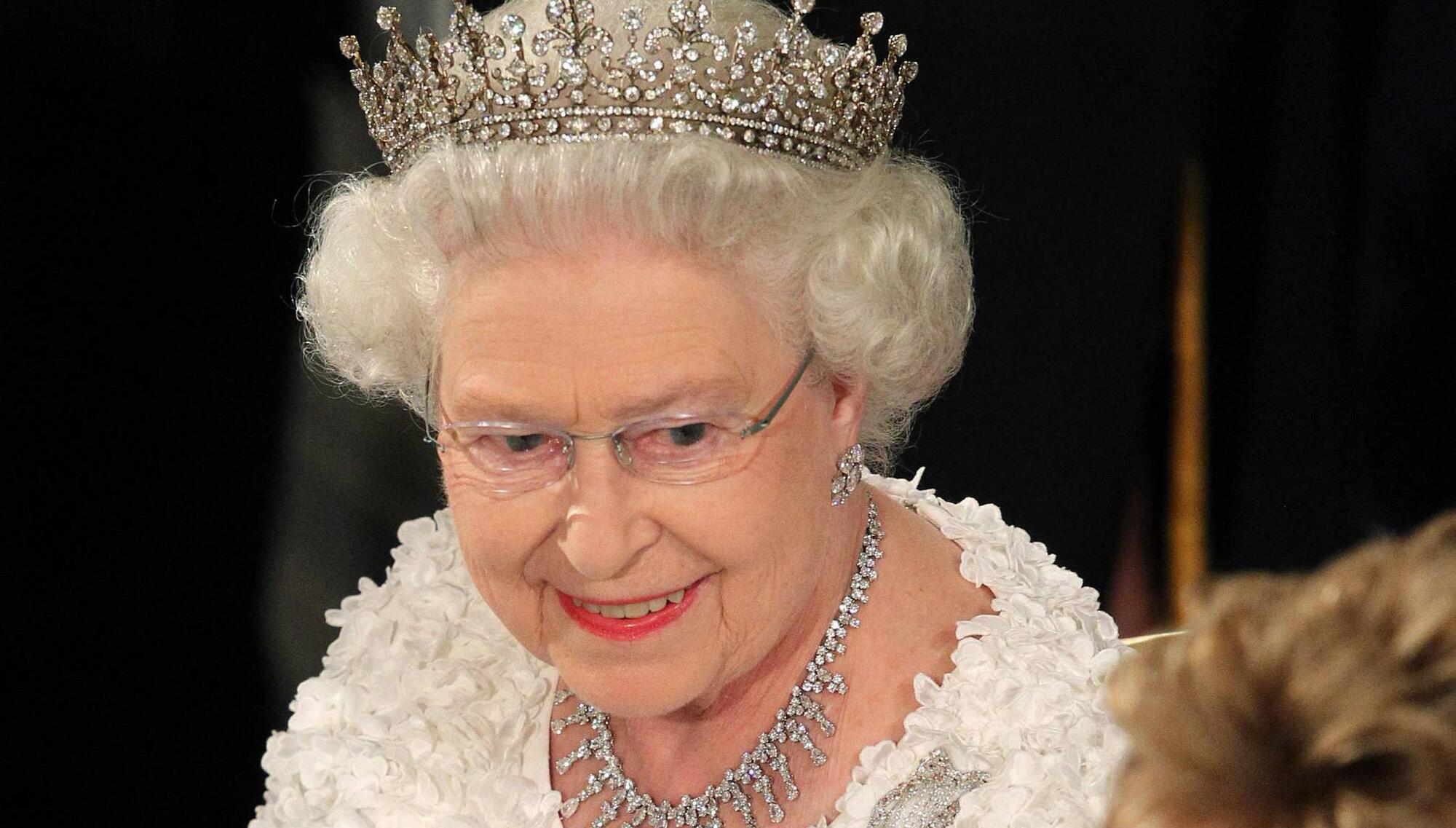
As Queen Elizabeth began her address ‘A Uachtaráin, agus a chairde..’ Mary McAleese was caught on camera exclaiming just one word: ‘wow!’. Picture: Peter Muhly/AFP via Getty Images
For any State Visit, the back-room planning goes on for months, sometimes years. For the first-ever visit by Queen Elizabeth II to the Republic of Ireland the possibility was skirted around for decades, and for most of the 20th century it would have been unthinkable.
So it was no surprise that meticulous protocol planning went back and forth between Dublin and London on every conceivable detail when finally, in May 2011, the first State Visit by a British monarch to the Republic of Ireland was about to become a reality.
What the diplomatic teams hadn’t foreseen, however, was a last-minute breach of protocol by none other than Her Majesty the Queen herself.
Now the evidence has come to light - in the shape of an old envelope with some hastily-scribbled notes in blue ink.
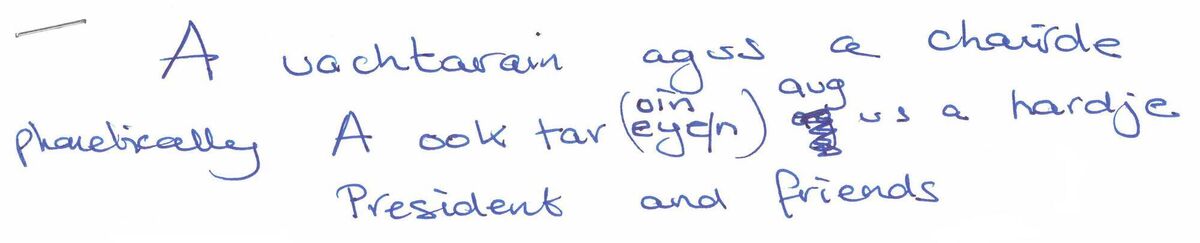
It’s the handwriting of former President of Ireland, Mary McAleese, who has set the scene herself in her 2020 memoir, .
In discussions with the queen’s deputy private secretary, Edward Young, McAleese had three suggestions to add to the official programme of events:
- A visit by Queen Elizabeth to the Garden of Remembrance in Dublin, which commemorates all those who fought for Irish freedom.
- A visit to Croke Park, including the Hogan Stand, named after young Michael Hogan murdered with 13 others in 1920 by British soldiers.
- And, a few words in Irish to begin the queen’s speech at their state dinner, in Dublin Castle, the only formal speech she was to make here.
McAleese wrote: “Even one sentence could set to rest so much historical angst and resentment around the dire treatment of the language by the British when they were in power in Dublin Castle”.
Two of the three were accepted, but the third was not to be - too risky - it was decided. If she stumbles in her pronunciation, that’s what will be remembered of the visit. The suggestion was knocked on the head by Buckingham Palace.
A week before the state visit, former British diplomat Francis Campbell paid a courtesy call on McAleese at Áras an Uachtaráin (both from Northern Ireland, they’d been students together at Queen's University Belfast).
As he was leaving, Campbell pulled an old envelope and a pen from his jacket pocket and persuaded the president to jot down the line she would have coached the queen to say. Reluctantly she did so, but warned him that the plan was ‘off the table’. He could give it to Edward Young for his own curiosity but that was as far as it could go.
‘A Uachtaráin, agus a chairde’ (President, and friends’) wrote McAleese, and then an almost comical phonetic approximation - ‘A ook tar eye/n aug us a hardje’.
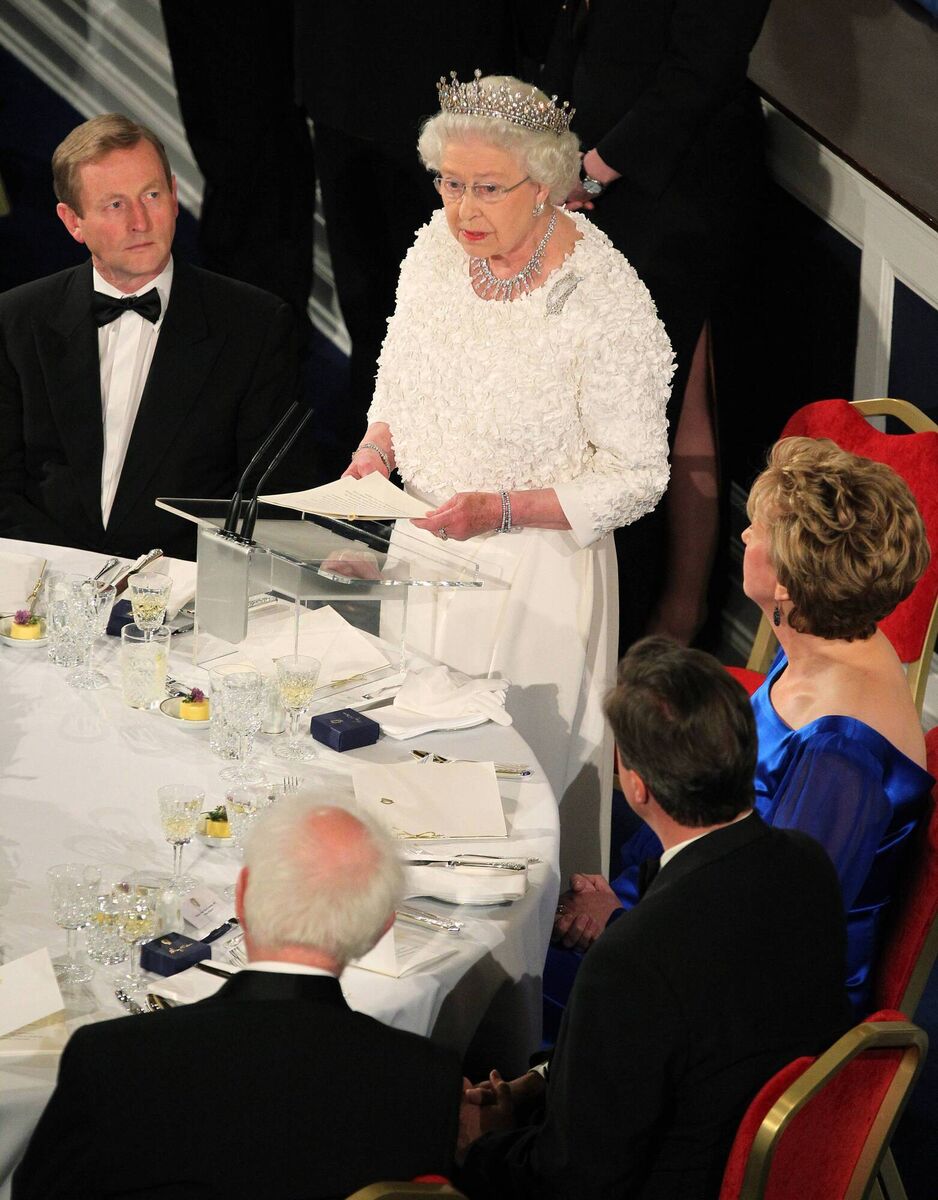
Queen Elizabeth II rose to her feet in Dublin Castle on May 18, 2011. As she began her address ‘A Uachtaráin, agus a chairde..’ an almost speechless and clearly delighted Mary McAleese was caught on camera exclaiming just one word: ‘wow!’.
Frances Campbell is now Vice Chancellor of the University of Notre Dame in Fremantle, Western Australia. Thanks to an introduction from McAleese he found the envelope for me in a drawer in his desk, and was delighted for it to be included in (New Island Books).
The ‘unexpected’ in the title allowed me to include not only the official correspondence which one might expect to find in the presidential archives, but also some of the more colourful letters, drawings, telegrams and maps that accompany them in the files.
Many of these refer to the queen’s State Visit here in 2011, and there are thousands of letters about the reciprocal visit by President Michael D. Higgins to the UK three years later.
A letter from fishmonger Pat O’Connell, whose jovial encounter with Queen Elizabeth in Cork’s Old English Market made world headlines wrote to President Higgins to wish him well on his State Visit in 2014: “I’ve just returned from a reception given by Queen Elizabeth and Prince Philip at Buckingham Palace”, he wrote, reminding Higgins that he’d made it there before him.
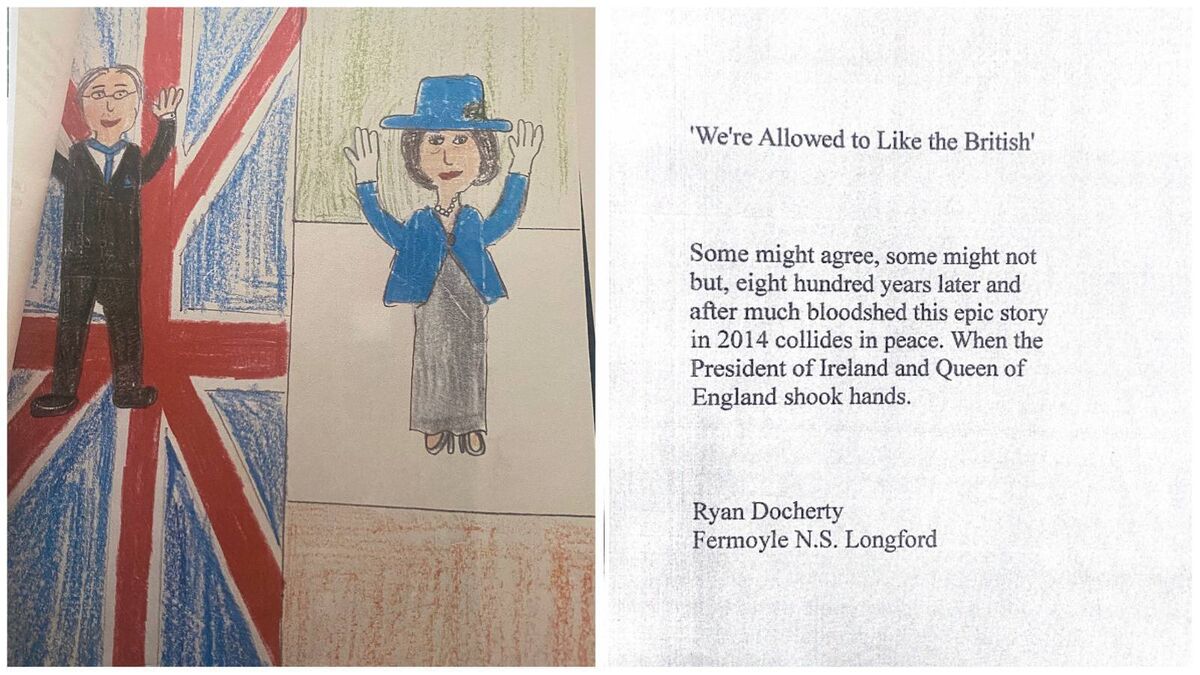
Children wrote in their droves, describing watching the events in Windsor Castle on television and writing poetry in school the next day. Among the items archived at Áras an Uachtaráin are poems and drawings by children from Fermoyle National School, Co. Longford.
Sometimes, it’s the kids who sum up an historic occasion most succinctly.
CONNECT WITH US TODAY



Be the first to know the latest news and updates