Pete the Vet: Wonderful whiskers are animals' sixth sense
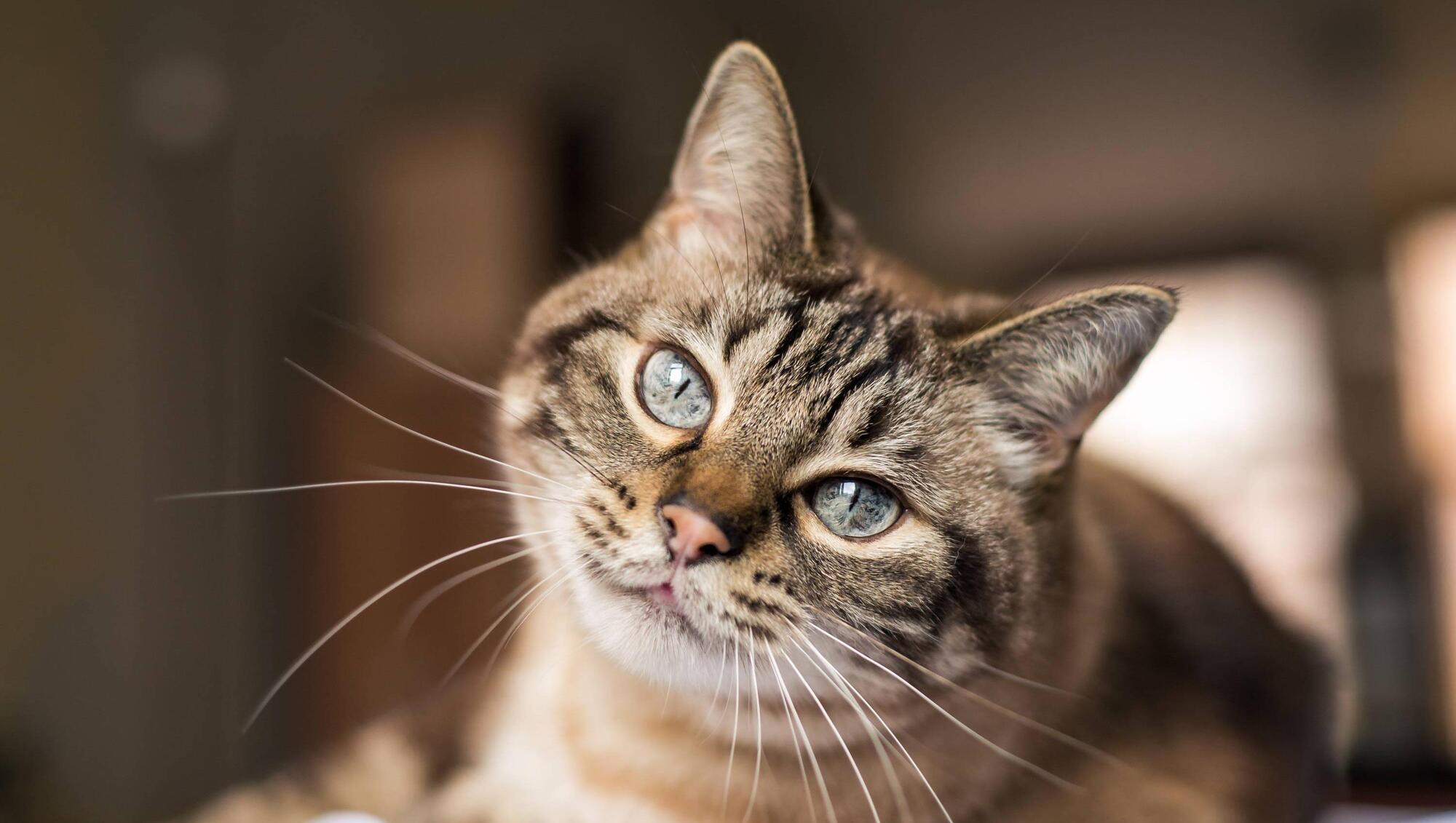
Pete the Vet: Whiskers are denser, tougher and less flexible than normal hairs. They are more like fishing rods when compared with the softer, rope-like structure of hairs. They tend to be longer than surrounding hairs, protruding from the skin surface.
Like human males, animals have facial hair, but they have a special tweak: some of these hairs have become specialised, with a new shape, structure and innervation. Whiskers are found across the animal world, with variations across the species, but with certain universal characteristics.
Whiskers are denser, tougher and less flexible than normal hairs. They are more like fishing rods when compared with the softer, rope-like structure of hairs. They tend to be longer than surrounding hairs, protruding from the skin surface.
Uniquely they have a rich, sensitive network of nerves around the hair follicle from which they sprout. Whiskers, like hairs, are insensitive structures in themselves: if they are cut with scissors, there’s no direct pain. However, they are exquisitely sensitive to movement, such as the lightest of touch causing the whisker to be displaced by even a few millimetres. If a speck of dust lands on a cat’s they will know about it. This sensitivity means that whiskers seem more like living tissue than hairs. If a whisker is pulled, it’s very painful. If it is cut, the delicate nerve endings at its base certainly ensure that the animal is very aware that something is happening.
Whiskers are technically called “vibriissae”, a name derived from the Latin for “vibrate”. The concept of protruding appendages to sense the environment is common in nature: the antennae of insects are an example. The rich nerve supply connects directly to a part of the brain called the somatosensory cortex which is relatively big in animals compared to humans. It’s difficult for us to imagine what it feels like to be an animal, but perhaps the sensations created by whiskers provide information similar to vision in humans. So as animals move around an environment, they continually “see” what’s around them in a way that is hard for us to imagine. This is particularly helpful in low light conditions, and it partly explains why some animals seem to be able to see in the dark.
Humans also have hair-like structures called vibrissae, but these are not the same as whiskers at all: this is the term used to describe nasal hairs. These hairs may be bristly, but they don’t have the same nerve supply or sensitive function as whiskers.
Dogs, cats and rabbits each have whiskers with their own peculiarities.
Dog whiskers are shorter, used when sniffing objects as an extra way of gathering information.
Most cats have twelve whiskers on each side of their face, in three rows of four. They also have a small group of whiskers above each eye, and a cluster of small whiskers on the underside of each carpus (wrist). Cats use these to discover subtle details about what’s going on around them.
The classic example is cats using their whiskers to judge if an opening is wide enough for their body to pass through: if their whiskers can squeeze through with ease, then they can be sure that their body will be able to follow. Whiskers are so sensitive that they can easily detect air currents, so when a cat is running along a narrow surface (such as a garden wall) their whiskers will help them balance by judging wind currents. And the whiskers on the underside of their feet are used when they are hunting: cats pat their prey from side to side, playing with them before they kill them. The paw whiskers give the cat extra information about the small animal or bird in front of them, allowing them to predict how they are going to behave.
Cats also use their whiskers as part of their repertoire of body language. Whiskers have tiny muscles at their base, and cats can move them around. If they are angry or frightened, the facial whiskers (above the eyes and on the cheeks) clamp down and flatten, while if they are relaxed and friendly, the whiskers are relaxed and spread out. If you watch a happy cat closely, you’ll notice the way their whiskers add to their open facial expression.
Whiskers are not a part of the body that suffer serious problems: when vets deal with whiskers, it’s usually as part of a bigger issue.For example, some hormonal diseases that cause baldness in dogs and cats also cause their facial whiskers to be short, malformed and sparse.
There is a rumoured syndrome known as “whisker fatigue”: this is the idea that if a cat drinks water and eats food from a bowl with high sides and a narrow diameter, their whiskers continually come into contact with the bowl sides. Somebody had a theory that this might make the whiskers get tired due to overstimulation, and they called this “whisker fatigue”. The main significance of this idea is that some people may be prompted to invest in wider, shallower food and water bowls for their pets. But there is no evidence that it is a genuine syndrome, and I see many cats happily eating and drinking from standard bowls, without any visible distress or discomfort as their whiskers bounce off the edges.
As a vet, I have occasionally accidentally trimmed cats’ whiskers: typically, I might be using electric clippers to trim fur away from a wound or surgical site close to the whiskers. One small slip with the clippers is enough to cut off a swathe of whiskers, giving the cat a peculiar lop sided appearance. I try to avoid doing this, and always apologise if it does happen. The good news is that the cats don’t seem to mind, and, of course, like any hairs, whiskers do grow back in, over time.

CONNECT WITH US TODAY



Be the first to know the latest news and updates