Making Cents: What are options for Ulster Bank’s Irish customers?
Traditional and cashless, online banks all provide a plethora of services and products for all requirements.
Making Cents: What are options for Ulster Bank’s Irish customers?

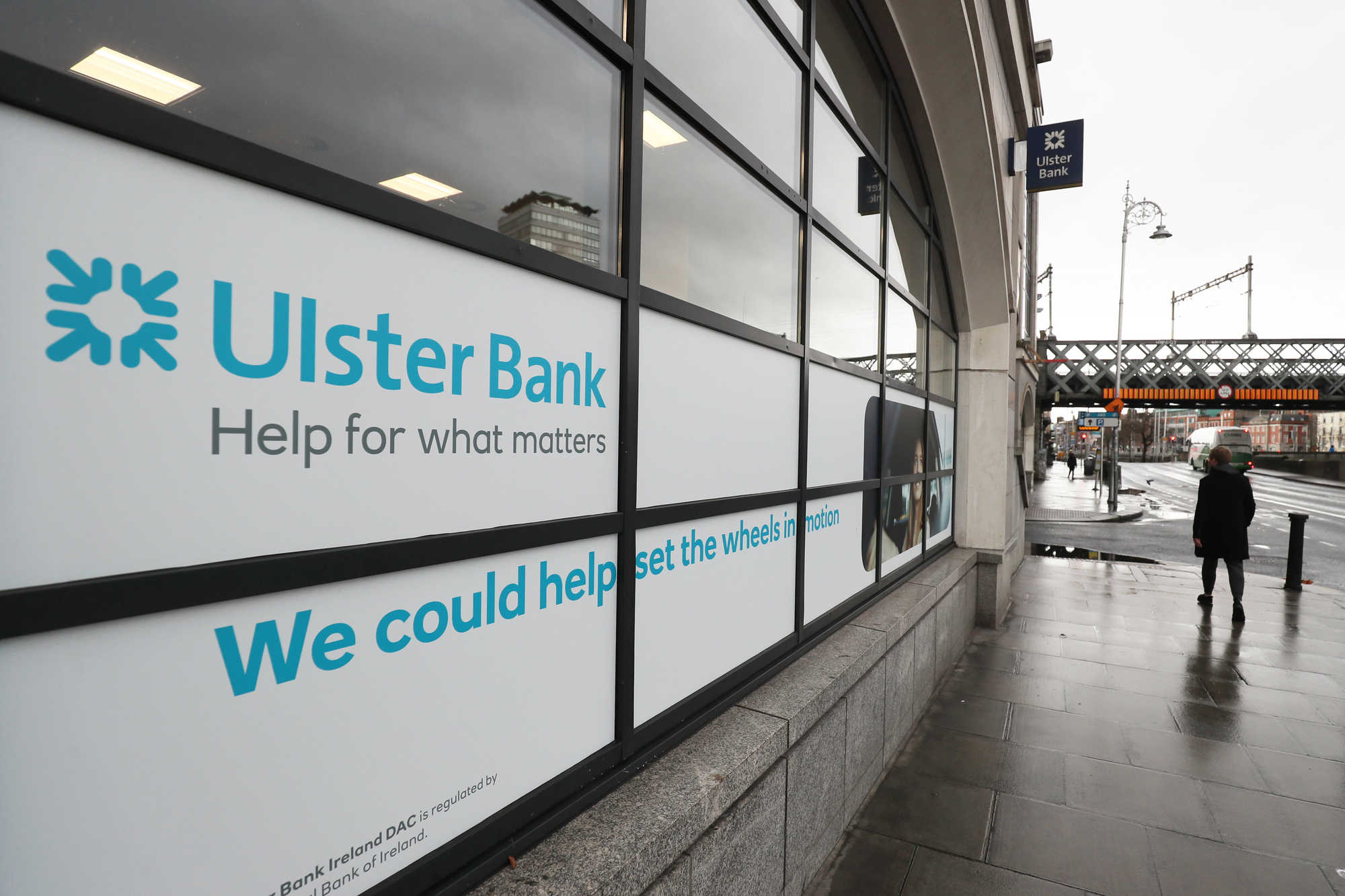
The Ulster Bank headquarters in Dublin. Parent company last week announced their withdrawal from the Irish market.

WITH Ulster Bank winding down its operations in the Republic of Ireland, its Irish customers will be looking for new banking facilities, including for current accounts. There is no urgency: The bank hasn’t given a withdrawal timeline yet and will have to give customers reasonable notice.

Still, Ulster Bank customers should consider what they want from their current account and assess the options for switching.

Daragh Cassidy, head of communications at switching site, Bonkers.ie, says the best account is dependent on people’s needs

“Do you prefer paying by cash over card?” he asks us to consider.“Do you want an overdraft? Are mobile payments, like Apple Pay and Google Pay, important to you? Do you want your bank to have a large branch network, where you can do some of your banking in person?

“All these questions will impact on the account that’s right for the individual customer.

“A good option, though, is KBC’s Extra current account,” Mr Cassidy says. “If you lodge €2,000 into the account each month, then all your day-to-day banking is free. KBC also has a really good mobile app and offers all the main mobile-payment options, such as Apple, Google, Fitbit, and Garmin Pay. Extra current account holders also get reduced rates of interest on KBC mortgages and loans.”

However, KBC is a cashless bank. So, while there is no issue in withdrawing money from any ATM, customers will find themselves stuck if they want to lodge cash regularly.

Another option is Permanent TSB.

“Its Explore account costs €6 a month,” Mr Cassidy says.“However, every time you use your card to pay for something, either in a store or online, it will pay you back 10c, up to a maximum of €5 a month. So, if you’re fond of using your card over cash, then the net cost could only be €1 a month.

“What’s more, if you pay your SSE Airtricity energy bill or Sky bill by direct debit from the account, you’ll also receive 2% and 5% cashback, respectively.

“PTSB’s main advantage over KBC is that it has an extensive branch network and accepts cash. However, its app isn’t nearly as good as KBC’s and it still doesn’t offer Google Pay,” he says.

“The EBS MoneyManager account, meanwhile, is very cheap. There are no day-to-day fees and no minimum, monthly lodgement requirement. However, there is no mobile app, no overdraft, and no Apple Pay or Google Pay.”

Mr Cassidy says N26 and Revolut are also options.

“They have great mobile apps, no day-to-day fees, and no foreign exchange fees on non-euro debit-card purchases (€1,000 a month limit with Revolut),” Mr Cassidy says.

“However, they are ‘online only’ banks, so have no high-street presence. So, again, not the choice for you, if you need to lodge cash.”

Your options for dealing with Ulster Bank in the wake of their phased withdrawal from Ireland: a wide variety of products and services to be mulled over

Both N26 and Revolut also charge relatively high fees for customers who go above a set number of ATM withdrawals, so may not suit those who regularly take out cash.

This leads me to another question: should people consider other banking products when choosing a current account?

“Not really, to be honest,” Mr Cassidy says. “There’s a perception that a bank won’t consider your mortgage application if you don’t have your current account with them.

This is absolutely not true. When assessing your mortgage application, a bank with look at your job security, your income, and your repayment capacity.

“When it comes to things like personal loans and credit cards, a lot of people do like to bank with the same provider for convenience and some banks make it very quick and easy for existing customers to apply for these products.

“So, some people might be put off choosing EBS, Revolut, or N26, for example, as you can’t get a personal loan, overdraft, or credit card with them. It’ll come down, again, to personal choice.”

People are often put off switching accounts, because of fear of the paperwork and hassle.

I asked Mr Cassidy how much work is involved and any tips on how to minimise it?

“The Central Bank has a switching code of practice in place, so it’s not as much hassle as some people think,” Mr Cassidy says.

“However, the process could be a bit more efficient. The biggest issue is changing direct debits and standing orders and making sure all your suppliers have your new details.

“Your new bank will work with you on this, but you might need to make a few calls yourself.

“Also, many bills, nowadays, are not taken as direct debits, but as an online transaction from your card. Amazon, Spotify, GoMo, and others all do this. In this case, once you get your new card and number, you’ll usually need to update these suppliers yourself.

“Be mindful that companies bill around five days in advance for direct debits, so if you’re changing account, you’ll need to let your broadband, energy, and mobile suppliers all know at least this far in advance, so that they don’t bill to your old account,” Mr Cassidy says.

“Again, your new bank will work with you on this, but there’s no harm ringing some of your suppliers to inform them of what’s happening and flagging that there might be some teething problems or a missed payment. Most should be able to accommodate you in some way.”

Mr Cassidy also points out the benefits of moving.

“People are slow to switch current account, even though you could save well over €100 a year, depending on how you use your account,” Mr Cassidy says.

“While all Ulster Bank customers will have to switch eventually, I’d encourage everyone else to check out whether they could save by switching, too.”

More in this section

Lifestyle

Newsletter

The best food, health, entertainment and lifestyle content from the Irish Examiner, direct to your inbox.

Cookie Policy Privacy Policy Brand Safety FAQ Help Contact Us Terms and Conditions

© Examiner Echo Group Limited