Finding a remedy in the sacred waters of ancient wells
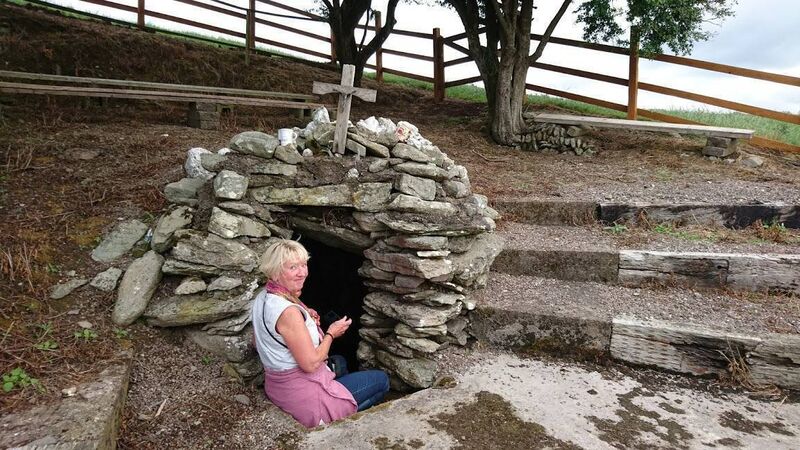
Amanda Clarke didn’t expect to get hooked on holy wells when she set out four years ago to visit all 356 in Co Cork.
The now-retired resource teacher and author, who moved from England to the Sheep’s Head Peninsula almost 20 years ago, started on St Bridget’s Day (February 1), 2016, visiting the well dedicated to St Bridget overlooking Lough Hyne near Skibbereen.
“Three years later I’d visited 303 wells all over Cork. Some may have escaped the net, but most of those unvisited I’m fairly confident have long since gone,” says Amanda, who – at each well – took photos, made notes and, where possible talked to a local person. She later researched each well, putting her findings on an ongoing blog.
A holy well, explains Amanda, doesn't have to be a well. It can be a spring, lake, even a water-filled scoop in a rock – basically a body of water with some supernatural significance that led to devotion there.
Amanda has heard that in Co Cork you’re never more than half a day’s walk from a well. “I reckon you’re closer!” she says.
Before setting out, she gathered basic info from sources including the Archaeological Survey for Ireland, which has recorded 356 holy wells for Co Cork, and the Schools’ Folklore Collection — a nationwide survey undertaken by 5,000 schools in 1937 that saw 100,000 Irish schoolchildren interviewing older members of their community about their local area.
One question was about holy wells.
“Many wells are in highly obscure places,” says Amanda.
To find them, she knocked on doors, traversed muddy fields, braved bumpy boreens, approached shoppers in supermarkets and even tapped on car windows.
“I’ve always been treated with kindness – my favourite phrase is ‘I’ll just get my wellies’. At one point half the population of Carrignavar were on their phones trying to identify the keeper of a well (we found him).
"I’ve met committed well-keepers, sometimes third/fourth generation, and those who’d almost forgotten the well on their land but enjoyed reminiscing.”
Amanda has found wells everywhere: at roadsides, by rivers, in towns, cities, fields, forests, on cliff and sea edge, near churches — even in pubs.
“The Franciscan Well in Cork city [has a] well, once associated with the 13th century Franciscan Friary. It’s still there, a large two-chambered well, just below ground level. The water once held a cure for sore eyes and consumption.”
Amanda says Co Cork wells roughly divide into thirds, based on the current status. Just under one-third have vanished — often the landowner’s able to point out exactly where the well was.
One-third are abandoned, with no trace of anyone having visited. Just over one-third are still revered: there’s evidence someone visited in the recent past.
Some of these still have a pattern day, usually feast day of the well’s patron saint, when it’s traditional to visit, pay rounds (follow set path around the well saying specific prayers, always clockwise) and drink the water.
Wells with well-attended patterns include St Gobnait’s Well, Ballyvourney (February 11); St Johns Well, Carrigaline (June 23); St Finbar/St John’s Well, Gougane Barra (September 28); St Fanahan’s Well, Mitchelstown (November 25) and Tubrid Well, Millstreet (May 1).
Amanda encountered 23 different cures linked to Co Cork holy wells — anything from ague to arthritis, men's health to infertility, headaches to rheumatism.
“The most popular cure is for sore eyes — 53 wells hold this cure. The second most popular cure is for warts —19 wells have this. Many of these are in fact bullaun stones — stones with a man-made scoop in them. There’s one in the woods in Castlefreke. You had to dip the afflicted warty finger in three times and the wart would disappear.”
Leaving an offering — eg rag tied to a nearby tree was a ritual at some holy wells. This had two possible meanings. “To show you’d paid your respects at the well — or the rag could be applied to an afflicted area, then tied to the tree in the hope that as it disintegrated so did the ailment,” says Amanda, who found a “magnificent” rag tree at Inghne Bhuide’s holy well near Millstreet.
Over 30 holy wells are said to contain blessed fish – usually eels or trout — and six have blessed frogs.
“To see one was considered very lucky, a sign your prayers would be answered,” says Amanda, adding that holy wells are believed to be even more potent when dedicated to a saint.
One of Amanda’s favourite pieces of holy well folklore relates to Lady’s Well near Cloyne where, according to the Schools’ Folklore Collection, water quantity remains the same in the driest weather as in the wettest winter, and the water “seems warm in winter and very cold in summer”.
The record, made by a child over 80 years ago, says: “There’s a trout in the well and I was told my grandmother brought a jug of water from the well to make tea.
But though she did her utmost to boil the water she could not do so.” Amanda recalls a landowner’s story at a tiny well in a field in Mitchelstown: “A digger had been brought to do drainage work. The driver was warned of the presence of the well. He ignored the advice, drove over the well – only to have the digger break down.”
For Amanda, each well — however forlorn — still has something.
“It was humbling, watching hundreds of people file past St John’s Well in Carrigaline on its pattern day, everyone engaged in a collective ritual, finishing with young and old collecting bottles of water.”
At Lady’s Well near Liscarroll after a long, wet day, feeling cold and damp, Amanda found herself in a circle of trees, where there was a large clear pool, water bubbling up from underground.
“An illuminated shrine to the Blessed Virgin Mary radiated in the gloom. Religious paintings, statues and offerings adorned the trees. There was a feeling of utter peace and tranquillity.”
Visit Ireland’s Holy Wells County by County and on Facebook.
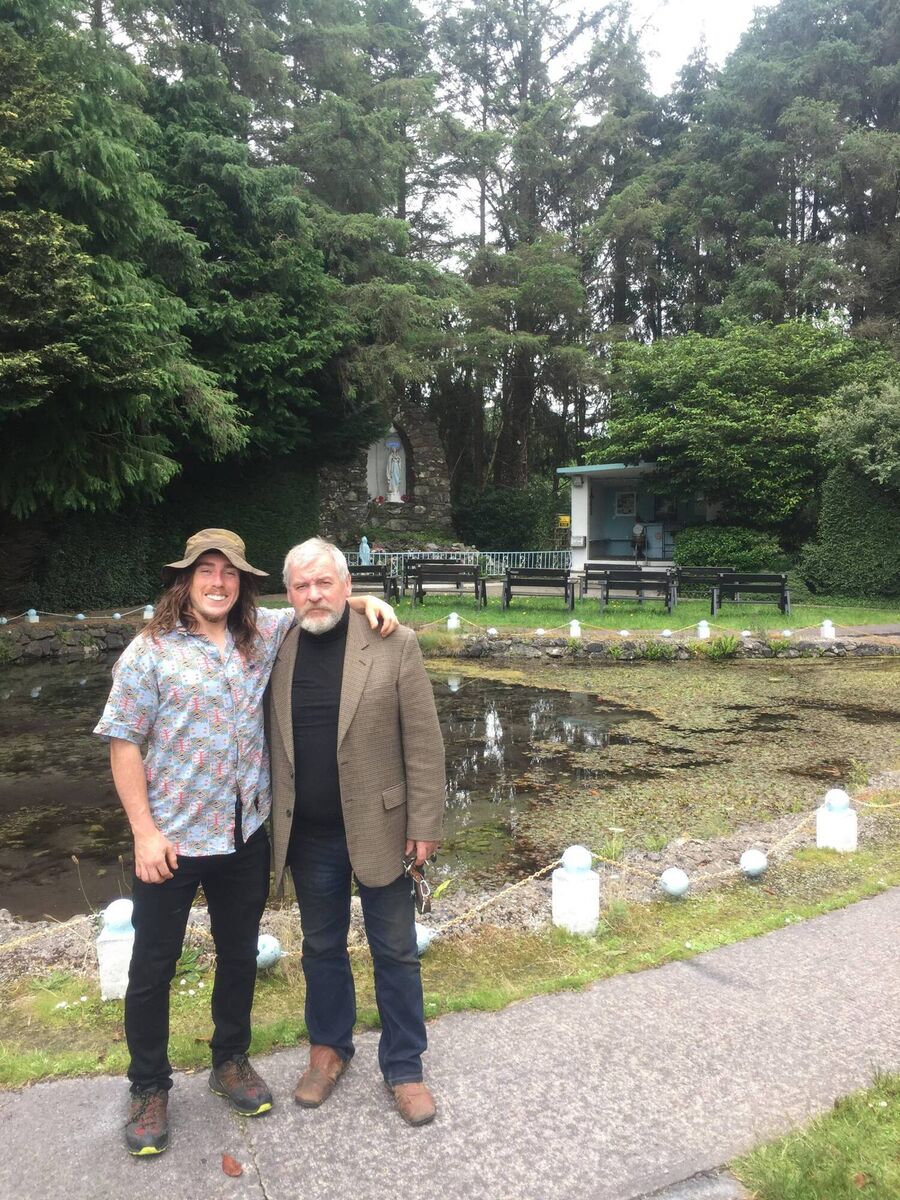
James O’Sullivan is a third-generation keeper-of-the-well at Tubrid Well, Millstreet. “I look after it, with others, but the biggest work was done by those who came before me. I see it as my duty to carry on a tradition," Mr O'Sullivan said.
“Sunday afternoons in May are the busiest — you could have 80 there at any one time. People come for help with something and the mere asking brings them some solace," he said.
"I would say, nobody goes there without having their load lightened. I go down and listen to the water at night; it gives me peace of mind. I have in my possession two walking sticks, left there by people who were cured."
“I had to take away the cups [for drinking well water] at the start of Covid-19. I closed it for 10 weeks during lockdown. I opened it at 6pm on June 7. There was a queue of cars waiting to go down.”
Tullylease — a tiny village on the Cork/Limerick border — has two holy wells, St Ben’s and St Mary’s. Well Day is February 18. Nora Stokes, chairperson of the local community council, says: "People in their 20s, 30s — and much older — visit. My own children, at exam time, would always pay their three days' rounds at the wells. People ring me and say, 'My niece or daughter has an operation tomorrow: Would you pray for her at the wells?' People have great faith in the wells.”


CONNECT WITH US TODAY



Be the first to know the latest news and updates