My Childhood with Seán Keane: 'I liked singing, but not in front of people'

Seán Keane shares his tales from youth, where music played a major role
Sean Keane: “Music was the most important thing. It was to be shared and freely given.”

Sean Keane: “Music was the most important thing. It was to be shared and freely given.”

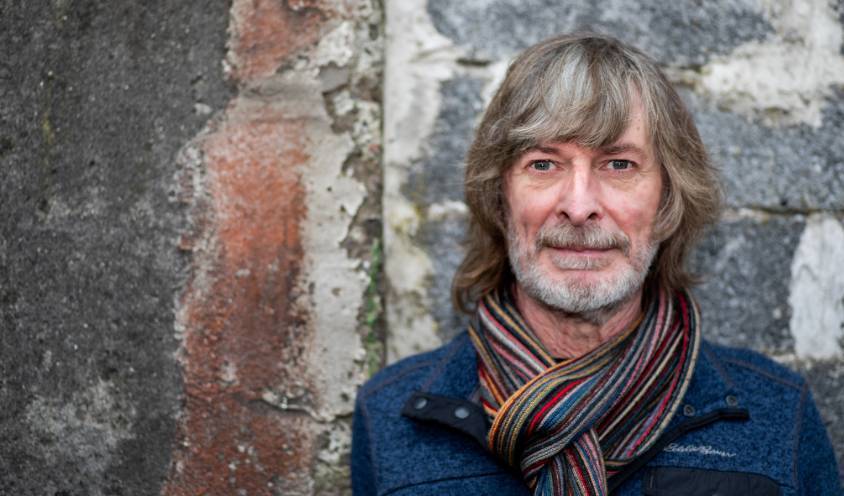
Seán Keane was raised when children were meant to be seen and not heard. That policy didn’t bother the singer and musician, because he was shy and jokes that “it suited me fine, as I didn’t want to talk anyway”.

He remembers his excruciating embarrassment when asked to sing. “All I wanted was for the ground to open up and swallow me there and then,” he says.

“I liked singing, but didn’t like doing it in front of people.”

Keane was the youngest of seven children, one of whom became the renowned traditional singer, Dolores Keane.

Their parents were Matt Keane and Bridie Comer, both from the parish of Caharlistrane in Galway.

Keane has fond memories of his childhood, especially its freedoms. He has three brothers and three sisters, and during the summer, growing up in the 1960s, the children would be let loose in the mornings and told not to come back home until they got hungry.

“We were free,” he says. “But, of course, we had to do chores first. There were always jobs to do, either on our own farm or working in a meitheal [a group of neighbours that would help each other out with labour-intensive tasks, like cutting turf] on nearby farms. Once jobs were done, we could get up to our own devilment.”

Music was a big part of family life. Keane’s mother played the fiddle and sang, while his father played the drums and also had a good voice.

His father’s family were the local céilí band, and people would flock to their home, because it was well known in musical circles.

“If ever anyone arrived for a session, all work stopped so the session could be had,” he says. “Music was the most important thing. It was to be shared and freely given.”

“I liked singing, but didn’t like doing it in front of people.”

The children were expected and encouraged to join in. “We’d be there in the background,” says Keane. “At first, we’d just listen and absorb, but slowly we started playing along.”

His first experience of having the spotlight shine directly on him was when he was seven or eight and his mother decided he should enter the Fleadh Ceoil in Tuam.

“She was reading The Tuam Herald, put it down, and told my sister, Dolores — who would have been 16 or 17 at the time — to teach me a song I could sing in the Fleadh. She taught me May Morning Dew.”

Luckily for nervous Keane, he was the only singer in his age group. “So I won and went on to win the provincial Fleadh and the All-Ireland in Dublin,” he says.

“When I went to Dublin, I realised that singing songs could bring me to different places around the country. Seeing new places became my incentive for overcoming my shyness and learning to sing songs.

“I entered Fleadh Ceoil competitions for years after that and won 13 All-Ireland medals in total.”

If learning music was easy and enjoyable, school was a different matter. He winces when he describes teachers “who tried to beat stuff into their students”.

Academia was not for him. He preferred working with his hands.

“My brothers Pat and Matt had a welding workshop at the back of our house, where they would make trailers and repair machines,” he says. “I couldn’t be kept away from it.”

He became good at welding and on Friday and Saturday evenings, when his brothers would go out dancing, anyone who needed a repair job started asking for “the young fella”.

“My parents would say I wasn’t allowed to be in the workshop by myself,” says Keane. “But the farmers would say that they would look after me. They didn’t care as long as they got their machine fixed.”

Keane left Galway for London at 17, eager to see the wider world. His experience as a welder earned him an offer of a job with a heavy-goods-vehicle trailer fabricator in Dagenham.

Seán Keane in his late teens, when he lived in London for three years.

“It was a job with regular hours, a predictable routine, and potential for progression, but it smelled too much like permanency for me,” he says.

“I like being able to chop and change. So when a friend offered me a job on the building sites, a job that meant I’d move around from place to place, I chose that instead.”

He stayed in London for three years and now regards it as a formative time. “There were still the old ghettoed areas for the Irish, with places like Kilburn heaving with music,” he says. “I’d work every day and play music at night. I slept very little while I was there, but learned so much musically. It was an incredible growing experience.”

When he returned home, he imagined he would set himself up as a fabricator, but life took him in a different direction. He started singing with Dolores and spent some time in Arcady, an eight-piece band that had the likes of Ringo McDonagh, Frances Black, and Sharon Shannon as members.

“But everything in a band is decided by majority vote and I like to make my own choices and mistakes,” he says. “So I made a solo record and have been a solo performer ever since.”

Keane may have overcome his shyness, but the now 64-year-old never lost his love of freedom. In fact, he thinks it may have enabled him to live the performing life. He says that “because I love spontaneity and not knowing what’s in store, being a touring musician has suited me just fine”.

  • Seán Keane tours regularly and has residencies at Westport Town Hall and the Bonnington Hotel in Dublin. Visit seankeane.com for details.

More in this section

Cookie Policy Privacy Policy Brand Safety FAQ Help Contact Us Terms and Conditions

© Examiner Echo Group Limited